 Anacortes Roofing
 Roofing in the Skagit Valley Is Its Own Challenge
Sedro-Woolley sits inland along the Skagit River, tucked between the foothills and the flatter farmland of the valley. It doesn't take the direct salt spray that coastal Anacortes properties deal with, but it shares almost everything else in our regional climate: long stretches of driving rain off Puget Sound weather systems, heavy fall and winter cloud cover that keeps roofs wet for days at a time, and a moss season that runs from early fall well into spring. Add in the shade from mature fir and cedar trees common on Sedro-Woolley lots, and you get roofs that stay damp longer than they would in a drier, more open climate.
None of that is a reason to panic about your roof. It's a reason to make sure a replacement is done with this specific climate in mind, not with a generic approach that works fine in Spokane or Eastern Washington but leaves gaps here.
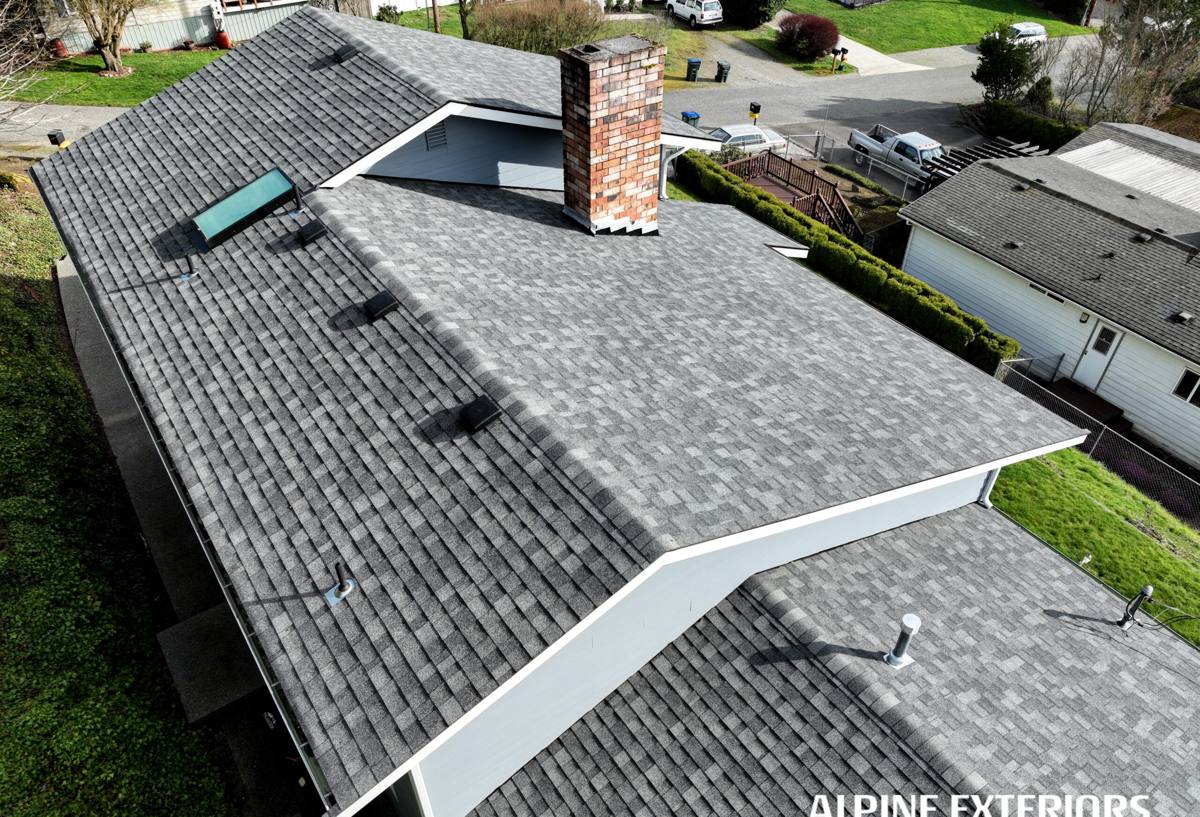
How the Local Climate Actually Wears Down a Roof
Moisture That Doesn't Dry Out Fast
Skagit County's marine-influenced weather means low sun angles and long overcast stretches, especially November through March. Shingles, moss, and debris in valleys or behind chimneys can stay wet for days after a storm passes. That prolonged moisture is what accelerates granule loss, softens decking over time, and gives moss and moss-related algae a foothold.
Moss and Organic Growth
Moss is the single biggest cosmetic and functional complaint we hear from Sedro-Woolley homeowners. It's not just an appearance issue — moss holds water against the roof surface, lifts shingle edges as it grows, and can work its way under flashing over several seasons. Roofs with heavy tree cover or north-facing slopes that don't get much sun are the most affected.
Wind-Driven Rain
Storms coming up the valley can push rain sideways, especially into rakes, eaves, and any wall-to-roof transition. A roof that's fine in a straight-down rain can still leak in these conditions if flashing and underlayment weren't installed with wind-driven moisture in mind.
Signs Your Roof Needs Replacement, Not Another Repair
- Granules collecting in gutters or at downspout outlets, especially after a new storm
- Shingles that are cupping, curling at the edges, or visibly thinning
- Moss coverage that comes back within a year or two of cleaning, even after treatment
- Soft or spongy spots on the roof deck when walked (a sign of decking damage underneath)
- Daylight visible through the attic or staining on interior ceilings and walls
- A roof approaching or past the manufacturer's expected service life for its material
- Multiple past repairs in different areas rather than one isolated issue
One or two of these on their own might mean a repair is enough. Several together, especially combined with the roof's age, usually mean replacement is the more honest recommendation — and the more cost-effective one over time.
What a Correct Replacement Actually Involves
A roof replacement is more than swapping old shingles for new ones. In a climate like ours, the layers underneath the visible roofing matter as much as the shingle brand on top.
Full Tear-Off
We remove the existing roofing down to the deck rather than layering over it. Layering can hide a failing deck, traps moisture between layers, and voids most manufacturer warranties. It also means we can actually see the condition of the wood underneath before anything new goes down.
Deck Inspection and Repair
Any decking that's soft, delaminated, or water-damaged gets replaced before new roofing goes on. Skipping this step is one of the most common corners cut in cheap replacements, and it's invisible once the new roof is on — until it isn't.
Underlayment Built for Wet Climates
Given how long our winters keep roofs damp, we don't treat underlayment as an afterthought. Ice-and-water shield or a synthetic underlayment rated for high-moisture exposure goes in the vulnerable spots: eaves, valleys, around penetrations, and wherever wind-driven rain is most likely to find a gap.
Flashing Done Right
Most roof leaks in this region trace back to flashing, not the field of the roof itself. Chimneys, skylights, sidewalls, and valleys all need properly formed, correctly lapped flashing — not just caulk covering a gap. We replace flashing as part of a full roof replacement rather than reusing old, corroded pieces.
Ventilation
A roof deck that can't breathe traps moisture from inside the house against the underside of the decking, which shortens the life of the new roof regardless of how good the shingles are. We check intake and exhaust ventilation balance as part of every replacement and correct it where it's inadequate.
Comparing Roofing Materials for a Valley Climate
| Material | Typical Lifespan | Moss & Moisture Behavior | Relative Cost |
|---|---|---|---|
| Architectural asphalt shingle | 25-30 years | Good with proper ventilation and periodic moss treatment | $ |
| 3-tab asphalt shingle | 15-20 years | More prone to curling and moss lift over time | $ |
| Standing seam metal | 40-50+ years | Sheds moisture fast, minimal moss retention | $$$ |
| Composite/synthetic shake | 30-50 years | Resists moisture absorption better than wood shake | $$-$$$ |
We generally steer homeowners away from natural wood shake and shingle roofing for full replacements in this climate. It's not that wood shake can't be installed well — it's that it demands more frequent maintenance to manage moisture and moss in a climate as wet as ours, and the upkeep cost over the life of the roof often outweighs the upfront savings compared to a composite alternative that mimics the look with less maintenance burden.
Our Replacement Process
- On-site inspection — we walk the roof and attic, check for soft decking, ventilation issues, and existing leak paths, and take photos to document what we find
- Written estimate — a clear scope of work and material options, with pricing broken out so you know what you're paying for
- Scheduling around weather — we work with the reality of Skagit County weather and schedule tear-off with dry windows in mind wherever possible
- Tear-off and deck repair — full removal of old roofing, replacement of any damaged decking
- Underlayment, flashing, and ventilation correction — the parts that determine how the roof performs, not just how it looks
- New roofing installation — installed to manufacturer specification to keep your warranty valid
- Cleanup and magnetic sweep — job site and yard cleared of debris and stray nails before we consider the job done
- Final walkthrough — we go over the finished roof with you before we call it complete
Permits and Local Considerations
Roof replacements in Skagit County typically require a permit, and the requirements can vary depending on the scope of work and whether structural changes are involved. We handle the permit process as part of the job so you're not left figuring out county requirements on your own. If your property is in an area with specific covenants or design guidelines, that's worth raising early so material and color choices are settled before installation begins.
Why a Crew That Already Works in Sedro-Woolley Matters
A roofing crew that regularly works this part of Skagit County already knows what the moss pattern looks like on a shaded, tree-covered lot versus an open one. They know how far wind-driven rain tends to travel up under an eave in a valley storm, and they don't need to guess at local permitting expectations. That familiarity shows up in fewer surprises during the job and a roof that's built for the conditions it will actually face, not a generic install.
It also matters for accountability. A local crew is easy to reach if a question comes up after the work is done, and has a reputation in the community worth protecting — that's a different incentive than a crew that's in town for one job and gone the next week.
What to Look For When Choosing a Roofing Contractor
- Proper licensing, bonding, and insurance — ask to see current documentation, not just a claim of it
- A written estimate that breaks down materials, labor, and scope rather than a single lump number
- Manufacturer certification for the products they're installing, which affects warranty coverage
- Willingness to inspect the attic and decking, not just the visible shingles, before quoting
- A clear explanation of how they'll handle ventilation and moss-prone areas specific to your roof
- References or a track record of work in the local area
If your Sedro-Woolley roof is showing signs of wear, or you'd just like an honest read on how much life it has left, we're happy to come take a look. Fill out the form below for a free, no-pressure estimate — we'll walk the roof, tell you what we actually see, and give you straight options.