 Anacortes Roofing
 Asphalt Shingle Roofing Built for Similk Beach Conditions
Similk Beach sits close enough to the water that its homes take on a different kind of weather than roofs just a few miles inland in Anacortes. Wind off the bay carries salt and moisture onto every exposed surface, mature tree cover keeps large sections of many roofs in shade for most of the day, and Skagit County's wet season doesn't let up for months at a time. Asphalt shingle roofing can hold up very well here, but only when it's specified and installed with those conditions in mind. A roof detailed the same way you'd detail one on a dry, open lot inland tends to show problems early — premature granule loss, soft spots at the edges, and moss that comes back season after season no matter how many times it's scraped off.
This page covers what asphalt shingle roofing actually needs to hold up in Similk Beach, how we approach the work, and what to look for whether you're planning a full replacement or trying to get more years out of an existing roof.
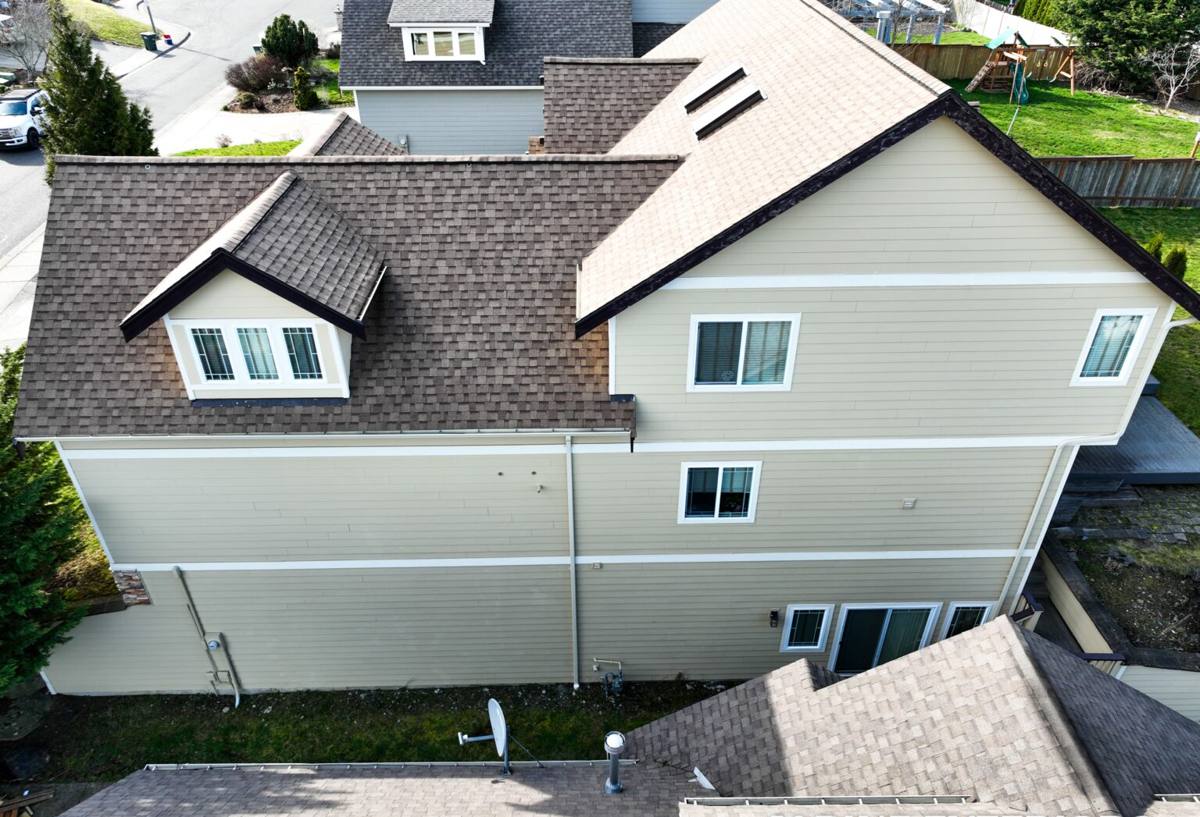
What Salt Air, Driving Rain, and Moss Actually Do to a Shingle Roof
Salt Air and Wind
Airborne salt is corrosive to metal long before it does anything visible to the shingles themselves. Nails, flashing, drip edge, and vent housings are usually the first casualties — a fastener that rusts and loses its grip can let a shingle lift in wind well before the shingle itself has worn out. Wind gusting off the water also drives rain sideways into laps and edges that were only ever designed to shed water moving straight down, which is why edge and perimeter detailing matters more here than it would on a sheltered inland roof.
Driving Rain
Western Washington's rain isn't usually heavy in a single event, but it's frequent and often wind-driven, which means water gets pushed uphill under shingle tabs and into valleys, penetrations, and low-slope transitions far more than a dry-climate roof ever experiences. Underlayment and flashing quality end up mattering as much as the shingle brand — a premium shingle over thin or poorly lapped underlayment will still leak.
Moss and Shade
Where a property has mature trees, or sits close to neighbors with tall evergreens, parts of the roof may stay damp for hours after the rest has dried. That's exactly where moss and algae take hold. Moss isn't just cosmetic — as it grows, it lifts shingle edges, holds water against the roof deck, and works its root structure into the granule surface, which shortens the shingle's life. Left unchecked over a few seasons, moss growth can do more damage to a shingle roof in this area than sun exposure ever would.
What a Correctly Installed Shingle Roof Needs Here
Underlayment
Given how much of the wear in this area comes from moisture rather than sun, we treat underlayment as a primary defense, not an afterthought. That typically means a synthetic underlayment with properly lapped seams, plus self-adhered membrane at eaves, valleys, and any low-slope sections where wind-driven rain and ice are most likely to find a way in.
Ventilation
A roof deck that can't breathe traps moisture underneath the shingles from the inside, which compounds whatever is happening from rain and humidity on the outside. Balanced intake and exhaust ventilation keeps the underside of the deck dry and helps the shingles themselves shed water and dry out faster after a storm — which matters directly for moss and algae resistance.
Flashing and Edge Detail
Chimneys, skylights, roof-to-wall transitions, and valleys are where most shingle roof leaks actually start, not in the open field of shingles. Corrosion-resistant flashing, correctly lapped step flashing, and solid drip edge at every eave and rake are non-negotiable for a roof that sits this close to salt air and wind-driven rain.
Warning Signs Worth a Closer Look
Homeowners in Similk Beach often notice these signs long before a roof actually starts leaking indoors. None of them mean a full replacement is automatically needed, but each is worth a professional look:
- Dark streaking or a green-black tint across shaded slopes — early algae or moss growth
- Moss visibly bridging shingle tabs, especially along north-facing or tree-shaded sections
- Granules collecting in gutters or at downspout outlets
- Shingle tabs that look lifted, curled, or cupped, particularly near eaves and rakes
- Rust staining running down from nail heads, vents, or flashing
- Soft or spongy spots underfoot near valleys or chimney flashing
- Daylight or water staining visible in the attic near penetrations
Choosing the Right Shingle for This Climate
Not every asphalt shingle product is a good match for a shaded, salt-exposed, high-moisture site. The table below outlines the general tradeoffs we walk homeowners through when the roof is going on or near Similk Beach.
| Shingle Type | Typical Fit for This Area | Key Consideration |
|---|---|---|
| Standard 3-tab | Lower cost, lower wind rating | Less margin against gusts off the water; algae resistance varies by product line |
| Architectural / laminated | Our standard recommendation for most Similk Beach homes | Higher wind rating, thicker profile sheds water better, longer warranty life |
| Algae-resistant (AR) shingles | Strongly recommended for shaded or tree-covered lots | Copper- or zinc-infused granules resist streaking and slow moss/algae regrowth |
| Impact-resistant options | Optional upgrade | Adds durability against wind-thrown debris common near mature trees |
Color also plays a small role — darker shingles show algae staining faster than lighter, more granule-variegated colors, which is worth factoring in on a heavily shaded lot even before algae resistance is considered.
How We Handle a Similk Beach Roofing Job
The process itself isn't different from good roofing practice anywhere, but the sequencing and attention shift toward the details that actually fail first in this environment:
- On-site evaluation — we walk the roof and attic, checking deck condition, ventilation, tree exposure, and existing moss or moisture damage before recommending anything
- Scope and material selection — shingle class, underlayment type, and flashing plan are chosen for the specific slopes and shade pattern on your roof, not a one-size template
- Tear-off and deck inspection — old roofing comes off down to the deck so any soft or water-damaged sheathing is found and replaced, not covered over
- Underlayment and ice/water membrane — installed with extra attention at eaves, valleys, and any low-slope transitions
- Flashing — new corrosion-resistant flashing at chimneys, walls, valleys, and penetrations rather than reusing old, pitted pieces
- Shingle installation — laid to manufacturer nailing and exposure specs, which is what actually preserves the wind warranty
- Ventilation check — intake and exhaust confirmed balanced for the attic space before we call the job finished
- Final walkthrough — cleanup, gutter check, and a plain-language explanation of what was done and what to watch for going forward
Cost Factors for Similk Beach Homes
Every roof prices out differently, but the same handful of factors drive most of the variation we see on jobs in this area:
| Factor | Why It Matters Here |
|---|---|
| Roof pitch and access | Waterfront lots often have steeper pitches or limited equipment access near slopes and trees |
| Deck condition | Homes with a history of moss or slow leaks sometimes need sheathing replaced during tear-off |
| Shingle class chosen | Algae-resistant and impact-resistant upgrades cost more upfront but reduce maintenance and re-treatment over time |
| Ventilation upgrades | Older homes may need added intake or exhaust vents to meet a proper balanced system |
| Tree and debris cover | Extra cleanup or protective measures where branches overhang the roofline |
We'll always walk through these factors on-site before putting a number in front of you — broad ranges without seeing the actual roof aren't useful to either of us.
Why Hiring a Crew That Already Works Similk Beach Matters
A shingle roof that's engineered for a dry inland lot and one that's engineered for a shaded, salt-exposed waterfront lot in the same county can look nearly identical from the ground and still perform very differently after a few winters. Crews that regularly work Similk Beach and the surrounding Anacortes waterfront know which slopes on a given lot stay wet longest, where salt corrosion tends to show up first, and which flashing and ventilation details are worth spending extra time on versus which are optional. That local pattern recognition is hard to replace with a generic install, and it's usually the difference between a roof that needs moss treatment and edge repairs every couple of years and one that doesn't.
Keeping a New Roof Performing After Installation
Even a well-built shingle roof in this environment benefits from periodic attention. Keeping gutters clear so water doesn't back up under the eaves, trimming overhanging branches to cut down shade and debris, and having moss addressed early — before it works into the shingle surface — all extend the life of the roof far more cheaply than early replacement. A quick professional check every couple of years is usually enough to catch small issues, like a lifted shingle tab or a rusting fastener, before they turn into a deck repair.
If you're weighing a repair, a full replacement, or just want a straight answer on the condition of your current roof, we're happy to take a look and walk you through it. Fill out the form below for a free, no-pressure estimate.