 Anacortes Roofing
 Building New on Guemes Island? Get the Windows Right the First Time
New construction gives you one real chance to install windows correctly. Every window opening is still open framing, the weather-resistive barrier isn't buried under siding yet, and there's no old window to work around or blame for a bad seal later. On Guemes Island, that first-chance advantage matters more than almost anywhere else in Skagit County, because the island's exposure to salt air, wind-driven rain, and a long moss season punishes any shortcut in flashing or frame selection far faster than a typical inland lot.
This page is specifically about new-construction window installs for homes being built on Guemes Island — what the site conditions demand, what a correct install actually involves, and why a crew that already understands the island's access and climate quirks is worth having on a new build rather than a general contractor's window sub who's never worked out there.
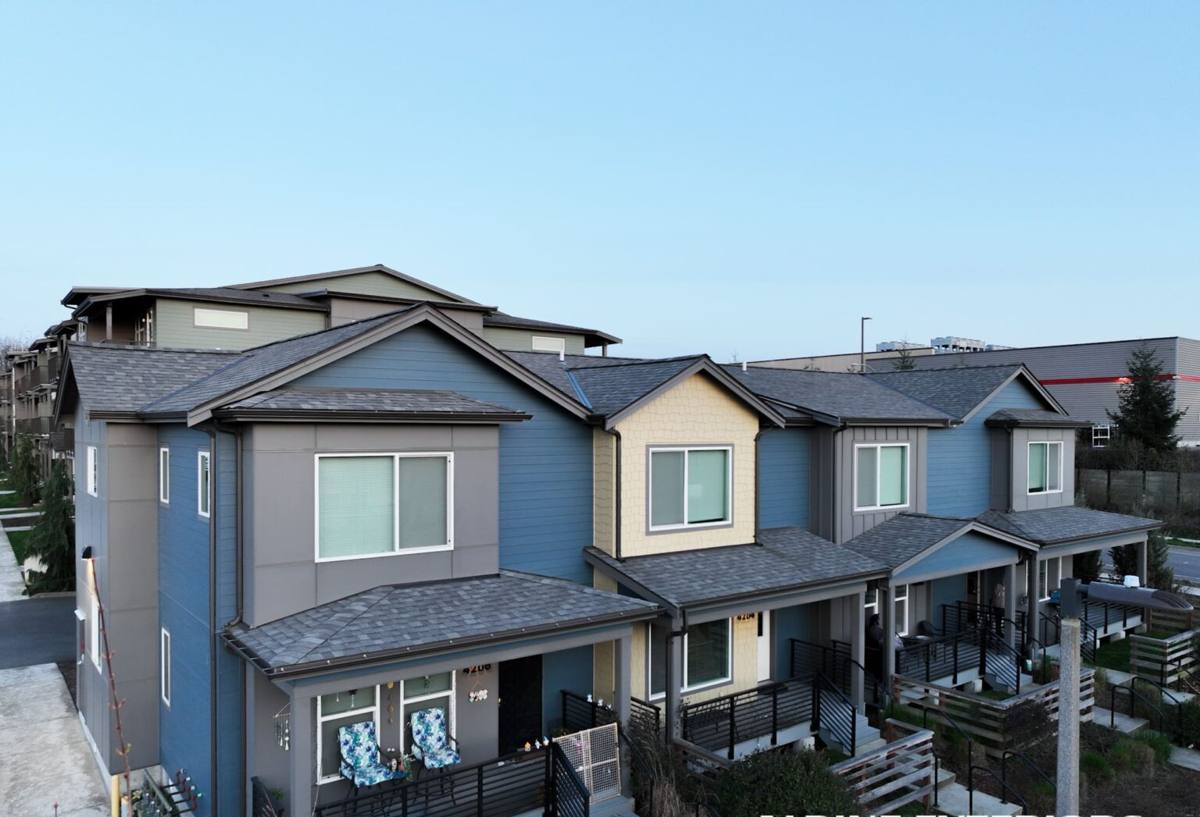
What Guemes Island's Climate Does to a New Window Install
Guemes sits in the marine waters north of Anacortes, and that shoreline exposure shapes almost every decision we make on a new-construction window package.
Salt air and corrosion
Airborne salt accelerates corrosion on fasteners, hinge hardware, and unprotected metal flashing. On a new build we're not just picking a window brand — we're specifying corrosion-resistant fasteners and flashing metals at the framing stage, before anything gets covered up. Get this wrong on a new house and the corrosion shows up as streaking, stuck hardware, or a failed seal years down the road, usually right around the time the warranty period ends.
Driving rain
Wind off the water pushes rain sideways, not straight down. That means water is hitting window assemblies at odd angles and testing every lap and seal in the flashing, not just the top of the opening. New-construction framing lets us build a proper drainage path — sill pan, correctly lapped WRB, and head flashing that actually sheds water outward — instead of retrofitting one into an existing wall.
Moss and prolonged moisture
The island's long wet season keeps north-facing walls and shaded elevations damp for extended stretches, which is exactly the environment moss and algae favor. Moss holding moisture against trim and cladding around a window opening is a slow, quiet way to compromise a seal that looked fine on install day. Good drainage detailing and the right sill and trim materials reduce how much moisture ever sits there in the first place.
New-Construction vs. Replacement Windows — Why the Install Method Matters Here
New-construction windows aren't just "the same window installed earlier." The installation method is different, and on an exposed site like Guemes Island the method is where most long-term problems either get prevented or built in.
Flush-fin (new-construction) frames
These windows have a nailing fin around the perimeter that gets integrated directly with the wall's weather-resistive barrier before siding goes on. Done right, the WRB, flashing tape, and fin overlap in the correct shingle-lap order so water is always directed outward and down, never behind the barrier. This is the standard approach for new builds and it's the one we use on Guemes Island projects, because it lets us control the entire drainage plane from the framing stage.
Block-frame (replacement-style) units in new construction
Some builders install block-frame or "pocket" style windows even in new framing, usually to save a step. Without a fin to integrate into the WRB, the window relies more heavily on sealant and trim to keep water out. Sealant is a maintenance item, not a permanent seal — it's not the standard we build to for a new home in a marine-exposure location, because it shifts long-term performance onto a joint that needs recaulking rather than a drainage plane that sheds water on its own.
Sill pans, every time
A sill pan — a shaped waterproof tray under the window opening — catches any water that gets past the primary seal and directs it back outside instead of into the framing. On a new build this takes minutes to install correctly and is nearly impossible to add later without removing siding. Given the driving rain this site sees, we treat sill pans as non-negotiable on every new-construction opening, not an upgrade.
Choosing the Right Window for a Marine-Exposure Build
Frame material, glass package, and hardware all need to be matched to salt air and sustained moisture, not just picked off a standard spec sheet.
| Frame Material | Behavior in Salt Air / Wet Climate | Where It Fits on Guemes Island |
|---|---|---|
| Vinyl (quality, welded corners) | Won't corrode; performance depends on weld quality and UV-stable formulation | Solid, cost-effective choice for most new-construction openings |
| Fiberglass | Dimensionally stable in temperature swings, strong resistance to moisture-driven warping | Good upgrade for larger openings or high-exposure elevations |
| Wood-clad | Attractive interior look but cladding seams and end grain need vigilant sealing near salt air | Workable if detailing and maintenance commitment are both solid |
| Bare aluminum | Prone to corrosion and thermal transfer without a marine-grade finish | We steer clients away from unclad aluminum on this site — a maintenance and longevity trade-off, not a knock on any brand |
Glass and hardware details that matter here
- Low-E coatings sized to the window's actual sun exposure — north-facing island walls don't need the same solar package as a south-facing elevation
- Stainless or coated corrosion-resistant hardware, not standard-finish hinges and locks
- Dual weatherstripping and a tested air-infiltration rating suited to wind-driven rain, not just a minimum-code window
- Condensation-resistant glass spacers, since sustained damp conditions make interior condensation more likely on a poorly specified unit
Our Process for a New-Construction Window Install
- Plan review and window schedule. We confirm rough openings, egress requirements, and window specs against the framing plan before anything ships to the island.
- WRB and flashing sequencing. We install or coordinate with the framer on correct shingle-lap order for the weather barrier, flashing tape, and sill pan before a single window goes in.
- Window set and fin integration. Each unit is set plumb, level, and square, then the nailing fin is integrated into the WRB per the manufacturer's flashing sequence — not just caulked and nailed.
- Insulation and interior seal. Gaps get low-expansion foam or backer rod and sealant appropriate to the frame material, avoiding over-compression that can bow a frame.
- Exterior trim and final weatherproofing. Trim, head flashing, and any cladding details are finished so the entire opening sheds water outward, with attention to the drainage gaps that keep moss and algae from getting a foothold.
- Walkthrough. We check operation, seals, and hardware on every opening before we call the job done.
Ferry Logistics and Scheduling on Guemes Island
Guemes Island is reached by ferry from Anacortes, and that changes how a window install actually gets scheduled and staged compared to a job on the mainland. Windows are heavy, easily damaged in transit, and expensive to have delivered twice, so we plan delivery and crew logistics around ferry sailings and freight capacity rather than treating it like a same-day supply run. A crew that regularly works Guemes Island already has this dialed in — staging materials in Anacortes, batching trips, and building the ferry schedule into the install timeline — instead of learning it for the first time on your project and burning a day figuring out logistics.
Weather windows matter too. Wind-driven rain events off the water can shut down productive exterior work faster than they would on a more sheltered inland lot, so a crew familiar with the island builds some flexibility into the schedule rather than promising a rigid timeline that a single storm blows up.
Cost Factors on a New-Construction Window Package
Every new build is different, so we don't quote broad projects sight unseen, but these are the factors that actually move the number on a Guemes Island install:
| Factor | Why It Affects Cost |
|---|---|
| Frame material and window count | Fiberglass and larger units cost more than standard vinyl; total opening count is the biggest line item |
| Elevation exposure | Openings facing prevailing wind and rain may warrant upgraded flashing details or corrosion-resistant hardware |
| Glass and coating package | Solar control, condensation-resistant spacers, and impact considerations add cost per unit |
| Site access and ferry logistics | Delivery staging and crew scheduling around sailings can affect labor efficiency |
| Framing coordination | Working directly with your framer's schedule versus arriving after openings are already closed in changes both cost and quality outcomes |
A Checklist for Homeowners and Builders
If you're building on Guemes Island and window installation is coming up on the schedule, this is worth confirming before the crew shows up:
- Window schedule matches final framing plans, including egress and any local code requirements
- Sill pans specified on every opening, not just ground-floor or high-exposure elevations
- WRB and flashing sequence confirmed with whoever installs the windows, so there's no gap between framer and window crew
- Frame material and hardware finish suited to salt-air exposure, not a standard inland spec
- Delivery and install dates built around ferry sailings, with a weather buffer for wind-driven rain
- Written confirmation of who handles exterior trim and final weatherproofing — this is where responsibility sometimes falls through the cracks between trades
Why a Crew That Already Works Guemes Island Is Worth Having
None of this is exotic work, but it's work that goes wrong quietly when a crew is guessing at the local conditions instead of already knowing them. A contractor who's done new-construction window installs on Guemes Island before isn't learning the ferry schedule, the wind exposure, or the moss-and-moisture behavior on your project's dime. That familiarity shows up in fewer surprises during the build and a window package that's still performing well after a few wet Skagit County winters, not just on install day.
If you're planning a new build on Guemes Island and want the window package handled right from the framing stage forward, we're happy to walk the plans with you. Reach out for a free, no-pressure estimate using the form below.