 Anacortes Roofing
 Decking Near the Water Takes a Different Kind of Beating
Similk Beach sits close enough to the water that homes here deal with a different set of conditions than decks a few miles inland in Anacortes. Salt-laden air off the bay accelerates corrosion on anything metal, wind-driven rain finds its way into joints and end grain that would stay dry elsewhere, and the shaded, damp stretches of Skagit County's fall and winter grow moss and algae faster than most homeowners expect. A deck built without those specifics in mind will show it within a few seasons — usually as corroding fasteners, soft spots at the ledger, or a slick green film that makes the surface unsafe to walk on.
Composite decking is a good match for this environment when it's specified and installed correctly, but "composite" isn't one product with one set of rules. The board, the fastening system, and the substructure all matter, and getting them wrong in a marine-air, high-rainfall setting like Similk Beach causes problems faster than it would in a drier part of the state.
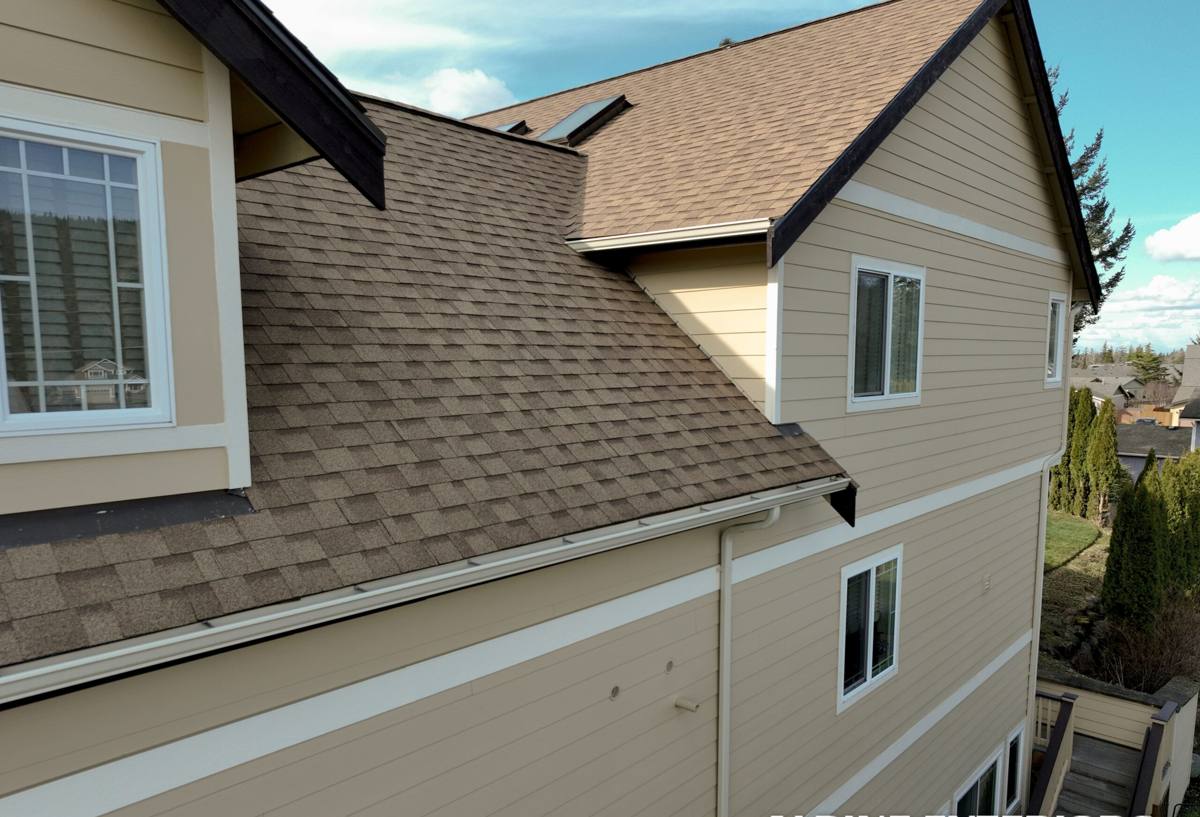
What Similk Beach's Climate Actually Does to a Deck
Salt Air and Metal Hardware
Proximity to Similk Bay and the surrounding waterways means airborne salt is a constant, low-level presence, even on homes that aren't directly waterfront. Standard zinc-coated screws and brackets corrode faster under that exposure. Once a fastener starts rusting, it weakens, stains the surrounding board, and can eventually fail structurally at ledger and joist connections — exactly the places you don't want a surprise.
Driving Rain and Water Intrusion
Anacortes and the broader Skagit County coastline get their share of wind-driven rain, and a deck attached to the house is only as good as its flashing at that connection. Rain that gets behind a poorly flashed ledger board doesn't dry out quickly in this climate — it sits, and it rots the framing behind the decking long before the composite surface shows any sign of trouble.
Moss, Algae, and Extended Damp Season
The long stretch of overcast, wet weather common to this area is exactly what moss and algae need to take hold, especially on decks that sit in partial shade or don't get much direct sun and airflow underneath. On composite boards, this shows up as a thin green or black film that's slippery underfoot and, if left alone, can work into the board's surface texture over time.
Why Composite Makes Sense Here — and Where It Doesn't Fix Everything
Composite decking's main advantage over wood in this setting is that the boards themselves don't rot, splinter, or need annual staining. That's a real benefit against Anacortes's wet winters. But composite doesn't solve every problem on its own — it shifts the risk to the substructure, the fasteners, and the details around drainage and airflow. A composite deck installed over a poorly ventilated frame, or fastened with hardware that isn't rated for coastal exposure, will still fail early. The board is only one part of a system.
Capped vs. Uncapped Composite
We install capped composite boards — meaning the board has a protective outer shell around a wood-plastic composite core — as our standard for anything near Similk Beach's salt air and moisture levels. Uncapped composite absorbs more moisture at the core over time, which matters more here than in a dry inland climate. Capped boards cost more up front but hold color, resist moisture absorption, and resist the algae growth mentioned above noticeably better over the life of the deck. We'll walk you through the tradeoff honestly rather than defaulting to whichever product has the best margin.
What a Correct Composite Deck Install Looks Like Here
Substructure First
Before a single composite board goes down, the framing underneath needs to be treated for ground contact and coastal moisture exposure, and the ledger connection to the house needs proper flashing — typically a metal flashing membrane that directs water away from the house band joist rather than letting it pool at the connection. This is the step that's invisible once the deck is finished, and it's also the step most likely to be shortchanged by crews trying to move fast.
Fasteners and Hardware Rated for the Coast
Given the salt air off the bay, we spec stainless steel or coated fasteners rated for coastal/marine exposure rather than standard exterior-grade hardware. It costs more per box. It also means the deck doesn't develop rust streaks and weakened connection points three or four years in, which is the more common failure point we see on decks near the water that were built with standard hardware.
Board Spacing and Drainage
Composite boards need consistent gapping for water to shed properly and for air to move underneath. Too tight, and water sits on the surface and between boards longer than it should in this rainfall pattern — which is also what accelerates moss growth. Too loose, and the deck feels and looks unfinished. We set gapping to the manufacturer's spec and adjust slightly tighter or looser based on the deck's sun exposure and how sheltered it is from prevailing wind and rain.
Ventilation Underneath
Skirting or lattice around the base of a deck looks finished, but if it's sealed too tightly it traps damp air underneath and slows drying after rain — which is exactly the condition that breeds mold and speeds up rot in the substructure. We build in enough ventilation gaps to let air move, even when the underside is skirted for appearance.
Composite Fastening Systems: Hidden Clips vs. Face Screws
| Fastening Method | Appearance | Coastal Durability | Cost |
|---|---|---|---|
| Hidden clip system | Clean surface, no visible screws | Good, but clips must be corrosion-rated for salt air | Higher labor time, moderate material cost |
| Face-screwed, color-matched | Visible fastener heads, still tidy | Depends heavily on screw coating quality | Lower labor time, lower material cost |
| Standard uncoated screws | Visible, prone to streaking over time | Poor — not recommended this close to the water | Lowest upfront cost, higher long-term risk |
We default to hidden clip systems with coastal-rated hardware for Similk Beach jobs unless there's a specific reason to face-screw, such as matching an existing deck section or a tighter budget where the homeowner understands the tradeoff.
Our Process for a Similk Beach Composite Deck
- On-site assessment — we look at sun exposure, prevailing wind and rain direction, existing framing condition, and how close the deck sits to salt water influence.
- Substructure evaluation — checking ledger attachment, joist spacing and condition, and whether existing framing can be reused or needs replacement.
- Product selection — capped composite board recommendation based on your sun exposure, budget, and how much moss/algae resistance matters for your specific lot.
- Flashing and framing work — this is where most of the long-term durability gets decided, done before any composite board is installed.
- Board installation — proper gapping, coastal-rated fasteners, and attention to expansion gaps at rim boards and transitions.
- Final walkthrough — reviewing drainage, skirting ventilation, and basic maintenance expectations specific to this climate.
Maintenance Realities for This Area
Composite decking is lower-maintenance than wood, not zero-maintenance, especially given Similk Beach's damp season and salt exposure.
- Rinse or sweep the deck surface periodically through fall and winter to keep organic debris from feeding moss and algae growth
- Check fastener heads and any exposed hardware once or twice a year for early rust staining, particularly on decks closest to the water
- Keep gutters and downspouts near the deck clear so runoff isn't dumping extra water onto the deck surface or ledger connection
- Avoid pressure-washing at close range or high pressure, which can degrade the cap layer on composite boards over time
- Trim back vegetation that shades sections of the deck and keeps them damp longer after rain
Why a Crew That Already Works Similk Beach Matters
A contractor who works this specific stretch of Skagit County already knows how exposed a given lot is to salt air, which directions the driving rain typically comes from, and which parts of a property tend to hold moisture longest into spring. That's the difference between a generic composite deck install and one that's actually specified for the site — right down to which fasteners and flashing details matter enough to spend extra on, and which decisions are just upsells. It also means we're a known, findable crew if a warranty question or a maintenance question comes up years down the road, rather than someone who did one job in the area and moved on.
Getting Started
If you're weighing a new composite deck or replacing an aging one near Similk Beach, we're happy to walk the site, look at your sun and wind exposure, and give you a straight read on what the job actually needs. There's a free, no-pressure estimate available through the form below — no obligation, just an honest assessment of your specific property.