 Anacortes Roofing
 New-Construction Windows for Similk Beach Homes
Building near the water in Similk Beach means the windows you choose and how they're installed matter more than they would inland. This stretch of Skagit County sits close enough to the water that salt-laden air, wind-driven rain, and a long stretch of damp, shaded months every year all work on a building envelope in ways that inland Anacortes neighborhoods don't experience as intensely. New construction is the one point in a home's life where you get to do the window installation correctly from the studs out — no working around old framing, no guessing what's hidden behind existing trim. Get it right here and you're set for decades. Get it wrong, and the problems show up as rot, leaks, and failed seals in places that are expensive to open back up once siding and interior finishes are in.
We install new-construction windows for builders and homeowners throughout the Anacortes area, including Similk Beach, and we treat every job here as a coastal installation, not a standard one.
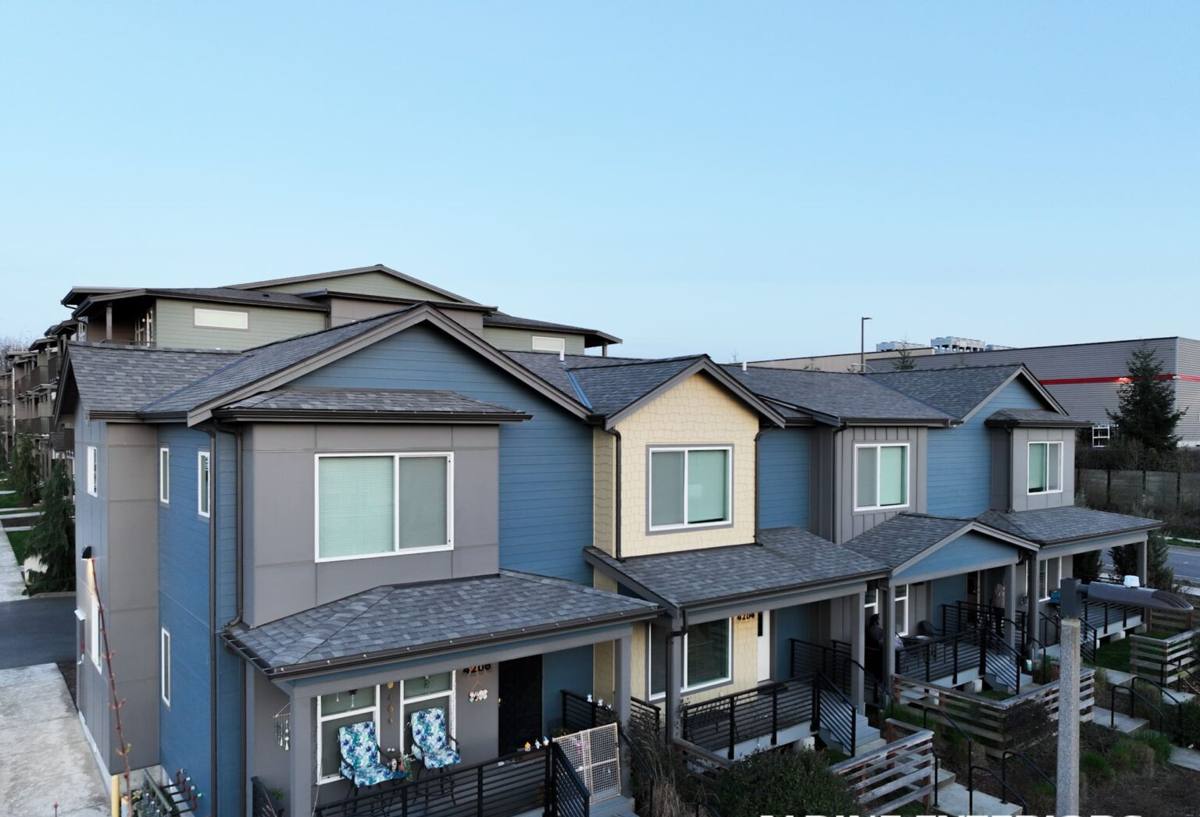
Why Similk Beach's Climate Changes the Job
Salt Air
Proximity to saltwater accelerates corrosion on fasteners, hinges, and hardware that aren't rated for it, and it can degrade lower-grade finishes on frames and trim faster than the manufacturer's warranty timeline assumes. This is a materials-selection issue as much as an installation one — the fasteners and flashing components we use need to hold up to salt exposure, not just meet a generic building code minimum.
Driving Rain
Wind off the water doesn't just bring rain — it drives it sideways and forces it into gaps and seams that would stay dry in a calmer inland setting. A window that's merely "sealed" isn't enough; the flashing and water-resistive barrier integration have to be layered so that any water that does get past the exterior surface has a clear path back out, not into the wall cavity.
A Long Moss and Damp Season
Skagit County's wet season stretches long, and shaded, north-facing walls in particular stay damp for extended periods. Moss and algae growth on sills, trim, and nearby siding hold moisture against the building longer than a quick rain event would. Window details that trap water — flat sills without slope, missing drip caps, gaps in caulking — become chronic problems here instead of occasional ones.
What a Correct New-Construction Window Installation Actually Involves
"New construction" windows are built with a nailing fin, which lets them integrate directly into the wall's water-resistive barrier (WRB) system rather than being retrofitted into an existing opening. Done right, that integration is what actually keeps water out — the window unit itself is only part of the system.
- Rough opening checked for square, level, and correct dimensions before the window ever goes in
- Sill pan flashing installed first, sloped to drain outward, so any water that reaches the sill exits the building instead of pooling
- Weather-resistive barrier (house wrap) integrated with the window flashing in the correct shingle-lap order — each layer overlapping the one below it
- Nailing fin fastened per the manufacturer's schedule, with corrosion-resistant fasteners appropriate for a coastal environment
- Head flashing installed last, lapped over the WRB above the window to shed water down and away
- Interior and exterior sealant applied at the correct points only — sealing everything can trap moisture instead of releasing it
- Final check for square, plumb, and smooth operation before insulation and trim go in around it
Every one of those steps has to happen in the right order. Skipping the sill pan, reversing the flashing lap order, or over-caulking are the kinds of shortcuts that don't show up as a problem on install day — they show up as a stain on a ceiling or soft trim two or three winters later.
New Construction vs. Replacement: Why the Approach Differs
Some homeowners planning an addition or major remodel ask whether their project counts as "new construction" for window purposes. The distinction matters because it changes both the product and the installation method.
| Factor | New Construction Windows | Replacement Windows |
|---|---|---|
| Installation method | Nailing fin, integrated with WRB and framing | Insert into existing frame, or full-frame tear-out |
| Access to framing | Full access to studs, sheathing, and sill | Limited or no access unless full-frame replacement |
| Flashing control | Complete control over flashing layering from scratch | Working with and around existing flashing conditions |
| Best fit for | New builds, additions, full envelope remodels | Existing homes keeping their current framing |
| Long-term water management | Built in from the start, easiest to get right | Depends heavily on condition of existing opening |
If you're building new or adding on in Similk Beach, you have the advantage of doing this once, correctly, rather than managing around decades-old framing decisions. That's worth taking seriously at the planning stage, not just during installation.
Choosing Window Products for a Coastal Skagit County Build
We don't push one brand or material as universally "best" — the right choice depends on your budget, the home's design, and how much maintenance you're willing to take on over time. What we do insist on is being honest about trade-offs for a site this close to the water.
Frame Materials
Vinyl windows are budget-friendly and low-maintenance, and quality vinyl holds up well in coastal conditions when the hardware and reinforcement are rated for it. Fiberglass frames offer strong dimensional stability and resist warping, which matters when a frame is exposed to repeated wet-dry cycling. Wood and wood-clad windows can look excellent on a new build, but they carry a real maintenance burden in a damp, salt-exposed setting — the cladding protects the exterior face, but any exposed wood, especially at the sill, needs consistent upkeep to avoid moisture problems over time. We'll walk through what each option actually means for your maintenance schedule before you commit.
Glass and Hardware
Dual-pane, low-E glass is standard for new construction in this region and helps with both energy performance and condensation control. Hardware and fasteners should be corrosion-resistant — stainless steel or coated options — given the salt exposure. Cheaper hardware isn't a dealbreaker on every project, but on a Similk Beach build, it's worth the upgrade.
Our Process for a Similk Beach New-Construction Job
- Site and plan review. We look at the home's orientation, exposure to prevailing wind and rain, and how the wall assembly is designed before recommending products.
- Product selection. We go through frame material, glass package, and hardware options against your budget and maintenance preferences, with the coastal exposure factored in honestly.
- Coordination with your builder. On new construction, timing with the framing and WRB installation matters. We coordinate directly with your general contractor so flashing sequencing isn't left to chance.
- Installation. Sill pan, WRB integration, fastening, and head flashing, done in the correct order, on every opening.
- Final inspection. We check operation, seal, and flashing coverage before signing off, so nothing gets buried behind siding and trim with an unresolved issue.
A Practical Checklist Before You Sign Off on Window Installation
Whether you're the homeowner or working with a general contractor, these are worth confirming before the siding crew closes everything up:
- Sill pan flashing is visible and properly sloped at every window opening
- WRB layers are shingle-lapped over the flashing, not tucked underneath it
- Fasteners used are rated for coastal or corrosion-prone environments
- Every window operates smoothly and locks fully before trim goes on
- Head flashing is installed and lapped correctly above each opening
- Sealant is applied at manufacturer-specified points only, not indiscriminately
- Photos or documentation of flashing exist before it's covered by siding
Why Local Experience in Similk Beach Matters
A crew that mainly installs windows in drier, inland conditions can do competent work and still underestimate what a coastal Skagit County site needs — the difference isn't skill, it's exposure to this specific set of conditions. We work on homes around Anacortes and the surrounding waterfront communities regularly enough to know which details actually matter here: where moss tends to build up on north-facing walls, how far driving rain can push water into a poorly lapped seam, and which hardware holds up under salt exposure versus which doesn't. That's not something you can fully substitute with a generic installation manual.
If you're planning a new build or an addition in Similk Beach and want windows installed correctly the first time, we're happy to walk the plans with you and put together a free, no-pressure estimate — just fill out the form below.