 Anacortes Roofing
 Why Similk Beach Siding Takes a Different Kind of Beating
Homes along Similk Beach sit close enough to the water that siding does double duty most inland houses never have to think about. Salt-laden air off Similk Bay settles on exterior walls day after day, wind-driven rain gets pushed sideways into joints and laps that were never designed to handle it, and the long, damp Pacific Northwest winter gives moss and algae months at a time to take hold on shaded or north-facing walls. None of this is dramatic on its own. It's cumulative. A house that looks fine in year three can have real problems by year eight if the siding, trim, and flashing weren't built and installed to handle that combination.
Skagit County's marine climate is generally mild, which is part of why it's such a good place to live — but mild and gentle aren't the same thing. Consistent moisture exposure plus salt air is a harder environment for exterior materials than a drier inland climate with occasional heavy storms. Siding repair in a neighborhood like Similk Beach has to account for that, not just patch the visible symptom.
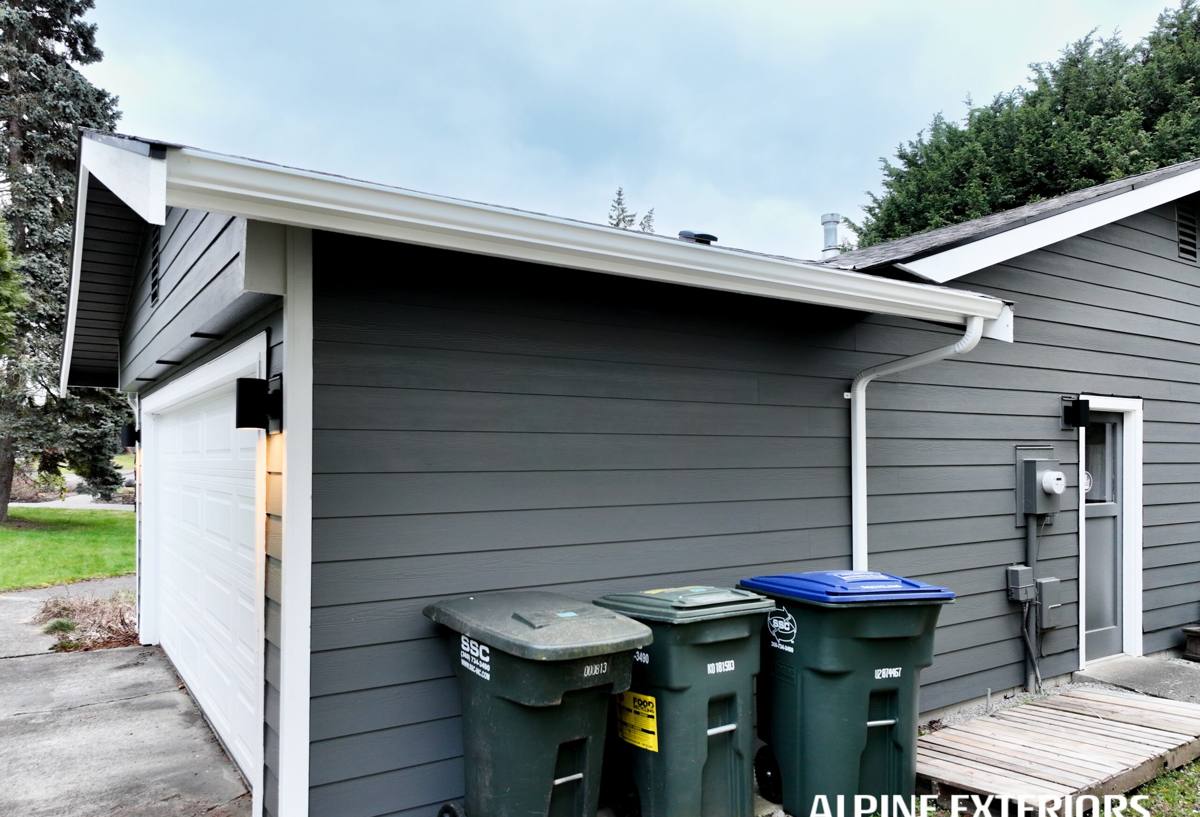
Signs Your Similk Beach Home's Siding Needs Repair
Some damage announces itself. Other damage hides behind a wall until it's expensive. Here's what we tell homeowners to walk their exterior and check for, especially before the next wet season:
- Soft or spongy spots when you press on siding, especially near the bottom courses and around window and door trim
- Visible gaps, cracks, or separation at butt joints and corners where caulking has failed
- Paint that's bubbling, peeling, or chalking unevenly — often a sign moisture is moving through the material, not just weathering the surface
- Persistent moss or dark streaking on north- and west-facing walls that keeps coming back within a season of cleaning
- Warped, bowed, or delaminating panels, which is common on older wood-based or engineered wood siding that's absorbed water over time
- Stains on interior walls or ceilings near exterior corners, which usually means water has already gotten past the siding
- Rust streaking from fasteners, which points to failed or incompatible flashing as much as the siding itself
If you're seeing more than one or two of these, it's worth having someone look at the whole wall assembly, not just the spot that's visibly damaged.
What a Correct Siding Repair Actually Involves
Diagnosing What's Underneath
The visible siding is the last thing to fail, not the first. Before we replace a single board, we check what's behind it — the weather-resistive barrier, the sheathing, and the flashing at windows, doors, and penetrations. If the sheathing has soaked up water, patching the surface siding and leaving wet sheathing behind it just buys a year or two before the same spot fails again, often worse.
Flashing and Water Management
A large share of the repair calls we get in shoreline neighborhoods trace back to flashing, not the siding material itself — a kickout flashing missing at a roof-wall intersection, a window head flashing that was never installed, or house wrap that was taped wrong or not at all. Repairing the siding without fixing the water path behind it is a temporary fix dressed up as a permanent one.
Matching Material and Finish
Patch repairs only look right, and hold up right, if the replacement material matches the existing siding in profile, exposure, and finish. This is one of the real advantages of a factory-finished product — matching a section of ColorPlus-finished Hardie is straightforward because the color and texture are consistent from the factory. Matching a hand-painted or field-finished product years after the original install is much harder to get right.
Repair vs. Replace: How We Help Similk Beach Homeowners Decide
| Factor | Repair Usually Makes Sense | Replacement Is Often Better |
|---|---|---|
| Extent of damage | Isolated to one or two wall sections | Recurring problems across multiple elevations |
| Underlying sheathing | Dry, sound, undamaged | Soft, water-stained, or rotted over a wide area |
| Siding material | Fiber cement or another durable material in otherwise good shape | Original material was never well suited to marine exposure |
| Age of siding | Well within its expected service life | Near or past the age where recurring failures should be expected |
| Home's exposure | Sheltered elevation with moderate wind and rain exposure | Direct wind/rain exposure with a history of repeated damage |
We'll always tell you honestly which side of that table your house falls on. Plenty of Similk Beach homes just need a focused repair — a damaged section replaced, flashing corrected, caulking redone properly. Others have siding that's simply reached the end of what repair can reasonably fix, and continuing to patch it is spending money without solving the underlying problem.
Why We Repair and Patch With James Hardie Fiber Cement
We install and repair exclusively with James Hardie fiber cement siding. We don't carry vinyl, LP SmartSide, primed spruce, cedar, or comparable fiber cement alternatives like Cemplank or Allura. That's a deliberate standard, not a limitation, and it matters for repair work specifically.
Fiber cement doesn't absorb and swell the way engineered wood products can when repeatedly wetted, which is exactly the stress pattern a home near Similk Bay deals with all winter. It's non-combustible, holds paint and factory finish far more consistently than wood-based sidings, and Hardie's HZ5 product line is engineered for the kind of moisture and freeze-thaw exposure the Salish Sea coastline sees. When we do a repair, we're not introducing a weaker or less predictable material into a wall that's already proven it can be tough on siding — we're using the same material, with the same moisture performance, across the whole house.
That consistency also protects the warranty. Mixing materials or patching with something other than what Hardie specifies can complicate a manufacturer warranty claim down the road. Repairing with Hardie keeps the whole wall under one system with one set of installation standards.
What We Won't Do
We won't patch failing vinyl or wood-composite siding with more of the same product just because it's a smaller job. If a repair calls for materials we don't believe hold up in this climate, we'll say so directly and explain the alternative, rather than installing something we wouldn't put on our own homes.
Our Repair Process for Similk Beach Homes
- On-site inspection: We look at the damaged area and the surrounding wall assembly, not just the spot you called about, since water damage rarely stays where it started.
- Diagnosis and honest scope: We tell you plainly whether this is a repair, a partial re-side, or a full replacement situation, and why.
- Flashing and moisture barrier correction: Any failed flashing, gaps in the weather-resistive barrier, or improperly sealed penetrations get fixed before new siding goes up — not after.
- Matched material installation: Hardie panels or planks are cut, fastened, and finished to match the existing wall's profile and exposure.
- Caulking and sealant detail: Joints, corners, and trim intersections are sealed with products rated for the moisture and salt exposure this area gets.
- Final walk-through: We review the completed work with you and point out anything else on the exterior worth keeping an eye on.
Moss, Algae, and Salt Air: What Ongoing Maintenance Should Look Like
Even correctly repaired siding needs some upkeep in this climate. Moss and algae growth on shaded siding isn't just cosmetic — trapped moisture underneath organic growth keeps the surface wet longer than it should be. A gentle rinse (never high-pressure spray directly into laps or joints) once or twice a year on north- and west-facing walls goes a long way. Salt air also means hardware, fasteners, and any exposed metal flashing are worth a visual check periodically, since corrosion there tends to show up before the siding itself does. None of this is heavy maintenance — it's the kind of five-minute-a-season attention that keeps a repair from becoming a recurring one.
Why Hiring a Crew That Already Works Similk Beach Matters
Siding repair done right depends on understanding how a specific house sits relative to wind, rain direction, and sun exposure — and homes near Similk Bay have exposure patterns that differ from siding jobs a few miles inland in Anacortes proper. A crew that regularly works this stretch of Skagit County has already seen which elevations take the worst of the weather, where flashing tends to fail first, and how quickly moss returns on shaded walls in this specific microclimate. That's not something you get from a general contractor doing their first job in the neighborhood — it's built up from repeat work on homes dealing with the same conditions yours does.
It also means a more realistic estimate. We're not guessing at how this climate treats siding over time; we're telling you what we've actually seen hold up and what hasn't, on houses like yours, in this area.
Get a Straight Answer on Your Siding Repair
If you're seeing soft spots, failing caulk, recurring moss, or you just want a second opinion on whether a section of siding needs repair or replacement, we're happy to take a look. Estimates are free and there's no pressure either way — just an honest read on what your home actually needs.