 Anacortes Roofing
 Why Similk Beach Homes Wear Differently
Similk Beach sits close to the water on Fidalgo Island, which means homes here take on a specific combination of stresses that inland Skagit County houses don't deal with nearly as much. Salt-laden air moves through the area constantly, driving rain comes in sideways off the water during winter storms, and the shaded, damp conditions common along the shoreline create a long moss and algae season that can run most of the year. Any one of these factors will slowly wear down a siding system. Together, they shorten the useful life of the wrong material significantly.
Salt air is corrosive to fasteners and hardware, and it accelerates the breakdown of coatings and finishes that weren't engineered to handle it. Driving rain finds every gap, seam, and fastener penetration in a siding system, pushing moisture behind the cladding if the water-resistive barrier and flashing details aren't done correctly. And moss doesn't just look bad — it holds moisture against the siding surface for extended periods, which is exactly the condition that causes rot, delamination, and paint failure in materials that aren't built to shed water quickly.
None of this means Similk Beach is an unusually hard place to keep a house looking good. It means the siding material and the installation details matter more here than they would on a home twenty miles inland, and it's why we don't treat every siding job the same regardless of location.
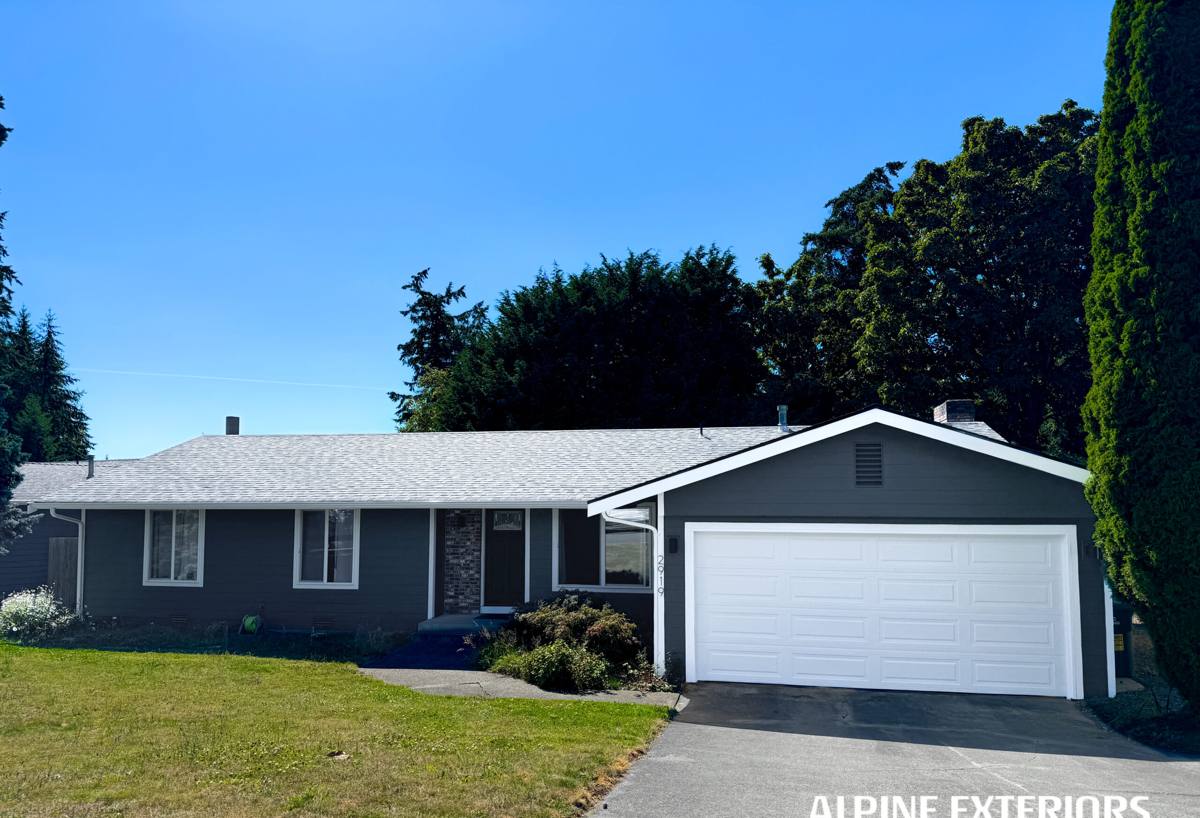
Signs Your Similk Beach Home Needs Siding Replacement
Siding failure near the water tends to show up in a fairly consistent pattern. Catching it early keeps a repair job from turning into a full tear-off, and it keeps water from reaching the framing underneath.
- Soft or spongy spots when you press on the siding, especially near the bottom courses and around windows and doors
- Paint that's peeling, bubbling, or chalking heavily rather than just fading evenly
- Persistent moss or algae growth that comes back within weeks of cleaning
- Visible warping, cupping, or separation at the seams between boards or panels
- Swelling or crumbling at butt joints and corners, where water tends to collect
- A musty smell or visible staining on interior walls that back up to exterior siding
- Fastener heads that are rusting, backing out, or leaving streaks down the face of the siding
Any one of these on its own might be a spot repair. Several of them together, or moisture damage that's reached the sheathing, usually means it's time to talk about full replacement rather than patching around the problem.
What a Correct Siding Replacement Job Actually Involves
Siding replacement isn't just pulling off old material and nailing up new boards. Especially this close to the water, the parts of the job nobody sees from the curb are what determine whether the new siding lasts fifteen years or forty.
Tear-off and inspection
Once the old siding comes off, the sheathing underneath gets inspected for rot, soft spots, or water damage that built up unseen. This is often the first real look anyone's had at the wall assembly in years, and it's the right time to catch and repair any framing or sheathing damage before it's covered back up.
Water-resistive barrier and flashing
A new weather-resistive barrier goes over the sheathing, with careful attention to how it laps and integrates with flashing around every window, door, and penetration. In a driving-rain environment, this layer is doing most of the real work of keeping water out of the wall — the siding itself is the second line of defense, not the only one.
Fastening and installation to manufacturer spec
Fiber cement siding has specific requirements for fastener type, spacing, clearance from grade, and gaps at joints and penetrations. Skipping or shortcutting these details is one of the most common causes of premature siding failure — and it's also one of the easiest things for a homeowner to never notice until years later when water damage shows up.
Trim, caulking, and finish work
Corner boards, trim, and caulked joints get finished with attention to how water will actually move across the wall in wind-driven rain, not just how the wall looks on a calm day.
James Hardie vs. Other Siding Materials for This Environment
We install James Hardie fiber cement siding exclusively, and it's worth explaining why in the context of a salt-air, high-moisture area like Similk Beach rather than just as a general preference.
| Material | How it handles salt air and moisture | Common long-term issue near water |
|---|---|---|
| James Hardie fiber cement | Non-combustible, dimensionally stable, engineered HZ product lines for the Pacific Northwest's wet climate | Requires correct installation to spec, but the material itself resists moisture-driven warping and rot |
| Vinyl siding | Won't rot, but expands and contracts significantly with temperature swings and can warp or crack in wind | Seams and panels can loosen over time, allowing wind-driven rain behind the cladding |
| LP SmartSide (engineered wood) | Treated to resist moisture, but it's still a wood-based product | More sensitive to sustained moisture exposure and edge swelling than fiber cement |
| Cedar or primed spruce | Natural material, attractive, but untreated wood is highly moisture-sensitive | Requires frequent refinishing and is prone to rot, cupping, and insect damage in damp, shaded conditions |
We're not going to claim any of these materials are junk — vinyl and engineered wood siding both have legitimate uses and plenty of installers who work with them successfully. Our position is narrower and more practical: for the specific combination of salt air, driving rain, and heavy moss exposure that Similk Beach homes deal with, fiber cement's dimensional stability and moisture resistance give it a real advantage, and it's the material we're willing to warranty our workmanship behind.
James Hardie's ColorPlus Finish and HZ Product Lines
James Hardie's ColorPlus finish is baked on at the factory under controlled conditions, which produces a more consistent, fade-resistant, and moisture-resistant coating than a field-applied paint job can typically match — that matters in an area where UV, salt, and moisture are all working against a painted finish at the same time. Hardie also engineers its HZ5 product line specifically for climates like ours, accounting for the freeze-thaw cycles, sustained moisture, and temperature swings the Pacific Northwest sees through the year. The combination of the engineered substrate and factory finish is a big part of why we can stand behind the material in an environment that's genuinely tough on siding.
Our Process for a Similk Beach Siding Replacement
- On-site assessment — we look at your current siding, sheathing condition, and the specific exposure your home has to wind, rain, and shade
- Detailed proposal — covering material, color, trim details, and the flashing and water management plan for your home specifically
- Tear-off and sheathing repair — old siding removed, framing and sheathing inspected and repaired as needed before anything new goes up
- Weather barrier and flashing installation — done to manufacturer spec at every window, door, and penetration
- Hardie siding installation — installed to James Hardie's fastening, clearance, and joint specifications
- Trim, caulk, and final finish — with a walkthrough so you know exactly what was done and why
What Affects the Cost of a Siding Replacement
| Factor | Why it matters |
|---|---|
| Extent of sheathing or framing damage found during tear-off | Water-damaged wood underneath the old siding has to be repaired before new siding goes on — this is the most common source of cost variation |
| Home size and wall complexity | More corners, windows, and rooflines mean more flashing detail and labor time |
| Siding profile and trim selection | Lap siding, shingle-style panels, and trim boards all price differently and affect labor time |
| Existing siding removal | Some materials and substrates take longer to strip off than others |
| Accessibility | Site conditions like steep grades, limited access, or height affect scaffolding and labor |
We won't quote a number here that doesn't apply to your specific home — every Similk Beach property we've looked at has had a different combination of these factors. A walkthrough and written estimate is the only honest way to give you a real number.
Why Hiring a Crew That Already Works Similk Beach Matters
A crew that regularly works this stretch of Skagit County shoreline already understands how wind and rain actually hit homes here, where moss tends to build up fastest, and which flashing details matter most given the exposure. That's different from general roofing or siding experience — it's familiarity with this specific microclimate, built from doing the work here repeatedly, not from a manufacturer's install manual alone. It also means fewer surprises during the job: local crews know what to expect when they pull old siding off a home that's been absorbing salt air and driving rain for decades.
Caring for New Siding in a Salt-Air, High-Moisture Climate
Correctly installed fiber cement siding is low-maintenance, but "low-maintenance" doesn't mean "no maintenance" in an environment like this one.
- Rinse the siding periodically to clear salt residue and organic buildup before moss gets established
- Keep gutters clear so water isn't overflowing and running down the siding face
- Trim back vegetation and tree cover where possible to reduce shade and improve airflow along walls that stay damp longest
- Inspect caulked joints and trim yearly, and have any cracked or missing caulk addressed before the next wet season
- Address any moss regrowth promptly rather than letting it sit against the siding surface
If you're seeing signs of wear on your Similk Beach home's siding, or you'd just like an honest assessment of where things stand, we're happy to take a look. Reach out for a free, no-pressure estimate using the form below.