 Anacortes Roofing
 Building a Deck That Holds Up in Similk Beach
Similk Beach sits close enough to the water that homes here deal with a different kind of weather than decks built further inland. The salt-laden air off the bay, the steady drip of Pacific Northwest rain through fall and winter, and the long stretch of damp, low-light months that let moss and algae take hold all put extra stress on outdoor structures. A deck built to a generic spec sheet might look fine for a season or two, but it's the details you don't see at first glance — fastener choice, flashing, board spacing, ventilation underneath — that decide whether it's still solid in ten years.
We build custom decks for homeowners around Anacortes and the rest of Fidalgo Island, and Similk Beach's exposure is something we plan for specifically, not something we patch after the fact. This page walks through what that actually means: the materials that hold up, the framing details that matter more here than they would in a drier climate, and what our process looks like from first look to final walkthrough.
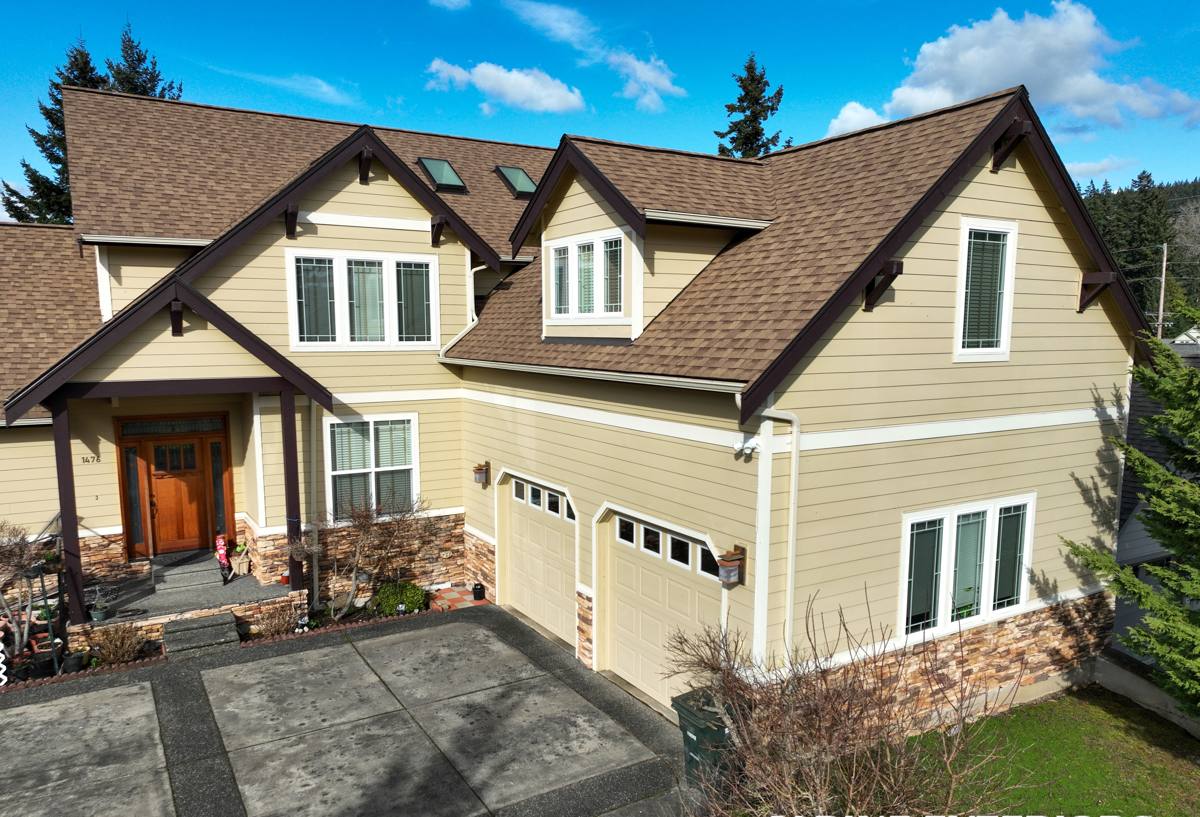
What Salt Air, Rain, and Moss Actually Do to a Deck
It helps to understand the specific failure points before talking about solutions, because each one calls for a different fix.
Salt Air
Airborne salt from Puget Sound accelerates corrosion on any exposed metal — fasteners, brackets, hinges, railing hardware. A screw or joist hanger rated for general outdoor use can start rusting years earlier near the water than it would a few miles inland. Once a fastener corrodes, it loses holding strength long before it looks obviously bad, which is part of why hardware choice matters more here than most homeowners expect.
Driving Rain
Skagit County gets its share of wind-driven rain, and a deck attached to the house is only as good as the flashing where it meets the wall. Water that gets behind a ledger board or under a poorly lapped flashing detail doesn't dry out quickly in our climate — it sits, and it rots framing from the inside where you can't see it until boards start feeling soft underfoot.
Moss and Algae
Shade, moisture, and mild temperatures are exactly what moss wants, and a deck with tight board spacing or poor airflow underneath becomes a long-term host for it. Beyond looking bad, moss holds moisture against the decking surface and makes boards slick and dangerous when wet — a real concern on stairs and landings.
Choosing Decking Material for a Coastal-Exposure Lot
There's no single "best" decking material — every option is a trade-off between upfront cost, maintenance, and how it behaves in salt air and moisture over time. Here's how the common choices actually compare for a property like the ones in Similk Beach.
| Material | Moisture & Salt Air Behavior | Moss/Algae Resistance | Maintenance | Realistic Lifespan Here |
|---|---|---|---|---|
| Cedar | Naturally rot-resistant but still absorbs moisture; needs sealing to perform well near salt air | Low — needs regular cleaning | Annual cleaning and re-sealing/staining | 15-20 years with upkeep |
| Pressure-Treated Fir/Pine | Treatment resists rot but cut ends and fastener holes are vulnerable if not sealed | Low — moss takes hold quickly if untreated | Sealing every 1-2 years, periodic washing | 15-20 years with upkeep |
| Capped Composite | Excellent — the cap layer doesn't absorb moisture or salt | Moderate to good depending on brand and texture | Occasional washing, no sealing/staining | 25-30+ years |
| PVC Decking | Excellent — fully synthetic, unaffected by salt or moisture absorption | Good — smooth, low-porosity surface sheds algae growth better | Occasional washing | 25-30+ years |
We don't push one product line on every job. Real wood still has a place — it's affordable up front and plenty of homeowners like the look and the ability to refinish it. But we're honest that it asks for more of your time every year, and if low maintenance is the priority given how much moisture this area sees, a capped composite or PVC board earns its higher upfront cost back in years you're not out there re-staining a deck in the rain.
Framing and Fasteners: The Part You Don't See
The decking surface gets all the attention, but the framing underneath is what actually determines how long a deck lasts in this climate. A few things we don't cut corners on:
- Fastener grade: stainless steel or high-grade coated fasteners rated for coastal/marine exposure, not the standard hot-dip galvanized hardware that's fine inland but corrodes faster here.
- Joist protection: joist tape or a comparable moisture barrier on top of every joist, so fastener penetrations don't become entry points for water into the wood grain.
- Post bases: posts set on elevated metal bases rather than buried directly in concrete or sitting flush on damp soil, keeping end grain away from standing moisture.
- Hidden fastener systems: where the decking product supports it, hidden clips reduce the number of surface penetrations that can trap water and corrode over time.
None of this shows up in a photo of the finished deck, which is exactly why it's worth asking about before you hire someone. A deck can look identical on delivery day and age completely differently five years out based on choices made in the framing stage.
Drainage, Flashing, and Keeping Water Moving
Where a deck attaches to the house is the single most common place we see rot on older decks in this region. Proper ledger flashing — installed so each layer sheds water outward and down, never trapping it against the wall sheathing — is non-negotiable on any deck we build that attaches to a structure. We also grade and space decking to let water pass through rather than pool, and we make sure the space underneath a deck has enough airflow to actually dry out between rain events rather than staying damp for weeks at a time, which is what invites both rot and moss.
On lower or ground-level decks, we also look at how water moves across the yard toward the structure. A deck built on a low spot that collects runoff will fight moisture problems no matter how good the materials are, so grading and drainage sometimes need to be part of the conversation before a single board goes down.
Design Considerations Specific to Similk Beach Properties
Being close to the water shapes more than just material choice. A few things we factor into design here:
Wind Exposure
Open, near-water lots can see stronger and more frequent wind than a sheltered inland yard. That affects railing design, how furniture and pergola structures should be anchored, and sometimes where we recommend placing the deck relative to the house for wind protection.
Guardrails and Code
Any deck surface a meaningful height above grade needs a code-compliant guardrail — height, baluster spacing, and load requirements are set by the state building code, not something to guess at or leave to a handyman-grade railing kit.
Permitting and Jurisdiction
Depending on exactly where a property sits, permitting may run through the City of Anacortes or through Skagit County, and lots closer to the shoreline can also fall under shoreline management review. We sort out which jurisdiction applies and handle the permit process as part of the job, so you're not the one trying to figure out which office to call.
Our Process for a Similk Beach Deck Project
- On-site assessment: we look at sun and wind exposure, existing drainage, soil conditions, and how the space will actually be used before talking materials.
- Design and material selection: we walk through the trade-offs above in plain terms — wood versus composite versus PVC, layout, railing style — based on your budget and how much upkeep you want to sign up for.
- Permitting: we handle the paperwork with the correct jurisdiction and any required inspections along the way.
- Construction: footings, framing with coastal-grade hardware and moisture protection, then decking, railing, and stairs.
- Final walkthrough: we go over the finished deck with you, including what maintenance it does and doesn't need going forward.
Keeping a Similk Beach Deck in Good Shape Year-Round
Whatever material you choose, a little seasonal attention goes a long way in this climate. A practical checklist for the year:
- Sweep debris off the surface regularly, especially in fall — wet leaves left sitting are one of the fastest ways to start a moss patch.
- Wash the deck surface at least once a year with a cleaner appropriate for the material (wood versus composite need different products) to knock back early moss and algae growth.
- Check and re-seal wood decking on the manufacturer's recommended schedule — don't wait until it looks gray and dry.
- Inspect railing connections and stair stringers annually for any looseness, which can be an early sign of fastener corrosion.
- Keep the area underneath the deck clear of stored items and vegetation so air can keep circulating and drying it out.
- Look at ledger flashing and the house connection point once a year for any staining or soft wood, which are early warning signs of a leak.
Why Hire a Crew That Already Works This Area
A contractor who mainly builds decks in drier, more sheltered parts of Skagit County can still do competent work, but they may not default to marine-grade fasteners, extra flashing attention, or moss-resistant material recommendations unless you specifically ask. Working regularly in Similk Beach and the rest of Anacortes means we build those choices in from the start, because we've seen what standard-spec decks look like after a few winters this close to the water. We also already know the local permitting process and how shoreline proximity can affect a project, which saves time and avoids surprises partway through the build.
If you're planning a new deck or replacing one that's showing its age, we're happy to come take a look and talk through what makes sense for your specific lot and budget. Reach out for a free, no-pressure estimate using the form below.