 Anacortes Roofing
 Storm Damage in Similk Beach: What Local Roofs Are Up Against
Similk Beach sits along Similk Bay in Skagit County, which means roofs here take a different kind of beating than roofs a few miles inland. Wind comes off the water with real force during winter storms, driving rain sideways under flashing and shingle edges that would stay dry in a calmer setting. Add in salt-laden air, which speeds up corrosion on exposed metal fasteners and flashing, and a moss season that can run from early fall through spring, and you've got a roof that's working harder than the shingles were probably rated for on paper.
None of that means a roof here is doomed to fail early. It means storm damage needs to be caught and fixed correctly the first time, because small problems compound fast in this climate. A lifted shingle tab that would just sit there in a dry region becomes an open door for wind-driven rain during the next Skagit County storm.
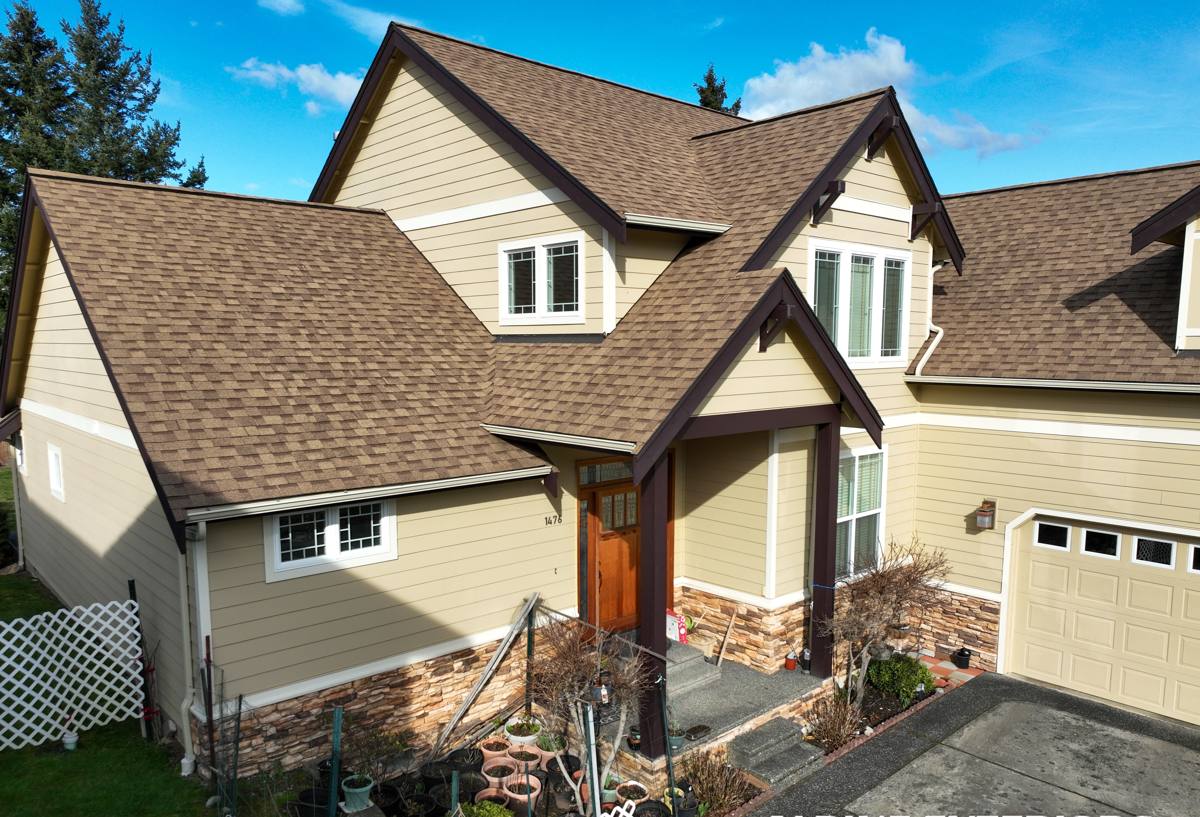
What Actually Counts as Storm Damage
Homeowners often assume storm damage means a hole punched clean through the roof. Most of what we actually repair after a wind or rain event is less dramatic but just as serious if left alone:
- Lifted or missing shingles — most common at ridges, rake edges, and eaves, where wind uplift concentrates.
- Creased or torn shingles from wind flex, which break the seal even if the shingle is still nailed down.
- Loosened or bent flashing around chimneys, valleys, and vent pipes, where wind can work metal loose over a single storm.
- Debris punctures or dents from tree limbs or wind-blown material.
- Granule loss in a concentrated area, which signals impact damage rather than normal wear.
- Gutter and downspout damage that redirects water back up under the roof edge instead of away from the house.
Some of these are only visible from the roof itself, which is part of why a proper inspection after a significant storm matters more than a quick look from the ground.
Why a "Small" Repair Shouldn't Wait
Water doesn't need much of an opening. A single lifted shingle or a flashing seam pulled a quarter-inch loose is enough for wind-driven rain to get underneath during the next storm system. Once water reaches the roof deck, it can travel sideways along the sheathing before it ever shows up as a stain on your ceiling — meaning the damage you eventually see indoors is usually smaller than the damage already sitting in the attic or wall cavity.
In a climate with as much sustained damp weather as Anacortes gets, that trapped moisture doesn't dry out on its own between storms the way it might in a drier region. It sits, it soaks into wood, and over a season or two it turns a repair that would have cost a few hundred dollars into sheathing replacement, insulation replacement, or worse. Catching storm damage early is the single biggest factor in keeping a repair a repair, instead of it becoming a much larger project.
Our Storm Damage Repair Process
We keep the process straightforward and honest, because homeowners dealing with storm damage usually have enough stress already without a confusing repair timeline.
1. Inspection
We walk the roof, not just the ground, and document what we find with photos — lifted shingles, flashing condition, granule loss, any signs of water having already reached the deck. If there's an area we can't safely access or fully assess from the roof surface, we'll say so rather than guess.
2. Temporary protection, if needed
If there's an active leak or an opening that could let more water in before the repair happens, we get it covered. This isn't a fix — it's a stopgap to prevent the damage from spreading while materials are sourced or a claim is processed.
3. A clear, written scope
Before any work starts, you get a plain explanation of what's damaged, what needs to be repaired versus replaced, and roughly what that involves. No surprise add-ons once the crew is already on the roof.
4. The repair itself
We match materials as closely as possible to what's already on the roof, tie new flashing and underlayment into the existing system correctly, and re-seal shingle courses so the repaired section performs like the rest of the roof — not like a patch.
5. Cleanup and follow-up
Debris and old materials get hauled off site. If you'd like us to check the repair after the next heavy rain, we're glad to.
Repair or Replace? How We Help You Decide
Not every storm-damaged roof needs a full replacement, and not every roof that looks fine after a storm is actually fine. The decision usually comes down to a handful of factors we walk through with you directly.
| Factor | Leans toward repair | Leans toward replacement |
|---|---|---|
| Roof age | Under 10–12 years, otherwise sound | Nearing or past expected lifespan |
| Damage extent | Isolated to one section or slope | Spread across multiple slopes or the whole roof |
| Prior condition | Minimal moss history, few past repairs | Heavy moss history, multiple past patch jobs |
| Underlying deck | Sheathing dry and solid | Sheathing shows rot or soft spots |
| Insurance scope | Claim covers a defined repair area | Adjuster determines full slope or roof replacement |
We'll always tell you honestly which side of that table your roof falls on. A repair that's done right can add years to a roof's life; a repair patched onto a roof that's already failing just delays a bigger cost.
Insurance Claims: What Homeowners Should Know
We're not insurance agents or adjusters, so we won't tell you what your policy covers — that's between you and your carrier. What we can do is document damage in a way that's useful when you file a claim: dated photos, a written description of what happened and what it affected, and a repair scope that lines up with what an adjuster will be looking to verify.
If your insurer sends an adjuster out, we're happy to be on site or available by phone to point out damage that's easy to miss from the ground or from a quick walk of the roof. Storm damage claims tend to go smoother when the documentation is thorough from the start, rather than assembled after the fact.
Materials and Methods We Use for This Climate
Similk Beach's mix of salt air, driving rain, and long wet seasons shapes how we approach repairs here, not just what we install.
- Corrosion-resistant fasteners and flashing in place of standard-grade hardware, since salt air accelerates rust on exposed metal.
- Ice-and-water shield membrane at eaves, valleys, and any repaired section prone to wind-driven rain — it's cheap insurance against the exact failure mode this area sees most.
- Proper flashing details at every penetration we touch, since a loose flashing seam is one of the most common repeat-failure points we find on storm calls.
- Moss-aware repair work — where it makes sense, we'll discuss zinc or copper strip options or a cleaning schedule as part of the conversation, as a maintenance choice you can weigh, not a hard sell.
We stand behind our repair standard, but we're also upfront that no single product or technique eliminates the need for periodic roof maintenance in a climate this wet. Our goal is a repair that holds up under the conditions this specific location actually sees.
After the Storm: A Homeowner Checklist
- Check the attic (if accessible) for damp insulation, water stains, or daylight coming through the roof deck.
- Look at ceilings and upper walls for new stains, especially after the first heavy rain following a windstorm.
- From the ground, scan for visibly missing or lifted shingles, bent flashing, or debris caught on the roof.
- Clear gutters and downspouts of storm debris so water isn't backing up under the roof edge.
- Photograph anything you notice before it's cleaned up or repaired — useful for both us and your insurer.
- Avoid walking the roof yourself after a storm; wet, moss-prone surfaces are not safe footing.
- Call for an inspection sooner rather than later, even if the visible damage looks minor.
Why a Crew That Already Works Similk Beach Matters
A roofer who works this stretch of Skagit County regularly knows what a Similk Bay windstorm typically does to a roofline versus what a more sheltered inland property sees. That familiarity shows up in small but real ways — knowing which flashing details tend to fail first in this exposure, having the right materials on hand instead of ordering them after the inspection, and being able to respond quickly when a storm rolls through and several calls come in at once.
It also matters after the job is done. A repair crew that's actually local is one you can reach again if a question comes up next winter, not a name from a storm-chasing outfit that was in town for a week and gone.
If you've got storm damage — or you're just not sure whether what you're seeing needs attention — we're glad to take a look. Reach out for a free, no-pressure estimate using the form below.