 Anacortes Roofing
 Fidalgo Island Roofs Take a Different Kind of Beating
Homes on Fidalgo Island sit close to open water on more than one side, and that changes what a roof has to survive year-round. It's not just occasional storms — it's a steady combination of salt-laden air, wind that picks up speed crossing open water before it hits a roofline, and driving rain that doesn't fall straight down so much as get pushed sideways into every seam, vent, and flashing detail. Add in a long stretch of gray, damp months that favor moss growth, and you've got a roof that ages differently than one fifteen miles inland.
Storm damage repair here isn't a one-size-fits-all service. A roof on this part of Skagit County needs a contractor who understands how wind, salt exposure, and moisture actually interact with roofing materials over time — not just someone who can patch a hole and move on.
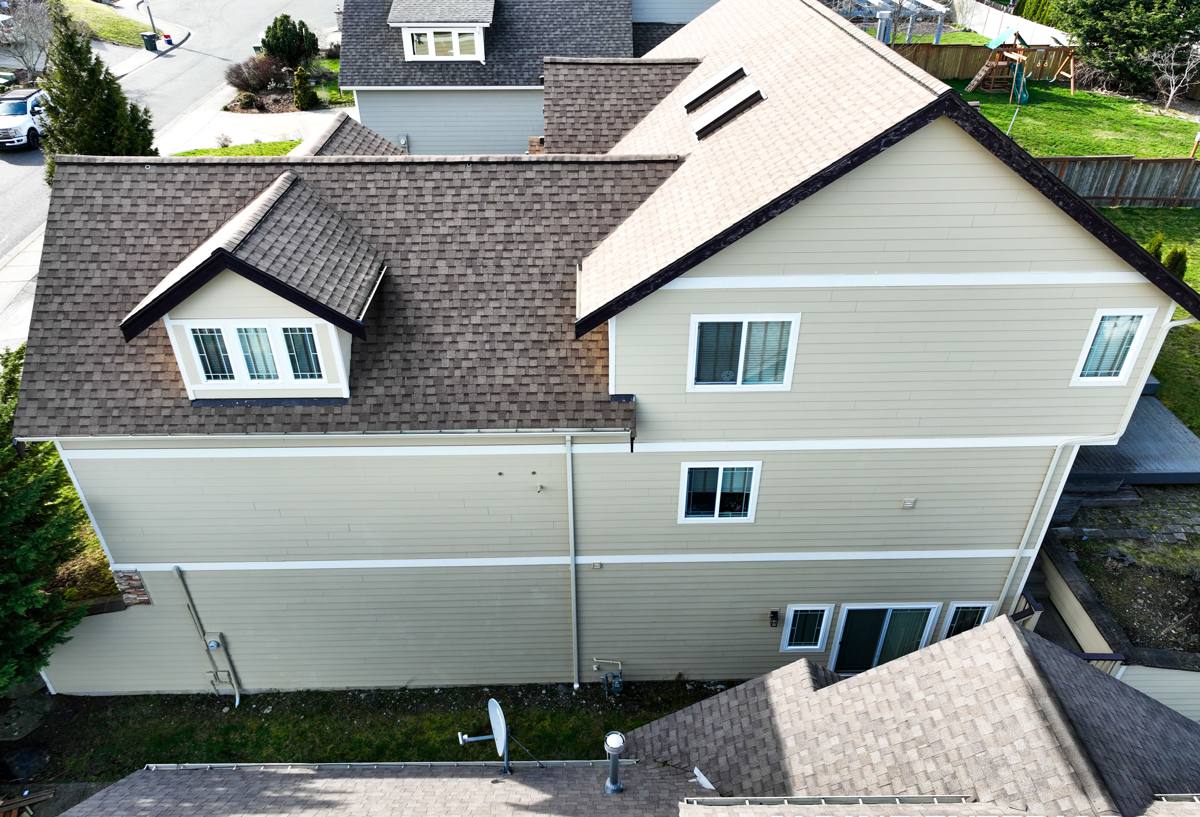
What Actually Counts as Storm Damage
Not every roof problem after a windstorm is dramatic. Some of the most costly damage is the kind that doesn't show up as a hole or a missing shingle right away.
Wind Damage
Sustained wind and gusts can lift shingle tabs, break the seal along shingle edges, or loosen ridge caps without tearing anything off completely. A shingle doesn't have to be missing to be compromised — a broken seal means the next rain event can drive water underneath it.
Wind-Driven Rain Intrusion
Rain that comes in nearly sideways behaves differently than a normal downpour. It can work its way under flashing at chimneys, skylights, and wall intersections, or push past vent boots that have started to crack from UV and salt exposure. This is one of the more common ways water gets into a roof system here without a single shingle being visibly damaged.
Impact and Debris Damage
Fallen branches, wind-blown debris, and occasionally hail can crack shingles, dent metal flashing, or puncture the roofing membrane in flatter sections. Even a glancing hit can crack the granule surface enough to shorten a shingle's remaining life.
Granule Loss and Long-Term Wear
Heavy wind and rain accelerate granule loss on asphalt shingles. Granules are what protect the asphalt layer underneath from UV and moisture, so bald patches after a storm are a real warning sign, not just cosmetic wear.
Signs Worth Checking After a Storm
Most homeowners aren't going to climb onto a wet, wind-battered roof to inspect it themselves, and they shouldn't. But there are signs visible from the ground or attic that are worth watching for:
- Shingle fragments or granules collecting in gutters or at the base of downspouts
- New or worsening water stains on interior ceilings, especially near chimneys or skylights
- Visible gaps, lifted edges, or curling shingles when viewed from the yard or a neighboring window
- Sagging or soft spots noticed when walking on an accessible upper deck or balcony below the roofline
- Musty smells in the attic, which can mean moisture is getting in gradually rather than all at once
- Debris — branches, moss clumps, or shingle pieces — sitting on the roof surface itself
Any one of these is a reason to get an inspection, even if nothing looks urgent.
Why Waiting Costs More Than the Repair Itself
A small storm-related opening in a roof doesn't stay small in this climate. Once water finds a path in, the region's humidity and mild temperatures create ideal conditions for it to keep moving — soaking insulation, staining drywall, and in some cases leading to mold or rot in framing before a homeowner ever notices a leak indoors. What would have been a straightforward shingle and flashing repair right after the storm can turn into a repair that includes deck replacement and interior work months later.
There's also a practical timing issue with insurance. Most policies expect damage to be reported and documented reasonably close to the storm event that caused it. Waiting weeks or months to address visible damage can complicate a claim, even when the damage itself is legitimate.
What a Correct Storm Repair Actually Involves
Beyond the Visible Patch
A storm repair done right starts with figuring out how far the damage actually extends, not just fixing what's obviously broken. That means checking the roof deck underneath damaged shingles for soft or wet wood, inspecting the underlayment in the affected area, and confirming that flashing at any nearby penetrations — vents, chimneys, walls — is still sealing correctly. Replacing a few shingles over a deck that's already taking on moisture just hides the problem for another season.
Matching Materials and Warranty Considerations
Repairs should use materials that match the existing roof as closely as possible in type, weight, and color — not just because of appearance, but because mismatched materials can affect how well a repaired section sheds water and ages alongside the rest of the roof. It's also worth confirming how a repair interacts with any existing manufacturer warranty, since some warranties have specific requirements about who performs repair work and what products are used.
Comparing Repair Scope
| Repair Scope | Typical Trigger | What Drives the Cost | General Timeline |
|---|---|---|---|
| Spot repair | A few damaged shingles, one flashing area, minor granule loss | Material match, roof pitch/access, number of penetrations nearby | Usually completed in a day |
| Sectional re-roof | Concentrated wind or impact damage across one slope or section | Square footage affected, deck condition once opened up, underlayment replacement | One to a few days depending on size and weather windows |
| Full roof replacement | Widespread age-related damage compounded by storm damage, or deck damage across multiple sections | Total roof size, material choice, tear-off and disposal, ventilation upgrades | Several days to about a week |
Most storm calls in this area turn out to be spot repairs or sectional work — but the only way to know for certain is a proper inspection, since damage from wind-driven rain often extends further than it looks from the ground.
Our Storm Damage Repair Process
- Inspection and documentation. We walk the roof and document damage with photos, which is useful both for our repair plan and for any insurance claim you may file.
- Straight talk on scope. We tell you plainly whether you're looking at a spot repair, a larger section, or something that warrants a broader conversation — and why.
- Material selection. We match products to what's already on your roof where possible, and recommend upgrades only where the existing materials or details are genuinely failing.
- The repair itself. We open up the affected area fully rather than working around it, check the deck and underlayment, and rebuild the section so it performs like the rest of the roof, not like a patch.
- Cleanup and follow-up. Debris and old material are hauled off, and we go over what we found and what we did before we leave.
Materials That Hold Up in a Marine Climate
Salt air is hard on metal. For flashing, fasteners, and any exposed metal components, we favor corrosion-resistant materials over standard-grade options, since standard fasteners and flashing can start showing rust and deterioration years earlier this close to salt water. For underlayment, we generally prefer synthetic products over traditional felt paper in storm-prone, high-moisture areas — synthetic underlayment handles repeated wetting and drying better and holds up longer if a shingle layer is compromised before a repair happens. That's a professional judgment call based on how these materials behave over time in this climate, not a claim that felt paper is unusable — it's simply a lower margin for error in a place where wind-driven rain is a regular occurrence.
Whatever materials are used, they need to be compatible with what's already on the roof so the repaired section ages at the same rate as the rest of it.
Working With Your Insurance Company
We're not your insurance adjuster and don't pretend to be, but we can make the process easier. Clear photo documentation taken close to the time of the storm, a written description of the damage and repair scope, and an itemized estimate all help support a claim. If an adjuster wants to see the roof themselves, we're glad to walk it with them and point out what we found. The goal is simply to make sure the paperwork reflects what actually happened to your roof.
Reducing Moss and Storm Risk Going Forward
Fidalgo Island's long moss season is a separate issue from storm damage, but the two interact more than people expect. Moss holds moisture against the roof surface, and a roof that's already retaining water is more vulnerable when the next windstorm or heavy rain event comes through. Keeping moss under control isn't just about appearance — it's part of keeping the roof's defenses intact.
A few habits make a real difference between storm seasons:
- Keep gutters and downspouts clear so wind-driven rain has somewhere to go instead of backing up under the edge of the roof
- Address moss growth before it builds up into thick mats, especially on shaded, north-facing slopes
- Trim back tree limbs that overhang the roof, since they're a common source of impact damage and they feed moss growth with shade and debris
- Check attic ventilation periodically — trapped moisture from poor airflow makes shingles and decking more vulnerable to wind and rain damage
- Have the roof looked at after any significant windstorm, even if nothing looks wrong from the ground
Why Local Experience on Fidalgo Island Matters
A roof on this island doesn't age the same way a roof twenty minutes inland does, and a crew that works here regularly knows that firsthand — which slopes tend to take the worst wind exposure, how fast moss comes back on shaded sections, and which flashing details tend to fail first in salt air. That kind of familiarity means fewer surprises during an inspection and a repair plan that accounts for how your roof will actually perform through the next storm season, not just how it looks the day the work is finished. It also means a faster response when a storm has just come through and water is already finding its way in — something that matters a lot more than it sounds like until you're the one dealing with it.
If you're dealing with storm damage on your roof, or you just want a second opinion after a rough windstorm, we're happy to take a look and give you a straightforward assessment. Reach out for a free, no-pressure estimate using the form below.