 Anacortes Roofing
 Why Fidalgo Island Roofs Take a Different Kind of Beating
Fidalgo Island sits right in the marine weather path of Skagit County, and that shapes what a roof out here has to survive. Homes get a steady mix of salt-laden air off the water, wind-driven rain that pushes moisture sideways under poorly lapped materials, and long stretches of shade and damp that keep moss and algae growing for most of the year. A roof replacement on Fidalgo Island isn't just a re-cover job — it's a chance to correct whatever combination of these factors wore out the old roof in the first place.
Salt Air and Metal Fatigue
Salt in the air accelerates corrosion on exposed metal — flashing, fasteners, vents, and gutters all age faster here than they would further inland. Cheap or mismatched metal components are usually the first thing to fail, well before the field material itself is worn out.
Moss, Shade, and Trapped Moisture
Tree cover and marine humidity mean moss and algae take hold quickly, especially on north-facing slopes and shaded sections of a roof. Moss doesn't just look bad — it holds water against the roofing surface and works its way under shingle tabs and along seams, which is how a slow leak starts long before anyone sees a stain on the ceiling.
Signs a Fidalgo Island Roof Needs Replacement, Not Another Repair
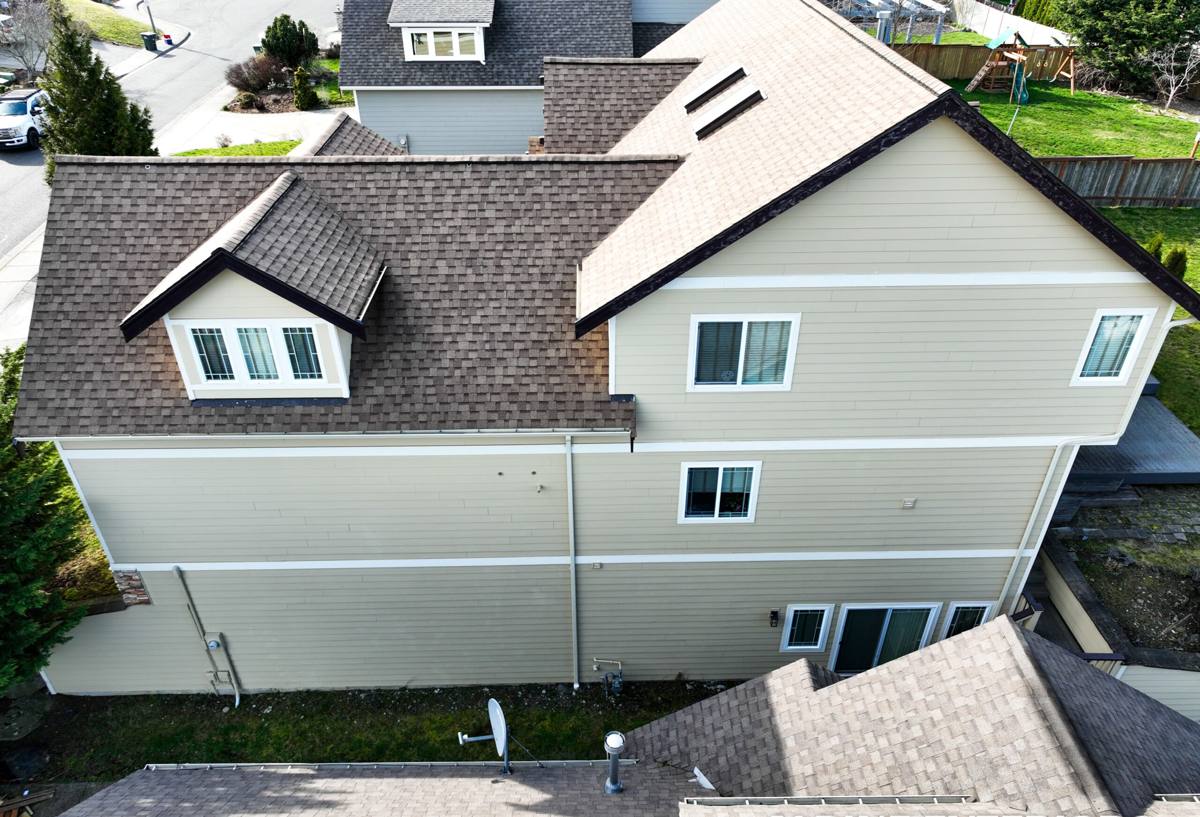
Repairs make sense when the damage is isolated and the rest of the roof still has life in it. Replacement makes sense once the roof is failing broadly, or once repair costs start adding up without solving the underlying problem. On Fidalgo Island, we look for these signs specifically:
- Granule loss heavy enough that you can see bare mat on multiple slopes, not just one weathered section
- Moss growth that comes back within a season or two of cleaning, even after treatment
- Soft or spongy decking felt underfoot during an inspection, a sign moisture has gotten past the roofing surface
- Repeated leaks around the same valley, chimney, or vent boot despite prior patch repairs
- Curling, cracked, or lifted shingle tabs across large areas rather than a few isolated spots
- Visible daylight or gaps in the attic where flashing or ridge details have pulled away
- A roof original to the home and past the practical service life of its material
What a Correct Roof Replacement Actually Involves
A roof replacement done right is about what happens underneath the new material as much as the material itself. Skipping steps here is exactly how a roof ends up needing repairs again in five years instead of holding up for decades.
Tear-Off and Deck Inspection
We remove the old roofing down to the deck rather than layering over it. That's the only way to actually see the sheathing — soft spots, rot around penetrations, or old water damage don't show up until the old material is gone. Any damaged decking gets replaced before anything new goes down.
Underlayment and Moisture Barrier
Given how much wind-driven rain this area sees, underlayment choice matters. Self-adhered membrane at eaves, valleys, and around penetrations gives a second line of defense in exactly the spots most likely to take on water, backed by synthetic underlayment across the rest of the field.
Ventilation
Balanced intake and exhaust ventilation keeps the attic dry and temperature-stable, which protects the decking from the underside and helps prevent the trapped condensation that speeds up moss growth and material breakdown from below. A lot of older Fidalgo Island homes are under-ventilated for the climate they're actually in, and that gets addressed as part of a full replacement.
Choosing Roofing Materials for Marine Exposure and Moss Season
There's no single "right" material for every home — it depends on the roof's exposure, the home's style, and your budget. Here's how the common options hold up against Fidalgo Island's specific conditions.
| Material | How It Handles Salt Air & Rain | How It Handles Moss Season |
|---|---|---|
| Architectural asphalt shingle | Good with corrosion-resistant flashing and fasteners; widely used and cost-effective | Algae-resistant shingle lines reduce staining; still needs periodic cleaning on shaded slopes |
| Standing seam metal | Excellent water shedding on steep pitches; requires marine-grade fasteners and coatings to resist salt corrosion long-term | Sheds moss more easily due to smooth, low-friction surface |
| Wood shake/shingle | Traditional look but higher maintenance in constant damp; more sensitive to installation quality | Naturally more prone to moss and rot without regular upkeep; we're upfront that this raises the long-term maintenance burden |
We install and stand behind asphalt and metal systems as our standard recommendation for this area because they give the most consistent long-term performance against salt air and moss for the maintenance effort involved. If you're set on a wood roof for its appearance, we'll walk you through what the upkeep schedule actually looks like so it's an informed decision, not a surprise.
Our Roof Replacement Process, Start to Finish
- Inspection and estimate — we get on the roof, check the deck where accessible, and give you a written scope and price before any work starts
- Material selection — we go over options based on your roof's exposure, pitch, and budget, not a one-size-fits-all pitch
- Permitting — we handle the permit process with the City of Anacortes so you don't have to track it down yourself
- Tear-off — old roofing removed down to the deck, job site protected and cleaned as we go
- Deck repair — any rotted or soft sheathing replaced before underlayment goes down
- Underlayment and flashing — moisture barrier and new flashing installed at all vulnerable points
- Ventilation check — intake and exhaust ventilation corrected or upgraded as needed
- Material installation — new roofing installed to manufacturer specification, not shortcuts
- Cleanup and walkthrough — magnetic sweep for debris, and a final walkthrough so you know exactly what was done and what's covered under warranty
What Drives the Cost of a Fidalgo Island Roof Replacement
Every roof is different, so we don't quote a number until we've actually seen yours. What we can tell you is which factors move the price up or down, so an estimate makes sense when you get it.
| Cost Factor | Why It Matters |
|---|---|
| Roof size and pitch | More square footage and steeper pitches mean more material and more labor time |
| Number of existing layers | Tearing off multiple old layers takes longer and costs more in disposal |
| Deck condition | Rotted or soft sheathing found during tear-off adds material and labor to replace it |
| Material choice | Standard architectural shingle, upgraded shingle lines, and metal all sit at different price points |
| Ventilation and flashing upgrades | Correcting under-ventilation or old flashing adds upfront cost but reduces future problems |
| Site access | Steep lots, limited driveway access, or difficult staging can add time to the job |
Full replacements on Fidalgo Island generally fall into a broad range depending on these factors — we'll give you a firm, itemized number after we've actually looked at your roof, not a guess over the phone.
Why a Local Fidalgo Island Crew Makes a Difference
A crew that already works this island knows which slopes on a given street tend to hold moss longest, which exposures take the worst of the wind off the water, and what the City of Anacortes expects for permitting and inspection. That local familiarity means fewer surprises during the job and a roof spec that's actually matched to how weather behaves on your specific lot, not a generic regional average. It also means if a warranty question or storm-related concern comes up down the road, you're calling a crew that's still local and still reachable — not a company that came through once and moved on.
Protecting Your Investment After Installation
A correctly installed roof still needs basic upkeep to hit its full service life in this climate. A little maintenance goes a long way toward avoiding an early second replacement.
- Keep gutters and downspouts clear so water isn't backing up under the roof edge
- Schedule moss and algae treatment on shaded or north-facing slopes before growth gets heavy
- Trim back overhanging branches to cut down on shade, debris, and moisture retention
- Have the roof checked after any major windstorm, even if nothing looks obviously wrong from the ground
- Keep an eye on attic ventilation — blocked vents undo a lot of what proper ventilation was installed to prevent
- Address small flashing or sealant issues early, before they turn into a deck-level repair
If your roof is showing wear, holding onto moss no matter how often it's cleaned, or simply old enough that repairs aren't worth it anymore, we're happy to take a look and give you a straight answer — no pressure, no obligation. Use the form below to request a free estimate for your Fidalgo Island home.