 Anacortes Roofing
 Fidalgo Island Decks Live in a Tougher Climate Than Most
Fidalgo Island sits right up against Puget Sound and Rosario Strait, which means homes here deal with a combination most inland Skagit County properties don't: salt-laden air off the water, long stretches of driving rain, and shaded, damp corners where moss and algae take hold and never fully let go. A deck built with generic, one-size-fits-all methods will show it within a few seasons — soft spots at the ledger, corroding fasteners, boards that stay slick with moss well into summer. A deck built with this specific climate in mind holds up the way it's supposed to.
This page is about composite decking done right for Fidalgo Island conditions specifically — not a general overview of composite decking as a product. If you're comparing materials in the abstract, that's a different conversation. If you already know you want composite and want to understand what "correct" looks like on this side of Anacortes, this is for you.
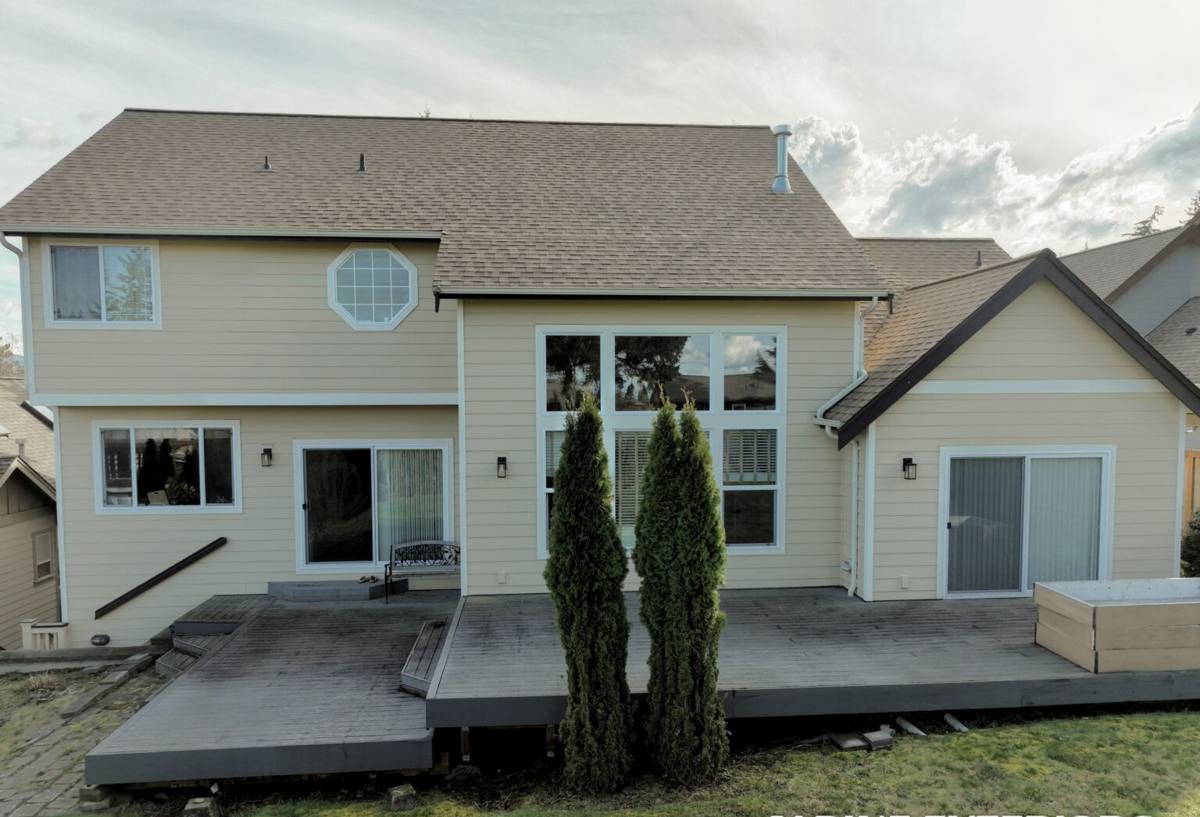
What Salt Air and Moss Season Actually Do to a Deck
Salt Air and Metal
Airborne salt accelerates corrosion on anything metal — screws, joist hangers, structural connectors, railing brackets. On a deck built inland, a standard galvanized fastener might last for years without issue. On Fidalgo Island, the same fastener can start showing rust streaks and weakening well before the decking above it shows any wear. The fasteners and hardware matter as much as the decking boards themselves, and they're the part homeowners never see once the deck is finished.
Moss, Shade, and Standing Moisture
Between the tree cover common on the island and the long wet season, a lot of Fidalgo Island decks have at least one section that rarely dries out — a north-facing corner, an area shaded by fencing or landscaping, or boards spaced too tight to shed water and debris. That's exactly where moss, algae, and mildew set up shop. Once established, they hold moisture against the board surface, which shortens the life of the material and turns the deck into a slip hazard for a good chunk of the year.
Why Composite Makes Sense for This Environment
Wood decking can absolutely be done well here, but it demands a maintenance schedule most homeowners don't stick to — annual cleaning, periodic sealing, and close attention to any board that starts cupping or splitting. Composite decking, when it's a quality capped product installed correctly, removes most of that burden. It doesn't absorb water the way wood fibers do, it doesn't need sealing, and a capped polymer shell resists the surface staining and mildew growth that untreated wood is prone to in a shaded, damp environment.
That said, composite isn't maintenance-free, and it isn't immune to moss or algae growth on the surface — nothing that sits outside in a wet climate is. The difference is that moss and mildew sit on top of a capped composite board rather than working into the fibers, which makes cleaning straightforward instead of a losing battle. We'll walk through that honestly rather than oversell it.
What a Correctly Built Composite Deck Involves
Most deck problems we get called out to fix on Fidalgo Island aren't failures of the decking material — they're failures in the parts underneath it that nobody thinks about until something goes wrong. A correct build addresses each of these:
- Ledger flashing: Where the deck attaches to the house is the single most common point of water intrusion into the rim joist. Proper flashing here isn't optional in a climate with sustained driving rain.
- Joist tape: A strip of waterproof tape over the top of every pressure-treated joist keeps water from pooling in fastener holes and slowly rotting the joist from the inside — a slow failure you won't see until the deck starts to feel spongy.
- Board spacing and airflow: Composite boards need consistent gapping for drainage and expansion. Too tight, and water and debris sit on the surface, feeding moss growth. Too loose, and the deck feels and looks unfinished.
- Fastener selection: Stainless steel or marine-grade coated fasteners and hardware, not standard galvanized, given the salt air off the Sound.
- Substructure and footings: Post footings need to sit below the local frost line and bear on solid, well-drained soil — something that varies more than people expect across Fidalgo Island's mix of soil types.
- Hidden fastener systems where appropriate: A clean, screw-free top surface not only looks better, it removes dozens of small penetration points where water could otherwise find its way into the board core.
Skip any one of these and the deck can still look fine on installation day. The problems show up eighteen months to five years later, usually as soft spots near the house or fastener corrosion nobody notices until a board comes loose.
Our Process on a Fidalgo Island Composite Deck
We start with an on-site look at the specific conditions your lot presents — sun exposure, tree cover, wind exposure off the water, existing drainage, and the condition of anything we're building on top of or replacing. From there:
- We assess the existing structure (if any) and the ledger connection to the house, since that's the area most likely to have hidden moisture damage.
- We confirm footing depth and placement against local frost-line and setback requirements before any digging starts.
- We build or repair the substructure with joist tape and corrosion-resistant hardware as standard, not an upgrade.
- We install decking with manufacturer-specified spacing and fastening, adjusted where your site's shade or drainage calls for it.
- We finish railings and edge details to current code, and walk the deck with you before we call it done.
None of this is unusual for a contractor who builds decks correctly — but it's worth spelling out because it's exactly where corners get cut on a rushed job, and those cuts are invisible until the deck starts to fail.
Comparing Composite Decking Tiers
Composite products vary quite a bit in construction and price. Here's how the general categories stack up for a marine, high-moisture environment like Fidalgo Island:
| Board Type | Moisture & Moss Resistance | Maintenance | Typical Installed Cost* |
|---|---|---|---|
| Uncapped composite | Fair — outer surface can absorb moisture and stain over time | Periodic cleaning; more prone to surface mildew in shaded areas | Lower end of the range |
| Capped composite (cap on wear surface only) | Good — protected top surface, exposed edges more vulnerable | Light cleaning; watch cut edges and board ends | Mid-range |
| Fully capped composite (all four sides) | Best — sealed against moisture on every exposed face | Occasional rinse and light scrub in shaded, moss-prone areas | Higher end of the range |
*Costs vary by board profile, railing choice, substructure condition, and deck size — we'll give you a firm number after seeing your site, not a number pulled from a national average.
Permits and Code Considerations in Skagit County
Most deck projects on Fidalgo Island require a permit through the City of Anacortes or Skagit County, depending on your property's location, and that permit process typically covers footing depth, structural attachment to the house, and guardrail and baluster requirements if the deck sits above a certain height. We handle the permit process as part of the job rather than leaving it to the homeowner to sort out — it's a normal part of building a deck correctly, not an extra step.
Choosing Boards and Colors for a Marine Environment
Darker composite boards absorb more heat, which matters on the rare hot, sun-exposed days but generally isn't a major issue in this climate compared to areas with real summer heat. What matters more here is how a color and finish hide or show water spotting, pollen, and the fine grit that blows in off the water. Lighter, streaked, or wood-grain finishes tend to hide seasonal grime better than solid dark tones, which is worth thinking about if your deck sits under trees or gets regular salt spray in winter storms.
Keeping a Fidalgo Island Composite Deck Looking Right
Composite decking is low-maintenance, not no-maintenance. A simple seasonal routine keeps it performing the way it's supposed to:
- Sweep debris off the boards regularly, especially in fall and during moss season, so organic material doesn't sit and trap moisture.
- Rinse the deck with a garden hose a few times a year; avoid pressure washers on composite unless you know the manufacturer's PSI limits.
- Use a soft-bristle brush and a mild composite-safe cleaner on any spots where moss or algae start to take hold, rather than letting it spread.
- Check railings, stairs, and fastener points once a year for any looseness or early corrosion, particularly if your deck faces the water.
- Keep gutters and downspouts near the deck clear so runoff isn't dumping extra water onto or under the structure.
Why a Local Fidalgo Island Crew Matters Here
Building decks in Anacortes and on Fidalgo Island specifically means knowing which lots get hit hardest by wind and salt spray off the Sound, which neighborhoods sit in enough shade to need extra attention to moss and drainage, and what the local permitting offices actually expect to see on a plan. That's different knowledge than what a crew that mostly works drier, inland parts of the county brings to the table. It shows up in the small decisions — fastener choice, flashing detail, board spacing — that determine whether a deck is still solid in ten years or starting to show problems in three.
If you're thinking about a composite deck for your Fidalgo Island property, we're glad to come take a look and talk through what your specific site needs — sun exposure, shade, drainage, the works — and give you a straightforward, no-pressure estimate. There's a form below to get that started.