 Anacortes Roofing
 Fidalgo Island Roofs Take a Different Kind of Beating
Anacortes sits on Fidalgo Island, surrounded by saltwater on nearly every side, and that location shapes what a roof needs here more than almost anything else. A roof twenty miles inland in Skagit County deals with rain and wind. A roof on Fidalgo Island deals with rain, wind, salt-laden air off the Sound, and a long stretch of the year where shaded slopes barely dry out between storms. That combination is why we treat roof repair on the island as its own job, not a smaller version of a generic repair.
Most of what we get called out for isn't dramatic. It's a handful of lifted shingles after a windstorm, a soft spot near a valley, a stain spreading across a bedroom ceiling, or moss that's crept from the north slope down toward the gutter line. None of it looks urgent from the ground. All of it gets worse the longer it sits, especially in a climate that doesn't give a roof much of a chance to dry out and reset.
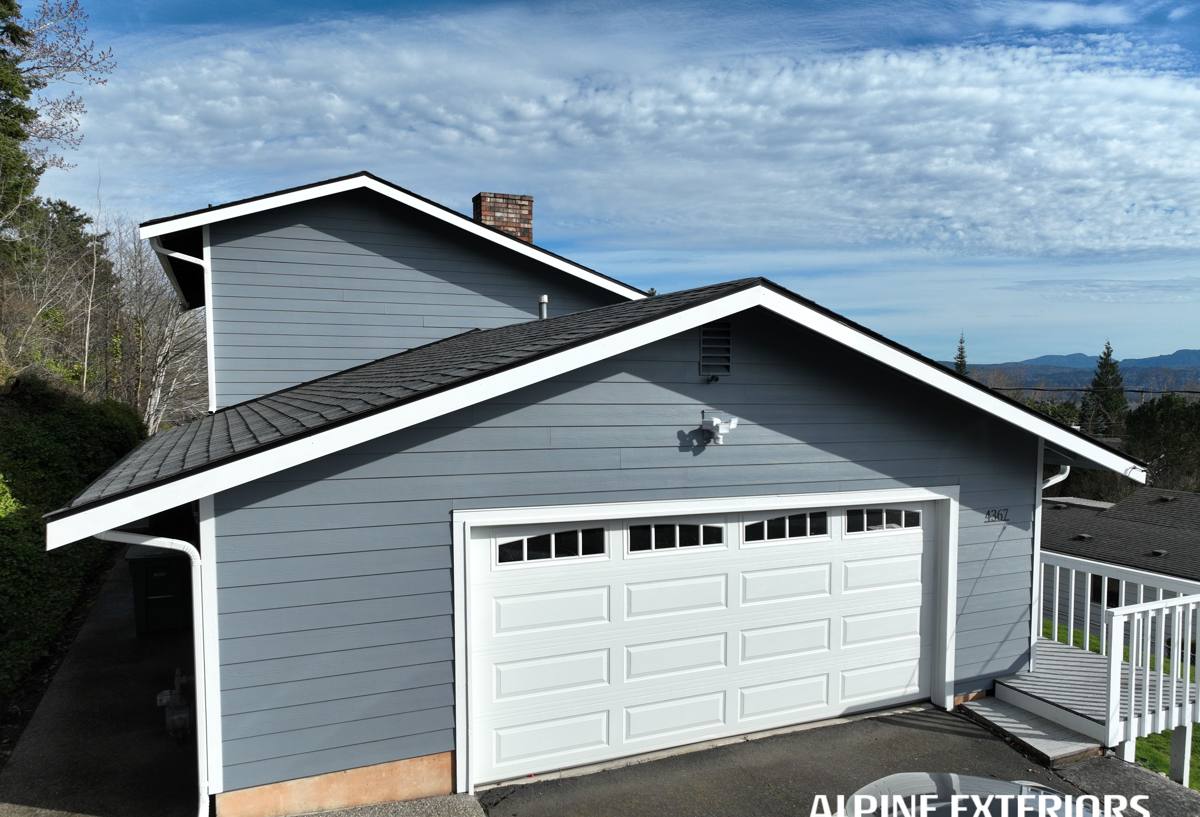
What Salt Air, Rain, and Moss Actually Do to a Roof
Salt Air and Metal Fatigue
Airborne salt accelerates corrosion on anything metal — flashing, fasteners, valley metal, vent caps, gutter hardware. It's a slow process, but it's constant, and it doesn't stop just because the roof still looks fine from the driveway. We see it most often in fastener heads that have rusted and backed out slightly, and in flashing seams where the protective coating has worn thin from years of salt exposure combined with normal weathering.
Driving Rain and Wind-Driven Water
Rain that comes in sideways behaves differently than rain that falls straight down. It gets pushed up under shingle edges, into gaps around vents and chimneys, and along any seam where the flashing wasn't lapped correctly to begin with. A roof can be watertight in a light rain and still leak in a windstorm, because the water is being forced uphill against gravity instead of running off. This is one of the most common reasons a "small" leak only shows up during certain storms and not others.
Moss, Shade, and Slow Drying
Moss needs moisture and shade, and a lot of Fidalgo Island's tree cover and marine humidity gives it plenty of both. North-facing and heavily shaded slopes can stay damp for days after a storm passes. Moss holds that moisture against the roofing material, works its way under shingle tabs as it grows, and lifts edges just enough to let water find its way underneath. Left alone through a few wet seasons, moss growth goes from a cosmetic issue to a structural one.
Signs a Fidalgo Island Roof Needs Repair, Not Replacement
Most roofs don't fail all at once — they show warning signs first. Catching these early is usually the difference between a repair bill and a full re-roof.
- Granules collecting in gutters or at downspout outlets, especially after a windy rain
- Shingles that look cupped, curled, or lifted at the edges, particularly on shaded slopes
- Moss or dark streaking concentrated on north-facing or tree-covered sections
- Rust staining around metal flashing, vent boots, or fastener heads
- Soft or spongy decking felt underfoot near valleys or roof-wall intersections
- Ceiling stains that appear only during wind-driven storms, not steady rain
- Daylight visible around chimney flashing or plumbing vent boots from the attic
- Gutters pulling away from the fascia or overflowing during moderate rain
Any one of these on its own is usually a straightforward repair. Several at once, especially combined with an older roof, is worth an honest look before deciding which direction makes sense.
What a Correct Repair Actually Involves
Diagnosis Before Anything Gets Touched
A repair is only as good as the diagnosis behind it. Water doesn't always show up where it enters — it can travel along decking or rafters before dripping somewhere else entirely. We trace the path back to the actual entry point rather than patching where the stain appears, because patching the wrong spot means the same leak comes back after the next storm.
Matching Materials, Not Just Covering Gaps
On a shingle roof, that means using shingles that match the existing course as closely as possible, both for appearance and so the repair sheds water the way the surrounding roof does. On metal or cedar sections, it means using compatible fasteners and flashing that won't react badly against the existing material, which matters more here than it would somewhere without constant salt exposure.
Flashing and Underlayment Get Rebuilt, Not Caulked
A lot of roof leaks near chimneys, skylights, and wall intersections come down to failed flashing, not failed shingles. Caulk or roof cement over old flashing is a short-term cover-up — it buys a season or two, then fails again, usually during the next hard blow. A correct repair replaces the flashing and underlayment at the problem area so the fix holds through actual wind-driven rain, not just a garden hose test.
Addressing Moss as Part of the Repair
If moss caused or contributed to the damage, removing it and treating the affected area is part of the job, not an upsell tacked on afterward. Leaving moss in place after a repair just sets up the same failure to happen again on the same slope.
Roof Repair Cost Factors on Fidalgo Island
Every repair is different, but the same handful of factors drive most of the cost difference between a simple fix and a more involved one.
| Factor | Why It Matters Here |
|---|---|
| Roof age and material | Older shingles may no longer be produced in a matching color or profile; older metal may have coating that's already degraded from salt exposure |
| Extent of moss or algae damage | Surface growth is a quick treatment; growth that's lifted shingles or degraded decking requires more material replacement |
| Flashing condition | Rusted or undersized flashing around chimneys, skylights, and walls often needs full replacement rather than resealing |
| Roof pitch and access | Steeper slopes and sections shaded by trees take longer to work safely and dry out before repair |
| Decking condition | Soft or water-damaged decking under the repair area adds material and labor beyond the visible shingle work |
| Number of repair locations | Several smaller issues across one roof are often more efficient to address in a single visit than one at a time |
We give a firm price after a physical inspection, not a phone estimate, because guessing on any of these factors from a description alone tends to be wrong in one direction or the other.
How We Approach a Repair Call
- Inspect the roof from the ground and up close, including the attic side where accessible, to trace the actual water path
- Check flashing, fasteners, and moss coverage across the whole roof, not just the reported problem area — one leak often has company
- Walk you through what we found in plain terms, including whether a repair makes sense or a section is better replaced outright
- Give a written price for the actual repair before any work starts
- Complete the repair with matched materials and rebuilt flashing where needed, not patched over the top of the old
- Clean up the work area, including cleared moss debris and old material, before we leave
Why a Crew That Already Works Fidalgo Island Matters
Roofing crews that mostly work drier, inland areas don't always account for how differently a roof ages here. A repair approach that's perfectly reasonable in a low-humidity, low-salt environment can fall short on a roof that faces constant marine air and a long moss season. Knowing which slopes on the island tend to hold moisture, which fastener and flashing choices actually hold up against salt exposure, and how wind off the water behaves differently than a straight-down rainstorm all come from having done this work here repeatedly, not from a general roofing background.
It also matters for scheduling. Storm damage on the island tends to cluster — one windstorm off the Sound can generate repair calls across several neighborhoods at once. A crew already working locally can respond faster and knows which temporary measures actually hold up until a full repair can be scheduled, versus which ones fail within days.
Maintenance That Extends the Life of a Repair
A repair holds up longer when it's not fighting the same conditions that caused the original damage. A few habits make a real difference on an island roof:
- Keep gutters and downspouts clear, especially heading into fall storms — overflow forces water back under the roof edge
- Trim back branches overhanging shaded slopes to cut down on moss regrowth and debris buildup
- Have moss treated before it spreads across a slope, not after it's already lifted shingles
- Rinse accumulated salt residue off metal flashing and fasteners during routine gutter cleaning where accessible
- Get a post-storm check after any windstorm strong enough to move patio furniture or drop large branches
None of this replaces a proper inspection, but it buys time between repairs and helps a repair actually last through the wet season instead of reopening the following winter.
Get a Straight Answer on Your Roof
If you're dealing with a leak, moss creeping across a slope, or just want an honest read on a roof's condition before the next round of Fidalgo Island storms, we're happy to take a look. The estimate is free, there's no pressure to sign anything on the spot, and if a section doesn't need work yet, we'll tell you that too. Fill out the form below and we'll get a visit scheduled.