 Anacortes Roofing
 Building Decks for Fidalgo Island's Marine Climate
Fidalgo Island sits where saltwater, wind, and rain all compete for space on the same afternoon. A deck built here does a different job than one built inland — it has to shrug off salt-laden air blowing in off Rosario Strait and the Guemes Channel, shed a long, wet Skagit County winter without trapping moisture underneath, and survive a moss season that seems to start earlier every year. Homeowners who move to Fidalgo Island from drier climates are often surprised how fast an untreated or poorly detailed deck starts showing problems — soft spots, black streaking, corroded hardware, boards that cup or crown. None of that is inevitable. It's a result of choices made in the framing and fastener stage that never get seen once the decking goes down.
We build and repair decks across Anacortes and the surrounding island, and Fidalgo Island's mix of waterfront exposure and forested lots means we're constantly balancing two different problems: salt corrosion near the water and moss/algae growth in shaded, tree-covered yards. A deck built to a generic spec sheet from a big-box store rarely accounts for both.
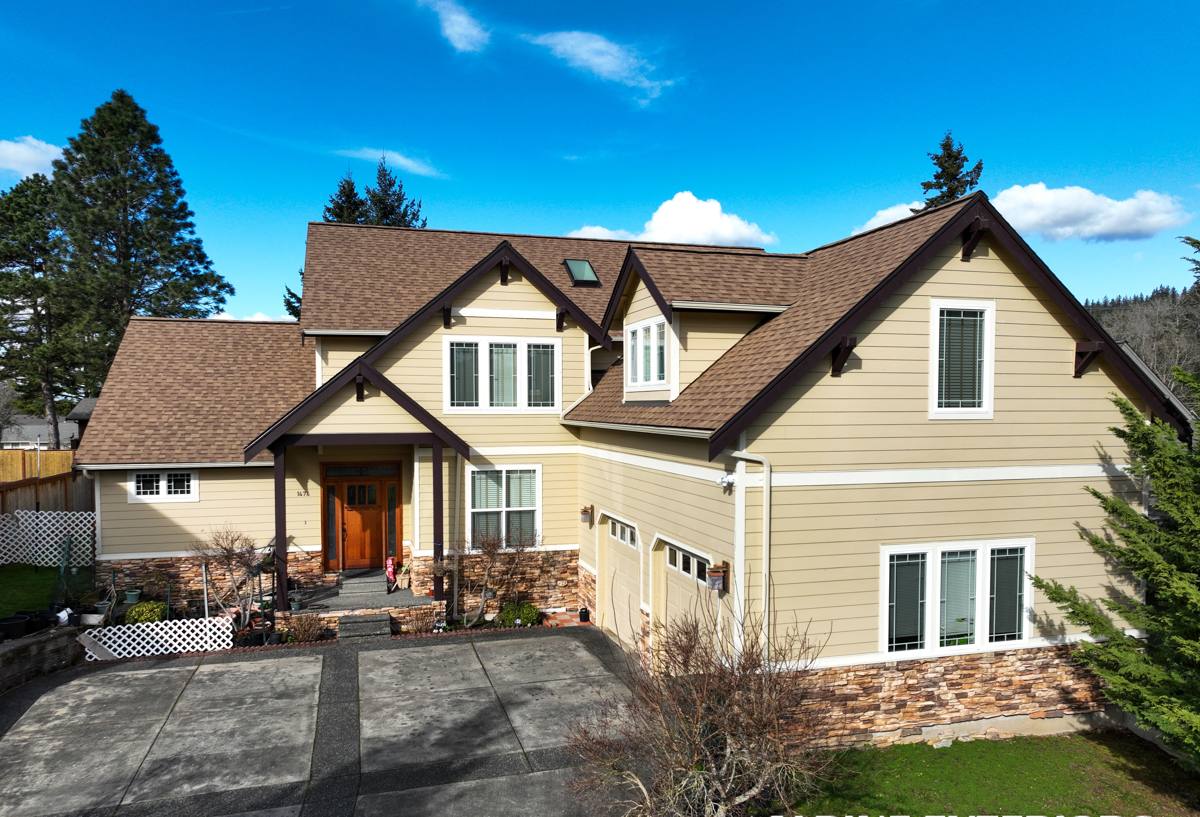
What Fidalgo Island's Climate Actually Does to a Deck
Salt Air and Corrosion
Even homes several blocks off the water get salt-bearing wind, especially on the west and north sides of the island. Salt accelerates corrosion in fasteners, joist hangers, and any exposed metal connector. A deck that looks fine on the surface can have hardware quietly rusting underneath for years before a board finally fails. This is why fastener and hardware selection matters more here than it would in a landlocked town.
Driving Rain and Standing Water
Skagit County gets a long, steady wet season, and Fidalgo Island's exposure to storms coming off the strait means rain often arrives sideways, not straight down. That drives water into places a simple flat deck design doesn't account for — under ledger boards, behind rim joists, into end grain that isn't sealed. Standing water on a deck surface, or trapped water underneath it, is the single biggest driver of rot and structural failure in this climate.
Moss, Algae, and Shade
Many Fidalgo Island lots are wooded or partially shaded, and combined with the damp climate, that's ideal moss and algae territory. Moss holds moisture against the wood surface, and on composite or wood decking it also creates a slip hazard that gets worse through fall and winter. A deck design that ignores airflow and sun exposure will grow moss faster than one that accounts for it from the start.
What a Correctly Built Deck Requires Here
A deck that holds up on Fidalgo Island isn't built differently in a dramatic way — it's built carefully in a handful of specific places that generic construction skips.
- Stainless or hot-dip galvanized hardware rated for coastal exposure, not standard zinc-coated fasteners that corrode within a few seasons near salt air
- Flashed ledger board connections where the deck attaches to the house, so wind-driven rain can't work its way behind the ledger and into the wall framing
- Proper joist spacing and blocking sized for the actual span and load, not the minimum the material allows
- Ventilation gaps and grading underneath the deck so air can move and water doesn't pool against framing
- Sealed or capped end cuts on any wood decking, since raw end grain is where rot almost always starts first
- Drainage-conscious layout — board spacing and slope that actually shed water instead of holding it
Skip any one of these and the deck may look identical on installation day, but the timeline to problems shortens considerably.
Choosing Materials: Wood vs. Composite for This Climate
There's no universally "right" decking material — the right choice depends on how much upkeep a homeowner wants to do and what look they're after. Here's how the common options actually perform on Fidalgo Island specifically.
| Material | How It Handles Salt Air & Rain | Moss/Algae Behavior | Maintenance |
|---|---|---|---|
| Pressure-treated fir/pine | Good if sealed regularly; end grain and fasteners are the weak points | Prone to growth if not cleaned annually | Re-seal every 1-2 years, clean regularly |
| Cedar | Naturally rot-resistant, but still needs sealing near the water | Moderate resistance, still needs occasional cleaning | Re-stain/seal every 2-3 years |
| Composite decking | Excellent — doesn't absorb water or corrode | Can still grow surface algae in constant shade; cleans off easily | Occasional washing, no sealing needed |
| PVC decking | Excellent, fully water-resistant | Low, but shaded areas still need periodic cleaning | Lowest maintenance of the group |
We're honest with homeowners about trade-offs rather than pushing one product. Wood costs less upfront and gives a natural look many people want on an island property, but it demands consistent maintenance to hold up against this climate — skip a season of sealing and you're playing catch-up. Composite and PVC cost more initially but remove most of the maintenance burden, which matters a lot to owners who aren't local year-round or simply don't want a recurring chore. The framing and fastener standards underneath, though, don't change based on which decking material sits on top — that part of the job is non-negotiable regardless of budget.
Our Process for a Fidalgo Island Deck Project
1. Site Assessment
We look at sun exposure, tree cover, proximity to the water, existing drainage, and the condition of any current structure. A deck on a shaded, tree-lined lot gets a different moss-prevention approach than one in open, wind-exposed waterfront yard.
2. Design and Material Selection
We walk through material options honestly, including realistic maintenance expectations, so the decision matches how the homeowner actually wants to spend their time — not just what looks best in a showroom.
3. Framing and Structural Work
This is where the climate-specific decisions happen: corrosion-resistant hardware, proper ledger flashing, correct joist sizing, and ventilation underneath. It's the least visible part of the job and the most important.
4. Decking Installation
Boards are laid with attention to drainage and spacing, and any cut ends are sealed before installation, not after.
5. Final Walkthrough
We go over maintenance expectations specific to the material chosen — what to clean, how often, and what warning signs to watch for given Fidalgo Island's conditions.
Deck Maintenance Realities on Fidalgo Island
Even a well-built deck needs upkeep, and what that upkeep looks like depends heavily on where the property sits relative to water and tree cover. A checklist that actually fits this island's conditions:
- Sweep off standing leaves and debris regularly, especially in fall — trapped organic matter holds moisture and feeds moss
- Rinse salt residue off railings and hardware periodically if the home is near the water
- Check for moss buildup starting in early fall, before it gets a full season to establish
- Inspect fastener heads and joist hangers yearly for early rust or corrosion, particularly on waterfront properties
- Re-seal wood decking on schedule — don't wait until it visibly needs it, since damage often starts before it's visible
- Confirm gaps between boards stay clear so water keeps draining through rather than pooling
Common Deck Problems We See on Fidalgo Island
Most of the deck repairs we get called out for trace back to the same handful of causes, and they're worth knowing before they become expensive:
- Rusted or failing hardware from standard fasteners that weren't rated for coastal exposure
- Soft or rotting ledger boards where flashing was skipped or done poorly at the original build
- Persistent moss and slip hazards in shaded corners that never dry out between rains
- Cupping or warping boards from wood decking that wasn't sealed on a consistent schedule
- Structural sag from undersized joists that were fine on paper but not once seasonal moisture weight was factored in
Most of these are preventable with the right build in the first place, and the ones that already exist are almost always fixable without a full rebuild if they're caught early.
Why Local Deck-Building Experience Matters
A contractor who mostly builds in drier, inland parts of Skagit County can still build a structurally sound deck — but they may not default to coastal-rated hardware, ledger flashing detail, or moss-conscious layout unless they're specifically thinking about it. Crews who work Fidalgo Island regularly build those choices in automatically because we see what happens to decks that skip them. We're not guessing at what this climate does to a deck — we're repairing the results of that guesswork on a regular basis, and we build accordingly from day one.
If you're planning a new deck or need an honest look at what's going on with an existing one, we're happy to walk the site with you and talk through what your specific lot and exposure call for. Reach out for a free, no-pressure estimate using the form below.