 Anacortes Roofing
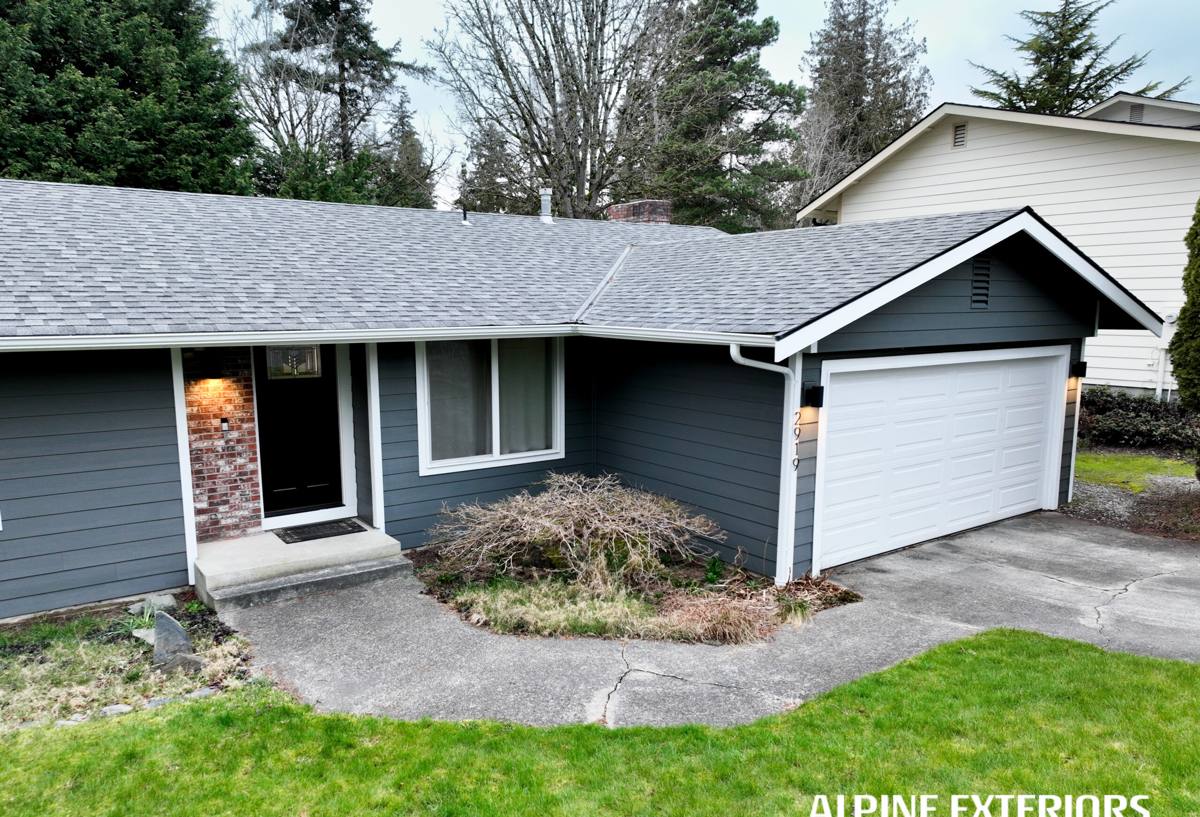
 Fidalgo Island Puts Siding to the Test
Fidalgo Island sits right where Skagit County's rain meets the salt air of Rosario Strait and Guemes Channel, and that combination is harder on a house than most homeowners realize until they're dealing with the results. Siding here doesn't just get wet — it gets wet, salted, and shaded for weeks at a time under a low winter sun and heavy tree cover in many of the island's neighborhoods. A siding job that would hold up fine in a drier inland town can fail early on Fidalgo Island if it wasn't specified and installed with this exposure in mind.
This page is about one thing: what a correct siding installation looks like for a Fidalgo Island home, and why the details matter more here than they do just a few miles inland.
What the Local Climate Actually Does to Siding
Salt Air and Corrosion
Homes closer to the water pick up airborne salt that settles on siding, trim, and especially fasteners. Over years, salt exposure accelerates corrosion in anything but the right grade of fastener and flashing metal, and it can dull or degrade finishes that weren't built to handle it. This is a slow, quiet problem — you don't see it happening, you see the results five or ten years later.
Driving Rain
Storms coming off the water don't just fall straight down here — wind-driven rain gets pushed sideways into wall assemblies, seams, and butt joints. Any weak point in the water-resistive barrier, flashing, or caulking becomes an entry point, and once moisture gets behind siding it can sit there because the same marine air that brings the rain also slows down drying.
Moss and Shade
A long moss season is part of life on Fidalgo Island. Shaded north walls, tree-lined lots, and the region's mild, wet winters give moss and algae months to establish themselves on any surface that stays damp. Moss holds moisture against siding, and on materials that aren't dimensionally stable or that absorb water, that constant dampness shortens the material's working life and invites paint failure.
Freeze-Thaw and Temperature Swings
Fidalgo Island doesn't see extreme cold often, but it does see repeated freeze-thaw cycling in winter. Materials that swell when wet and don't fully dry before a freeze are more prone to cracking, splitting, and finish failure over time — another reason material choice matters as much as workmanship.
Why We Install Only James Hardie Fiber Cement Here
We standardized on James Hardie fiber cement siding for every home we side, including on Fidalgo Island, and we don't install vinyl, LP SmartSide, cedar, primed spruce, Cemplank, or Allura. That's not a marketing position — it's a professional standard built around what actually holds up in this climate.
- Non-combustible core: fiber cement doesn't feed a fire the way wood-based or engineered wood products can, which matters anywhere with dry summer stretches and wildfire smoke seasons.
- Dimensionally stable: it doesn't swell and shrink with moisture the way wood-based siding does, which matters directly for a place with this much rain and humidity.
- Factory-applied ColorPlus finish: a baked-on finish that resists fading and chalking far better than field-applied paint, and it's engineered to shed the kind of grime and mildew that a shaded, damp lot produces.
- Climate-engineered HZ product lines: Hardie makes region-specific formulations, and the HZ5 line used in the Pacific Northwest is engineered for exactly this combination of moisture, humidity, and temperature swing.
- Strong transferable warranty: a real, honored warranty backing the product matters more on a house exposed to salt air and driving rain than it does somewhere drier.
We're not saying every other product is worthless — vinyl is inexpensive and low-maintenance in mild conditions, and cedar has real appeal for people who want a natural look and are willing to maintain it. But when we weigh moisture behavior, maintenance burden, and long-term performance specifically for homes exposed to Fidalgo Island's salt air and rain, fiber cement is what we're willing to put our name behind — and it's the only product we install.
What a Correct Installation Involves
Siding is a system, not just a set of boards nailed to a wall. On a marine-exposed island lot, every layer of that system earns its keep.
The Water-Resistive Barrier
A properly lapped, sealed weather-resistive barrier behind the siding is the last line of defense if wind-driven rain gets past the cladding. Seams, penetrations, and transitions all need to be taped or sealed correctly — this is invisible work, but it's the difference between a wall that dries out and one that doesn't.
Flashing at Every Penetration
Windows, doors, hose bibs, light fixtures, and deck ledgers are all places where water wants to get behind the siding. Correct flashing details — head flashing, kick-out flashing at roof-wall intersections, and proper drip caps — matter more on a site that gets frequent, wind-driven rain than they do somewhere with light, straight-down precipitation.
Fastening and Clearances
Fiber cement has to be fastened per manufacturer spec: correct fastener type and spacing, and correct penetration depth so the board isn't over-driven or under-driven. Near salt air, fastener material matters — corrosion-resistant fasteners rated for the exposure are non-negotiable, not an upsell.
Ground and Roof Clearances
Hardie specifies minimum clearances from grade, roofing, decks, and walkways so the bottom edge of the siding isn't sitting in a splash zone or trapped moisture pocket. On lots with limited drainage or a lot of shade, we don't shave these clearances to make a look work — we hold them because that's what keeps the bottom courses from failing first.
Caulking and Joint Treatment
Butt joints, trim intersections, and penetrations get sealed with the right sealant for fiber cement, applied correctly — not overused as a substitute for proper flashing, but used where it belongs.
Our Process on a Fidalgo Island Home
- On-site assessment: we walk the exterior, check the existing wall assembly, note shaded and wind-exposed faces, and look for any moisture or rot already present.
- Tear-off and inspection: once old siding comes off, we inspect sheathing for hidden damage before anything new goes up — this is often where problems from a prior installation surface.
- Repair as needed: any compromised sheathing or framing gets addressed before the weather barrier goes back on. Covering up existing damage is not something we'll do.
- Weather barrier and flashing: correctly lapped barrier, sealed seams, and flashing at every penetration and transition.
- Hardie installation: installed to manufacturer spec — fastening, clearances, joint treatment, and ColorPlus-safe handling to protect the factory finish during install.
- Final inspection and cleanup: a walk-through checking clearances, caulk lines, and finish before we call the job done.
Material Comparison for This Climate
| Material | Behavior in Salt Air / Rain | Moss/Shade Resistance | Maintenance Burden |
|---|---|---|---|
| James Hardie fiber cement | Dimensionally stable, non-combustible, factory finish resists moisture-driven fading | Good — surface doesn't swell or rot under sustained dampness | Low — occasional wash, no repainting cycle |
| Vinyl siding | Doesn't rot but can warp/fade with sun and temperature swings; seams can be entry points | Fair — surface itself is inert but traps moisture behind it if installed loose | Low, but limited repair options if damaged |
| Cedar / wood | Absorbs moisture, prone to swelling, cupping, and rot without diligent upkeep | Poor without regular treatment — moss and mildew take hold quickly in shade | High — regular refinishing and inspection required |
| LP SmartSide / engineered wood | Better than raw wood but still moisture-sensitive at cut edges and joints | Fair — edge sealing and maintenance are critical to keep moisture out | Moderate — edge and joint maintenance is ongoing |
What Drives Cost on a Fidalgo Island Siding Job
Every home is different, but a few factors consistently move the price on island jobs more than they would on an inland, less-exposed lot:
| Factor | Why It Matters Here |
|---|---|
| Existing sheathing condition | Salt air and past moisture intrusion sometimes mean hidden repair work before new siding can go on |
| Wall exposure and complexity | Wind-exposed water-facing walls and shaded, moss-prone walls both need extra flashing and clearance attention |
| Trim and detail work | More window, door, and roof-wall transitions mean more flashing details, which adds labor |
| Access and site conditions | Tree cover, tight lot lines, and slope common on island properties can affect scaffolding and staging |
| Color and finish selection | ColorPlus finishes vary in price point by collection; this is a smaller factor than the ones above |
A Pre-Installation Checklist Worth Asking About
- Is the existing sheathing being inspected before new siding goes on, not just covered over?
- Is the weather-resistive barrier being lapped and sealed correctly, with taped seams?
- Are fasteners corrosion-resistant and rated for the exposure, not just whatever's on the truck?
- Are manufacturer-specified clearances from grade, roofing, and decks being held, not shaved for looks?
- Is flashing being installed at every window, door, and roof-wall intersection — not just caulk covering a gap?
- Does the crew have experience specifically with marine-exposed, shaded, or moss-prone sites on the island?
Why It Matters That We Already Work Fidalgo Island
A crew that's done siding elsewhere in Skagit County but hasn't worked much on Fidalgo Island specifically can still do competent work — but they're learning the island's particular exposure patterns on your house. A crew that already works here knows which walls on a typical island lot take the worst of the wind-driven rain, where moss tends to establish first, and which details need extra attention because of the salt air. That local pattern recognition shows up in the small decisions made on-site — where to add an extra flashing detail, where clearance needs to be generous rather than minimum-code — that don't show up on a quote but show up in how the house performs ten years later.
Maintenance After Installation
Correctly installed Hardie siding is low-maintenance, not no-maintenance. On Fidalgo Island specifically, we recommend homeowners periodically check for moss or algae buildup on shaded walls and gently wash it off before it has time to hold moisture against the surface. It's also worth a visual check of caulk lines and trim joints every year or two, since UV and moisture exposure eventually age any sealant, and catching a failed joint early is a five-minute fix rather than a repair.
Get a Free, No-Pressure Estimate
If you're weighing a siding replacement or new installation on a Fidalgo Island home, we're happy to walk the exterior with you, point out what your specific site and exposure call for, and give you a straightforward estimate — no pressure, no hard sell. Use the form below to get started.