 Anacortes Roofing
 Fidalgo Island Puts Extra Demands on a Roof
A new roof on Fidalgo Island has to do more work than the same roof would twenty miles inland. Being surrounded by saltwater means the air itself carries salt, and that salt settles on every exposed surface of a roof — fasteners, flashing, vents, and the shingles or panels themselves. Add in the driving rain that comes off the water during fall and winter storms, plus a mild, damp climate that keeps moss and moss spores active for most of the year, and you have a combination that punishes a roof built to a generic spec. A roof installed correctly for Fidalgo Island conditions holds up. One built to a lowest-cost, one-size-fits-all standard tends to show corrosion, moss growth, and leaks years before it should.
This page is about one job: putting on a new roof for a Fidalgo Island home, done in a way that accounts for the salt air, the wind-driven rain, and the moss season, rather than treating this as a generic reroof.
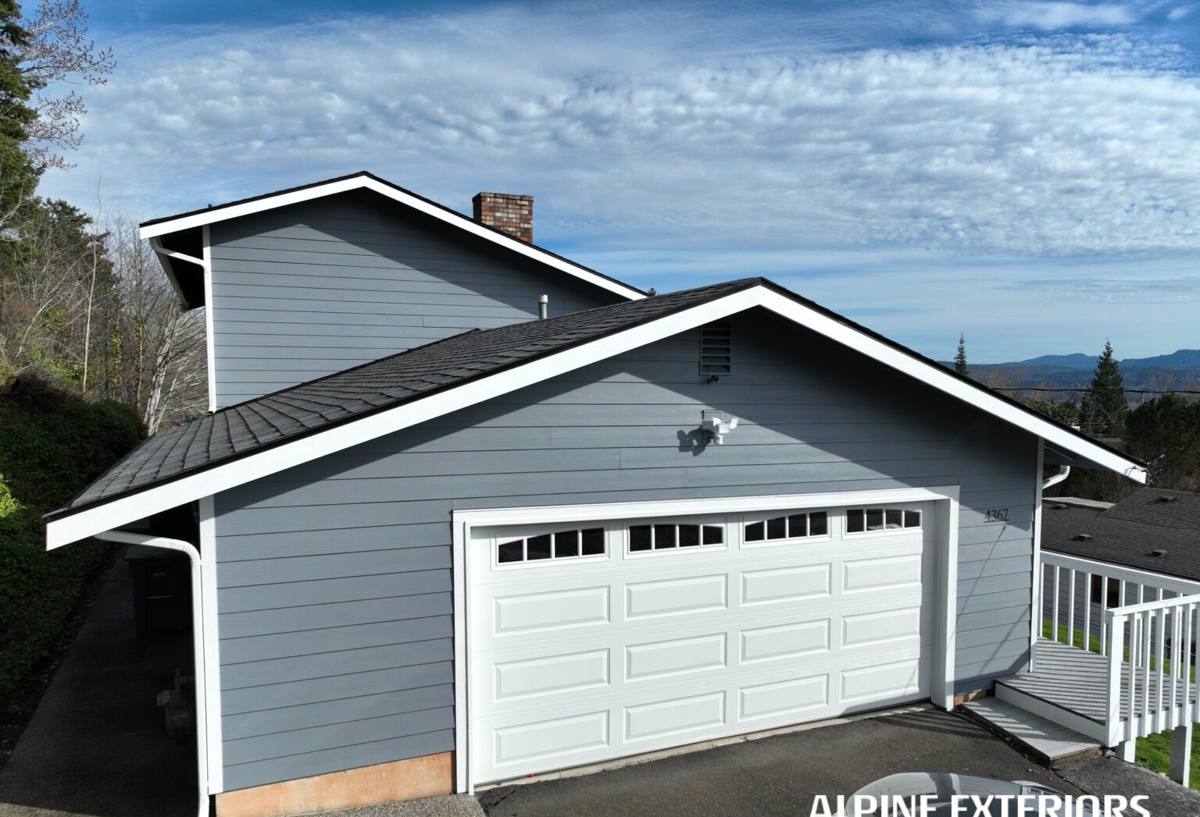
What Salt Air Actually Does to a Roof
Salt air is corrosive to unprotected metal. On a roof, that shows up in a few predictable places long before the field of the roof fails:
- Exposed fasteners and nail heads that aren't properly coated or capped
- Flashing around chimneys, skylights, and roof-to-wall transitions, especially at seams and cut edges
- Metal roof-vent housings and turbine vents
- Gutter hangers, drip edge, and other trim pieces installed with the wrong fastener type
None of this means metal can't be used on a roof near saltwater — it can, and it often performs very well. It means the metal that touches this roof needs to be rated for coastal exposure and installed with fasteners and flashing that match, rather than whatever happened to be in the truck. This is a spec decision made at the estimate stage, not something to catch after the fact.
Driving Rain and Wind-Driven Water
Anacortes weather off the water isn't just steady rain — it's frequently wind-driven, coming in at an angle instead of falling straight down. That matters for roofing because wind-driven rain can push water sideways and even slightly upward under shingle tabs, into vents, and along flashing edges that would shed a straight-down rain just fine. A correct installation accounts for this with:
- Ice-and-water barrier (a self-adhered waterproof membrane) at eaves, valleys, and around every penetration — not just the code minimum
- Properly lapped underlayment, shingled in the right direction relative to prevailing wind and water flow
- Step flashing and counter-flashing at walls and chimneys, rather than relying on caulk or roof cement as the primary seal
- Wind-rated shingle or panel fastening patterns, matched to actual exposure rather than the minimum the manufacturer allows
These details cost very little extra at install time. They're expensive and disruptive to fix after the fact, once water has already found its way into the deck or the attic.
The Long Moss Season
Skagit County's mild, wet climate keeps roofs damp for long stretches of the year, and moss thrives in exactly those conditions — especially on the north-facing slopes and shaded sections common on wooded Fidalgo Island lots. Moss isn't just a cosmetic problem. As it grows, it lifts shingle edges, holds moisture against the roof deck, and accelerates granule loss on asphalt shingles. Left unaddressed for years, it shortens the life of an otherwise sound roof.
A new roof installation is the right time to build in moss resistance, rather than treating it as an annual maintenance chore to fight forever:
Zinc or Copper Strips
Installed near the ridge, these metals release trace amounts that wash down the roof with every rain and inhibit moss and algae growth on the slopes below. This is a one-time install decision that keeps working for years.
Algae-Resistant Shingles
Many asphalt shingle lines are available with algae-resistant granules built in. It's a modest upgrade at install time and it's the more effective long-term move compared to trying to treat an existing roof after growth has already taken hold.
Ventilation and Sun Exposure
A well-ventilated attic keeps the underside of the roof deck drier, which slows moss and moisture problems from the inside as well as the outside. Trimming back overhanging branches where practical also helps — less shade means the roof dries out faster after rain.
Material Options for Fidalgo Island Conditions
There's no single "best" roofing material for every house — the right choice depends on the home's structure, the roof's pitch and shading, and the owner's budget and maintenance preferences. Here's how the common options stack up against the specific conditions on Fidalgo Island:
| Material | Salt Air Behavior | Moss Resistance | Typical Lifespan Locally |
|---|---|---|---|
| Architectural asphalt shingle | Good with corrosion-resistant fasteners and flashing | Better with algae-resistant granules; standard grade needs more upkeep | 20–30 years |
| Standing-seam metal | Excellent when the panel, fastener, and coating are all coastal-rated | Very good — sheds moss more easily than textured surfaces | 40–50+ years |
| Synthetic/composite shingle | Good; check fastener and flashing spec same as asphalt | Good, product-dependent | 30–50 years, varies by product |
We'll walk through these trade-offs at the estimate — including honest talk about maintenance, upfront cost, and what each option means for warranty coverage — rather than steering every homeowner to the same product.
Our Installation Process
- On-site inspection and estimate. We look at the existing roof, the deck condition, ventilation, and any problem areas — valleys, chimneys, skylights — and give a clear, written scope and price.
- Full tear-off. We remove the old roofing down to the deck rather than layering over it, so we can actually inspect the sheathing and fix any soft or rotted sections before anything new goes down.
- Deck repair as needed. Any deteriorated plywood or planking is replaced — this is called out separately in the estimate so there are no surprise charges mid-job.
- Underlayment and waterproofing. Ice-and-water membrane at eaves, valleys, and penetrations, synthetic underlayment across the field, sized for this climate rather than the bare code minimum.
- Flashing. New step flashing, counter-flashing, and drip edge at every wall, chimney, and transition — not a reuse of old, corroded flashing.
- Roofing material installation. Installed to the fastening pattern and exposure spec appropriate for a marine climate, including moss-resistant measures discussed at the estimate.
- Ventilation check. Intake and exhaust venting confirmed or corrected so the attic can actually dry out between wet spells.
- Cleanup and walkthrough. Magnetic sweep for stray fasteners, full site cleanup, and a walkthrough so you know exactly what was done and what the warranty covers.
Why a Crew That Works Fidalgo Island Already Matters
A new roof is a big investment, and the details that matter most here are the ones that are easy to skip if a contractor isn't used to building for this specific environment. A crew that regularly works Anacortes and the surrounding Skagit County area already knows to spec coastal-rated fasteners and flashing without being asked, already builds in moss-resistant details as standard practice rather than an upsell, and already understands how wind-driven rain off the water behaves differently than a straight-down rainstorm inland. That local experience shows up in fewer callbacks and a roof that's still doing its job well past the point a generic installation would be struggling.
It also matters for the practical side of the job: knowing how to stage equipment and materials on island lots with limited access, understanding typical permitting steps with the local jurisdiction, and being reachable afterward if a question comes up — not a crew that did one job on the island and moved on.
Signs You Need a New Roof, Not a Repair
Not every roof problem calls for full replacement. These are the signs that point toward a new roof rather than another round of patching:
- Shingles that are cupping, cracking, or missing granules across large sections rather than one isolated spot
- Soft or spongy spots when walking the roof, indicating deck damage beneath the surface
- Repeated leaks in different locations after previous repairs
- Heavy, established moss growth that has already lifted shingle edges rather than just staining the surface
- Visible rust or deterioration on metal flashing, vents, or fasteners
- A roof approaching or past the upper end of its expected material lifespan, especially if it was never upgraded for coastal exposure
If a roof only shows one or two of these in a limited area, a targeted repair may still make sense — we'll tell you honestly which situation you're in rather than defaulting to the bigger job.
What Drives the Cost
| Factor | Why It Matters |
|---|---|
| Roof size and pitch | More square footage and steeper pitches mean more material and more labor time and safety setup |
| Number of existing layers | Tear-off of multiple old layers takes longer and adds disposal cost |
| Deck condition | Rotted or soft sheathing found during tear-off needs replacement before new roofing goes down |
| Material selected | Asphalt, metal, and composite options carry different material and labor costs |
| Roof complexity | Valleys, dormers, skylights, and chimneys all add flashing work and time |
| Access and staging | Some island lots have limited equipment access, which can affect labor time |
We give a firm, written price after the on-site inspection — not a phone-quote guess — so you know what you're paying for and why.
If your roof is showing its age, or you just want an honest read on whether it's a repair or a full replacement situation, we're happy to take a look. Fill out the form below for a free, no-pressure estimate from a crew that already knows what Fidalgo Island roofs need.