 Anacortes Roofing
 Building a Deck That Actually Holds Up in Burlington
Burlington sits in the flat, wet lowlands of Skagit County, close enough to the Salish Sea that salt-laden air, long stretches of steady rain, and shaded, moisture-trapping yards are just part of daily life. A deck built here has to do more than look good on a dry August afternoon. It has to survive nine months of damp weather a year, resist the moss and algae that thrive in our shade and humidity, and shrug off the corrosive effect of salt air on metal fasteners and connectors. A deck plan copied from a drier inland climate, or built with shortcuts that would be fine in Arizona, tends to show problems within a few seasons here: soft spots, black staining, loose railings, and rot at the points where the deck meets the house.
This page focuses specifically on custom deck work for Burlington homeowners — what the local climate demands, what a properly built deck looks like from the ground up, and how we approach the job from first conversation to final walkthrough.
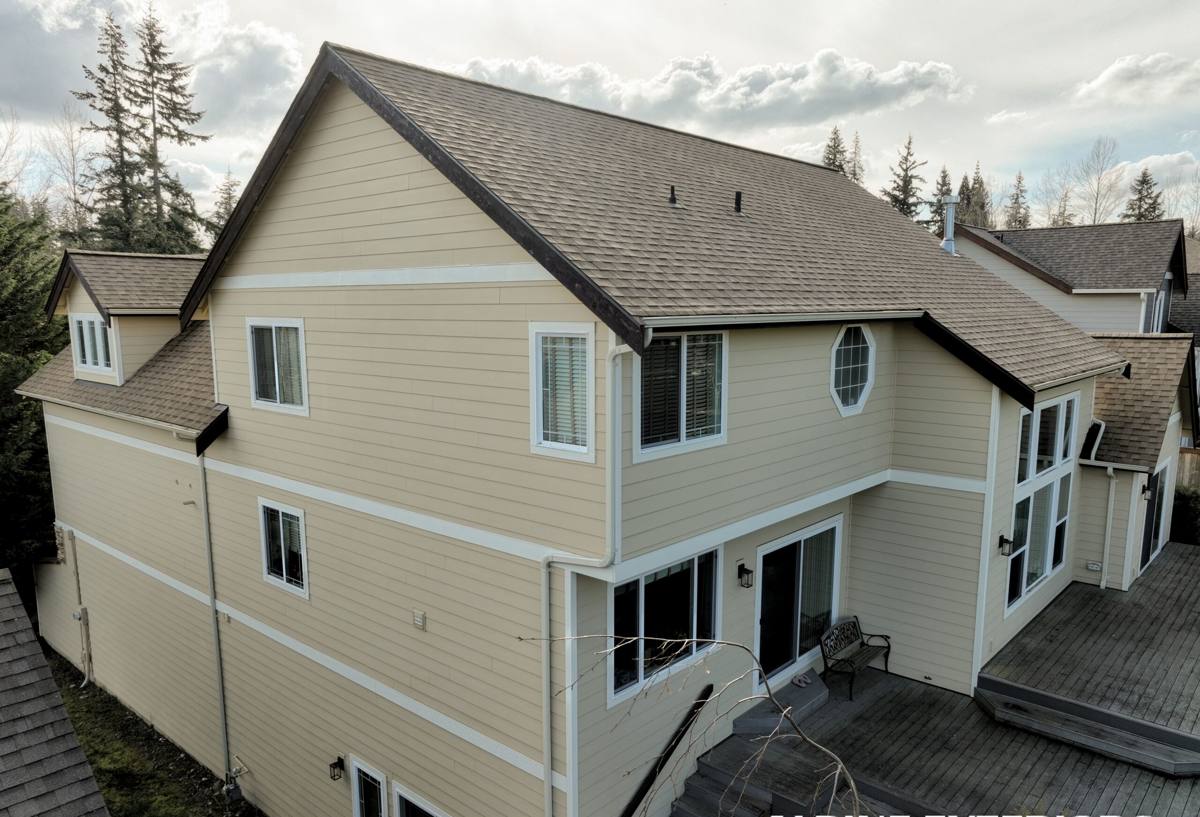
What Skagit County Weather Does to a Deck
Before talking about design, it helps to understand what we're actually building to resist. The combination of salt air, driving rain, and long moss seasons creates a specific set of failure points we see over and over on older or poorly built decks in this area.
Salt Air and Metal Fatigue
Homes closer to the water deal with airborne salt that accelerates corrosion on anything metal — screws, joist hangers, railing brackets, and structural bolts. Standard interior-grade or low-quality exterior fasteners can start rusting and weakening in just a few years, which is a serious problem when those fasteners are holding up a structure people stand on.
Driving Rain and Water Intrusion
Rain here doesn't always fall straight down. Wind-driven rain gets pushed sideways and upward, finding gaps around ledger boards, under poorly flashed railing posts, and into end grain that wasn't sealed. Once water gets behind or under decking material, it doesn't dry out quickly in our climate — it sits, and that's where rot and mold start.
Moss, Algae, and Shade
Many Burlington lots have mature trees or sit close to neighboring structures, which means decks often spend a good part of the day in shade. Combine that with our long, wet fall and winter, and you get ideal conditions for moss and algae to take hold on decking surfaces, stair treads, and railings. Beyond looking bad, moss holds moisture against the wood surface and creates a slip hazard on stairs and walkways.
Freeze-Thaw and Ground Movement
Skagit County doesn't get brutal winters, but we do get enough freeze-thaw cycling to matter for footings and posts that weren't set to proper depth. Combined with the region's often heavy, poorly draining soils, an undersized or shallow footing can shift over time, leading to a deck that feels bouncy or slightly out of level within a few years.
Choosing Decking Material for This Climate
There's no single "best" decking material for every Burlington home — it depends on budget, how much upkeep the homeowner wants to do, and the look they're after. What matters is understanding the honest trade-offs of each option in a wet, shaded, salt-influenced climate.
| Material | How It Handles Our Climate | Maintenance | Typical Lifespan Here |
|---|---|---|---|
| Pressure-treated wood | Good rot resistance when properly sealed; still needs regular upkeep | Annual cleaning and re-sealing recommended | 10-15 years with upkeep |
| Cedar | Naturally moisture-resistant and handles our humidity well; softer surface | Periodic cleaning and staining to prevent graying and moss | 15-20 years with upkeep |
| Composite decking | Resists moisture absorption and won't rot; can still grow surface algae in shade | Periodic washing; no staining or sealing needed | 25+ years, varies by product warranty |
| PVC/capped polymer | Fully moisture-sealed surface, very strong against our wet conditions | Occasional washing | 25+ years, varies by product warranty |
We don't push one material on every homeowner. Wood decks built and maintained correctly can look beautiful for many years in Burlington, but they demand a real maintenance commitment. Composite and PVC products cost more up front and reduce upkeep substantially, but they're not maintenance-free — surface algae in shaded yards still needs an occasional wash, and installation quality matters just as much as with wood, since a poorly ventilated composite deck can trap moisture underneath just like any other structure.
The Structural Details That Actually Prevent Failures
Most deck problems we get called out to repair in this area don't come from the decking boards themselves — they come from structural and flashing decisions made (or skipped) before the first board was ever installed. This is where the difference between a correctly built deck and a problem deck really shows up.
Ledger Board Flashing
The ledger board, where the deck attaches to the house, is the single most common source of hidden rot on decks in wet climates. It needs proper metal flashing integrated with the home's existing weather barrier, not just caulk or a wrap of tape, so that water is directed away from the house framing rather than trapped against it.
Joist Protection
Exposed cut ends and the tops of joists absorb water readily. Capping joists with a self-adhering flashing tape before decking goes down significantly extends the life of the frame underneath, especially on a deck that's going to see nine months of wet weather a year.
Footings Set to Proper Depth
Footings need to be sized and set below the frost line and bear on solid, undisturbed soil — not just poured into a shallow hole in whatever soil happens to be there. On sites with heavier clay or poor drainage, this sometimes means larger footings or additional drainage work around the post base.
Fastener Selection
Given the salt-air exposure common in this part of Skagit County, we use corrosion-resistant, exterior-rated fasteners and structural connectors throughout — not standard hardware that looks fine on day one but starts rusting within a couple of winters.
Airflow Underneath
A deck built low to the ground or over damp soil needs enough clearance and, where necessary, ground cover or grading to let air move underneath. Without it, moisture gets trapped below the deck surface year-round, which speeds up rot regardless of what decking material is on top.
Our Custom Deck Process
Every property is different, so the process below is a framework, not a rigid script — but it reflects how we approach every custom deck project for Burlington homeowners.
- Site visit and design conversation. We look at the house, the yard's drainage and sun/shade pattern, existing structures, and talk through how the family actually plans to use the space.
- Design and material selection. We work out layout, size, decking material, railing style, and any built-in features, with honest pricing for each option so the trade-offs are clear before anything is finalized.
- Permitting. Deck projects typically require a building permit through the applicable local jurisdiction. We handle the permit application and inspections as part of the project.
- Footings and framing. This is where the structural details above get built in correctly — proper footing depth, ledger flashing, joist protection, and corrosion-resistant fasteners.
- Decking, railing, and stairs. Boards, railing systems, and stairs are installed to the manufacturer's specifications, which matters for both appearance and any material warranty.
- Final walkthrough. We go over the finished deck with the homeowner, cover basic care for the specific material installed, and address any questions before calling the job done.
Railings, Lighting, and Features Worth Considering
Custom decks in Burlington often include a few extras that fit both the local climate and how homeowners actually use outdoor space here.
Railing Options
Wood, metal, and cable railing systems each hold up differently in our climate. Metal and cable systems need corrosion-resistant hardware and finishes given the salt-air exposure in the region; wood railings need the same maintenance commitment as a wood deck surface.
Covered or Partially Covered Decks
Given how much of the year sees rain, a partial roof or pergola-style cover over at least part of the deck can significantly extend how much of the year it actually gets used, while also reducing direct rain exposure on the decking surface below.
Built-In Lighting
Low-voltage deck lighting on stairs, post caps, or under railings adds safety and usability during our long stretches of early darkness in fall and winter, and all fixtures and wiring need to be rated for continuous wet exposure.
Drainage Systems Under Elevated Decks
For elevated decks, an under-deck drainage system can capture water running through the boards and route it away, keeping the space underneath usable and dry — a genuinely useful upgrade in a climate that sees as much rain as ours does.
Living With a Deck in a Moss-Prone, Wet Climate
No deck material is truly maintenance-free once it's sitting outside in Skagit County weather. The amount of upkeep varies a lot by material, but a little regular attention prevents almost every major problem we see.
- Sweep leaves and debris off the deck surface regularly, especially in fall — trapped organic material holds moisture and feeds moss and algae growth.
- Clean the surface at least once or twice a year with an appropriate cleaner for the material; avoid pressure washing wood decks aggressively, which can damage the grain and open it up to more water absorption.
- Check and re-seal or re-stain wood decking on the schedule recommended for the specific product, typically every one to three years depending on sun and shade exposure.
- Inspect railings, stair connections, and structural hardware annually for rust, looseness, or corrosion, particularly on homes closer to the water.
- Keep gutters and downspouts near the deck clear so runoff isn't dumping extra water directly onto or under the structure.
- Trim back overhanging branches and vegetation that keep the deck shaded and damp longer than necessary.
Permits and Working With Local Jurisdictions
Custom deck construction in and around Burlington generally requires a building permit, along with inspections at key stages such as footings and framing before the decking goes on. Requirements can vary depending on the deck's height, size, and proximity to property lines, so we confirm the specific requirements for each property with the applicable local building department rather than assuming one standard applies everywhere. Handling this correctly matters beyond just legal compliance — a permitted, inspected deck is easier to document for insurance purposes and for a future home sale.
What a Custom Deck Project Typically Costs
Cost depends heavily on size, decking material, height off the ground, railing style, and any added features like covers or lighting. As a broad guide, a modest, straightforward wood deck tends to sit at the lower end of the cost range, while a larger multi-level deck in composite or PVC decking with custom railing and built-in features runs considerably higher. Rather than quoting a number that doesn't reflect your specific property, we prefer to walk the site and give an honest, itemized estimate based on what your project actually needs.
Why Hire a Crew That Already Works in Burlington
A deck built by a crew unfamiliar with this specific climate can look identical to a properly built one on the day it's finished — the difference only shows up two, five, or ten winters later, in the form of soft spots, rusted hardware, or a ledger board rotting out behind the siding. Working regularly in Skagit County and the greater Anacortes area means we already know how the local combination of salt air, driving rain, and shaded, moss-prone yards affects material choices, flashing details, and fastener selection, and we build to that reality from the start rather than learning it through a callback.
If you're considering a custom deck for your Burlington home, we're happy to come take a look, walk through material options honestly, and put together a clear estimate — no pressure, no obligation. Use the form below to request your free estimate.