 Anacortes Roofing
 Burlington's Climate Puts Real Stress on Exterior Walls
Burlington sits inland from Anacortes and Puget Sound, but the weather here doesn't know the difference. Moist marine air moves up the Skagit Valley for much of the year, and it brings the same combination that wears down siding all over this county: long stretches of driving rain, high humidity that lingers in shaded and north-facing wall sections, and a moss and algae season that can run from fall through spring. Add the salt-tinged air that carries inland off the Sound, and you have an exterior wall assembly that's under near-constant pressure, even when the weather looks mild.
None of this is dramatic on any given day. That's exactly why it causes so much damage — homeowners don't see one big storm event, they see slow, cumulative moisture intrusion behind siding that was never properly flashed, or paint and caulk that failed years before it should have because the underlying material couldn't handle repeated wet-dry cycling. By the time it's visible from the curb, the problem has usually been building for a while.
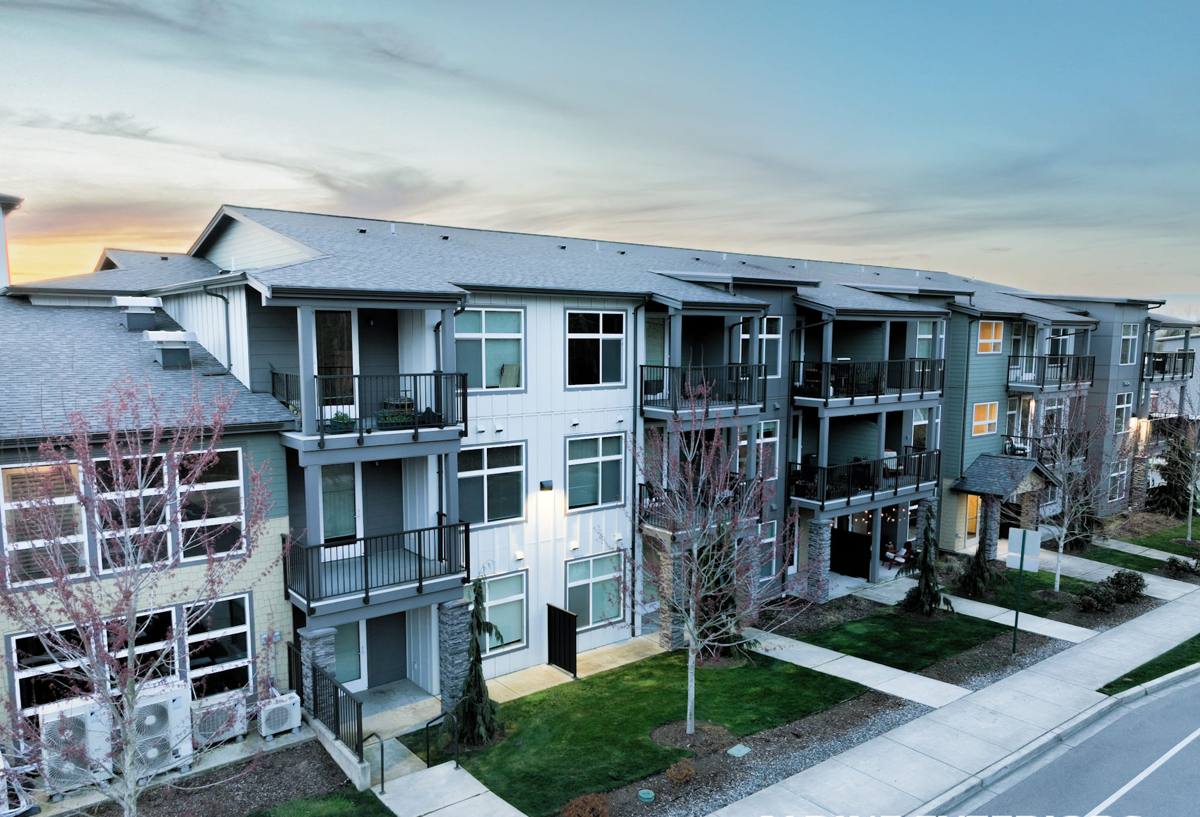
Why Siding Material Choice Matters So Much Here
In a drier climate, siding material choice is partly an aesthetic decision. In Skagit County, it's a performance decision first. The material has to resist moisture absorption, hold paint and caulk without constant upkeep, resist fungal growth in shaded areas, and stay dimensionally stable through repeated wet-dry cycles without cupping, swelling, or delaminating.
This is the reason we don't offer a menu of siding options for Burlington customers to choose between on looks alone. We install James Hardie fiber cement siding, exclusively. We don't install vinyl, LP SmartSide, Cemplank, Allura, primed spruce, or cedar. That's not a marketing position — it's a standard we hold to because we've seen what each of those alternatives asks of a homeowner over a 20- or 30-year ownership window in this exact climate, and we'd rather install one product correctly than offer several and manage the trade-offs after the fact.
What Correct Siding Installation Actually Involves
Siding failures in this region are rarely caused by a bad material choice alone. Far more often, they trace back to installation shortcuts that don't show up until years later. A correct installation addresses several details that are easy to skip and expensive to fix later.
Weather-Resistive Barrier and Flashing
Behind every piece of siding, there needs to be a continuous weather-resistive barrier, properly lapped and sealed, with flashing integrated at every window, door, deck ledger, and penetration. Water that gets behind the siding has to have a planned path back out — it can't be left to find its own way through the sheathing. This is the single most common point of failure we find when we're called out to look at a home with rot or staining that "shouldn't be there yet."
Fastening and Clearances
James Hardie siding has specific fastening patterns, nail penetration requirements, and clearance rules — minimum gaps from grade, roofing, decks, and horizontal trim — that exist specifically to keep the bottom edge of the siding from sitting in standing water or wicking moisture from soil contact. Skipping these clearances is one of the fastest ways to void a warranty and create a moisture problem in a climate that gives wood-based products and poorly installed fiber cement no room for error.
Joints, Trim, and Caulking
Every butt joint, corner, and trim intersection is a potential entry point for water. Correct installation means joints are backed, caulked with the right product, and painted or finished so the seam actually sheds water instead of holding it. Rushed trim work is invisible on install day and obvious three winters later.
The Siding We Install: James Hardie Fiber Cement
James Hardie is a fiber cement product engineered specifically for climate zones like ours. It doesn't absorb moisture the way wood-based products do, it's non-combustible, and Hardie's HZ product lines are formulated by climate zone rather than sold as one generic product for the whole country. The factory-applied ColorPlus finish is baked on under controlled conditions rather than field-painted, which matters a great deal in a region where field-applied paint has a narrow weather window and an uphill fight against constant moisture.
Hardie also backs the product with a long, transferable warranty, which carries real weight for homeowners who may sell within the product's service life. None of this makes Hardie maintenance-free — it still needs to be installed to spec, caulked and touched up over time like any exterior product — but it removes several of the failure points that we see repeatedly with the alternatives in this climate.
How Common Siding Materials Hold Up in Skagit County Conditions
| Material | Moisture Performance Here | Maintenance Burden | Typical Field Lifespan in This Climate |
|---|---|---|---|
| Vinyl | Doesn't absorb water itself, but panels flex, gap, and warp with temperature swings, and driving rain can get behind it at seams | Low, but limited repair options — damaged panels are often replaced rather than fixed | Variable; UV and impact damage show up earlier in exposed coastal-influenced areas |
| Cedar / Wood | Naturally moisture-resistant in small doses, but constant wet-dry cycling and shaded moss growth outpace the wood's natural defenses | High — regular refinishing, caulking, and moss/algae treatment | Shorter without diligent, ongoing upkeep |
| LP SmartSide (engineered wood) | Treated to resist moisture, but it's still a wood-strand product — edge and cut-end exposure are sensitive points | Moderate — cut edges and joints need consistent sealing to stay protected | Depends heavily on installation quality at joints and edges |
| James Hardie Fiber Cement | Fiber cement composition resists moisture absorption and doesn't swell, cup, or rot | Low — periodic caulk and paint touch-up, no refinishing cycle | Long service life when installed to manufacturer spec |
Our Installation Process, Start to Finish
- On-site evaluation. We look at existing siding, trim, flashing, and any signs of moisture damage before quoting anything, so the estimate reflects what your walls actually need.
- Tear-off and sheathing check. Old siding comes off and we inspect the sheathing underneath for rot or soft spots before anything new goes up — covering a hidden problem is worse than finding one.
- Weather-resistive barrier and flashing. New house wrap and flashing are installed at every window, door, and penetration, lapped correctly for water to shed downward and outward.
- James Hardie installation to manufacturer spec. Panels or lap siding go up with the correct fastener pattern, spacing, and clearances from grade, roofing, and decks.
- Trim, caulk, and finish work. Joints and corners are sealed and finished so they shed water rather than collect it.
- Final walkthrough. We go over the completed work with you before calling the job done, not after.
Signs Your Burlington Home May Need New Siding
Most siding problems in this area develop quietly. A few warning signs are worth checking for before they turn into a sheathing or framing repair:
- Persistent moss, algae, or dark streaking that comes back soon after cleaning
- Paint that's peeling, bubbling, or chalking faster than it should be for its age
- Soft, spongy, or visibly warped sections, especially near the bottom courses
- Gaps opening up at trim, corners, or window and door casings
- Visible cupping or separation between siding boards or panels
- A musty smell or interior wall staining near an exterior wall
Why Hire a Crew That Already Works in Burlington
A siding crew that treats every job the same regardless of location will size flashing, fastening, and clearances the same way whether the home is in a dry inland climate or here in Skagit County. That's how corners get cut without anyone intending to cut them — the installer simply doesn't know this area demands more from the details. A crew that already works Burlington and the surrounding area knows how the rain moves through this valley, which wall orientations hold moisture longest, and where moss takes hold first, and builds the installation around that reality instead of a generic checklist.
There's also a practical side to hiring local: warranty service, follow-up caulk touch-ups, and any questions that come up years down the line are far easier to resolve with a crew that's a short drive away and already familiar with your home, rather than a company that installed once and moved on.
If your Burlington home's siding is showing its age, or you're planning ahead for a replacement, we're happy to take a look and give you a straightforward, no-pressure estimate — just fill out the form below.