 Anacortes Roofing
 Metal Roofing Built for Burlington's Weather, Not Just Its Style
Burlington homeowners usually come to us for one of two reasons: they like the clean look of a metal roof, or they're tired of replacing shingles every decade or two because of what Skagit County weather does to them. Both are good reasons. But a metal roof only delivers on that durability promise if it's specified and installed correctly for this area. A panel system that works fine in a dry inland climate can underperform here if the details are wrong.
This page is about what that looks like specifically for Burlington — not a generic overview of metal roofing, but what we actually pay attention to when we're up on a roof in this part of Skagit County.
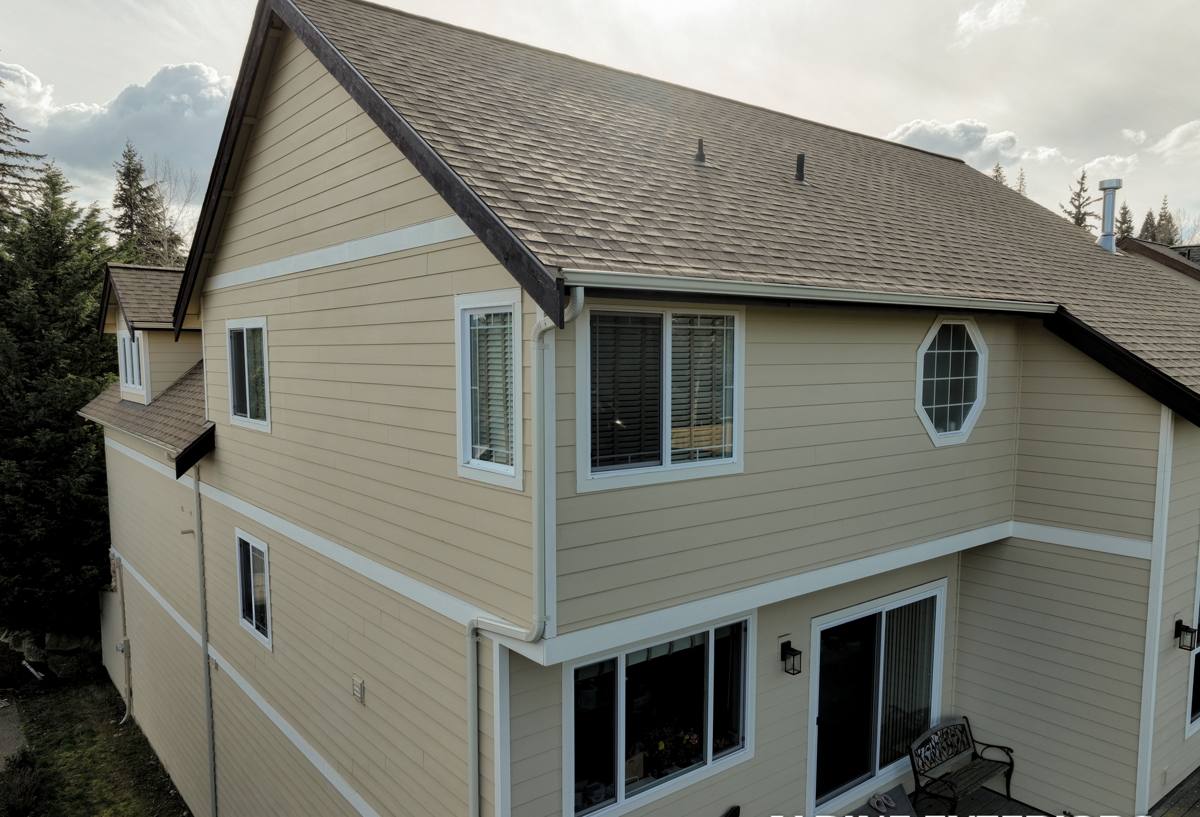
What Skagit County Weather Actually Does to a Roof
Burlington sits back from the open saltwater that Anacortes and the islands face directly, but it's not isolated from it. Moist, salt-tinged marine air moves through the Skagit Valley regularly, especially during onshore weather, and it settles into the same neighborhoods that get the valley's heavy fall and winter rain. That combination — near-constant moisture plus airborne salt — is hard on fasteners, flashing, and any metal that isn't coated for the job.
Then there's moss. Shaded roof slopes, north-facing sections, and roofs near mature trees hold moisture longer through our long wet season, and moss doesn't need much encouragement to take hold. On shingle roofs, moss lifts and holds water against the surface. On a properly installed metal roof, there's far less for moss to grip — but "properly installed" is doing a lot of work in that sentence, which is why installation quality matters more here than in drier climates.
The Three Things We Design Around
- Driving rain — wind-blown rain that hits roof planes at an angle and tests every seam, lap, and penetration, not just the flat field of the roof
- Sustained moisture — long stretches of damp weather rather than short storms, which is why ventilation and underlayment choices matter as much as the panel itself
- Salt-influenced air — present in varying degrees across Skagit County, which affects what fasteners and coatings we're willing to stand behind
Choosing the Right Metal Roofing System
"Metal roofing" covers a range of products, and they're not interchangeable in terms of performance or price. For Burlington homes, we generally steer the conversation toward a small set of options that hold up well in Northwest conditions, and we're upfront about the trade-offs of each.
| Panel Type | Fastening Method | Best Fit | Key Consideration |
|---|---|---|---|
| Standing seam | Concealed clips, no exposed fasteners | Most roof pitches and styles, especially where long-term low maintenance matters most | Higher upfront cost, but the concealed fastening removes the most common long-term leak point |
| Exposed-fastener panels (ribbed/corrugated) | Screws through the panel face into decking or purlins | Outbuildings, shops, some simpler roof lines | Fasteners and their washers age faster in wet, salt-influenced air and need periodic checking |
| Stone-coated steel | Nailed, similar to shingle installation | Homeowners who want a shingle or shake look with metal's underlying durability | Coating and granule adhesion quality varies by manufacturer; we vet this before recommending it |
For most Burlington homes, we lean toward standing seam because it gives the fewest places for water to find a way in over the roof's lifespan. Exposed-fastener systems have their place — they're a legitimate, cost-conscious option for shops and simpler structures — but we're honest with customers that they carry more long-term maintenance because every exposed fastener is a potential future leak point once its seal ages.
What a Correct Metal Roof Installation Actually Involves
The panel itself is only part of the system. Most of the roofs we get called to repair — metal or otherwise — failed because of what was underneath or around the panels, not the panels themselves.
Underlayment and Deck Prep
In a climate this wet, we don't treat underlayment as an afterthought. A high-temperature, self-adhering synthetic underlayment gives the roof deck a real second line of defense if wind-driven rain ever gets past a seam, and it matters even more at valleys, eaves, and any low-slope section where water lingers longer before it drains.
Fasteners and Flashing Metal
Given the salt-influenced air that moves through this part of Skagit County, we match fasteners and flashing metal to the panel material rather than defaulting to whatever is cheapest. Mismatched metals in contact with each other, in the presence of moisture, can corrode faster than either material would on its own — a detail that's easy to overlook and expensive to ignore.
Ventilation
A metal roof that's installed over a poorly ventilated attic can trap moisture underneath it, which defeats a lot of the point of switching to metal in the first place. We check intake and exhaust airflow as part of every metal roofing job, not just as an upsell.
Penetrations and Transitions
Vent pipes, chimneys, skylights, and roof-to-wall transitions are where driving rain does the most damage on any roof. These are hand-detailed, not just caulked, because caulk is a maintenance item, not a permanent flashing solution.
Our Process for a Burlington Metal Roof
- On-site assessment — we walk the roof and attic, not just look from the ground, and check for existing moss, moisture damage, ventilation issues, and roof geometry that affects panel layout
- Straightforward proposal — panel type, underlayment, flashing plan, and ventilation scope laid out clearly, with the reasoning behind each choice
- Tear-off and deck inspection — we don't install a new roof over hidden rot; any deck issues are addressed before panels go on
- Underlayment, flashing, and panel installation — done in the sequence and to the tolerances the manufacturer specifies, since metal roofing is less forgiving of shortcuts than shingles
- Final walkthrough — we review the finished roof with the homeowner, including basic care and what to watch for over time
What Drives the Cost of a Metal Roof
Metal roofing costs more upfront than asphalt shingles — often by a meaningful multiple, depending on the system — but the honest comparison has to include lifespan and maintenance, not just the install-day number. Here's what actually moves the price on a given project.
| Cost Factor | Why It Matters | Typical Impact |
|---|---|---|
| Panel type and gauge | Standing seam with heavier-gauge steel or aluminum costs more than lighter exposed-fastener panels | Moderate to high |
| Roof complexity | Multiple valleys, dormers, and penetrations mean more custom flashing and labor time | High |
| Tear-off and deck condition | Existing moisture or rot damage found during tear-off adds repair work before installation can proceed | Variable |
| Underlayment upgrade | High-temp self-adhered underlayment costs more than basic felt but performs far better in sustained wet weather | Low to moderate |
| Ventilation corrections | Adding or improving intake/exhaust venting if the existing attic system is inadequate | Low to moderate |
We give a firm, itemized quote before any work starts — no vague allowances that turn into surprise charges partway through the job.
Living With a Metal Roof in Burlington
One of the appeals of a correctly installed metal roof is how little it asks of a homeowner afterward. That said, "low maintenance" isn't "no maintenance," especially in a climate that grows moss on almost anything that sits still.
- Clear debris from valleys and around penetrations once or twice a year, especially after fall leaf drop
- Keep gutters clear so water isn't backing up against eave flashing during heavy rain
- Trim back tree limbs that shade sections of roof and keep them damp longer than the rest
- Have fastener and flashing points on exposed-fastener systems checked periodically as sealants age
- Address any moss or algae growth early with roof-safe methods rather than letting it establish
Most of this is the same basic care any Skagit County roof needs — metal just tends to reward that upkeep with a longer, more trouble-free service life than shingles do.
Why It Matters That We Already Work in Burlington
A lot of what makes a metal roof perform well here comes down to judgment calls that aren't written in a manufacturer's manual: how much ventilation a particular attic actually needs, which roof sections hold moisture longest through a typical Skagit County winter, where salt-influenced air is enough of a factor to change a fastener spec. Those calls get more reliable with local, repeated experience — not from a crew passing through the area once.
We also know how driving rain moves across roofs in this part of Washington, because we deal with the aftermath of bad installations regularly. That's not a knock on any one product — it's usually a detail that got skipped under time pressure. Our process is built to not skip those details.
Get a Straightforward Estimate
If you're weighing metal roofing for a Burlington home, we're glad to take a look, walk you through what your specific roof would need, and give you a clear, no-pressure estimate. There's a form below to get that started — no obligation, just an honest assessment.