 Anacortes Roofing
 Deck Repair in Burlington: Built for Skagit County Weather
Decks in Burlington take a different kind of beating than decks in drier parts of the state. Between the salt-laden air blowing in off the Sound, long stretches of driving rain, and a moss season that seems to start earlier every year, an unmaintained deck here can go from "looks fine" to "structurally questionable" faster than most homeowners expect. We repair decks throughout Burlington and the surrounding Skagit County area, and the calls we get are almost always some version of the same story: a deck that was solid a few years ago is now soft in spots, slippery half the year, and starting to worry the family that uses it.
This page is about deck repair specifically — not full rebuilds, not new construction. If your deck's frame is sound but the surface, fasteners, or a section of framing has failed, repair is usually the right call, and it's almost always the more affordable one.
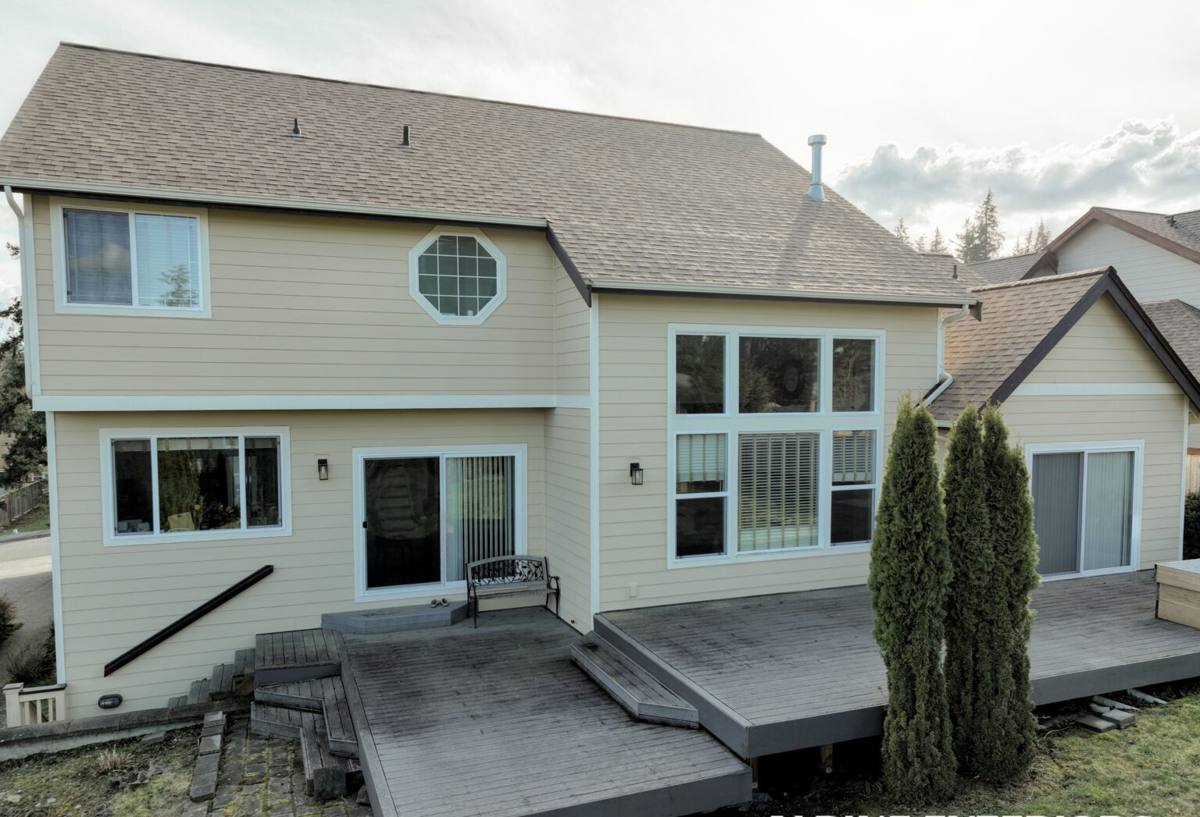
What Salt Air, Rain, and Moss Actually Do to a Deck
Salt Air
Proximity to Puget Sound means airborne salt settles on everything, including fasteners and metal connectors. Salt accelerates corrosion in nails, screws, and joist hangers — even galvanized ones — which is one of the most common hidden causes of a deck that feels "bouncy" or loose even though the boards themselves look okay.
Driving Rain
Western Washington rain doesn't just fall — wind-driven rain gets pushed sideways into ledger boards, stair stringers, and the underside of railings. Water that gets past a joint and can't dry out is what causes rot, and in this climate the drying window between storms is often too short for wood to fully release moisture before the next system rolls through.
Moss and Organic Growth
Moss holds moisture against the deck surface long after the rain has stopped, which is exactly the opposite of what wood or composite decking needs to last. A moss-covered deck isn't just a slip hazard — it's actively speeding up decay underneath the growth, particularly on shaded decks or ones tucked under overhangs and tree cover, which describes a lot of Burlington properties.
Signs Your Deck Needs Repair (Not a Full Replacement)
- Individual boards that flex, spring back slowly, or feel soft when you press on them
- Railings or posts that wiggle when leaned on
- Rust streaks below fasteners or connector hardware
- Stair treads that feel spongy or have visible splitting at the nosing
- Gaps opening up around the ledger board where the deck attaches to the house
- Persistent green or black staining that doesn't scrub off with normal cleaning
- Fasteners backing out or "popping" above the board surface
- A noticeable sag between joists, even a small one
Most of these are repairable in isolation. The deck only needs to come out entirely when the ledger connection or a large portion of the main framing has failed — and even then, we'll tell you plainly if that's what we're looking at rather than pushing a bigger job than the deck needs.
What a Proper Deck Repair Involves
A repair that actually holds up in this climate is more than swapping a rotten board for a new one. We look at the whole assembly, because in wet climates the surface problem is often a symptom of something happening underneath.
Structural Assessment
Before replacing anything, we check the framing: joists, beams, posts, and especially the ledger connection to the house, since that's the single most safety-critical joint on most decks. We're also checking footings and post bases for movement or rot at ground contact.
Board and Framing Replacement
Failed decking boards, stair treads, and any rotted joists or blocking get cut out and replaced — not just capped or patched over. Patching rot instead of removing it just hides the problem until it resurfaces somewhere else on the deck.
Fastener and Hardware Upgrades
Given the salt air here, we typically upgrade to corrosion-resistant fasteners and connectors rated for coastal or high-moisture exposure during repairs, even if that wasn't what was originally used. It costs a little more upfront and saves you from doing the same repair again in a few years.
Flashing and Water Management
A large share of the deck failures we see trace back to missing or failed flashing at the ledger board — the point where the deck meets the house. Correcting that is often the difference between a repair that lasts and one that doesn't.
Railing and Guard Repair
Loose or rotted railing posts get addressed as a safety item, not an afterthought, especially on raised decks.
Repair vs. Replace: How We Help You Decide
| Factor | Favors Repair | Favors Replacement |
|---|---|---|
| Framing condition | Joists and beams are solid, only isolated damage | Widespread rot in the main structure |
| Ledger connection | Sound, properly flashed | Failed, missing flashing, or improperly attached originally |
| Age of deck | Under 15–20 years, built to code | Older, undersized framing, or built before current code |
| Extent of damage | Localized to a few boards, stairs, or railing sections | Damage spread across most of the deck surface |
| Typical cost range | Roughly $150–$400 for small board/hardware fixes; $800–$3,000+ for larger structural or ledger repairs | Full replacement runs significantly higher and depends on size and material |
These ranges are broad on purpose — actual cost depends on deck size, material, and what we find once we open things up. We give a firm number after an on-site look, not a phone estimate.
Our Deck Repair Process
- On-site inspection. We walk the full deck, check the framing where accessible, probe suspect boards, and inspect the ledger and stairs.
- Written scope and estimate. You get a clear breakdown of what's being replaced and why, not a vague lump sum.
- Repair work. Damaged material comes out, framing and hardware get addressed as needed, and new decking or railing components are installed to match as closely as possible.
- Water management check. We confirm flashing and drainage are doing their job before we call it finished.
- Final walkthrough. We go over what was done and what to keep an eye on going forward.
Material Considerations for a Skagit County Deck
When we're replacing boards or sections, the material choice matters more here than in a drier climate.
Pressure-Treated Wood
Affordable and widely used, but it needs regular sealing to perform well through repeated wet-dry cycles. If the existing deck is wood and well-maintained, matching with treated lumber for repairs is usually the practical choice.
Cedar
Naturally rot-resistant and a common choice in this region, though it still benefits from periodic finishing to hold its color and resist moisture uptake, especially on horizontal surfaces that stay wet longer.
Composite Decking
Composite resists rot and doesn't need sealing, which appeals to a lot of homeowners tired of annual maintenance. It's not maintenance-free, though — it still needs regular cleaning to prevent moss and algae buildup, and not every composite product performs the same in shaded, damp conditions. We'll walk you through the trade-offs honestly rather than pushing whatever's easiest to install.
Fasteners and Hardware
Regardless of decking material, we favor stainless or coated hardware rated for coastal exposure on repair work in this area. Standard galvanized fasteners can corrode faster than the wood around them near the water.
Maintenance That Extends the Life of a Repair
- Sweep debris and standing leaves off the deck regularly, especially in fall
- Clean moss and algae off the surface at least once a year, more often on shaded decks
- Check and reseal wood decking every 1–2 years depending on sun and rain exposure
- Keep gutters and downspouts clear so runoff isn't draining onto the deck
- Inspect the ledger board area annually for gaps, staining, or soft wood
- Trim back vegetation that's shading the deck and keeping it damp
- Check railings and stair treads by hand a couple of times a year
Why Hire a Crew That Already Works in Burlington
Deck repair done by someone unfamiliar with this specific climate often misses the real cause of failure — they'll replace the board you can see and miss the flashing problem or corroded hardware that caused it. We work throughout Burlington and the greater Anacortes and Skagit County area, so we're used to seeing how salt air, sustained rain, and moss affect decks here specifically, and we build our repairs to hold up against exactly those conditions rather than a generic checklist.
We're also straightforward about scope. If your deck genuinely needs a small repair, that's what we'll recommend — and if we find something more serious once we're into the framing, we'll show you what we found and explain the options before doing any additional work.
Get a Free Deck Repair Estimate
If your Burlington deck has a soft spot, a wobbly railing, or you just want a second opinion before winter weather makes things worse, we're happy to take a look. Use the form below to request a free, no-pressure estimate and we'll get back to you with next steps.