 Anacortes Roofing
 Storm Damage Roof Repair for Burlington Homes
Burlington sits inland in the Skagit Valley, but that doesn't spare its roofs. The same Pacific storm systems that push wind and driving rain across Fidalgo Island and the Anacortes waterfront track right up the valley toward Burlington, often gaining speed as they funnel between the hills. Add in the tree cover around many Burlington properties and the near-constant damp that Skagit County sees from fall through spring, and you've got a climate that's hard on roofs in a slow, cumulative way — not just during the one big windstorm everyone remembers.
We're based in Anacortes and have worked roofs throughout Skagit County long enough to know that "storm damage" here rarely looks like the dramatic wind-off-the-roof photos people expect. More often it's a handful of lifted shingle tabs, a cracked ridge cap, or a flashing seam that opened up just enough to let water in during the next round of rain. This page covers what that actually looks like in Burlington, how we assess and repair it, and why working with a crew that's already familiar with this area's weather pattern matters.
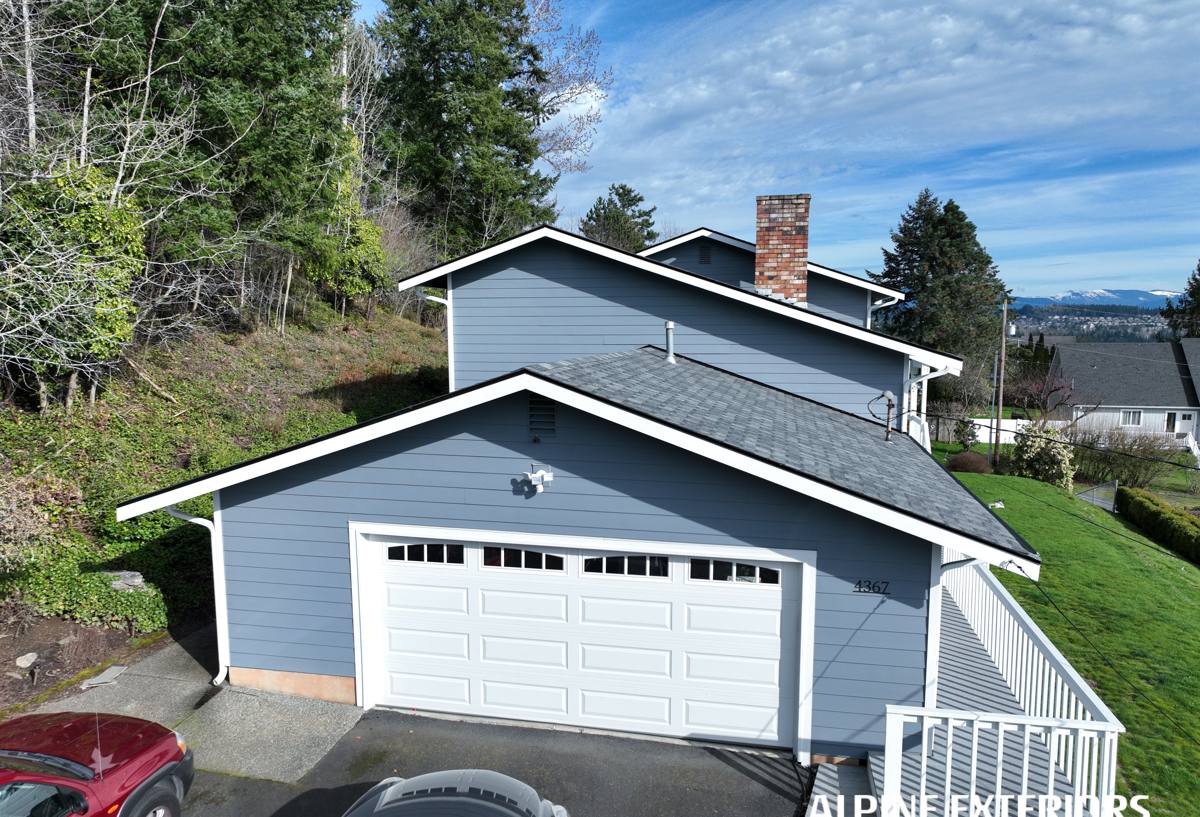
What Burlington's Climate Does to a Roof Over Time
No single storm usually destroys a roof outright. What actually happens is a combination of factors working together over a season or two:
- Wind-driven rain gets pushed sideways under shingle tabs and around flashing that would otherwise shed water fine in a normal downpour.
- Moss and algae growth — common on Burlington roofs with shade from mature trees — holds moisture against shingles and roof decking far longer than open sun exposure would.
- Repeated freeze-thaw cycles in colder snaps can widen small cracks in flashing sealant or aging shingle mat that a summer storm wouldn't have touched.
- Gutter and downspout backups from needles, moss debris, and leaf litter push water back under the roof edge instead of off it.
By the time a homeowner notices a stain on a ceiling, the underlying damage has usually been building for a while. That's part of why we treat "storm damage repair" as more than patching the one visible problem — we're looking at what let the storm in, not just where it showed up.
Signs of Storm Damage That Are Easy to Miss
Some damage is obvious — a missing shingle, a branch through the roof deck, a gutter torn loose. Most of what we find on Burlington service calls is quieter than that:
On the roof surface
Lifted or creased shingle tabs that haven't fully broken off, granule loss showing up as gritty buildup in gutters, and nail heads that have backed out slightly from wind flexing the shingle mat. Ridge caps are frequent casualties since they take the brunt of wind uplift.
At penetrations and edges
Flashing around chimneys, skylights, and vent pipes can shift or separate at the seam without a single shingle being damaged. Roof edges and rake boards can loosen from repeated wind flex even when the field of the roof looks intact.
Inside the house
A faint musty smell in an attic, a slightly discolored patch of drywall that hasn't fully bloomed into a visible leak yet, or insulation that feels damp near an exterior wall. These are the early warnings that a storm opened a path water is now using on a regular basis.
Our Storm Damage Repair Process
We keep this straightforward because homeowners dealing with storm damage are usually already stressed about it. The process looks like this:
- Roof and attic inspection. We walk the roof surface and check the attic from inside, since interior signs often tell us more about water path than what's visible from the ground or a ladder.
- Documented findings. We note and photograph what we find — this matters if you're filing an insurance claim, and it gives you a clear record of what was damaged versus what was already aging.
- Written repair scope. You get a plain-English explanation of what needs fixing, what's optional, and what we'd flag to watch over the next year even if it doesn't need repair today.
- Repair work. Most storm repairs — shingle replacement, flashing resealing or replacement, ridge cap work, minor deck repair — are completed in a single visit unless the damage is extensive.
- Follow-up check. For larger repairs, we recommend a follow-up look after the next significant rain to confirm the fix is holding under real conditions, not just a dry-day inspection.
Repair vs. Replace: How We Make the Call
Not every storm-damaged roof needs a full replacement, and we don't push one when a targeted repair will genuinely hold. The decision usually comes down to a few practical factors:
| Factor | Leans toward repair | Leans toward replacement |
|---|---|---|
| Roof age | Under 12–15 years, otherwise sound | Nearing or past expected shingle lifespan |
| Extent of damage | Isolated to one slope or area | Spread across multiple slopes |
| Underlying deck condition | Solid, no soft spots | Soft, rotted, or repeatedly wet decking |
| Shingle matching | Discontinued line, but blend is minor | No reasonable match available, patchwork would be obvious |
| History of leaks | First occurrence in this area of the roof | Recurring leaks in the same spot despite past repairs |
If a repair is the honest answer, that's what we'll recommend and quote. If the roof is genuinely past the point where patching makes sense, we'll explain why in specific terms tied to what we actually found — not a general sales pitch.
Materials and Methods We Use
Storm repairs are only as good as the materials and technique behind them. A few standards we hold to on every job:
- Matching shingle profile and weight as closely as possible, not just color, so repaired sections shed water the same way the surrounding roof does.
- Metal flashing over caulk-only fixes. Sealant has its place, but where flashing has actually shifted or corroded, we replace it rather than relying on sealant to bridge a gap that will move again in the next windstorm.
- Proper nailing pattern on replacement shingles — under-nailing is a common cause of repeat wind damage in high-exposure areas.
- Ice-and-water shield at vulnerable points like valleys and eaves when we're already opening that section up, since it's a low-cost addition during a repair that's expensive to add later.
Insurance and Documentation
Many Burlington storm repairs go through a homeowner's insurance policy, and the process goes smoother when the paperwork is solid from the start. We provide clear, dated photos and a written description of damage that your adjuster can work from directly. We're glad to walk the roof with an adjuster if that's useful, and we'll give you our honest read on the damage regardless of how the claim process goes — our job is to tell you what's actually wrong with the roof, not to inflate a scope to match a settlement.
Why a Crew That Already Works Burlington Matters
Roofing crews unfamiliar with this part of Skagit County sometimes miss the slower-building damage patterns that show up here — the moss-related deck softening, the way certain roof orientations catch more wind-driven rain off the valley, the flashing failures that come from repeated damp-dry cycling rather than one dramatic event. Working locally out of Anacortes means we're not learning the regional climate on your roof. We've seen how these storms behave here across multiple seasons, and we price and schedule work with that in mind — including being realistic about weather windows for repairs rather than rushing a fix between rain systems in a way that compromises it.
Reducing Storm Damage Before the Next One Hits
Between storms, a few maintenance habits go a long way toward reducing how much damage the next one causes:
- Keep gutters and downspouts clear, especially before the fall rain season starts.
- Have moss growth treated and removed rather than left to spread — it holds moisture against the roof surface and shortens shingle life.
- Trim back tree limbs that overhang the roof, both to reduce impact risk and to cut down on shade that keeps the roof damp longer.
- Get flashing around chimneys and skylights checked every couple of years, since these are the points most likely to fail quietly.
- After any significant windstorm, do a visual check from the ground for obviously lifted or missing shingles, even if there's no active leak yet.
What to Do Right After a Storm
If you suspect storm damage, avoid getting on the roof yourself, especially on wet or steep sections. Check the attic and ceilings for any signs of water intrusion, photograph anything visible from the ground, and get a professional inspection before the next rain rather than waiting to see if a small problem gets worse on its own. Small, quickly repaired damage almost always costs less than the same damage left to work through several more storms.
If your Burlington home has visible storm damage or you're just not sure after a rough windstorm, we're happy to take a look. Request a free, no-pressure estimate using the form below and we'll give you a straight read on what we find.