 Anacortes Roofing
 Metal Roofing in Bow: What the Location Actually Demands
Bow sits close enough to the water that salt air is a real design factor, not a marketing talking point. Homes here take a steady combination of moisture, wind-driven rain, and airborne salt that moves inland off the bays and inlets around this stretch of Skagit County. That combination is hard on roofing in ways that don't show up in a showroom or a glossy brochure. It shows up two, five, and ten years later, in the fasteners, the flashings, and the places where two roof planes meet.
A metal roof done right in Bow needs to account for that environment from the first decision you make, not as an afterthought. That means choosing the right metal and coating system, using fasteners and flashings that won't corrode faster than the panels around them, and detailing the roof so wind-driven rain can't work its way sideways under a seam or lap. Get those decisions right and a metal roof in this area can outlast several generations of asphalt shingles. Get them wrong and you end up with a roof that looks fine from the ground while it's quietly failing at the fastener heads.
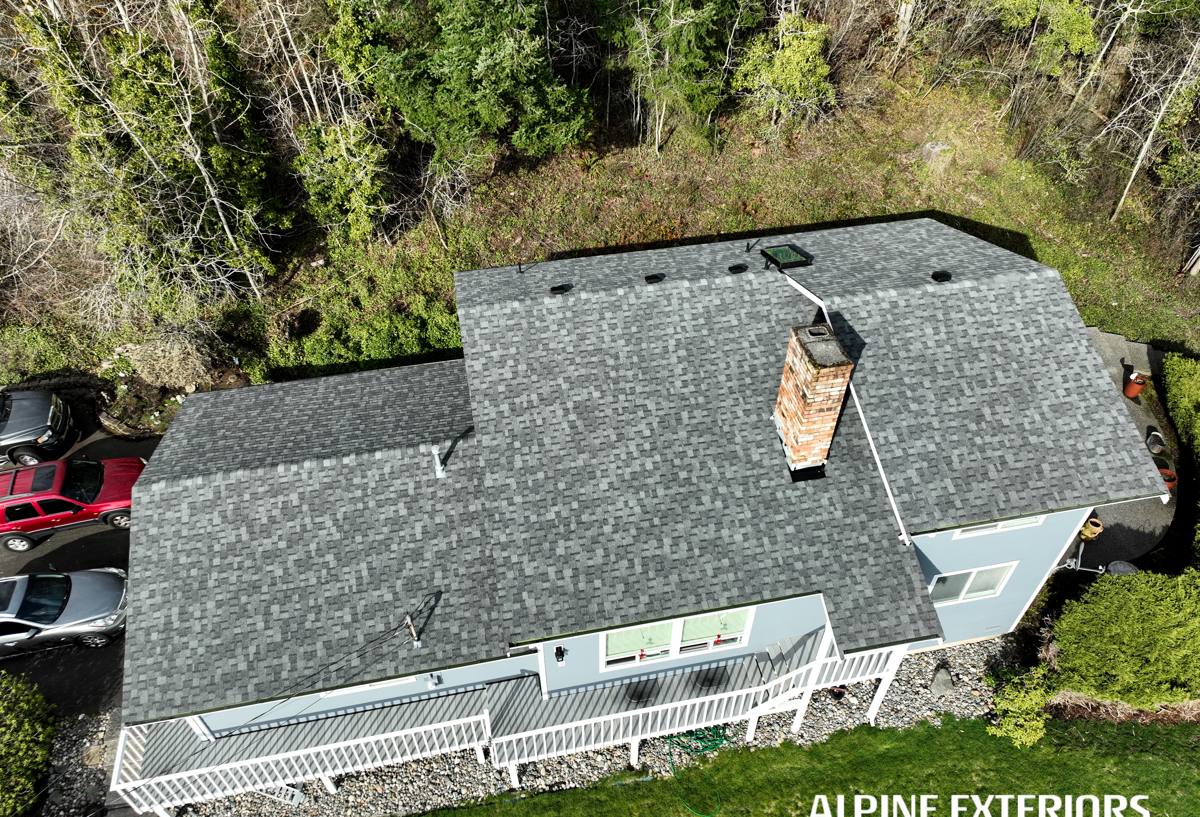
Why Salt Air and Long Moss Seasons Change the Job
Salt Air and Galvanic Corrosion
Salt-laden air accelerates corrosion, especially where two different metals touch. This is called galvanic corrosion, and it's one of the most common reasons metal roofs fail early near the water. A steel fastener in an aluminum panel, or the wrong flashing metal paired with the wrong panel metal, sets up a slow electrical reaction that eats away at one of the two metals. In Bow's air, that reaction runs faster than it would inland. The fix isn't complicated, but it has to be done deliberately: matched or compatible metals throughout the system, and fastener coatings rated for coastal exposure.
Moss, Debris, and Roof Chemistry
The long moss season in this part of Washington affects metal roofing differently than it affects shingles, but it still matters. Moss and organic debris hold moisture against a roof surface, and on a metal roof that moisture sits at seams, panel laps, and fastener penetrations rather than soaking into a shingle mat. Standing seam profiles shed this material better than exposed-fastener panels because there are fewer flat catch points, but no metal roof is immune to a valley or a low-slope section collecting needles, leaves, and moss spores that hold water against the finish.
Driving Rain and Wind Load
Wind-driven rain off the water pushes moisture into places a calm-weather roof would never see it — up under panel laps, sideways through open ridge vents, and into any flashing detail that was cut short. Skagit County building code accounts for regional wind exposure, and a metal roof's fastening pattern and panel clip spacing need to match that exposure, not a generic manufacturer minimum meant for a calmer climate zone.
What a Correct Metal Roof Installation Involves
A metal roof is only as good as the details underneath it and around its edges. The panels themselves are the easy part; almost any competent installer can run a straight seam on a clear day. What separates a roof that lasts 40-plus years from one that leaks in year six is everything most homeowners never see once the job is finished.
- A synthetic underlayment rated for the panel type and climate, installed as a continuous water-shedding layer beneath the metal, not just a formality under the panels
- Ice-and-water membrane at eaves, valleys, and any low-slope transition, since these are the spots where wind-driven rain and pooled moisture do the most damage
- Panel fasteners and clips matched to the panel metal to avoid galvanic corrosion, with coatings rated for coastal or high-humidity exposure
- Flashing at every penetration, wall intersection, and roof-to-roof transition, formed and lapped correctly rather than caulked as a shortcut
- Proper panel overlap and seam direction relative to prevailing wind and water flow on that specific roof plane
- Ventilation that lets the roof assembly dry from underneath, since trapped moisture under metal panels causes problems no coating can fix
- Correct clip spacing and fastening schedule for the wind exposure category that applies to the property
Skip any one of these and the roof can still look correct for a few years. The failures that come from cut corners on metal roofing tend to show up slowly, as small leaks at a penetration or a soft spot in the decking under a poorly flashed valley, rather than as a dramatic, obvious failure.
Panel and Coating Choices That Make Sense for This Area
Not every metal roofing product is a good fit for a coastal-influenced climate like Bow's. The choice of metal, gauge, and coating changes how the roof ages, how much maintenance it needs, and how it holds up against salt exposure specifically.
| Factor | What to Look For in This Climate | Why It Matters Locally |
|---|---|---|
| Panel Metal | Aluminum or coated steel with a marine-grade or coastal-rated finish | Resists salt-air corrosion better than uncoated or standard-grade finishes |
| Coating System | High-performance paint systems (PVDF-type finishes) over basic polyester | Holds color and resists chalking and corrosion longer under coastal UV and salt exposure |
| Panel Profile | Standing seam over exposed-fastener panels where budget allows | Concealed fasteners mean fewer penetration points for wind-driven rain to exploit over time |
| Fastener Coating | Corrosion-resistant fasteners matched to panel metal | Prevents galvanic corrosion, the single most common cause of early metal roof failure near water |
| Underlayment | Synthetic, high-temp rated underlayment with ice-and-water at vulnerable zones | Backs up the metal at seams and penetrations during driving rain events |
We steer homeowners away from bargain-tier exposed-fastener panels with basic painted finishes in this specific area, not because the product is inherently bad everywhere, but because the maintenance burden it creates near salt air and constant moisture outweighs the upfront savings. Exposed fasteners eventually need rechecking and occasional replacement as gaskets age, and that's a maintenance commitment worth being honest about before you commit to that system.
Our Process for a Bow Metal Roof Project
1. On-Site Assessment
We walk the existing roof, check the decking condition, look at ventilation, and assess how exposed the property is to wind and salt air based on its position and surroundings. This tells us which panel system and detailing approach actually fits the home, rather than defaulting to whatever is easiest to install.
2. Detailing the Plan Before Ordering Material
Every valley, penetration, and wall transition gets planned out before panels are ordered. This is where a lot of the coastal-specific decisions get made: fastener type, flashing metal, underlayment placement at vulnerable zones.
3. Tear-Off and Deck Inspection
Once the old roofing is off, we inspect the decking for moisture damage or soft spots, which are common on older roofs in areas with long wet seasons. Any compromised decking gets addressed before a single panel goes down, since metal roofing installed over a weak deck is a problem that only gets more expensive to fix later.
4. Underlayment and Flashing Installation
This is the layer that does the real work during a driving rainstorm. We install synthetic underlayment across the full roof and ice-and-water membrane at eaves, valleys, and low-slope sections, then form and install flashing at every penetration and transition.
5. Panel Installation
Panels go down with fastener and clip spacing matched to the wind exposure for that specific property, using fasteners compatible with the panel metal to avoid galvanic corrosion over the life of the roof.
6. Final Walkthrough
We walk the finished roof with the homeowner, cover what routine maintenance looks like (mainly keeping debris and moss out of valleys), and go over warranty coverage for both material and workmanship.
Maintenance That Actually Extends the Roof's Life
A metal roof is lower-maintenance than most alternatives, but "low-maintenance" isn't "no-maintenance," especially with a long moss season and salty air working against it year-round.
- Clear moss, needles, and leaf debris from valleys and low-slope sections at least once a year, since trapped organic material holds moisture against the finish
- Check that gutters and downspouts are clear so water isn't backing up against the eave edge during heavy rain
- Have flashing and penetration points visually checked periodically, particularly after major wind events
- Avoid pressure washing directly at seams and fastener heads, which can drive water into places it shouldn't go
- Watch for any streaking or staining near fasteners, which can be an early sign of a coating or corrosion issue worth having looked at
Cost Factors Homeowners Should Understand
Metal roofing costs more upfront than asphalt shingles, and the price range depends on more than just square footage. Roof complexity, panel profile, and how much flashing and detailing a particular roof requires all move the number.
| Cost Factor | Why It Moves the Price |
|---|---|
| Panel profile (exposed-fastener vs. standing seam) | Standing seam requires more labor and material to fabricate and install correctly |
| Roof complexity (valleys, dormers, penetrations) | Every transition needs custom flashing work, which adds labor time |
| Decking condition | Repairs or replacement of soft or moisture-damaged decking add cost before panels go on |
| Coating tier | Higher-performance coastal-rated finishes cost more than standard paint systems but last longer here |
| Tear-off scope | Multiple existing roof layers or difficult disposal access add labor |
We give straightforward, itemized estimates so homeowners can see where the money is going, rather than a single lump number that hides which decisions are driving the cost.
Why a Crew That Already Works Bow Matters
Roofing crews that work across a wide, varied region tend to default to generic specs because it's simpler to standardize. A crew that regularly works properties in and around Bow already knows how exposed a given roof plane typically is to wind-driven rain, how aggressively moss builds up in shaded valleys through the wet season, and which fastener and flashing choices actually hold up against the salt air here rather than just on paper. That local pattern recognition shows up in the small decisions — clip spacing, flashing metal choice, where extra ice-and-water membrane earns its cost — that determine whether a metal roof performs for decades or needs early attention.
It also means a faster, more realistic assessment. We're not guessing at how Skagit County's weather patterns affect a roof; we're applying what we've already seen hold up and what hasn't, on homes with the same coastal exposure and the same long moss season your property deals with.
Get a Straightforward Estimate
If you're weighing metal roofing for a home in Bow, we're happy to walk the roof, talk through panel and coating options suited to this specific coastal environment, and give you a clear, no-pressure estimate. There's no obligation — just an honest look at what your roof actually needs. Use the form below to request a free estimate.