 Anacortes Roofing
 Edison Roofs Face a Different Set of Problems
Edison sits in a stretch of Skagit County where the weather doesn't do anything by half measures. You're close enough to Samish Bay and the Salish Sea to get salt-laden air working on every exposed metal fastener, ridge cap, and flashing seam on the roof. You're also low, flat, and surrounded by farmland and tree cover, which means moisture sits in the air longer after a storm than it would on a hillside lot in town. Add the long, low-angle rains that come through Skagit County most of the year, and you have a roof environment that ages differently than a roof twenty miles inland.
None of that means an Edison roof needs exotic materials or unusual construction. It means the ordinary parts of a roof — fasteners, flashing, underlayment, ventilation — have to be chosen and installed with that environment in mind. A repair that would hold up fine in a drier part of the county can fail early here if it skips that step.
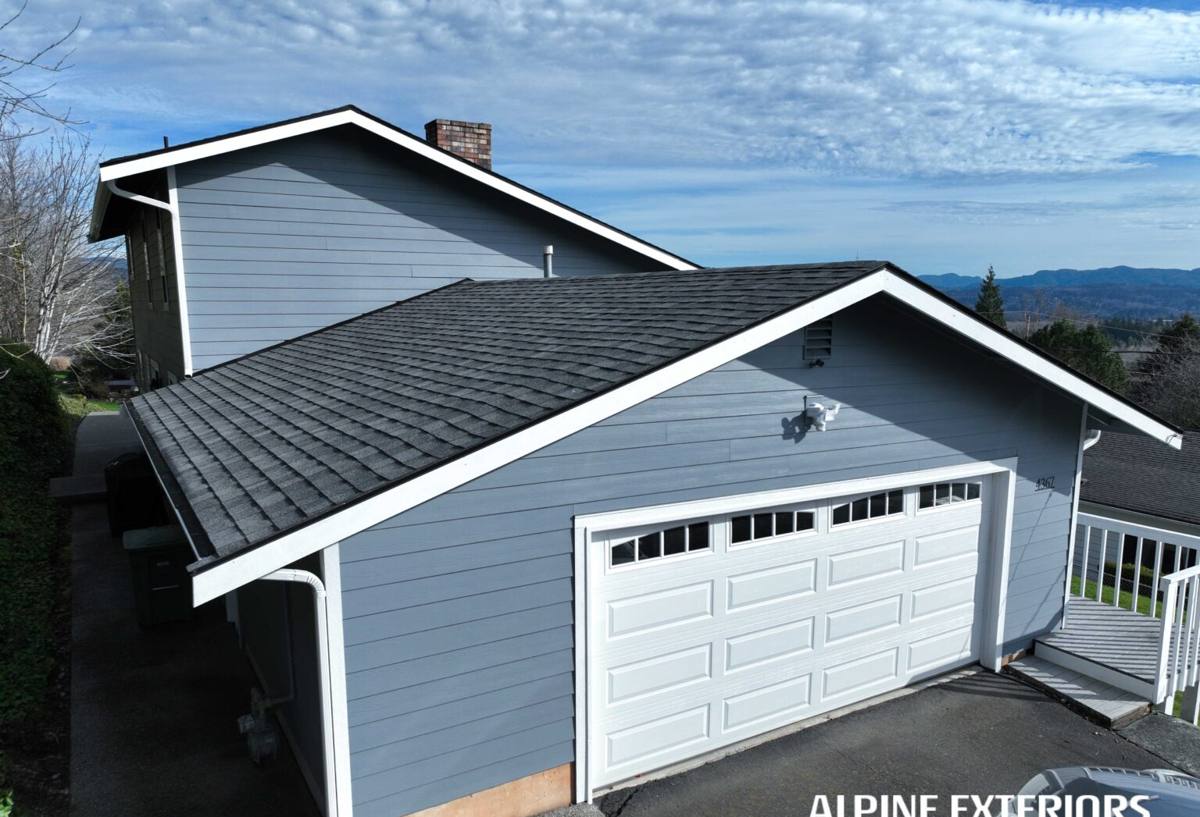
What Actually Wears Out a Roof Near Edison
Salt Air and Corrosion
Salt-carrying air doesn't need to be blowing hard to do damage — it just needs time. Standard galvanized fasteners, cheaper flashing, and exposed metal edges corrode faster this close to the water than they would in a landlocked part of the state. Once a fastener corrodes, it loses grip on the decking, and that's when shingles start to lift in wind or nail heads back out and create a leak path.
Moss and Organic Growth
Skagit County's moss season runs long — shaded roof sections, north-facing slopes, and anywhere debris collects can stay damp for weeks at a stretch. Moss isn't just cosmetic. Its root structure works into shingle granules and seams, holds moisture against the roof surface, and lifts shingle edges enough for wind-driven rain to get underneath. Left alone, a patch of moss becomes a soft spot, then a leak.
Driving Rain and Wind-Driven Water
Edison gets its share of storms pushing rain sideways off the water. Roofs built or patched without enough attention to lap direction, flashing overlap, and valley protection can handle straight-down rain fine and still leak the first time wind pushes water uphill under a shingle edge or around a chimney.
Age and Cumulative Wear
Every roof eventually shows granule loss, brittle sealant, and flashing that's worked loose from decades of freeze-thaw and thermal movement. In this climate, that wear shows up as isolated leaks and soft spots well before the whole roof is actually due for replacement — which is exactly the stage where targeted repair makes the most financial sense.
Signs an Edison Homeowner Shouldn't Ignore
- Dark streaking or thick moss growth on north-facing or shaded roof slopes
- Granules collecting in gutters or at the base of downspouts
- Rust staining below metal flashing, vents, or valleys
- Soft or spongy decking felt underfoot near chimneys, skylights, or roof-to-wall junctions
- Interior water stains that appear only during wind-driven storms, not steady rain
- Curling, cracked, or missing shingles after a windstorm
- Daylight visible through the attic roof deck at flashing or vent penetrations
What a Correct Repair Actually Involves
A roof repair that's done right starts before anyone touches a shingle. We inspect the full roof plane, not just the spot that's leaking, because water rarely enters where it shows up on the ceiling below — it travels along the deck or underlayment first. That means checking flashing at every penetration, valley condition, ridge and hip seams, and the general state of the underlayment in the affected section.
Once we know the actual source, the repair itself typically involves:
- Removing and replacing damaged shingles or panels back to sound material, not just patching over the visible gap
- Re-flashing chimneys, vents, skylights, or wall junctions where the original flashing has corroded or worked loose
- Replacing compromised underlayment in the repair area to restore the roof's actual water barrier, not just its surface layer
- Correcting nailing or fastening pattern where corrosion or poor original installation caused the failure
- Clearing moss and treating the area to slow regrowth, rather than leaving growth to continue undermining the new work
Skipping any of those steps produces a repair that looks fine for a season and then fails again in the same spot — usually during the next hard storm off the water.
Our Process, Start to Finish
1. Inspection and Diagnosis
We walk the roof and the attic when accessible, trace the actual water path, and document what we find with photos before recommending anything.
2. A Straight-Up Assessment
We explain what's failing, why, and whether it's a repair or a sign of broader wear. If a repair is the right call, we say so. If the roof is past the point where repair makes sense, we say that too.
3. Written Scope and Estimate
You get a clear, specific scope of work — what's being replaced, what materials we're using, and what it costs — before any work starts.
4. The Repair
We work the affected area back to sound decking, correct the underlying cause, and rebuild with materials matched to Edison's salt-air, high-moisture conditions.
5. Cleanup and Follow-Up
We clear debris and old material from the site, and we're reachable afterward if you have questions about how the repair is holding up through the next storm cycle.
Repair or Replace? How We Sort That Out
| Factor | Usually Points to Repair | Usually Points to Replacement |
|---|---|---|
| Extent of damage | Isolated to one section or penetration | Multiple areas failing independently |
| Roof age | Well within expected service life | At or near the end of its material's lifespan |
| Decking condition | Sound, dry decking under the damaged area | Widespread soft or rotted decking |
| Granule loss | Localized to the repair area | Uniform, heavy loss across the whole roof |
| Flashing condition | One or two points corroded or loose | Flashing failing broadly, roof-wide |
We'll tell you honestly which side of that line your roof is on. A well-timed repair on a roof with years of life left is money well spent; sinking repair after repair into a roof that's structurally at the end of its run usually isn't.
Materials That Make Sense in This Climate
For Edison-area repairs, we lean toward corrosion-resistant fasteners and flashing over standard galvanized options, because the cost difference is small compared to redoing the same repair in a few years once salt air has worked through cheaper metal. We also pay close attention to underlayment quality in repair areas — a self-adhering or high-performance underlayment at valleys, eaves, and flashing points gives the roof a real second line of defense against wind-driven rain, which matters more here than in a drier part of the county.
We're straightforward about product trade-offs. Some lower-cost materials look identical to better ones on the shelf but behave very differently after a decade of salt exposure and moss cycles — thinner metal corrodes faster, and cheaper sealants dry out and crack sooner. We'd rather explain that trade-off up front than have you find out the hard way after a repair that didn't hold.
Homeowner Maintenance Checklist for Edison Properties
- Clear moss and debris from shaded roof sections at least once a year, ideally before the wettest months
- Keep gutters and downspouts clear so water isn't backing up under the roof edge
- Trim back tree limbs that keep sections of the roof shaded and damp
- Check attic insulation and ventilation periodically — poor airflow speeds up moisture damage from the inside out
- Have flashing around chimneys, skylights, and vents inspected every couple of years, since these are the first points to fail
- Address small leaks immediately rather than waiting for a dry spell to "see if it's still happening"
Why It Matters to Hire a Crew That Already Works Edison
Roof repair isn't a one-size-fits-all trade. A crew that mostly works drier, inland areas may not think twice about standard fasteners or skip extra flashing protection at a valley, because in their normal working conditions it doesn't matter as much. A crew that regularly works Edison and the surrounding Skagit County waterfront communities has already seen which shortcuts fail first in this environment — and builds repairs that account for it from the start, rather than learning the hard way on your roof.
There's also a practical side to it: a local crew can respond faster when a storm damages your roof and you need someone out before the next system rolls through, and they're still around locally afterward if a question comes up about how the repair is holding.
Get a Straight Answer About Your Roof
If you're dealing with a leak, moss buildup, or storm damage on an Edison-area roof, we're happy to take a look and give you an honest read on what it needs — repair, monitoring, or something more. Reach out below for a free, no-pressure estimate.