 Anacortes Roofing
 Why Ship Harbor Homes Need a Different Approach to Windows
Ship Harbor sits right up against the water, on the exposed western edge of Anacortes where weather off the Strait doesn't get softened by much of anything before it hits a house. That means more wind-driven rain, more salt-laden air, and a longer stretch of the year where surfaces stay damp instead of drying out between storms. Windows here work harder than windows just a few miles inland in more sheltered parts of Skagit County, and they show wear differently — often starting at the frame corners and sill before anything visible happens to the glass itself.
A window that's rated fine for a typical Pacific Northwest install can still underperform in a spot like this if the flashing, sealants, and drainage details aren't matched to the exposure. This page is about what that match looks like in practice, not a generic rundown of window types.
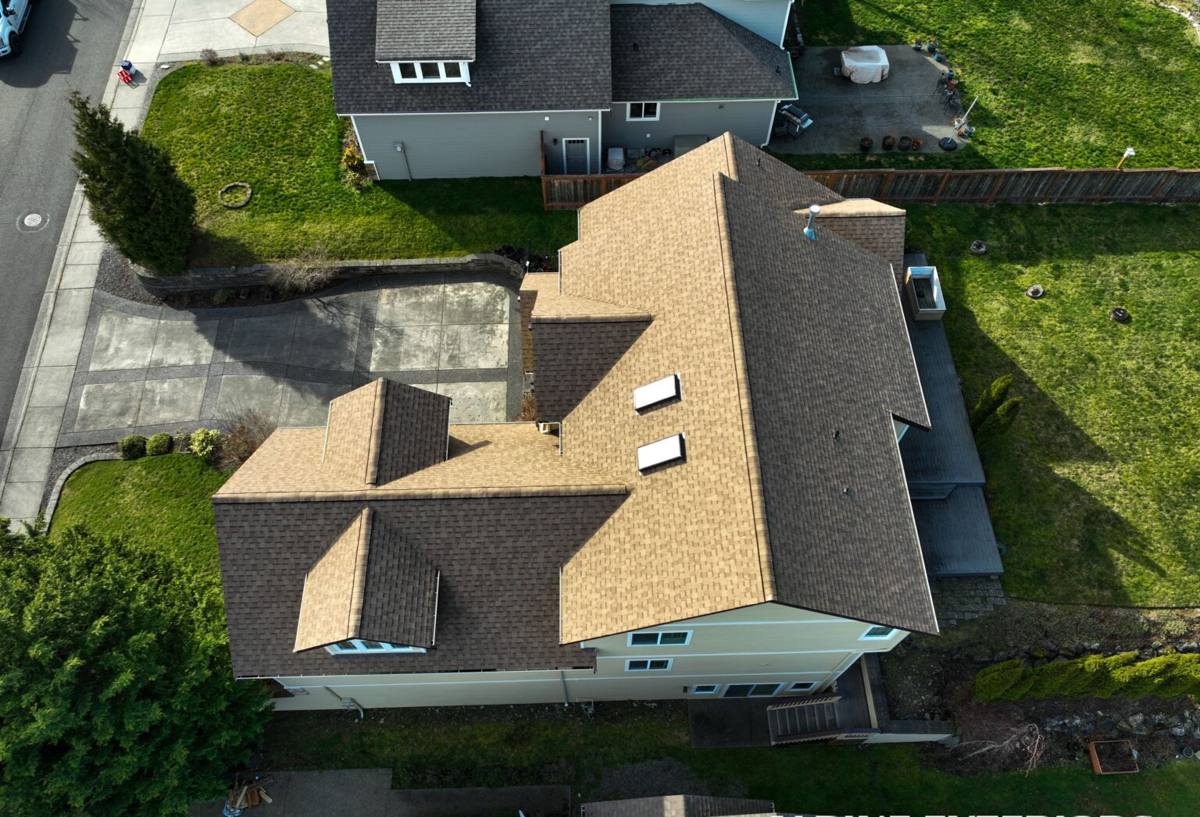
What Salt Air, Rain, and Moss Season Actually Do to Windows
Salt air and hardware
Airborne salt accelerates corrosion on anything metal — hinges, cranks, locks, and especially the fasteners holding a window frame in place. On homes near the water, we see hardware pitting and stiffening years before it would inland, and once corrosion starts on a fastener behind trim, it's not something caulk fixes.
Driving rain and wind pressure
Wind off the water doesn't just bring rain straight down — it pushes it sideways and up under trim and sills. That means the water management behind the window (the flashing and drainage plane, not just the caulk bead you can see) has to actually work, because wind pressure will find any gap that exists.
Moss and prolonged dampness
Anacortes' long moss season means north-facing and shaded window trim can stay damp for weeks at a stretch. Moss and organic buildup hold moisture against wood trim and sills, which is a slow but steady path to rot if the surface underneath isn't properly sealed and the area isn't detailed to shed water instead of trap it.
Choosing Window Materials for This Microclimate
There's no single "best" window material for every house — it depends on exposure, maintenance appetite, and budget. Here's how the common options actually perform in a salt-air, high-moisture setting like Ship Harbor.
| Material | Salt air resistance | Maintenance | Notes for this area |
|---|---|---|---|
| Vinyl | Good — won't corrode or rot | Low | Solid value pick; check hardware quality since not all vinyl lines use the same latches and rollers |
| Fiberglass | Very good — dimensionally stable, resists salt exposure well | Low | Handles temperature swings and moisture with less movement over time; higher upfront cost |
| Aluminum-clad wood | Fair to good on the exterior face | Moderate — interior wood still needs attention | Good look, but any breach in the cladding exposes wood underneath to sustained dampness |
| Bare wood | Poor without diligent upkeep | High | We steer most direct-exposure Ship Harbor homes away from this unless upkeep is a firm commitment |
We're not against wood-look aesthetics — we just frame the trade-off honestly: a material that needs regular refinishing on a house that gets this much salt spray and rain is a maintenance commitment, not a one-time choice. Fiberglass and quality vinyl tend to be the lower-hassle path for homes with direct or near-direct water exposure.
What a Correct Installation Involves
The parts you don't see are what matter most
A window looks the same from the curb whether it was installed correctly or not — the difference shows up years later. Proper installation in a high-exposure spot means:
- Correct flashing sequence so water sheds down and out over each layer, never trapped behind one
- A sloped sill pan so any water that gets past the exterior seal drains back out instead of pooling
- Sealant compatible with the window's material and rated for sustained UV and moisture exposure
- Proper shimming and fastening so the frame doesn't rack or bind, which stresses seals over time
- Insulation in the gap between frame and rough opening — not just caulk — to control both heat loss and condensation
- Corrosion-resistant fasteners and hardware appropriate for a coastal environment
Skip any one of these and the window can still look fine on install day. The failures that follow — water staining on interior sills, soft trim, fogged glass from a failed seal — usually take a season or two to show up, by which point the fix is bigger than it would have been to just do it right the first time.
Our Process for Ship Harbor Installations
Assessment
We start by looking at the existing opening, not just the window itself — checking the sheathing and framing for any dampness or rot that's already set in, since replacing a window over a compromised opening just locks the problem behind new trim.
Removal and opening prep
Old flashing and sealant get fully removed rather than covered over. Any soft wood or corroded fasteners we find get addressed before anything new goes in.
Installation
New flashing, sill pan, and window go in following the sequence above, matched to your siding type and the direction that opening faces relative to prevailing wind and rain.
Finish and check
Exterior trim and sealant are finished to shed water, and we check operation — smooth open, close, and lock — before we consider the job done.
Signs a Ship Harbor Home May Need Window Attention Now
Homeowners often wait until a window is obviously failing, but there are earlier signs worth acting on:
- Stiff or gritty-feeling cranks, latches, or locks — an early sign of corrosion inside the hardware
- Fogging or a persistent haze between panes of double-glazed units, meaning the seal has failed
- Soft or discolored trim or sill material, especially on north- or west-facing walls
- Moss or dark staining building up on sills and trim faster than on the rest of the house
- Noticeable draft or a whistle during wind events, suggesting the seal or fit has degraded
- Difficulty latching fully, which can point to frame movement or swelling
None of these mean the whole window needs replacing right away, but they're worth a look before the next storm season rather than after.
Cost Factors for This Type of Project
Pricing on window installation varies a lot by scope, so instead of a single number, here's what actually moves the cost up or down on a Ship Harbor job specifically:
| Factor | Why it matters here |
|---|---|
| Number and size of openings | Straightforward scope driver, same as anywhere |
| Material choice | Fiberglass and higher-end vinyl cost more upfront but reduce long-term maintenance in salt air |
| Condition of the existing opening | Rot or damage found behind old trim adds repair scope before the new window goes in |
| Flashing and sill detail complexity | Direct water exposure calls for more thorough water management, which takes more labor time to do right |
| Access and site conditions | Wind exposure and site layout near the water can affect scheduling and setup |
We give straight, itemized numbers rather than a vague range, because the biggest cost swing on coastal jobs is almost always what we find once old trim comes off — not the window itself.
Why a Crew That Already Works Ship Harbor Matters
Window installation isn't identical from house to house even within Anacortes — a home a block from the water needs different flashing and sealant decisions than one set back and sheltered by trees. A crew that regularly works this specific stretch of Skagit County has already seen how salt air, wind-driven rain, and moss buildup play out here over years, not just in theory. That translates into fewer surprises, materials chosen for the exposure your house actually gets, and installation details that account for what this coastline does to a building over time rather than a one-size-fits-all approach.
Keeping New Windows Performing in This Climate
Once new windows are in, a little seasonal attention goes a long way in this environment. Rinsing salt residue off exterior surfaces periodically, clearing moss and debris from sills and trim before it holds moisture, and checking hardware operation each fall before storm season are simple habits that extend the life of a correctly installed window. None of it is complicated — it just matters more here than it does a few miles inland.
If you're planning window work on a Ship Harbor home, we're happy to take a look and talk through what your specific exposure calls for. Reach out for a free, no-pressure estimate using the form below.