 Anacortes Roofing
 Asphalt Shingle Roofing Built for Oak Harbor's Marine Climate
Oak Harbor sits in one of the more demanding stretches of coastline in the Pacific Northwest for a roof. Homes here take wind off the water, salt-laden air that never fully lets up, long stretches of drizzle and driving rain in the fall and winter, and shaded, damp conditions in wooded lots that keep moss and algae active nearly year-round. Asphalt shingle roofing can absolutely hold up to all of that, but only when the materials and installation details are matched to the exposure instead of treated the same as a roof going up somewhere inland and dry.
We work throughout the Anacortes area and into Oak Harbor regularly, so this page isn't a generic rundown of shingle roofing — it's specifically about what a shingle roof needs to perform well on this stretch of Skagit and Island County coastline, what a correct installation looks like, and what to watch for as the roof ages in this climate.
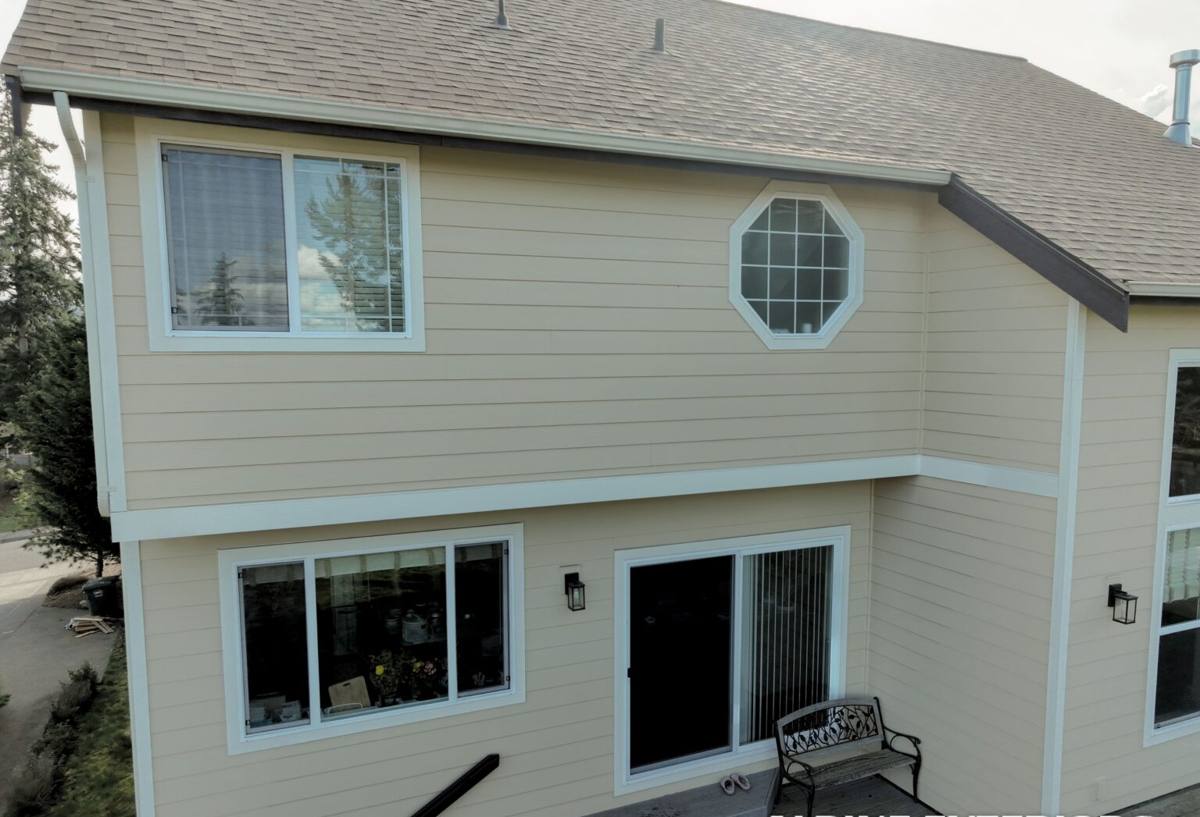
What Salt Air, Wind, and Moss Do to a Shingle Roof
Three things drive most of the shingle roofing problems we see in Oak Harbor, and they compound each other.
Salt Air and Corrosion
Airborne salt accelerates corrosion on any exposed metal — nail heads, flashing, gutter fasteners, vent stacks. A roof detailed with the wrong fastener or flashing material will show rust streaks and early failure at those points well before the shingles themselves wear out. This is why fastener and flashing choice matters more here than it would on a roof twenty miles inland.
Wind-Driven Rain
Open water exposure means wind doesn't just blow rain sideways occasionally — it does it often, and it pushes water uphill under shingle tabs and into laps that a calmer climate would never test. Underlayment coverage, shingle sealing, and fastener count all need to account for that, not just the roof's pitch and square footage.
Moss and Algae
Shaded roof sections, north-facing slopes, and anywhere debris collects stay damp far longer than they would in a drier region. That moisture supports moss growth that lifts shingle edges and holds water against the roof deck, plus algae staining that, while mostly cosmetic, is a sign of a roof surface that's staying wet too long.
None of these are reasons to avoid asphalt shingles — they're reasons to install them correctly for this specific environment, which is where a lot of roofs in this area fall short.
Choosing the Right Shingle for a Marine Exposure
Not every asphalt shingle product is a good fit for a wind- and salt-exposed roof. The differences that matter most are wind rating, algae resistance, and how the shingle handles repeated wet-dry cycling.
| Shingle Type | Typical Wind Rating | Best Fit For | Trade-Offs |
|---|---|---|---|
| 3-tab (standard) | Lower (60-70 mph class) | Budget projects, less exposed roof planes | Lighter weight, less wind margin, shorter expected service life |
| Architectural / laminate | Mid-high (110-130 mph class) | Most Oak Harbor homes, all exposures | Higher material cost than 3-tab, worth it for durability here |
| Impact-resistant (Class 3/4) | Mid-high, plus impact rating | Homes wanting extra durability or insurance credit | Higher upfront cost, may qualify for insurance discounts |
For most Oak Harbor homes, we lean toward architectural (laminate) shingles with a wind rating suited to open or partially open exposure, paired with algae-resistant granules. That combination handles the coastal wind load better and resists the streaking that shaded, damp roofs are prone to in this area. Impact-resistant shingles are worth discussing if a homeowner wants the extra margin or is checking into insurance credits, but they're not a requirement for a sound roof here.
What a Correct Installation Actually Involves
A shingle roof is only as good as what's underneath it. In a climate like this, the underlayment, flashing, and fastening details do as much work as the shingles themselves.
Tear-Off and Deck Inspection
We remove the old roofing down to the deck rather than layering over it, because that's the only way to actually see the condition of the sheathing. Wood that's gone soft from long-term moisture intrusion — common around old flashing or valleys that have been leaking slowly — gets replaced before anything new goes down. Roofing over a compromised deck just hides the problem.
Underlayment and Ice-and-Water Protection
We use a synthetic underlayment as the primary water-resistive layer across the field of the roof, with self-adhered ice-and-water membrane at the eaves, valleys, and any roof-to-wall transitions — the spots most likely to see wind-driven rain push water backward under the shingles. This is a detail that's easy to skip or minimize, and it's one of the first things we check when we inspect an older Oak Harbor roof that's leaking.
Flashing Details
Chimneys, skylights, sidewalls, and valleys get properly integrated step flashing and counterflashing rather than relying on sealant alone. In salt air, we pay close attention to flashing material and fastener compatibility so we're not setting up a corrosion problem a few years down the road.
Nailing Pattern and Wind Rating
Shingles are only rated for the wind speeds their manufacturer specifies if they're nailed per spec — correct nail count, placement in the nailing zone, and ring-shank fasteners where called for. On a wind-exposed roof plane, sloppy nailing is often the real reason shingles start lifting or blowing off, not a defect in the shingle itself.
Ventilation
Balanced intake and exhaust ventilation keeps the attic and roof deck at a stable temperature and moisture level, which matters for shingle life and for controlling condensation in a damp climate. We check existing ventilation on every reroof and correct it when it's undersized or blocked.
Signs Your Oak Harbor Roof Needs Attention
Because moss, algae, and wind exposure act on a roof gradually, a lot of damage builds up before it shows up as an obvious leak. Worth checking for:
- Granules collecting in gutters or at downspout outlets
- Shingles that are curling, cupping, or lifting at the edges
- Moss growth on north-facing or shaded slopes
- Dark streaking across the roof field (algae staining)
- Exposed or rusted nail heads
- Cracked or missing shingles after a windstorm
- Soft spots, staining, or daylight visible in the attic
- Flashing that's separated, rusted, or resealed with visible caulk patches
Any one of these on its own isn't necessarily an emergency, but a roof showing several of them at once is usually past the point where a small repair fixes it.
What Affects the Cost of a New Shingle Roof
Every roof is priced on its own specifics, but the factors that move the number are consistent. This gives a general sense of what drives cost up or down, not a quote.
| Factor | Why It Matters |
|---|---|
| Roof pitch and complexity | Steeper roofs and more valleys/hips take longer and need more safety setup and flashing work |
| Number of tear-off layers | Removing multiple old layers adds labor and disposal cost versus a single-layer tear-off |
| Deck condition | Rotted or soft sheathing needs replacement before new roofing goes down |
| Accessibility | Steep lots, limited driveway access, or tight setbacks near neighboring homes affect staging and cleanup |
| Ventilation upgrades | Adding or correcting intake/exhaust venting is worthwhile but adds material and labor |
| Shingle class chosen | Architectural and impact-resistant products cost more per square than standard 3-tab |
| Chimneys, skylights, penetrations | Each one needs individual flashing work, which adds time regardless of roof size |
Maintenance in a Moss-Prone, Salt-Air Environment
A well-installed shingle roof in this climate still benefits from some upkeep. Keeping gutters and valleys clear of needles and debris reduces the standing moisture that feeds moss growth. Trimming back overhanging branches on shaded sides of the roof cuts down on the damp, low-light conditions moss favors. Periodic moss treatment — done carefully, without pressure-washing the granules off the shingles — extends the life of the roof surface. And after any significant windstorm off the water, a quick visual check for lifted or missing shingles catches small damage before it becomes a leak. None of this requires a maintenance contract; it's just the reality of owning a roof in a marine climate.
Why a Crew That Already Works Oak Harbor Matters
Oak Harbor and Anacortes sit across the water from each other but fall under different counties — Island County versus Skagit County — with their own permitting processes and inspection expectations. A crew that regularly works both sides of that line already knows the paperwork, the local wind exposure differences between a waterfront lot and a more sheltered inland one, and which flashing and fastener choices actually hold up here versus what a manufacturer's generic spec sheet assumes.
That local experience shows up in the details that don't get discussed on a sales visit but determine how the roof performs in year five, ten, and twenty: how the valleys are built, how the ridge vent is tied in, whether the fasteners were chosen for salt exposure, and whether the crew took the wind rating seriously instead of just matching whatever shingle was already on the roof.
Get a Straightforward Look at Your Roof
Whether you're dealing with visible moss, a roof that's simply reaching the end of its service life, or you just want an honest read on how many years you've got left, we're happy to take a look and walk through what we find. The estimate is free, there's no pressure attached to it, and you'll get a plain explanation of the roof's condition and your options — just fill out the form below to get started.