 Anacortes Roofing
 Asphalt Shingle Roofing Built for Sedro-Woolley Conditions
Sedro-Woolley sits a bit inland from Anacortes, tucked against the Skagit Valley with more tree cover and shade than you'll find along the water. That changes how a roof ages here. Homes closer to the coast deal more directly with salt air working on metal components; homes in Sedro-Woolley deal more with shaded roof planes, slower drying times after a storm, and a longer moss season because sun exposure is limited by surrounding trees for a good part of the day. Add in the driving rain that comes through Skagit County most of the winter, and you've got a roof that's under near-constant moisture pressure for months at a time. Asphalt shingles handle this well when they're specified and installed correctly for the conditions. They handle it poorly when a crew treats every roof the same way regardless of where it sits.
This page is about one thing: asphalt shingle roofing, done right, for houses in and around Sedro-Woolley. Not a general overview of every roofing material we offer — just what this specific job requires in this specific place.
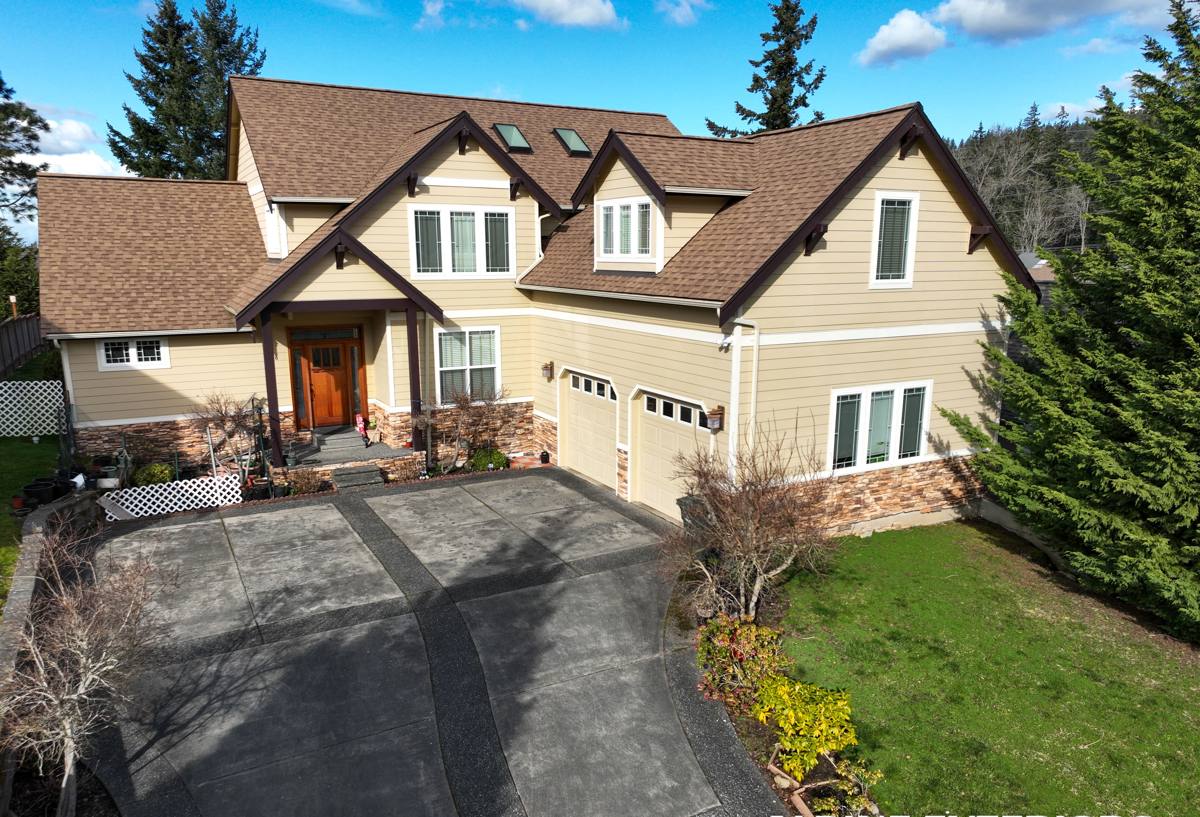
Why Asphalt Shingles Still Make Sense Here
Asphalt shingle roofing remains the most common roof type in Skagit County for good reason. It's a proven, well-understood system that most manufacturers back with solid warranties, it's serviceable by any licensed roofer down the road (not a specialty product only a handful of installers know how to work with), and it holds up well against wind-driven rain when the underlayment and flashing details are done correctly underneath it. The material itself isn't the weak point in most roof failures we see — the installation is. A shingle roof put on without attention to ventilation, ice-and-water protection at the vulnerable spots, and proper nailing will underperform no matter how good the shingle bundle is. A shingle roof put on correctly will do exactly what it's rated to do.
For Sedro-Woolley specifically, that means paying close attention to the parts of the roof that stay damp longest — north-facing slopes, areas under overhanging trees, valleys where water and debris collect — because that's where moss gets a foothold and where granule loss and premature aging start.
What Local Climate Actually Does to a Shingle Roof
Driving Rain
Skagit County storms don't just fall straight down — wind pushes rain sideways under shingle tabs, into exposed nail heads, and up under flashing that isn't sealed correctly. A roof that would be fine in a drier climate with sloppier flashing work will leak here. This is why we treat flashing detail — around chimneys, skylights, dormers, and roof-to-wall transitions — as the part of the job that determines whether the roof actually performs, not just how it looks from the street.
Long Moss Season
Moss needs shade and moisture to establish, and Sedro-Woolley's tree cover provides plenty of both for much of the year. Moss holds moisture against the shingle surface longer than the shingle was designed to tolerate, and over time it lifts tabs and works granules loose. Once moss gets established on a roof, it keeps coming back until the underlying conditions — shade, debris buildup, poor drainage — are addressed, not just the moss itself.
Salt Air and Corrosion
Homes closer to the water around Anacortes see faster corrosion on exposed metal — flashing, fasteners, vents — than homes further inland. Sedro-Woolley isn't right on the water, but it's still Skagit County, and homes here aren't immune to the broader marine-influenced climate that keeps humidity elevated for long stretches. We spec fasteners and flashing metal with that regional reality in mind rather than assuming an inland location means no concern at all.
Slow Drying Times
A roof in full sun dries out between rain events. A shaded roof in Sedro-Woolley may stay damp for days after a storm passes. That extended dampness is the single biggest driver of moss growth, algae staining, and accelerated granule loss on shingle roofs in this area.
Signs a Sedro-Woolley Roof Needs Attention
- Moss visible on north-facing slopes, valleys, or anywhere shaded by trees
- Dark streaking or discoloration across shingle courses (algae, not just dirt)
- Granules collecting in gutters or downspout splash areas
- Shingle tabs that are curling, cupping, or lifting at the edges
- Soft or spongy decking felt underfoot near valleys or eaves
- Daylight visible through the roof deck from inside the attic
- Rust staining around vent pipes, flashing, or exposed fasteners
- Interior ceiling stains, especially after a stretch of heavy rain
None of these mean a full replacement is automatically necessary — some are maintenance issues, others point to a roof nearing the end of its service life. The honest answer usually requires a look at the actual roof, not a guess from a list.
What a Correct Asphalt Shingle Installation Involves
A shingle roof is a system, not just a layer of shingles. Every component underneath the visible surface matters for how the roof performs in this climate:
Deck Inspection and Repair
Before anything goes down, the decking gets inspected for soft spots, delamination, or rot — especially around valleys and eaves where moisture sits longest. Installing new shingles over a compromised deck just hides the problem; it doesn't fix it.
Ice-and-Water Shield at Vulnerable Areas
Eaves, valleys, and areas around penetrations get a self-adhering waterproof membrane underneath the shingles, not just standard felt. This is the backup layer that keeps water out if wind-driven rain gets past the shingle surface itself — a real scenario in Skagit County storms.
Synthetic Underlayment
Across the rest of the roof, a synthetic underlayment provides a second line of defense and holds up better than old-style felt paper against the moisture exposure a roof sees during a multi-day install in changeable weather.
Flashing
New step flashing at walls and dormers, new flashing around chimneys and skylights, and correctly lapped valley flashing. Reusing old flashing to save time is one of the most common shortcuts that leads to callbacks — we don't do it.
Ventilation
Balanced intake and exhaust ventilation keeps the attic temperature and moisture level in check, which protects the deck from the underside and helps prevent the kind of trapped moisture that speeds up moss and mold growth from inside out. This is one of the most overlooked parts of a roofing job and one of the most important for long-term performance in a shaded, damp climate like Sedro-Woolley's.
Correct Nailing
Manufacturer-specified nail count and placement, driven flush (not overdriven, which cuts into the shingle and weakens wind resistance). This is a five-minute detail that determines whether a roof holds up in a windstorm or loses shingles in the first bad blow.
Choosing the Right Shingle for This Climate
Not every asphalt shingle product is a good fit for a shaded, damp, moss-prone area. The table below covers the main factors worth weighing for a Sedro-Woolley home specifically.
| Factor | What to Look For | Why It Matters Here |
|---|---|---|
| Algae Resistance | Shingles with algae-resistant (AR) granules | Reduces the dark streaking and staining common on shaded, damp roof planes |
| Wind Rating | Higher wind-rated architectural shingles | Skagit County gets sideways-driving storms; a higher rating means better tab adhesion |
| Shingle Style | Architectural (dimensional) over 3-tab | Thicker laminate holds up better to prolonged moisture exposure and generally carries a stronger warranty |
| Warranty Structure | Manufacturer warranty plus workmanship coverage from the installer | Material defects and installation errors are different problems; you want both covered |
| Color | Slightly lighter or mid-tone shades | Very dark colors show algae staining and granule loss more visibly over time |
We don't push a single brand as the only option — we walk through what fits the specific roof, the budget, and the shade conditions on that property, and explain the trade-offs honestly rather than upselling a premium line that isn't necessary.
Our Process, Start to Finish
- Free on-site inspection — we look at the actual roof, not just photos or a satellite view, and check attic ventilation and decking condition where accessible.
- Written estimate — a clear scope of work and price, no vague allowances or surprise add-ons later.
- Material selection — we go over shingle options suited to the roof's sun/shade exposure and your budget.
- Scheduling around weather — we plan install windows with Skagit County's rain patterns in mind rather than rushing a job into a forecasted storm.
- Tear-off and deck inspection — old roofing comes off, decking gets checked and repaired as needed before anything new goes down.
- Full system install — ice-and-water shield, underlayment, flashing, shingles, and ventilation components installed to manufacturer spec.
- Cleanup and magnetic sweep — job site and yard cleared of debris and stray nails.
- Final walkthrough — we go over the finished roof with you before calling the job done.
Moss Prevention and Ongoing Maintenance
A well-installed roof still benefits from upkeep in a climate like this one. A short annual maintenance routine goes a long way toward getting full service life out of the roof:
- Keep gutters and valleys clear of leaves and needles that trap moisture against the shingles
- Have overhanging branches trimmed back to reduce shade and debris drop where practical
- Remove moss gently — never with a pressure washer, which strips protective granules and shortens shingle life
- Check attic ventilation isn't blocked by insulation or debris
- Schedule a roof check after any major windstorm, not just on a fixed calendar schedule
- Address small leaks or lifted shingles promptly — they don't get better on their own in a wet climate
Why Local Experience in Sedro-Woolley Matters
A roofing crew that works Sedro-Woolley regularly knows which roof orientations hold moisture longest, which neighborhoods have heavier tree cover, and how the local building department handles permitting and inspections for reroofs. That familiarity shows up in fewer surprises during the job and a roof that's specified correctly for the property from the start, instead of a generic install that ignores the shade and drainage realities of the site. It also means we're not driving in from out of the area for warranty work or a follow-up question — we're already working in Skagit County.
If you're weighing a repair against a full replacement, or just want an honest read on how much roof life you have left, we're happy to take a look. Reach out for a free, no-pressure estimate using the form below — we'll give you a straight answer about what your roof actually needs.