 Anacortes Roofing
 Why Board & Batten Fits Bow's Coastal-Edge Climate
Bow sits along Samish Bay in Skagit County, close enough to open water that salt-laden air is a real factor in how siding ages here, not just a talking point. Add Skagit County's long wet season, driving rain off the Sound, and the shaded, damp conditions that bring on moss growth for much of the year, and you've got a climate that's genuinely hard on exterior materials. Board & batten siding — with its bold vertical lines and exposed seams — can be a great fit for the farmhouse, craftsman, and rural-modern homes common around Bow, but only if the material underneath the good looks can actually take the punishment.
Salt Air and Moisture
Salt air accelerates corrosion on fasteners and trim, and it degrades fiber and finish quality on lower-grade siding products faster than inland installations ever see. Combined with wind-driven rain, any siding profile with vertical joints — which is exactly what board & batten is — needs a water management plan behind it, not just a good caulk job on the face.
Moss Season and North-Facing Walls
Shaded, north- and west-facing walls in this part of Skagit County stay damp for extended stretches, especially under tree cover, which is common on Bow properties. Moss and algae take hold on siding that can't shed water and dry out between rain events. That's a maintenance issue on any product, but it's a durability issue on products that absorb moisture into their core.
What Correct Board & Batten Installation Actually Requires
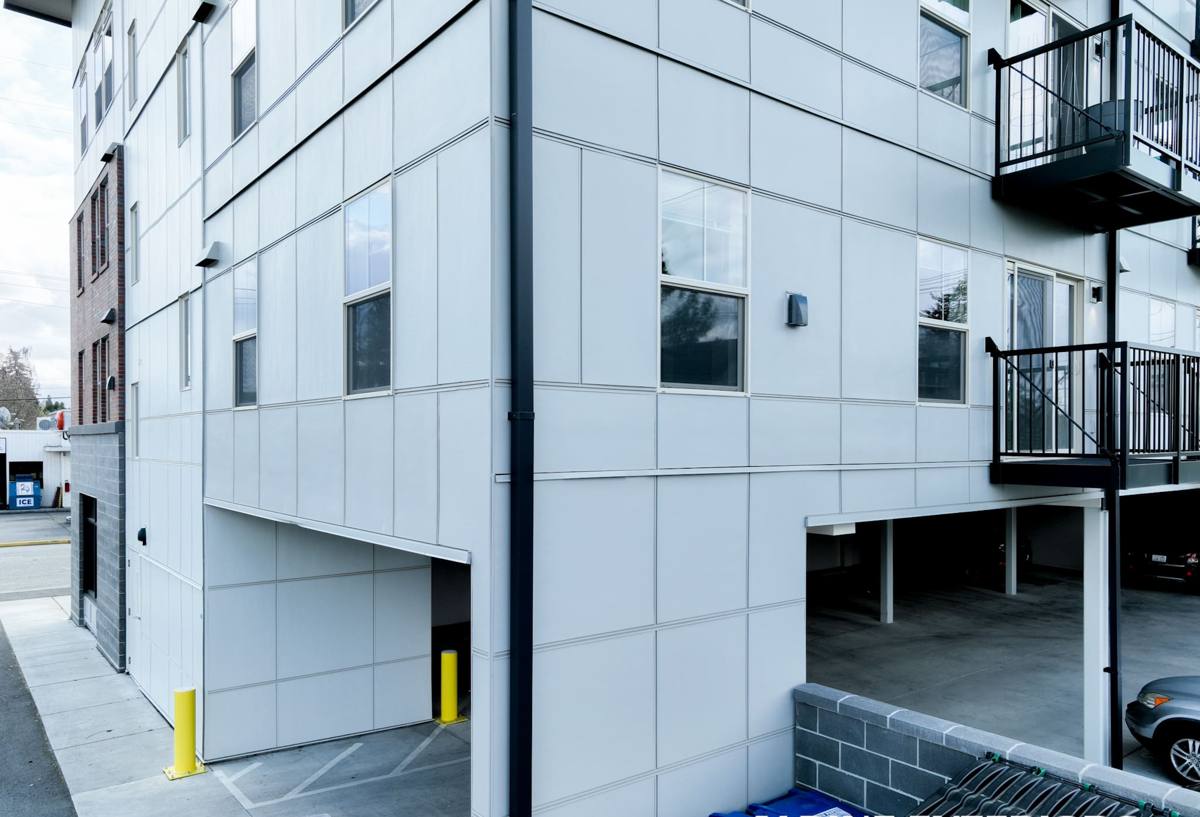
Board & batten looks simple — vertical panels with strips covering the seams — but the visible seams are also the most vulnerable part of the wall if it's installed wrong. A correct installation is mostly about what you don't see.
A Drainage Gap Behind the Siding
Any vertical siding installed directly against the wall sheathing traps moisture that gets past the outer layer. The correct approach uses a rainscreen or furring strip system that creates a small air gap behind the panels, so bulk water can drain and the wall can dry from both sides. Skipping this step is one of the most common shortcuts we see on board & batten jobs, and it's the one most likely to cause hidden rot years down the road.
Batten Spacing and Fastening
Battens need consistent spacing, correct fastener length and placement to hit framing (not just sheathing), and enough clearance at the panel edges to allow for material movement without cracking the caulk line. Fastening through the wrong layer, or overdriving nails, is a quiet failure point that doesn't show up until a seam starts leaking.
Flashing at Every Penetration and Trim Line
Windows, doors, hose bibs, light fixtures, and roof-to-wall intersections all need proper flashing integrated with a weather-resistant barrier before the siding goes on. Board & batten's vertical seams make flashing details around openings even more important than on lap siding, since water running down the wall face has more joints to find on its way down.
Why We Install James Hardie Board & Batten Only
We install James Hardie fiber cement exclusively — no vinyl, no LP SmartSide, no primed wood, no other fiber cement brands. For board & batten specifically, that means HardiePanel vertical siding paired with Hardie trim battens, engineered as a matched system rather than mixed components from different manufacturers.
Built for This Climate, Not Just Rated for It
James Hardie's HZ5 product line is engineered for the Pacific Northwest's combination of moisture and moderate freeze exposure. Fiber cement doesn't absorb water into a wood-based core the way engineered wood siding can, and it won't corrode like some metal or rot like untreated wood trim — which matters directly on a site exposed to salt air and long wet stretches.
ColorPlus Finish vs. Field-Painted Siding
James Hardie's ColorPlus finish is baked on at the factory under controlled conditions, with better adhesion and UV resistance than siding painted on-site after installation. On a project with as many exposed seams as board & batten, that finish quality matters at every batten edge and panel joint — those are the spots where field-applied paint tends to fail first. Cut edges still get factory-matched touch-up product during install, but the field is never relying on job-site paint to hold the line.
A Warranty You Can Actually Use
James Hardie backs its siding with a strong, transferable limited warranty — a real factor for Bow homeowners who may sell in the years ahead. A warranty is only worth as much as the installation behind it, though, which is why correct fastening, flashing, and drainage details matter as much as the product choice itself.
Our Process for a Bow Board & Batten Project
- On-site assessment. We look at wall orientation, existing moisture damage, roofline intersections, and how exposed the home is to prevailing wind and rain.
- Tear-off and sheathing check. We remove the old siding and inspect sheathing for rot or soft spots before anything new goes up — problems get fixed, not covered.
- Weather-resistant barrier and drainage plane. A code-compliant WRB goes down first, followed by the furring or rainscreen system that gives the wall room to drain and dry.
- Flashing at every opening. Windows, doors, and penetrations get flashed and integrated with the barrier before panels are installed.
- HardiePanel and batten installation. Panels and battens are fastened per James Hardie's published installation specs — correct spacing, correct fastener embedment, correct clearances.
- Trim, caulking, and touch-up. Cut edges are sealed and touched up with matched product; trim is finished to shed water at every horizontal surface.
- Final walkthrough. We review the finished work with you before calling the job done.
Board & Batten vs. Other Siding Profiles for Bow Homes
| Profile | Look | Key Installation Consideration |
|---|---|---|
| Board & Batten (vertical) | Farmhouse, rustic-modern, strong vertical lines | More seams to manage; drainage gap and flashing detail are critical |
| Lap Siding (horizontal) | Traditional, widely used across the region | Fewer vertical joints; each course naturally sheds water downward |
| Panel + Trim Combination | Board & batten accents mixed with lap fields | Requires careful transition detailing between profiles |
Board & batten isn't "better" or "worse" than lap siding structurally — both perform well when installed correctly in fiber cement. The choice usually comes down to the architectural style of the home and how the vertical lines read against the roofline and trim.
What Affects the Cost of a Board & Batten Job in Bow
| Factor | Why It Matters |
|---|---|
| Wall exposure and orientation | Sides facing prevailing wind and rain need extra attention to drainage and flashing |
| Existing sheathing condition | Rot or moisture damage found at tear-off adds repair scope before new siding goes on |
| Number of window and door openings | Each opening adds flashing and trim detail work |
| Batten spacing and reveal design | Tighter spacing or custom reveal patterns take more material and labor |
| Site access | Rural lots, tree cover, or limited driveway access affect setup and material staging |
We don't quote board & batten jobs off a generic per-square-foot number — the assessment above is how we build an honest estimate for your specific home.
Living With Board & Batten Siding After Installation
Correctly installed James Hardie board & batten is low-maintenance, but "low" isn't "none" — especially with Bow's moss and moisture exposure.
- Rinse siding periodically to clear pollen, salt residue, and organic buildup before it takes hold, especially on shaded walls.
- Keep gutters clear so overflow doesn't run down the wall face and concentrate water at specific seams.
- Trim back vegetation and tree cover where practical to let shaded walls dry out between rain events.
- Have caulking and touch-up areas inspected every few years — small gaps are cheap to fix and expensive to ignore.
What to Ask Before You Hire for Board & Batten Work
- Will you install a drainage gap or rainscreen behind the panels, or is it going direct-to-sheathing?
- What flashing details will you use at windows, doors, and roof-to-wall intersections?
- Is the fastening pattern and battens spacing based on the manufacturer's published specs?
- What's covered under the product warranty, and is it transferable if I sell the home?
- Have you installed board & batten on homes in this area before, in this climate?
Why a Crew That Already Works Bow Matters
Board & batten's exposed seam pattern leaves less room for installation shortcuts than most siding profiles — and Bow's combination of salt air, wind-driven rain, and moss-prone shaded walls leaves even less room for guesswork. A crew that already understands how Skagit County's coastal-edge conditions behave on a wall isn't learning that on your project. We install James Hardie fiber cement exclusively because we've seen what holds up out here and what doesn't, and board & batten done right — with proper drainage, flashing, and a factory finish that isn't relying on job-site paint — is built to handle it.
If you're considering board & batten siding for a home in Bow, we're happy to take a look and walk you through what a correct installation involves for your specific property. Reach out for a free, no-pressure estimate using the form below.