 Anacortes Roofing
 Flounder Bay's Climate Is Harder on Siding Than It Looks
Flounder Bay sits close enough to the water that homes here take a different kind of beating than a house a few miles inland. Salt-laden air works on fasteners, trim, and paint film year-round. Winter storms off Rosario Strait push driving rain sideways into wall assemblies, not just straight down onto roofs. And the long gray stretch from fall through spring keeps north-facing and shaded walls damp long enough for moss and algae to take hold and stay there. None of that is unique to one street or one house — it's the baseline condition for anything built near the water in this part of Skagit County.
Board and batten siding, done right, actually holds up well against these conditions. Done wrong — with the wrong material or sloppy installation — it becomes a moisture trap behind a good-looking facade. The difference is almost entirely in the material choice and the install details, which is the whole point of this page.
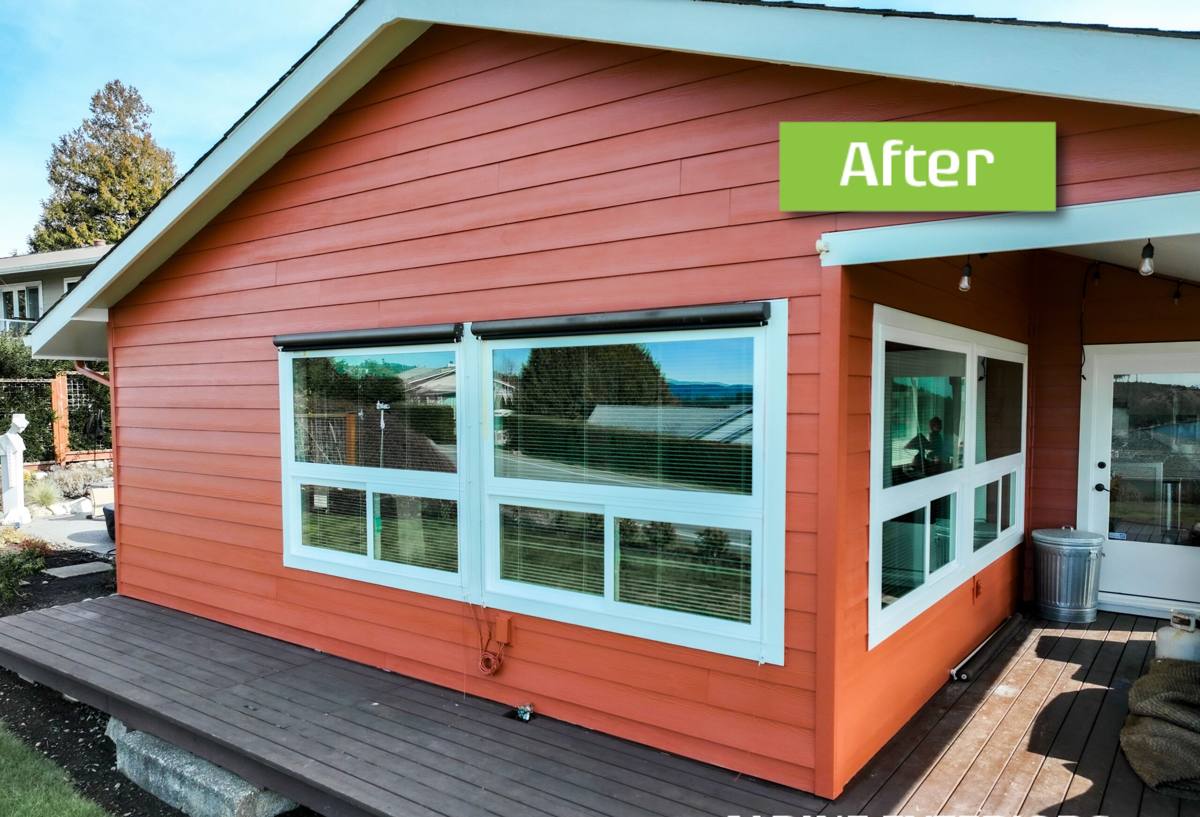
What Board & Batten Siding Actually Is
Board and batten is a vertical siding pattern: wide flat panels or boards installed vertically, with narrower strips (battens) covering the seams between them. It's a classic look on Pacific Northwest homes — modern farmhouse builds, craftsman-style remodels, and waterfront cottages all lean on it because the vertical lines read as clean and intentional rather than busy. It also pairs well as an accent against horizontal lap siding, which is common on Flounder Bay homes that want a gable, dormer, or entry feature to stand out.
The pattern itself isn't complicated. What matters is what's underneath it and what it's made of. Vertical seams and batten joints create more places for water to find a way in than a lapped horizontal profile does, which means the material and the flashing details behind it carry more of the weatherproofing load.
Why the Vertical Profile Matters Near the Water
Horizontal lap siding is designed to shed water downward, lap over lap, the way rain naturally falls. Board and batten runs against that logic — water can run down a batten joint and sit against a seam longer than it would on a horizontal lap. That's fine on a material that doesn't swell, doesn't wick water through its face, and holds paint without cracking at the joint. It's a real problem on a material that does any of those things, especially with the wind-driven rain this area sees several months a year.
Why We Only Install James Hardie for This Application
We install exclusively James Hardie fiber cement siding — no vinyl, no LP SmartSide, no Cemplank, no Allura, no primed spruce or cedar board and batten. That's not a marketing position; it's a standard we hold because of what we've seen happen to the alternatives specifically in vertical, seam-heavy applications like this one, in a climate like this one.
Wood board and batten looks great new. But real wood swells and shrinks with moisture, which stresses the battens and paint film at exactly the seams that are doing the weatherproofing work. In a salt-air, high-moisture environment, that shows up as cracked caulk lines, checking paint, and eventually rot at the base of boards and around battens — usually within a handful of years, not decades. Engineered wood products carry their own moisture-sensitivity concerns at cut edges and panel seams, which is a real liability in a vertical profile with more seams per square foot than lap siding. Vinyl board and batten is low-maintenance but it's a thin plastic profile — it doesn't hold color the way a factory finish does, it can warp or fade with sustained UV and temperature swings, and it doesn't project the same solid, substantial look that board and batten is usually chosen for in the first place.
Fiber cement doesn't swell, doesn't rot, and doesn't feed the moss and algae growth the way wood substrates can. That's the deciding factor for us on this specific product.
The James Hardie Board & Batten System
James Hardie's vertical siding options give us a board and batten look built from fiber cement rather than wood: dimensionally stable panels finished with battens over the seams, or trim boards used to create the same visual pattern with Hardie's panel products. Panels are manufactured with ColorPlus Technology, a factory-applied, baked-on finish that's engineered to hold color and resist fading, chipping, and cracking far better than field-applied paint — which matters directly here, since it's the paint film at the seams that fails first on lesser materials.
Hardie's HZ10 formulation is engineered for wetter, harsher climates like the Pacific Northwest, with additional resistance to moisture damage compared to their standard formulation. It's also non-combustible, which matters for insurance conversations regardless of climate. And it carries a long, transferable manufacturer warranty on both the substrate and the ColorPlus finish — a warranty that means something because the product is dimensionally stable enough to actually earn it.
Board & Batten Material Comparison
| Material | Moisture behavior | Finish durability | Typical concern in this climate |
|---|---|---|---|
| James Hardie fiber cement | Dimensionally stable, does not swell/rot | Factory ColorPlus finish, long warranty | Requires correct fastening and flashing at install |
| Cedar or primed spruce | Swells, shrinks, absorbs moisture | Field-applied paint, needs recoating | Rot and paint failure at seams over time |
| LP SmartSide / engineered wood | Moisture-sensitive at cut edges/seams | Factory finish, moderate durability | Edge swelling if seams aren't sealed correctly |
| Vinyl | Does not rot, but can warp with heat | Color molded in, fades over time, no repaint option | Thin profile, less substantial appearance |
What a Correct Board & Batten Install Actually Involves
The material choice solves half the problem. The other half is installation, and this is where a lot of board and batten jobs — regardless of material — go wrong. A few non-negotiables:
- Proper weather-resistive barrier and rain screen or drainage gap behind the siding, so any water that does get past the surface has somewhere to go and can dry out
- Correct flashing at every window, door, and horizontal transition — board and batten's vertical seams mean flashing details at penetrations matter even more than on lap siding
- Manufacturer-specified fastener spacing and type, driven correctly (not overdriven, which cracks the material, and not underdriven, which lets it move)
- Battens installed with the gaps and fastening pattern James Hardie specifies, not just butted tight for looks
- Caulking and sealant only where Hardie's installation instructions call for it — over-caulking seams that are supposed to breathe traps moisture instead of shedding it
- Proper clearance at the base of the wall and any grade-to-siding gap, so splashback and standing moisture aren't sitting against the bottom course
Skipping any one of these doesn't usually show up in year one. It shows up in year four or five, as a stain, a soft spot, or a seam that's opened up — right when driving rain season finds the weak point.
Our Process on a Flounder Bay Job
We start with a walk-around and an honest look at what's actually happening on the walls now — moisture staining, moss buildup, failed caulk, soft trim — because that tells us as much about the wall assembly as it does about the old siding. From there:
- Assessment of existing siding, sheathing, and any moisture intrusion already present
- Removal of old siding and inspection of the sheathing underneath before anything new goes up
- Correction of any water-damaged sheathing or framing found during tear-off — this gets flagged and discussed before we cover it back up
- Installation of weather-resistive barrier and drainage plane appropriate to the wall assembly
- Flashing at every window, door, and penetration, installed to shed water outward and downward
- James Hardie board and batten install to manufacturer fastening and gapping specification
- Final walkthrough covering warranty registration and what maintenance (if any) the homeowner should expect
Why a Crew That Already Works in Flounder Bay Matters
Siding installation isn't one-size-fits-all across a region — a wall that faces open water and takes direct wind-driven rain needs more attention to flashing and drainage than a sheltered wall a few blocks inland. A crew that's already worked on homes in this neighborhood has seen how that plays out here specifically: which elevations take the worst of the weather, how moss tends to establish on shaded walls, and what the salt air does to fasteners and trim over a few winters. That's not something you can fully substitute with general experience from a different part of the county — it's local pattern recognition, and it shows up in fewer callbacks down the road.
It also means we're not learning on your house. We show up with the flashing and fastening details already dialed in for this specific exposure, not figuring it out job by job.
What to Expect for Maintenance and Longevity
A correctly installed James Hardie board and batten system is genuinely low-maintenance, not zero-maintenance. Expect to rinse off surface dirt, pollen, and moss buildup periodically — how often depends on how shaded and exposed a given wall is. The ColorPlus finish doesn't need repainting on the schedule a wood system would, but keep an eye on caulking at trim joints over the years and have it inspected periodically, especially after a hard storm season. Because the substrate itself doesn't rot or swell, small maintenance items stay small instead of turning into structural repairs.
Questions Worth Asking Before You Sign a Contract
- Is the quoted product James Hardie, and which line and profile specifically?
- Does the quote include tear-off and sheathing inspection, or just install over existing siding?
- What weather-resistive barrier and drainage approach is included?
- Who is responsible for flashing at windows and doors — is it itemized or assumed?
- Is the installer a James Hardie-recognized contractor, and what does that warranty cover?
- What's the payment schedule, and is there a written warranty on workmanship separate from the manufacturer's material warranty?
If you're weighing board and batten siding for a home in Flounder Bay, we're happy to take a look and give you a straight answer on what your walls actually need — no pressure, no upsell. Use the form below to request a free estimate.