 Anacortes Roofing
 Asphalt Shingle Roofing Built for Bow's Climate
Bow sits close enough to Samish Bay and the open water around Skagit County that homes here take on a different kind of weather load than roofs just a few miles inland. Salt-laden air, wind-driven rain off the water, and a moss season that can run most of the year all work against a roof that isn't installed and maintained with this specific environment in mind. Asphalt shingles remain one of the most practical roofing choices for this area when the installation accounts for what the climate actually does to a roof over time, not just what it looks like on install day.
We work on homes throughout the Bow area regularly, alongside our broader service territory around Anacortes and the rest of Skagit County. That means we're not guessing at how a roof here ages — we're looking at roofs we installed or repaired seasons ago and adjusting our approach based on what actually holds up.
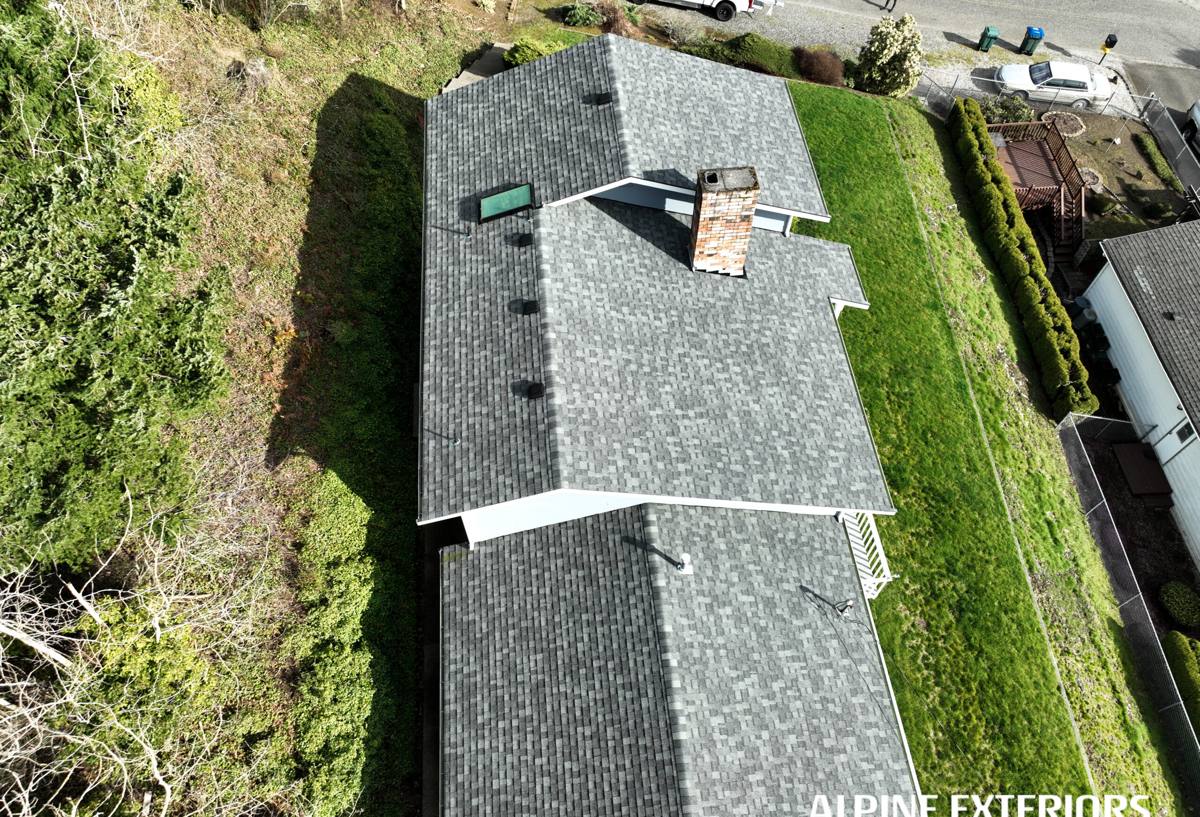
What Salt Air, Rain, and Moss Actually Do to a Shingle Roof
Salt Air and Metal Fasteners
Homes closer to the water deal with airborne salt that accelerates corrosion on any exposed metal — nail heads, flashing edges, and fasteners on vents and pipe boots. A roof installed with standard-grade fasteners in a coastal-influenced area will show rust streaking and early fastener failure well before a roof of the same age set back further inland. This is a material selection issue as much as an installation issue.
Driving Rain and Wind-Driven Water
Rain that comes in at an angle, pushed by wind off the water, doesn't behave like rain falling straight down. It gets forced under shingle tabs, around flashing edges, and into any gap that a fair-weather installation might get away with elsewhere. Roofs in this area need tighter sealing at every transition point — valleys, chimneys, skylights, and roof-to-wall junctions — because wind-driven rain will find the shortcut if there is one.
The Long Moss Season
Skagit County's shaded, moisture-heavy climate gives moss a long runway to establish itself on north-facing slopes and anywhere tree cover limits sun exposure. Moss isn't just cosmetic. As it grows, it lifts shingle edges, holds moisture against the roof deck, and creates a foothold for algae staining and eventual rot in the decking underneath if it's left unaddressed for multiple seasons.
What a Correctly Installed Shingle Roof Includes
A roof that's going to hold up under Bow's conditions isn't defined by the shingle brand alone — it's defined by everything underneath and around the shingle. The visible shingle layer is maybe a third of what actually keeps water out.
- Underlayment rated for the exposure — a synthetic underlayment with good water-shedding characteristics, not just the minimum code-required layer
- Ice-and-water shield at vulnerable points — eaves, valleys, and around any roof penetration where wind-driven rain is most likely to intrude
- Properly lapped and sealed flashing — chimneys, skylights, and wall intersections done in the correct order relative to the shingle courses, not caulked over as an afterthought
- Balanced ventilation — intake at the eaves and exhaust at the ridge, sized to the attic volume, so moisture doesn't get trapped against the underside of the deck
- Corrosion-resistant fasteners — appropriate for a coastal-influenced area rather than standard-grade nails that will streak and fail early
- Correct nailing pattern and shingle exposure — matched to the manufacturer's high-wind specifications, since under-nailing is one of the most common causes of early shingle blow-off
Skipping any one of these doesn't necessarily cause an immediate problem — it causes a problem two, five, or ten years down the road, usually right around the time a homeowner assumes the roof still has years of life left in it.
Common Issues We See on Bow Roofs
Moss and Algae Buildup
North-facing slopes and roofs under tree cover are the first to show moss and dark algae streaking. Left alone, moss growth lifts shingle tabs and holds standing moisture against the roof surface, shortening the shingle's usable life well below its rated warranty period.
Flashing Failure at Penetrations
Wind-driven rain finds weak flashing before it finds anything else. Chimneys, skylights, and plumbing vents are the most common leak points we find on roofs that are otherwise in decent shape — it's rarely the shingle field itself that fails first.
Fastener Corrosion and Early Wear
On homes with more direct salt air exposure, we sometimes find nail corrosion and rust bleed-through on shingles that are otherwise mid-life. This is a material spec issue from the original installation, not a sign the whole roof needs replacing — but it does need to be addressed correctly during any repair.
Granule Loss From Age and Impact
Shingles lose their protective granules gradually with age and UV exposure, and faster after hail or debris impact. Granule loss shows up as bald patches and accelerates the aging of the asphalt mat underneath.
Our Process for Bow Homeowners
Every roof gets evaluated on its own terms — the slope, the tree cover, the exposure to weather, and the age and condition of what's currently up there. Here's how we typically approach a project in Bow:
- On-site inspection. We walk the roof (or use a drone/ladder inspection when access is limited) and check the deck, flashing, ventilation, and shingle condition — not just look at it from the ground.
- Honest assessment. We tell you plainly whether you're looking at a repair, a partial re-roof, or a full replacement, and why — including what happens if you wait.
- Written estimate. A clear scope of work and price range, with the reasoning behind material and labor choices spelled out, not buried in fine print.
- Deck inspection during tear-off. Any rot, soft spots, or moisture damage found once old shingles come off gets addressed before new material goes down — no covering up existing problems.
- Installation to manufacturer and high-wind specifications. Correct underlayment, flashing sequence, fastening pattern, and ventilation — not just the shingle layer.
- Final walkthrough. We go over the completed work with you before we consider the job done.
Choosing the Right Shingle for a Bow Home
Not every shingle class performs the same way under coastal-influenced wind and rain. Here's how the main categories compare for this area:
| Shingle Type | Wind/Rain Performance | Moss Resistance | Typical Lifespan |
|---|---|---|---|
| 3-Tab Asphalt | Lower wind rating; more vulnerable to lifting in gusty, driving rain | Standard — no built-in resistance | 15-20 years |
| Architectural (Laminate) | Higher wind rating due to thicker, layered construction | Standard, or algae-resistant with treated granules | 25-30 years |
| Impact-Rated Architectural | Best wind and impact performance of the asphalt options | Often paired with algae-resistant granules | 30+ years |
We generally steer Bow homeowners toward architectural shingles with algae-resistant (copper-treated) granules given the moss and algae pressure this area sees. It's a matter of matching the product to the environment, not a strong stance against any particular brand — 3-tab shingles still have a place on lower-slope, budget-conscious projects where the wind exposure is limited.
What Affects the Cost of a Shingle Roof in Bow
| Factor | Why It Matters |
|---|---|
| Roof pitch and complexity | Steeper slopes and multiple valleys/dormers take longer and require more flashing work |
| Current deck condition | Rotted or soft decking found during tear-off needs replacement before shingles go down |
| Shingle class chosen | Architectural and impact-rated shingles cost more upfront but last longer and handle wind better |
| Tree cover and access | Heavy tree cover near the roofline often means more moss-prevention work and careful debris management |
| Ventilation upgrades needed | Older homes sometimes need added intake or exhaust ventilation brought up to current standards |
We give real, project-specific numbers after an on-site look — broad online estimates rarely account for what's actually going on with your particular roof.
Maintenance That Actually Extends Roof Life Here
- Have moss and debris cleared from the roof at least once a year, more often under heavy tree cover
- Keep gutters clear so water isn't backing up under the shingle edge at the eaves
- Trim back overhanging branches to reduce shade, moisture retention, and debris buildup
- Check flashing around chimneys, skylights, and vents after major wind events
- Address small leaks or lifted shingles right away rather than waiting for the next dry stretch
- Schedule a professional inspection every couple of years, especially once a roof passes the 10-year mark
Why Hire a Crew That Already Works in Bow
A roofer who works this area regularly already knows which slopes on which lot orientations tend to hold moss the longest, which older subdivisions were built with ventilation that's now undersized by current standards, and how far wind-driven rain actually travels under a shingle edge in a real Skagit County storm — not a textbook one. That local pattern recognition shortens the inspection process and reduces the chance of a callback for something that should have been caught the first time.
It also means accountability. We're not driving in from out of the area for a one-time job — we're doing work that our neighbors in Bow and around Anacortes will see and live with, and that we'll likely be asked to service again down the road.
Ready to Talk About Your Roof?
If you're dealing with moss buildup, a leak you can't pin down, or a roof that's simply getting up in years, we're happy to take a look and give you a straight answer about what it actually needs. Fill out the form below for a free, no-pressure estimate — no obligation, just an honest read on your roof's condition.