 Anacortes Roofing
 Siding in Bow Faces a Different Set of Problems Than Siding in Town
Bow sits in the low, agricultural stretch of Skagit County between Burlington and Fidalgo Island, close enough to Samish Bay that salt-laden air is part of daily weather, not an occasional event. Homes out here are a mix of older farmhouses, newer construction on cleared acreage, and waterfront or view properties closer to the bay. What they share is exposure: open fields let wind-driven rain hit siding at an angle instead of straight down, tree lines and low-lying, damp ground keep humidity high long after a storm passes, and the salt air that blows in off the water accelerates corrosion on fasteners, trim, and anything not built to handle it. A siding installation done for a dry inland climate does not hold up the same way out here.
We install siding on Bow-area homes regularly, and the failures we get called out to fix are consistent: moss and mildew staining that never fully washes off, caulk joints that cracked and let water behind the wall, trim boards gone soft at the bottom, and paint that's peeling years ahead of schedule. None of that is bad luck — it's what happens when a product or an installation isn't matched to this specific climate.
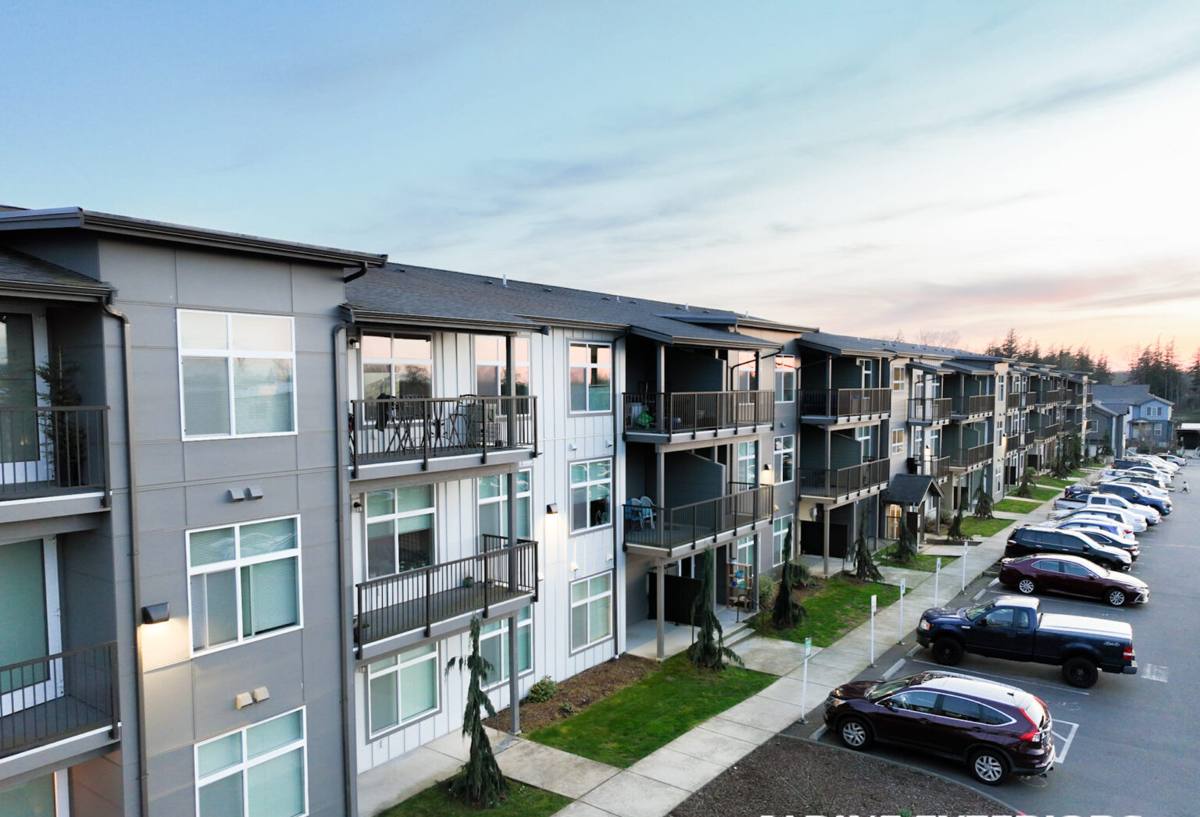
What Skagit County's Coastal-Rural Climate Demands From Siding
Three conditions do most of the damage to siding in Bow, and any correct installation has to be planned around all three:
- Salt air: Airborne salt from Samish Bay speeds up corrosion on fasteners, flashing, and metal trim, and it can degrade some paint finishes faster than inland exposure would.
- Driving rain: Open farmland and waterfront exposure mean wind pushes rain sideways into wall assemblies, not just down. Laps, seams, and trim joints take more direct water than they would on a sheltered lot.
- Extended moss and moisture season: Skagit County's mild, wet fall-through-spring stretch keeps siding damp for long periods. Any material that absorbs moisture, or any installation that traps it behind the cladding, is set up to grow moss, mildew, and eventually rot.
None of these are exotic problems — they're the normal weather pattern for this part of Washington. But they mean siding installed in Bow needs better moisture management, more corrosion-resistant hardware, and a material that doesn't swell, wick water, or feed mold, than siding installed somewhere drier.
Why We Install Only James Hardie Fiber Cement
We standardized on James Hardie fiber cement siding for every home we work on, including in Bow, and we don't install vinyl, LP SmartSide, or wood-based products like cedar or primed spruce. That's not a marketing position — it's a decision built around what actually holds up in this climate.
Fiber cement is made from cement, sand, and cellulose fiber, which means it doesn't absorb water the way wood-based siding does and doesn't soften or delaminate the way some engineered wood products can when they take on repeated moisture. It's also non-combustible, which matters for insurance considerations and general fire safety, and it holds paint and factory finish far longer than vinyl or wood because it doesn't expand and contract with temperature the way vinyl does or absorb moisture the way wood does.
Hardie's HZ5 Line — Engineered for This Region
James Hardie makes climate-specific product lines, and the HZ5 line is engineered for the kind of cold, wet, coastal-influenced weather Skagit County sees. It's formulated to resist moisture damage and hold up to freeze-thaw cycling better than Hardie's products built for hot, dry climates. When we install Hardie in Bow, we're specifying the version of the product actually built for this weather, not a generic version.
ColorPlus Factory Finish
Most of what we install uses Hardie's ColorPlus finish — a factory-applied, baked-on finish that's more durable and consistent than field-applied paint, and that comes with its own finish warranty on top of Hardie's product warranty. In a climate where paint failure is one of the most common complaints we hear about older siding, a factory finish engineered to resist fading and chipping is a real, practical advantage, not a marketing add-on.
What We Don't Install, and Why
Vinyl siding is affordable and low-maintenance in mild climates, but it expands and contracts significantly with temperature swings, can crack or warp in wind-driven storms, and its seams and J-channels give wind-blown rain more opportunities to work behind the cladding — a real liability in Bow's open, exposed lots. LP SmartSide and other engineered wood products perform well when installation and maintenance are followed exactly, but they're wood-based, which means they're more sensitive to the sustained damp conditions Skagit County produces than fiber cement is. Cedar and primed spruce are attractive materials with a real place in architecture, but as unpainted or lightly finished wood, they require a maintenance commitment — restaining, resealing, moisture monitoring — that most homeowners underestimate, especially given how much moss and mildew pressure this region puts on exterior wood. We'd rather put one material on a home that we know performs to spec here than offer several options and let a homeowner unknowingly take on the maintenance burden of the wrong one for this climate.
What a Correct Installation Looks Like in Bow's Conditions
The siding material is only half the equation — how it's installed determines whether it actually delivers on its warranty and performance in a wet, salt-exposed, wind-driven climate. On every Bow-area job, our process follows the same sequence:
- Assessment and tear-off: We inspect the sheathing and framing once old siding comes off, since this is often the first real look anyone's had at moisture damage that's been hidden for years.
- Repair before covering: Any soft, rotted, or water-damaged sheathing gets repaired before anything new goes on. Installing new siding over damaged sheathing just hides a problem that will resurface.
- Weather-resistive barrier: A properly lapped and sealed house wrap goes on first, giving the wall assembly a drainage plane behind the siding — critical when wind-driven rain is a regular event.
- Flashing and trim details: Windows, doors, and any wall penetrations get flashed to shed water outward and downward, not into the wall. This is the single most common place we find shortcuts on older installations.
- Fastening to Hardie's specification: Corrosion-resistant fasteners, correct spacing, and correct nailing depth — fastener corrosion from salt air is a real issue if the wrong hardware gets used, so we follow Hardie's fastening spec exactly.
- Proper clearances: Siding is kept clear of grade, decks, roofing, and other surfaces per code and manufacturer spec, so water has somewhere to go instead of wicking up into the board.
- Caulking and finish work: Joints and seams get sealed with a caulk rated for the material and this climate, and any field-cut edges get sealed per Hardie's guidelines to prevent moisture intrusion at cut ends.
Skip any one of these steps and you get the same failures we see on older Bow homes — moss creeping up from the bottom edge, soft trim, and water stains that trace back to a flashing detail that was never done right in the first place.
Signs Your Current Siding Is Already Behind This Climate
A lot of siding replacement calls in Bow start with a homeowner noticing one of these and wanting to know if it's cosmetic or structural:
- Moss or dark streaking that comes back within a season of being cleaned
- Paint that's peeling, bubbling, or chalking well ahead of its expected life
- Soft or spongy spots when you press on siding near the bottom edge or around trim
- Visible gaps or cracking at seams, corners, or caulk joints
- Warping, buckling, or panels that no longer sit flat against the wall
- A musty smell or visible mold on the interior side of an exterior wall
Any of these is worth a real inspection rather than a patch job, especially if the home is more than 15-20 years old and has never had the siding fully assessed.
What Drives the Cost of a Bow Siding Installation
Every home is different, so we won't quote a number without seeing the property, but the factors that move the price are consistent across the jobs we do in this area:
| Factor | Why It Matters |
|---|---|
| Home size and wall complexity | More square footage and more corners, gables, and dormers mean more material and more labor-intensive cuts |
| Existing siding removal | Tear-off of old wood, vinyl, or damaged fiber cement adds time and disposal cost versus a new-construction install |
| Sheathing repair | Rot or water damage found once old siding is off can add scope that wasn't visible during the initial estimate |
| Trim and detail work | Window and door surrounds, corner boards, and fascia detail all add labor beyond flat wall coverage |
| Siding profile chosen | Lap siding, shingle-style panels, and board-and-batten each have different material and installation costs |
| Site accessibility | Rural lots with long driveways, limited staging area, or difficult grading can affect logistics and labor time |
We walk every property before quoting, because the honest cost drivers on a farmhouse with original trim detail are different from the ones on a newer build on cleared acreage.
Maintaining Hardie Siding in Bow's Climate
Fiber cement is genuinely low-maintenance compared to wood, but "low-maintenance" doesn't mean "no maintenance," especially with the moss and salt exposure this area sees. A short, manageable routine keeps it performing for decades:
- Rinse siding with a garden hose once or twice a year to clear salt residue and organic buildup before it sets in
- Keep gutters clean and downspouts directed away from walls so water isn't sheeting down siding repeatedly
- Trim back vegetation and tree limbs that keep sections of the wall shaded and damp — a major contributor to moss growth
- Inspect caulk joints every year or two and re-caulk any that have cracked or pulled away
- Check clearance at grade, decks, and roof lines periodically, especially after landscaping changes
- Repaint or address touch-up areas promptly if any finish damage occurs, rather than letting exposed material sit
Why a Crew That Already Works This Area Matters
Siding installation isn't just about following a manufacturer's install manual — it's about knowing how this specific stretch of Skagit County behaves. A crew that works Bow, Anacortes, and the surrounding area regularly knows which wall exposures on open, rural lots take the worst of the wind-driven rain, how much salt exposure to plan for near the bay, and what permitting and inspection expectations look like with Skagit County. That local pattern recognition is what catches a flashing detail that would otherwise get missed, or flags a moisture issue that's about to become a bigger repair.
We're not a national crew rotating through on a subcontractor schedule — we're based in the area and stand behind the installation because we're the ones who'll get the call if something isn't right down the road.
If your Bow home needs new siding, or you want an honest assessment of what's already on the walls, we're glad to walk the property and give you a straightforward, no-pressure estimate — no obligation, just a clear look at what your home actually needs.