 Anacortes Roofing
 Bow's Climate Is Hard on Siding — Here's Why
Bow sits in the flat farm country of Skagit County, close enough to Samish Bay and Padilla Bay that saltwater air is a constant fact of life, not an occasional one. Add in the driving rain that comes off the Sound in the fall and winter, plus the long, damp moss season that settles into shaded and tree-lined lots for much of the year, and you have a climate that is genuinely tougher on exterior siding than most homeowners realize.
Salt-laden air accelerates corrosion on fasteners and trim, and it breaks down paint film faster than it would inland. Driving rain doesn't just get siding wet — it tests every lap, seam, and penetration in the wall system, finding any weak point in the water-shedding details. And moss and algae, which thrive in Skagit County's mix of moisture and moderate temperatures, hold dampness directly against the siding surface for weeks at a time, which is especially hard on wood and wood-based products.
None of this means siding is doomed to fail in Bow. It means the material and the installation both have to be matched to what this specific climate actually does to a house, year after year.
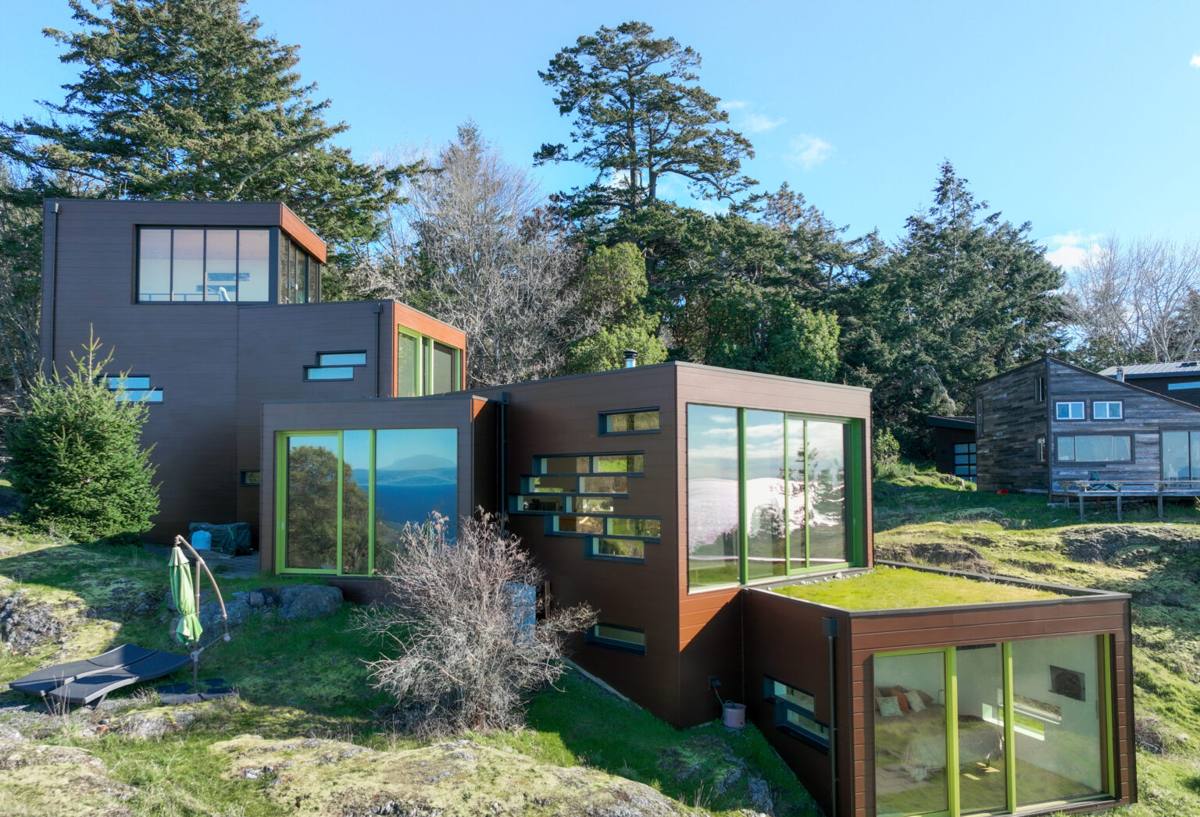
Signs Your Bow Home's Siding Is Overdue for Replacement
Most siding failures don't happen all at once. They show up as small signs first, usually in the areas most exposed to wind-driven rain or shaded from the sun. If you're seeing more than one or two of these, it's worth having someone take a real look rather than patching around the symptoms.
- Soft, spongy, or crumbling spots when you press on the siding, especially near the bottom courses or below windows
- Moss, algae, or dark staining that keeps coming back no matter how often it's cleaned
- Panels that are swelling, bowing, or delaminating at the edges
- Paint that's peeling, chalking, or bubbling, particularly on south- and west-facing walls
- Cracked or gapped caulk joints around trim, windows, and corners
- Rust streaks running down from fasteners or trim pieces
- A noticeable jump in heating costs, which can point to a compromised weather barrier behind the siding
- Visible warping or waviness when you sight down a wall from the corner
What a Correct Siding Replacement Actually Involves
Siding replacement is not just swapping old panels for new ones. Done right, it's a full assessment and rebuild of how the wall sheds water, and skipping steps here is exactly how a brand-new siding job ends up with the same problems in a few years.
Tear-Off and What's Underneath
Once the old siding comes off, that's the only real chance to see what's been happening behind it. We check the sheathing for soft spots or rot, look at how the old siding was fastened and flashed, and identify any areas where water has been getting in — often around windows, doors, and roof-to-wall transitions. Any damaged sheathing gets replaced before anything new goes back on; covering over a compromised wall with new siding just hides the problem.
Weather-Resistive Barrier and Flashing Details
The siding itself is the last line of defense, not the only one. A properly lapped weather-resistive barrier, correctly integrated flashing at windows, doors, and penetrations, and attention to how water is directed away from the wall at every transition matter as much as the siding material itself — arguably more, given how much rain this area sees in a typical winter.
Installing to Manufacturer Spec
Fastener spacing, clearances above rooflines and decks, gaps at butt joints, and caulking practices all affect how the siding performs over time and whether the manufacturer's warranty actually holds up. We install to the manufacturer's published specifications, not shortcuts that look fine on install day but create problems down the road.
Why We Install Only James Hardie Fiber Cement
We made a decision as a company to install James Hardie fiber cement siding exclusively. We don't install vinyl, LP SmartSide, Cemplank, Allura, or primed spruce or cedar siding. That's a deliberate standard, not a lack of options, and it comes down to how these products actually perform in a climate like Bow's over the long haul.
Non-Combustible and Built for Wet, Coastal Conditions
James Hardie fiber cement is non-combustible, which matters to a lot of homeowners regardless of climate. But for Skagit County specifically, what matters just as much is how the material handles sustained moisture. Fiber cement doesn't swell, rot, or delaminate the way wood-based siding can when it stays damp for extended stretches — which is exactly the condition Bow's rain and moss season create for months at a time. Hardie also engineers specific product lines for different climate zones (their HZ5 and HZ10 designations), which lets us match the product to the moisture and temperature conditions this region actually sees.
Factory-Applied ColorPlus Finish vs. Field-Applied Paint
A lot of siding failure in this area isn't the substrate — it's the paint. Field-applied paint on wood or wood-composite siding has to fight salt air and UV exposure from day one, and it's only as good as the prep and application conditions on the day it was rolled on. Hardie's ColorPlus finish is baked on at the factory under controlled conditions, resists fading and chipping far better than a job-site paint job, and comes backed by its own finish warranty. That's a meaningful difference on a coastal property where repainting every several years isn't something most homeowners want on their maintenance list.
How James Hardie Compares to the Alternatives
Every siding material has trade-offs. Here's an honest look at how the products we don't install compare to James Hardie on the factors that matter most in Bow's climate.
| Factor | James Hardie Fiber Cement | Vinyl | LP SmartSide / Wood Composite | Cedar / Primed Spruce |
|---|---|---|---|---|
| Moisture tolerance | Very high; won't rot or swell | High, but can warp with heat/cold cycling | Moderate; vulnerable if the finish fails | Low to moderate; needs consistent maintenance |
| Moss/algae resistance | Good; hard, non-organic surface | Fair; can still grow algae film | Fair; wood fiber content is a food source | Poor; natural wood invites growth |
| Finish durability | Factory ColorPlus, long fade resistance | Color molded in, but fades and chalks over time | Field-applied, prep-dependent | Field-applied, needs recoating on a regular cycle |
| Fire performance | Non-combustible | Combustible | Combustible | Combustible |
| Typical maintenance | Low; occasional wash, caulk checks | Low, but cracks/fades are hard to repair invisibly | Moderate; finish upkeep matters | High; regular staining/painting expected |
Our Siding Replacement Process in Bow
We keep the process straightforward and communicate at each stage, since a full siding replacement is disruptive enough without surprises added on top.
- On-site assessment. We walk the exterior, check for the signs of failure covered above, and talk through what we're seeing before recommending a full replacement versus targeted repairs.
- Material and color selection. We help you choose the right James Hardie product line and ColorPlus color for your home's exposure, style, and the look you want.
- Tear-off and inspection. Old siding comes off, sheathing is inspected and repaired as needed, and any rot or moisture damage is addressed before anything new goes up.
- Weather barrier and flashing. We install and lap the weather-resistive barrier correctly and flash every window, door, and penetration to direct water out and away from the wall.
- Siding installation. Panels and trim go on to manufacturer spec, with correct fastening, clearances, and joint treatment throughout.
- Cleanup and final walkthrough. We clear the site of debris and walk the finished job with you so you know exactly what was done.
Why Hiring a Crew That Already Works in Bow Makes a Difference
Bow isn't a large town, and its housing stock and lot conditions vary a lot within a short distance — open farmland exposure on one property, dense tree cover and shade on the next, older farmhouse construction mixed with newer builds. A crew that already works this area understands how those differences change what a siding job needs: how much moss pressure a shaded, tree-lined lot is really dealing with, how exposed a wall facing open fields toward the bay is likely to be, and how Skagit County's permitting and inspection process works for exterior projects.
That local familiarity also means fewer surprises on scheduling and logistics for rural or semi-rural properties, where driveway access, staging space, and weather windows can look different than they do on a standard in-town lot.
Caring for Your New Siding After Installation
James Hardie siding is low-maintenance, not no-maintenance, especially in a climate that throws salt air, rain, and moss at it year-round. A few habits go a long way toward getting the full lifespan out of the investment:
- Rinse the siding periodically to clear salt residue, pollen, and organic buildup before it has a chance to stain
- Keep nearby vegetation trimmed back so air can move across the wall and dry it out between rain events
- Check caulk joints at trim, windows, and corners annually and have any cracked or missing caulk addressed promptly
- Keep gutters and downspouts clear so water is directed away from the wall rather than running down it
- Address any impact damage or chipped finish quickly rather than letting it sit exposed
If your Bow home's siding is showing its age, or you're planning ahead rather than waiting for a problem, we're glad to take a look and talk through what makes sense for your property. The estimate is free, there's no pressure, and you'll get a straight answer about what your siding actually needs.