 Anacortes Roofing
 Why Cap Sante Homes Wear Out Windows Faster
Cap Sante sits close enough to the water that homes here take a different kind of weathering than houses just a few miles inland in Skagit County. Salt-laden air works on metal hardware, fasteners, and frame components year-round, not just during storms. Add in the driving rain that comes off the water sideways rather than straight down, and you've got a window assembly that has to resist wind-driven moisture at the frame joints and sill, not just shed water off a sloped surface. Then there's the long moss and mildew season that runs through much of the fall, winter, and spring — anywhere moisture sits against wood trim or gets trapped behind poorly sealed flashing, you get slow rot and staining that shows up long before the window itself actually fails.
None of this means Cap Sante needs exotic products. It means the window package and the installation details both need to be matched to a marine, high-rain environment instead of treated like a generic replacement job. A window that performs fine in a drier part of Washington can underperform here if the frame material, glazing, or flashing detail wasn't chosen with this climate in mind.
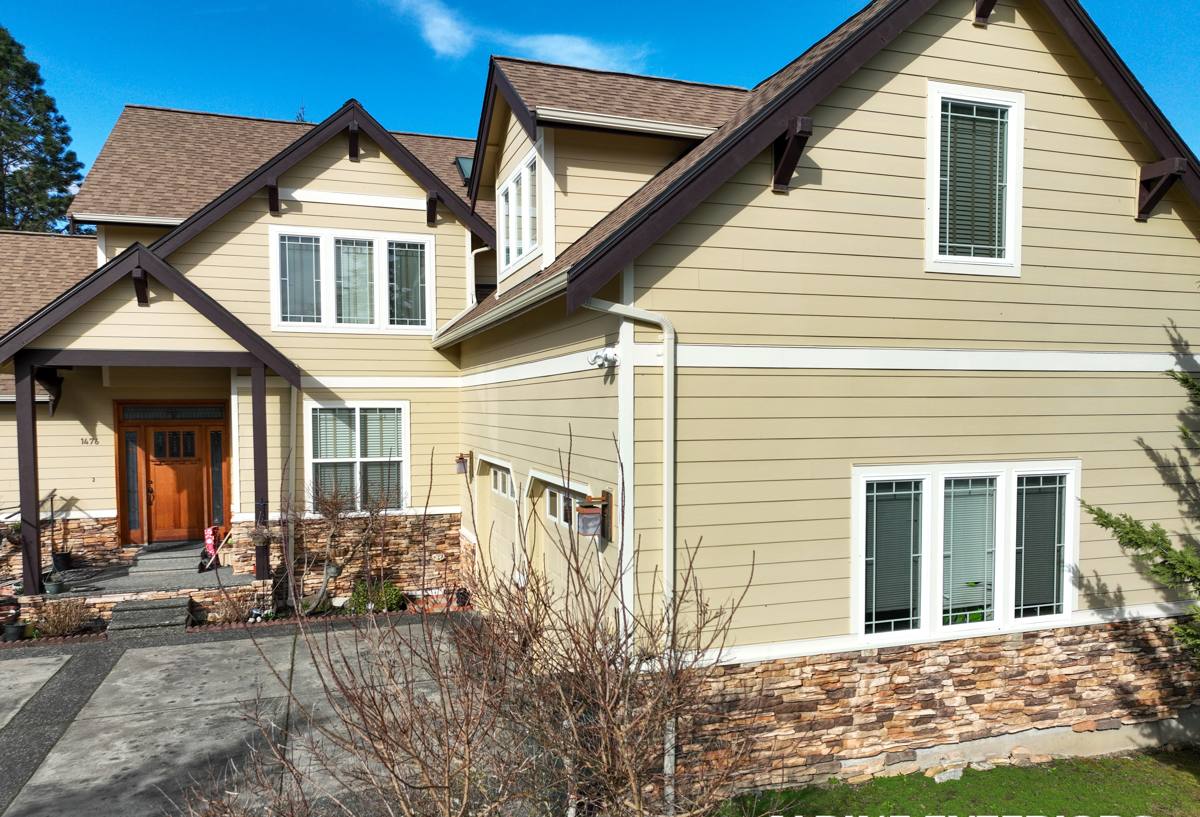
What "Energy-Efficient" Actually Means Here
Energy efficiency for a window is usually reduced to one number — U-factor — but in a coastal, high-humidity climate like Anacortes, three other factors matter just as much:
- U-factor: how much heat escapes through the window. Lower is better for our cool, wet winters.
- Solar Heat Gain Coefficient (SHGC): how much solar heat passes through the glass. Moderate SHGC values tend to work well here since we don't get the intense summer sun that drives cooling costs in other regions.
- Air infiltration rating: how much air leaks around the sash and frame. This matters more in Cap Sante's wind exposure than in a sheltered inland lot.
- Condensation resistance: how well the window resists interior fogging and frame sweating in cold, damp conditions. This is often overlooked, but in a house near the water it's one of the biggest comfort and moisture-durability factors.
A window with a great U-factor but poor condensation resistance can still leave you with foggy glass and damp sills every winter morning. We look at the whole performance picture, not just the efficiency label on the sticker.
Double-Pane vs. Triple-Pane in a Marine Climate
Triple-pane glass gets marketed heavily, but for most Cap Sante homes a well-built double-pane unit with a quality low-E coating and an argon or krypton gas fill delivers most of the real-world benefit at a lower cost and lighter sash weight. Triple-pane makes more sense on a north- or water-facing elevation that takes the brunt of the wind and rain, or in a room with a known cold-draft complaint. We'll tell you honestly when the upgrade is worth it and when it isn't.
Frame Material: The Decision That Matters Most Here
More than glass package, frame material determines how a window holds up to salt air and constant damp. Here's how the common options compare for a Cap Sante installation:
| Frame Material | Salt Air / Moisture Behavior | Maintenance | Notes for Cap Sante |
|---|---|---|---|
| Vinyl | Won't corrode; good moisture resistance | Low — occasional cleaning | Solid value choice; check weld quality at corners |
| Fiberglass | Excellent — stable in wide temperature/moisture swings | Low | Strong option for exposed, water-facing walls |
| Wood / Wood-clad | Vulnerable if cladding or seals fail | High — needs inspection and upkeep | Beautiful, but demands disciplined maintenance in this moss season climate |
| Aluminum | Prone to corrosion and thermal transfer near salt air | Moderate to high | We generally steer clients away from bare aluminum on exposed elevations |
We're not telling anyone that wood windows are a bad product — plenty of homeowners love the look and are willing to keep up with the maintenance. Our job is to be straight with you about what each material asks of you over the next fifteen or twenty years in a marine environment, and let you decide what trade-off you're comfortable with.
Where Installation Quality Actually Shows Up
In driving rain, a window fails at the installation far more often than it fails at the glass. The details that matter most in Cap Sante's exposure:
Flashing and Water Management
Proper flashing integrates with the wall's weather-resistive barrier so water is directed out and down, never trapped behind the window frame. On a home taking direct rain off the water, we pay particular attention to head flashing and end-dam details at the sill — this is the single most common point of failure we find when we're called out to fix a leaking replacement window someone else installed.
Sealing and Insulation at the Rough Opening
The gap between the window frame and the rough opening needs to be sealed and insulated correctly — not just caulked on the exterior face. A backer rod and sealant at the exterior, low-expansion foam or batt insulation in the cavity, and an interior air seal all work together. Skipping any one of these layers is how you end up with a draft or a slow moisture problem that isn't obvious until trim starts staining.
Hardware and Fastener Selection
Standard fasteners and hardware corrode faster in salt air. We use corrosion-resistant fasteners and hardware rated for coastal exposure wherever the manufacturer offers that option, rather than defaulting to whatever ships in the box.
Our Process for a Cap Sante Window Project
- On-site assessment: We look at each window's exposure — which walls face the water and prevailing wind, where past moisture or moss staining shows up, and what's driving the replacement (comfort, appearance, or an active problem).
- Product selection: Based on that exposure, we recommend frame material and glass package per elevation — not a single one-size spec for the whole house.
- Removal and opening inspection: When we pull the old window, we check the rough opening and sheathing for hidden rot or moisture damage before anything new goes in. This is often where problems from a prior poor installation surface.
- Installation: Flashing, sealing, insulation, and fastening done to the sequence above — not shortcuts to save an hour per window.
- Interior and exterior finish: Trim, caulking, and touch-up so the finished opening looks clean inside and out.
- Walkthrough: We operate every window with you before we consider the job done, and explain any maintenance specific to the material you chose.
What Drives the Cost
Every home and every window opening is a little different, but the main variables that move the price on a Cap Sante project are:
| Factor | Why It Matters |
|---|---|
| Frame material | Fiberglass and wood typically cost more upfront than vinyl |
| Glass package | Triple-pane, upgraded low-E, or laminated glass for sound/wind add cost |
| Number and size of openings | Larger picture windows and multi-window bays cost more than standard double-hungs |
| Wall condition at removal | Hidden rot or damaged sheathing found during removal adds repair work |
| Exposure and flashing complexity | Water-facing walls with harder flashing details take more labor to do right |
| Access | Second-story or hard-to-reach openings add time and equipment cost |
We give straightforward, itemized estimates so you can see what you're paying for on each opening, rather than a single lump number.
Signs Cap Sante Homeowners Shouldn't Ignore
- Fogging or moisture between the panes — the seal has failed and the insulating gas is gone
- Persistent condensation on the interior glass or frame during cold weather
- Drafts you can feel near the frame even with the window latched
- Soft or discolored trim and sill wood, especially on water-facing walls
- Visible moss or dark staining creeping onto window trim from the exterior
- Windows that are difficult to open, close, or latch — often a sign of frame movement or swelling
Choosing a Window Contractor in Cap Sante
Because this neighborhood's exposure is more demanding than a typical inland lot, the contractor's local experience matters as much as the product line they carry. Before hiring anyone for window work here, it's worth asking:
- Have you installed windows on homes with similar water/wind exposure in this area?
- What flashing and sealing method do you use, and can you explain why?
- What frame materials and hardware do you recommend for a salt-air environment, and why?
- Do you inspect the rough opening for hidden moisture damage before installing, or just swap the window?
- What's the warranty on both the product and your installation labor?
- Are you licensed and insured to do exterior work in Washington?
A contractor who's worked this specific stretch of Anacortes waterfront will have real answers to these, not generic talking points. That local pattern-recognition — knowing which walls in this area typically need triple-pane, which flashing detail actually holds up to this rain, which fastener corrodes fastest — is the difference between a window job that lasts and one that needs revisiting in a few years.
Getting Started
If you're noticing drafts, fogged glass, or moisture damage around your windows, or you're just ready to cut your heating costs and get ahead of Skagit County's next wet season, we're happy to take a look. We'll walk your home, assess each window's exposure, and give you a straightforward, no-pressure estimate — use the form below to get started.