 Anacortes Roofing
 Windows Built for Cap Sante's Waterfront Exposure
Cap Sante sits close enough to Fidalgo Bay and the Guemes Channel that homes here take a different kind of weathering than houses a few miles inland. Salt-laden air moves off the water and settles on everything, including window frames, hardware, and glazing seals. Add Skagit County's long stretch of driving rain each fall and winter, plus the shaded, moisture-holding conditions that let moss and algae take hold on north-facing walls and sills, and you have a climate that is genuinely hard on windows. A window that performs fine in a drier inland town can fail early here if it wasn't installed with this exposure in mind.
Window installation in Cap Sante isn't just about picking a style and setting it in the opening. It's about managing water at every seam, choosing hardware and finishes that resist corrosion, and sealing the assembly so wind-driven rain has nowhere to get behind the frame. Get that wrong and you're not looking at a cosmetic problem — you're looking at rot in the framing and trim that can take years to show up and cost far more to fix than the window itself.
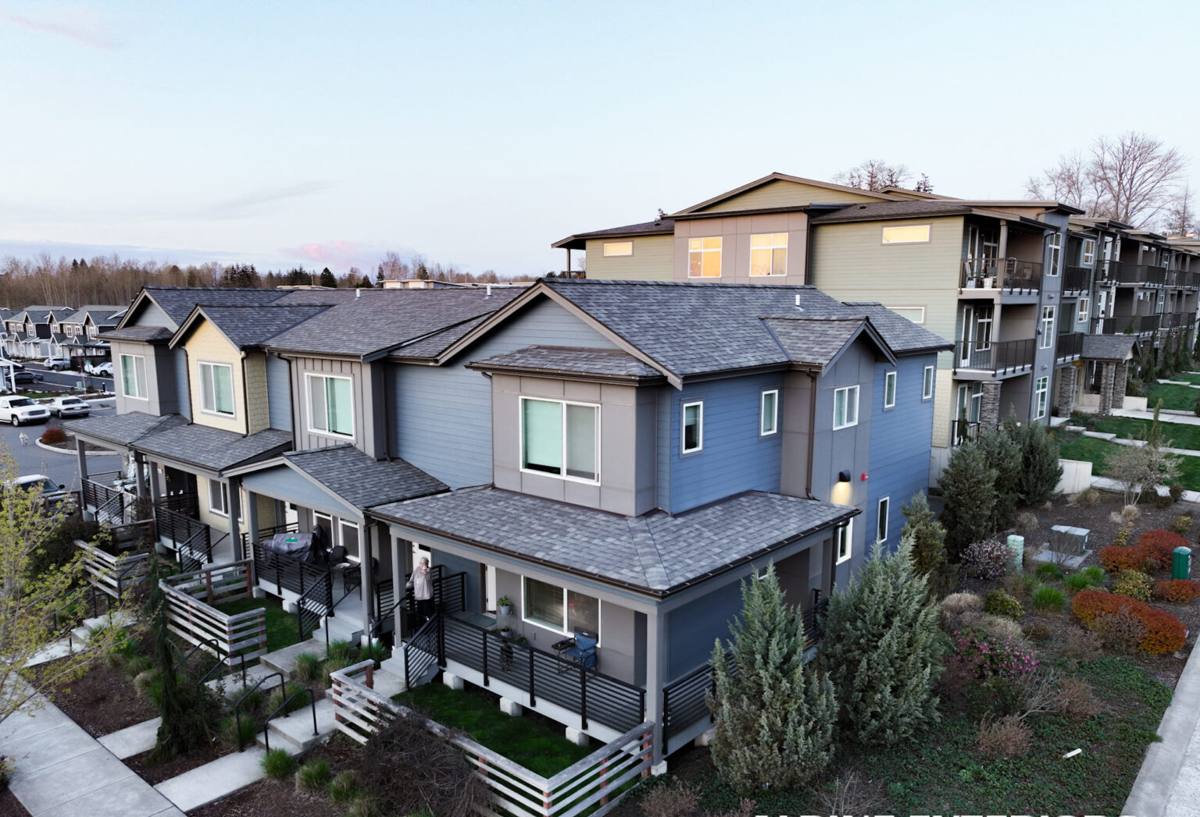
Signs Your Cap Sante Home Needs New Windows
Most homeowners call us for one of a handful of reasons. Knowing which one applies helps set expectations for the job.
- Fogging or a permanent haze between panes — the seal on the insulated glass unit has failed and moisture is trapped inside
- Windows that are noticeably cold to the touch or let in a draft even when latched
- Wood sills or trim that are soft, discolored, or showing paint failure, especially on the weather side of the house
- Hardware — cranks, locks, hinges — that's stiff, pitted, or corroded from salt exposure
- Visible daylight or a whistling sound around the frame during a windstorm
- Difficulty opening or closing, which often points to a frame that's shifted or swollen
Any one of these can usually be traced back to a failed seal, a worn weatherstrip, or — in older Cap Sante homes — flashing details that were never adequate for this level of wind-driven rain in the first place.
What a Correct Window Installation Actually Involves
It's Mostly About Water Management
The window unit itself is usually the easy part. What separates a window that lasts twenty-plus years from one that causes rot in five is everything around it: flashing, sealant, and how the opening ties into the house's water-resistive barrier. In a marine climate like this one, water doesn't just fall straight down — wind pushes it sideways and up under trim, so every lap and seal has to account for that.
The Details That Matter
| Step | Why It Matters in Cap Sante's Climate |
|---|---|
| Removing old window and inspecting the rough opening | Catches hidden rot or moisture damage before it's sealed behind a new window |
| Sill pan flashing | Directs any water that gets past the window out and away from framing, not into it |
| Proper shimming and leveling | Keeps the sash operating smoothly despite temperature swings and settling |
| Integrating flashing with house wrap (shingle-lap method) | Prevents wind-driven rain from working behind the siding around the frame |
| Backer rod and sealant at the exterior joint | Handles the wide range of driving rain angles common near the water |
| Insulating the gap between frame and rough opening | Cuts drafts and prevents condensation inside the wall cavity |
| Interior trim and finish sealing | Stops interior condensation from reaching framing |
Skip any one of these steps and the window may look fine for a year or two before water finds its way in. This is the part of the job that separates a proper installation from a quick swap.
Choosing a Window: Material and Frame Options
There's no single "right" window for every Cap Sante home — it depends on the house, the exposure, and the budget. Here's how the common frame materials compare for this specific environment.
| Material | Salt Air / Moisture Performance | Maintenance | Typical Use Case |
|---|---|---|---|
| Vinyl | Good — won't corrode or rot, handles moisture well | Low; occasional cleaning | Most straightforward replacements, strong value |
| Fiberglass | Very good — dimensionally stable, resists warping in temperature swings | Low | Larger openings, homes wanting a more paint-grade or wood-like look |
| Wood-clad | Fair to good depending on cladding and detailing — the clad exterior protects the wood core | Higher; interior wood needs periodic attention | Homes prioritizing an interior wood aesthetic |
| Aluminum | Weaker in this climate unless thermally broken — prone to condensation and corrosion near salt air | Moderate | Limited residential use here; more common commercially |
Whatever material you choose, we pay close attention to hardware finish. Standard steel or bare aluminum hardware corrodes noticeably faster this close to the water — stainless or coated hardware is worth the small upcharge.
Glass Packages
Double-pane glass with a low-E coating and argon gas fill is the practical standard for this region — it cuts heat loss, reduces condensation on the interior glass surface, and helps with the low winter sun angle common to Western Washington. Triple-pane is available for homes wanting maximum performance, but for most Cap Sante houses, a well-installed double-pane low-E window is the better balance of cost and benefit.
Our Installation Process
- On-site assessment — we look at the existing windows, the condition of the rough openings, and any signs of past water intrusion before quoting anything
- Measuring and ordering — precise measurements matter more on older homes where openings are rarely perfectly square
- Removal and inspection — old units come out carefully so we can check the framing underneath for hidden damage
- Repair as needed — any soft or rotted framing gets addressed before a new window ever goes in; installing over damaged wood just hides the problem
- Flashing and installation — sill pan, window unit, shimming, and integration with the house wrap
- Sealing and insulating — exterior sealant, interior insulation, and trim work
- Final check — every window is tested for smooth operation and a tight seal before we consider the job done
What Affects the Cost
| Factor | Impact |
|---|---|
| Number and size of windows | Largest driver of overall project cost |
| Frame material chosen | Vinyl is generally the most economical; fiberglass and wood-clad cost more |
| Condition of existing framing | Rot repair adds labor and material beyond the window itself |
| Access and window height | Second-story or hard-to-reach windows take more time and equipment |
| Full-frame vs. insert replacement | Full-frame replaces flashing and framing details too; inserts reuse the existing frame and cost less but only make sense when that frame is sound |
Rough budget ranges vary widely depending on these factors, which is why we walk every Cap Sante home in person rather than quoting sight unseen.
Why Hiring a Crew That Already Works Cap Sante Matters
Cap Sante isn't a generic suburb — it's a shoreline-adjacent neighborhood where wind exposure, moisture patterns, and even how fast moss regrows on shaded siding can vary block to block. A crew that regularly works this part of Anacortes knows to check for salt-corroded fasteners on older homes, to flash more conservatively on walls that catch the prevailing weather, and to recommend hardware finishes that will actually hold up rather than pit within a couple of seasons. That local pattern recognition is hard to replace with a generic install checklist.
It also matters for permitting and code compliance — Anacortes and Skagit County have their own permitting requirements for window replacement in many cases, particularly when the rough opening size changes or the work is part of a larger remodel. A contractor who pulls permits regularly in this jurisdiction knows what's required and won't leave you exposed at resale.
Keeping New Windows Performing in This Climate
A correct installation does most of the work, but a little seasonal attention extends the life of any window near the water.
- Rinse frames and hardware periodically to clear salt residue, especially on windows facing open water
- Check and clear weep holes on vinyl and fiberglass frames so water can drain properly
- Inspect exterior sealant annually for cracking or separation, particularly after a hard winter
- Keep gutters and downspouts clear so roof runoff isn't sheeting down over window heads
- Address moss or algae on nearby siding promptly — it holds moisture against the wall and can migrate toward window trim
- Operate hardware occasionally through the off-season so cranks and locks don't seize up
Get a Straightforward Estimate
If your Cap Sante home has windows that are drafty, fogged, hard to operate, or simply original to a house that's due for an upgrade, we're happy to take a look and give you an honest read on what's needed — no pressure, no inflated scope. Use the form below to request a free estimate and we'll walk you through your options in plain terms.