 Anacortes Roofing
 Composite Decking Built for Sedro-Woolley's Weather, Not Just Its Look
Sedro-Woolley sits inland from Anacortes along the Skagit River, but it shares the same wet, marine-influenced weather pattern that shapes exterior work across Skagit County — long stretches of drizzle, heavy fall and winter rain, and a moss season that seems to start earlier every year. Wood decking in this area needs re-staining, sanding, and constant moss scrubbing to survive more than a few seasons looking decent. Composite decking was built to solve exactly that problem, but only when it's installed correctly for local conditions. A composite deck put together the same way you'd build one in a dry climate will trap moisture, grow algae in the shade, and fail at the fasteners well before the boards themselves wear out.
We're an Anacortes-based crew that works both the coastal side of the county — where salt air off the water accelerates corrosion on hardware and fittings — and inland communities like Sedro-Woolley, where the challenge is less about salt and more about standing moisture, shade, and moss. Knowing the difference matters. It changes what fasteners we spec, how we frame for drainage, and where we tell a homeowner a deck needs airflow it isn't currently getting.
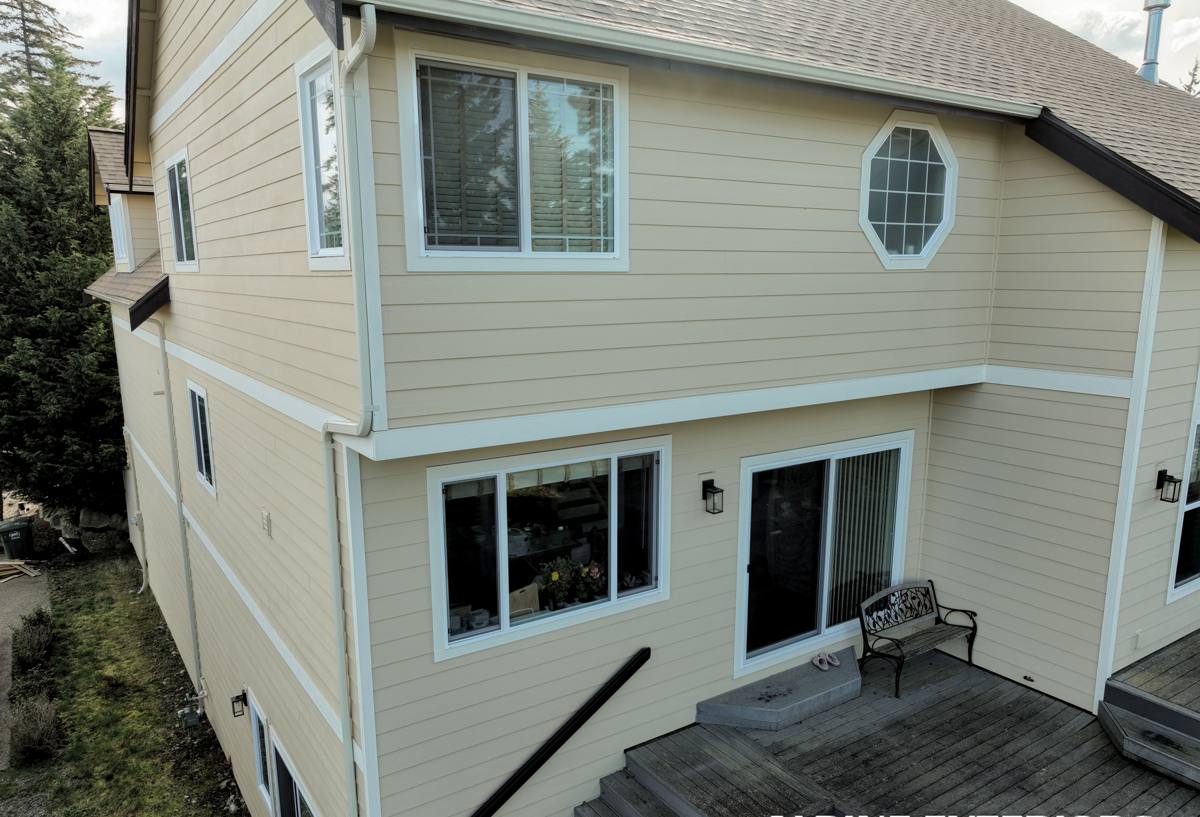
What Sedro-Woolley's Climate Actually Does to a Deck
Composite boards themselves resist rot, but a deck is a system — boards, framing, fasteners, flashing, and the ground underneath. In a climate with driving rain and long wet stretches, most composite deck problems don't start in the decking material. They start underneath it or around its edges.
- Moss and algae: Shaded decks near trees or on the north side of a house stay damp longer, which is exactly what moss and algae need to take hold on any composite surface, even the capped, stain-resistant kind.
- Trapped moisture in the framing: Untreated or poorly protected joists underneath composite boards can hold water long after the surface looks dry, leading to rot in the structure even though the decking above never shows a problem.
- Fastener corrosion: Standard fasteners degrade faster in a consistently damp climate. This shows up as rust streaking on light-colored boards and, eventually, loose or failing connections.
- Ledger board and house-connection failure: Where the deck ties into the house is the single most water-exposed joint on the structure. Poor flashing here is the most common source of hidden rot we find on older decks.
None of this is unique to any one brand of composite decking. It's a function of how the deck was built, not just what it's built from.
What a Correct Composite Deck Build Involves Here
Framing and Ledger Attachment
The ledger board — where the deck attaches to the house — gets proper flashing that sheds water away from the wall assembly, not just a bead of caulk. Joists get spaced and sized for the specific composite product being installed, since composite boards flex differently than wood and manufacturers publish span requirements that matter for a board that won't creak or bounce over time.
Joist Protection
In a climate this wet, we protect the tops of joists with a moisture barrier tape before decking goes down. It's a small material cost that keeps rainwater from soaking directly into cut or fastened wood, which is where framing rot actually starts.
Drainage and Airflow Underneath
Low decks built tight to the ground with poor airflow underneath are the decks we see moss and mildew on first, regardless of the decking brand. Correct grading away from the house, adequate ground clearance, and skirting that still allows air movement all matter more than most homeowners realize when they're comparing board colors.
Fasteners and Hardware
We use fastening systems rated for the specific composite product and matched to the exposure — hidden clip systems where the product supports them, and corrosion-resistant screws elsewhere. This is not a place to save a few dollars, since fastener failure is one of the more common callback issues on decks that were otherwise built reasonably well.
Choosing a Composite Board for a Wet, Shaded Property
Not every composite product performs the same way in a damp, moss-prone yard. Fully capped composite boards — with a plastic cap surrounding the core on all sides — resist moisture absorption and staining far better than older, uncapped composite products, some of which are still sold at lower price points. For a Sedro-Woolley property with any shade or tree cover, that difference matters more than it would on an open, sun-exposed lot.
| Decking Type | Moisture Behavior | Moss/Algae Resistance | Maintenance |
|---|---|---|---|
| Pressure-treated wood | Absorbs water; prone to swelling, splintering, checking | Low — needs regular treatment and scrubbing | Annual staining/sealing |
| Uncapped composite | Some moisture absorption at cut edges and surface | Moderate — can stain and hold algae over time | Periodic cleaning; edge sealing at cuts |
| Fully capped composite | Minimal absorption; sealed on all sides | Good — surface sheds moisture, resists staining | Routine washing only |
| PVC decking | Essentially non-absorbent | Good, though can still support surface algae if never cleaned | Routine washing only |
We don't push homeowners toward the most expensive option by default. If a deck sits in full sun with good airflow, a mid-range capped composite is often a perfectly sound, long-lasting choice. If it's shaded, low to the ground, or near mature trees — common in parts of Sedro-Woolley with more tree cover than the open coastal lots closer to Anacortes — we'll recommend spending more on the fully capped product because that's where the maintenance savings actually pay off.
Our Process, Start to Finish
- On-site assessment: We look at drainage, sun exposure, existing structure (if replacing a deck), ledger condition, and how the site sheds water during heavy rain — not just how it looks on a dry day.
- Honest product recommendation: Based on shade, exposure, and budget, we walk through which composite tier actually makes sense for that specific site, not a one-size answer.
- Permitting: Most deck work in Skagit County requires a building permit, particularly for any structure attached to the house or built above a certain height. We handle that process as part of the job.
- Demolition and framing (if applicable): Old wood decking and, where needed, compromised framing come out. New framing is built to current code and to the composite manufacturer's span specifications.
- Installation: Joist protection, proper fastening, and clean board layout with attention to expansion gaps, since composite boards do expand and contract with temperature.
- Final walkthrough: We go over the finished deck with the homeowner, including basic care and what to expect during the first wet season.
Maintenance in a Moss-Prone Climate
Composite decking is lower-maintenance than wood, not maintenance-free. In Skagit County's wet stretches, a deck that never gets cleaned will eventually grow moss and algae on the surface, the same way a roof or a fence will. The good news is that upkeep on a correctly installed composite deck is straightforward.
- Sweep debris and standing leaves off the deck regularly, especially in fall — trapped organic matter is what feeds moss and algae growth.
- Rinse or wash the surface a few times a year with a soft-bristle brush and mild soap; avoid pressure washers on close settings, which can damage the board surface over time.
- Keep gutters and downspouts near the deck clear so water isn't dumping directly onto or under it.
- Trim back overhanging branches to let sunlight and air reach shaded sections of the deck.
- Check underneath periodically for debris buildup that blocks airflow to the framing.
What This Doesn't Mean
It doesn't mean sanding, staining, or sealing every year the way wood decking demands. It means basic seasonal care — closer to washing siding than to refinishing a deck.
What Affects the Cost of a Composite Deck Project
We won't quote a number without seeing the site, but these are the factors that move the price up or down on most Sedro-Woolley projects, and they're worth understanding before you start comparing bids.
| Factor | Why It Matters |
|---|---|
| Deck size and shape | Square footage drives material cost; complex shapes and angles add labor and cutting waste |
| Board tier (capped vs. uncapped) | Fully capped composite costs more upfront but typically needs less long-term maintenance |
| Height and railing requirements | Elevated decks need code-compliant railing systems and additional structural support |
| Existing structure condition | Replacing decking on sound framing costs far less than rebuilding rotted substructure |
| Site access | Difficult access for material delivery or equipment can add labor time |
| Permitting scope | Attached decks and taller structures generally require more permit and inspection steps |
Broadly, composite decking projects tend to run more than a comparable wood deck upfront, with the difference recovered over the life of the deck through lower maintenance costs. We'll break down the real numbers for your specific project during a walkthrough rather than quoting a per-square-foot figure that doesn't account for your site.
Why a Crew That Already Works Sedro-Woolley Matters
Anacortes and Sedro-Woolley aren't identical sites, and a contractor who only builds decks in dry inland climates or only builds along the immediate waterfront can miss things that matter here. Knowing which properties in this area tend to have shade and drainage issues, which framing details hold up through a Skagit County winter, and how local permitting offices handle deck applications comes from doing the work here repeatedly — not from a generic install process brought in from somewhere else.
We also know what "normal" looks like on a deck in this climate versus what's an early warning sign — moss in one section but not another, a soft spot near the ledger, discoloration that indicates trapped moisture rather than surface dirt. That judgment is what keeps small issues from becoming full rebuilds.
Get a No-Pressure Estimate
If you're planning a new composite deck or replacing an aging wood deck in Sedro-Woolley, we're glad to take a look at the site, talk through what the specific location needs — sun, shade, drainage, framing condition — and give you a straightforward estimate. No pressure, no upsell script. Use the form below to get started.