 Anacortes Roofing
 Why Composite Decking Makes Sense for Conway
Conway sits low in the Skagit River delta, close to the tidal flats of Skagit Bay, which means the air here carries more moisture and salt than you'd find further inland. Add in the shade from surrounding evergreens, the long stretch of gray, drizzly months, and a moss season that can run from fall through spring, and you've got conditions that are hard on any exterior wood structure — and decks take the worst of it because they sit low, flat, and exposed to standing moisture.
Composite decking was built for exactly this kind of environment. It doesn't absorb water the way wood does, it won't rot or delaminate from constant dampness, and it holds up better against the driving rain that blows in off the Sound during winter storms. That doesn't mean it's maintenance-free or that any composite deck will perform well here — it means the material gives us a better starting point, as long as the build underneath it is done right for Skagit County conditions.
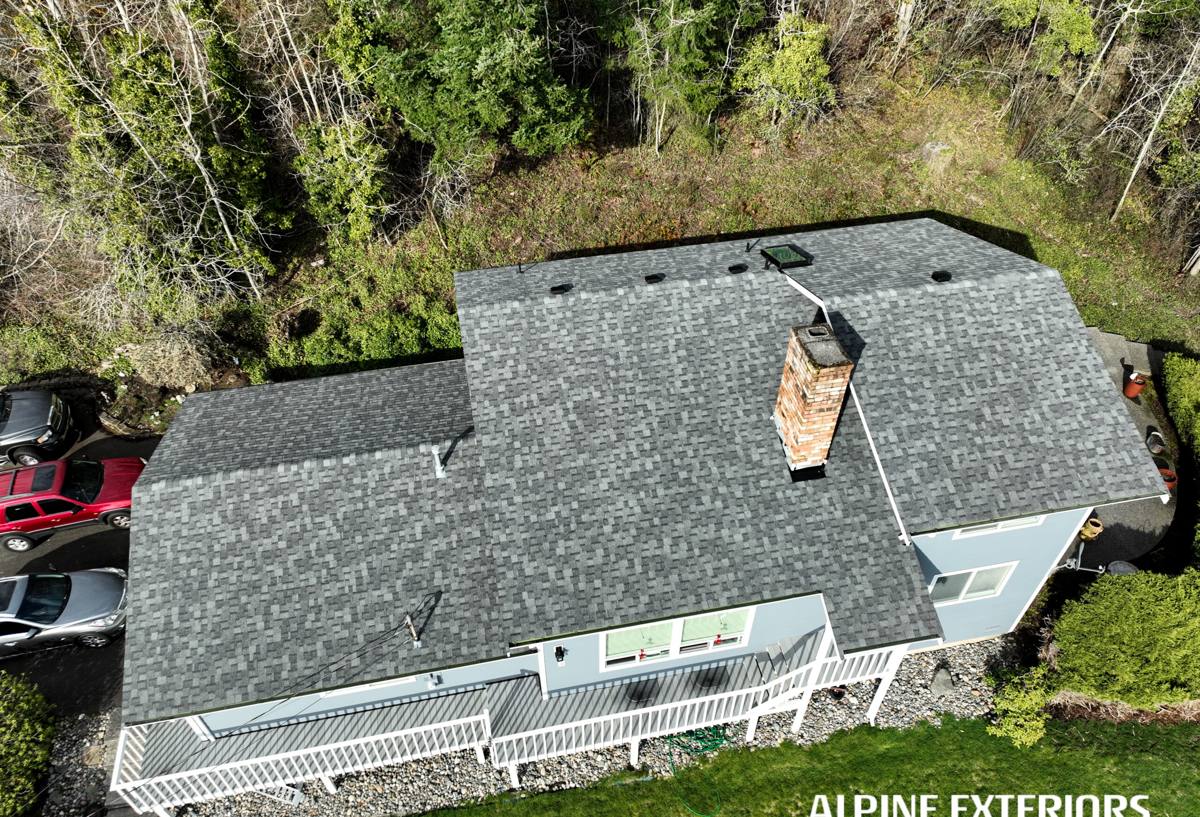
What a Correct Composite Deck Build Involves
The composite boards themselves get most of the attention, but the framing, fasteners, and drainage details underneath are what actually determine whether a deck holds up in a low, damp community like Conway. This is where a lot of shortcuts get taken, and where the problems show up years later.
Framing and Footings
Conway's ground is part of the Skagit River delta, and delta soil tends to hold water and settle differently than the gravelly, well-drained soil you'll find on higher ground closer to Anacortes. Footings need to be sized and set to account for that — going too shallow or relying on undersized concrete pads is a common way decks end up with a sag or a soft corner within a few years. We evaluate the soil at your specific site rather than assuming a standard footing spec will work everywhere in the county.
Fasteners and Hardware
Salt-influenced air corrodes standard fasteners faster than most homeowners expect, especially on a deck that's shaded and slow to dry out. We use stainless steel or coated, corrosion-rated hardware for ledger connections, joist hangers, and hidden fastener clips — not because code always requires the upgrade, but because standard galvanized hardware is one of the more common failure points we see on older decks in this area.
Drainage and Ventilation Underneath
A composite deck surface can shed water perfectly well and still sit over a substructure that never dries out. Low clearance, poor grading, or vegetation growing up underneath the deck all trap moisture against the framing. We grade and clear the space beneath the deck, use joist tape to protect the tops of the framing lumber from standing water, and make sure there's enough airflow underneath that the substructure actually gets a chance to dry between rain events — which, in Conway, doesn't happen as often as everyone would like.
Composite vs. Wood Decking in Conway's Conditions
Homeowners considering a new deck or a replacement often ask us to lay out the real tradeoffs, not just the sales pitch. Here's an honest comparison based on how each material actually performs in this specific climate:
| Factor | Composite Decking | Pressure-Treated Wood |
|---|---|---|
| Moisture resistance | Won't rot or absorb water into the board itself | Can absorb moisture and swell/shrink with the seasons |
| Moss and algae | Still needs periodic cleaning in shaded, damp spots | Same issue, often worse due to more porous surface |
| Upkeep | Occasional washing; no staining or sealing required | Needs re-staining or sealing every 1–3 years |
| Upfront cost | Higher material cost | Lower material cost |
| Long-term cost | Lower over 15–20 years due to minimal upkeep | Higher over time from repeated maintenance and repairs |
| Appearance consistency | Color and texture stay consistent for years | Grays and weathers unevenly, especially in shade |
Wood isn't a bad material, and for some budgets or some projects it's still the right call. But for a deck that's going to sit low and shaded in a delta climate like Conway's, composite generally holds up with far less ongoing work.
Board Tiers We Install
Composite decking isn't one product — it spans a range of quality and price. Entry-level composite boards get you the rot resistance but can be more prone to fading or surface wear over time. Mid- and upper-tier boards, including capped composite lines from manufacturers like Trex, TimberTech, and Fiberon, add a protective outer shell that resists staining, fading, and moisture penetration far better than uncapped boards. We'll walk you through what each tier actually gets you rather than steering you toward the most expensive option by default.
Our Process for a Conway Composite Deck
Every deck we build follows the same core process, adjusted for the specific site conditions we find in Conway and the surrounding low-lying parts of Skagit County.
- Site assessment: We look at grading, drainage, soil condition, shade exposure, and how close the site sits to standing water or the flood-prone areas near the river delta.
- Design and material selection: We talk through board tiers, railing options, and layout based on your budget and how the space will actually get used.
- Permitting: We handle the paperwork with Skagit County, including any additional review that applies to lower-elevation or flood-zone-adjacent properties.
- Demo and framing: Removal of any existing structure, followed by framing built to the footing and hardware standards described above.
- Decking and railing installation: Boards are installed with attention to expansion gaps, fastening pattern, and water runoff direction — details that matter more in a wet climate than a dry one.
- Final walkthrough: We go over the finished deck with you, including what maintenance to expect given your specific site's shade and moisture exposure.
Maintenance Through Skagit County's Moss Season
Composite decking cuts down on maintenance significantly compared to wood, but "low-maintenance" isn't "no-maintenance," especially in a community as shaded and damp as Conway. Moss, algae, and mildew can still take hold on the surface, particularly in corners that don't get much sun or airflow.
- Sweep debris — leaves, needles, seed pods — off the deck regularly so it doesn't trap moisture against the boards.
- Wash the deck surface once or twice a year with a mild soap and water solution and a soft-bristle brush; avoid pressure washers on composite unless used carefully at a low setting.
- Keep gutters and downspouts clear so runoff isn't dumping extra water directly onto or near the deck.
- Trim back overhanging branches and nearby vegetation to let more light and air reach the deck surface.
- Check the space underneath the deck once a year for trapped debris, standing water, or vegetation growth that can hold moisture against the framing.
- Inspect railing posts and stair connections annually, since these often take more direct weather exposure than the deck field.
Permits, Setbacks, and Flood-Zone Considerations in Conway
Because Conway sits low in the Skagit River delta, some properties in and around the area fall within or near mapped flood zones, which can affect setback requirements, footing depth, or how the deck ties into the house. This isn't true of every lot, but it's worth checking before design work goes too far. We pull the relevant Skagit County permit and building requirements for your specific parcel as part of our process, rather than assuming a standard build will clear review without issue.
Cost Factors for a Composite Deck in Conway
Every deck is priced around the specifics of the site, but the same handful of factors drive most of the variation we see on projects in this area:
| Cost Factor | What Affects It |
|---|---|
| Deck size and shape | Larger footprints and multi-level or angled designs increase labor and material |
| Board tier | Entry-level composite vs. capped, premium composite lines |
| Substructure condition | Whether existing framing can be reused or needs full replacement |
| Footing work | Soil condition and footing depth required for stable support |
| Railing and stairs | Composite, metal, or cable railing systems vary widely in cost |
| Site access | Difficult access for equipment or material delivery adds time |
| Permitting | Additional review for flood-zone-adjacent or setback-sensitive lots |
We give straightforward, itemized estimates so you know what you're paying for at each stage — not just a single lump-sum number.
Why Hire a Crew That Already Works in Conway
A lot of decking problems in this area don't come from the material — they come from a build that was designed for a drier, better-drained site and then used here anyway. A crew that already works Conway and the surrounding Skagit County lowlands knows to check soil conditions before setting footings, knows which fastener hardware actually holds up against the salt-tinged air off Skagit Bay, and knows what a realistic maintenance routine looks like once moss season sets in. That local familiarity shows up in fewer callbacks, fewer surprises during permitting, and a deck that's actually built for the ground it's sitting on rather than a generic spec sheet.
We also know the difference a single storm season can make. Decks built without proper drainage or ventilation underneath often don't show problems in year one — the trouble shows up two or three winters in, once moisture has had time to work into places it shouldn't be. Building it right the first time costs less than fixing it later.
If you're planning a new composite deck or need to replace one that's struggled through a few too many wet winters, we're happy to take a look at your specific site and walk you through the options. Reach out for a free, no-pressure estimate using the form below.