 Anacortes Roofing
 Window Installation Built for Conway's Climate
Conway sits low in the Skagit River delta, close enough to Skagit Bay that salt-laden air is part of daily life. Add in the driving rain that blows through this stretch of Skagit County most of the year and the long, damp moss season that keeps everything shaded and wet for months at a time, and you have a climate that is genuinely hard on windows. Frames swell and shrink. Seals get tested by wind-driven water instead of just falling rain. Aluminum hardware corrodes faster than it would twenty miles inland. A window installation that would hold up fine in a dry climate can fail here in a handful of years if it was not built and installed with this specific environment in mind.
This page is about one thing: installing windows correctly on Conway homes, given what this location actually throws at a house. Not a generic overview of window replacement — the specifics that matter here.
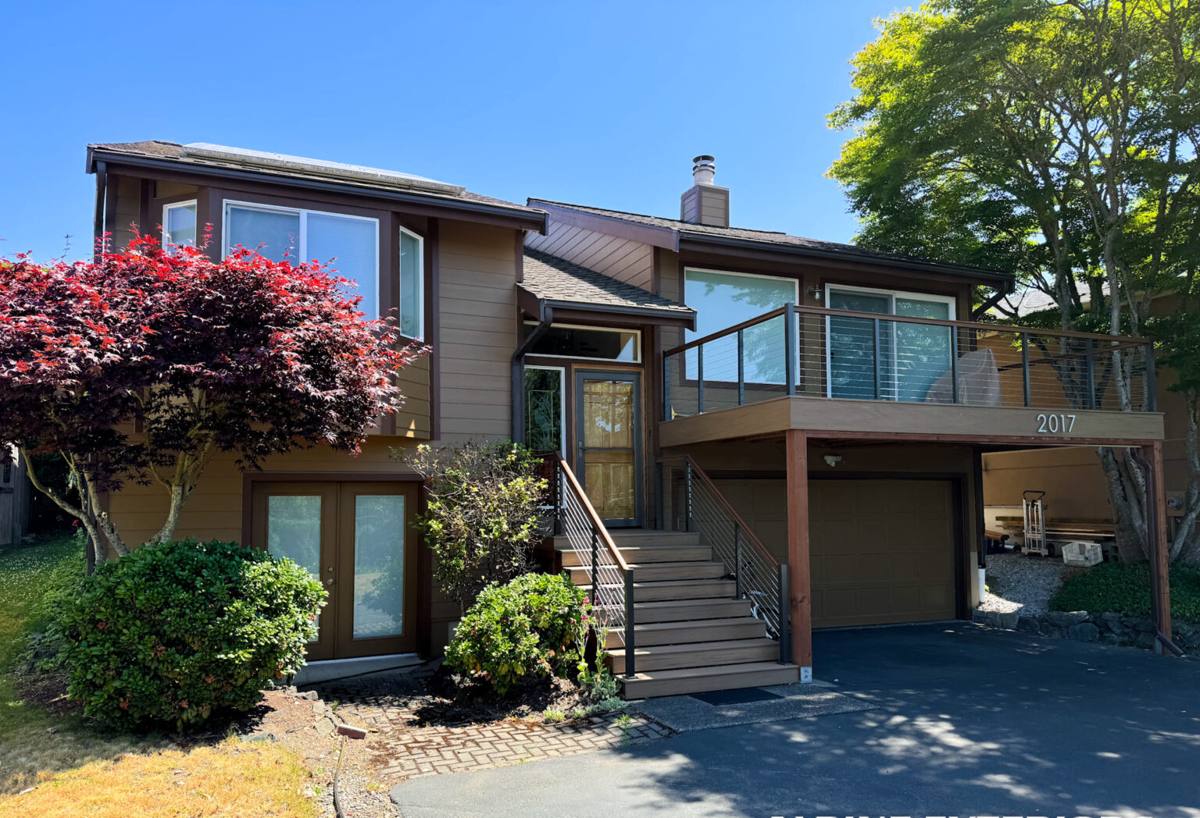
What Conway's Climate Actually Demands from a Window
Salt Air and Corrosion
Homes closer to Skagit Bay and the open water take on a fine salt mist that settles on everything, including window frames, hardware, and screens. Over years, this accelerates corrosion on lower-grade fasteners, hinges, and locking hardware. It also degrades certain finishes faster than a manufacturer's inland warranty testing accounts for. The practical result: hardware and fastener choice matters more here than in most parts of the state, and it is worth asking about it directly rather than assuming every window on a showroom floor will hold up the same way.
Driving, Wind-Blown Rain
A lot of window installation guidance assumes rain falls mostly straight down. That is not how it behaves on exposed sides of a Conway home during a winter storm system — rain gets pushed sideways and upward under eaves and around trim. A window that is only sealed for vertical rainfall will eventually leak at the sill or at the corners where flashing laps meet. Correct installation treats every window as if it will see wind-driven water at some point, because on this stretch of the county, it will.
A Long, Damp Moss Season
The extended stretch of overcast, wet weather that grows moss on roofs and north-facing siding does something similar around window openings: it keeps wood trim, sills, and any exposed fasteners damp for long stretches at a time. Wood that cannot dry out between rain events is where rot starts, usually at the bottom corners of a sill or wherever caulking has failed and gone unnoticed. This is less about moss itself damaging a window and more about what sustained dampness does to any organic material near the opening if the water management behind the trim isn't right.
Signs a Conway Home Needs New Windows
Not every drafty or foggy window needs full replacement, but certain signs point clearly toward it. Worth a look before deciding:
- Fogging or a permanent haze between the panes of a double-pane window — the seal has failed and the gas fill is gone
- Soft or spongy wood at the sill or lower corners of the frame, especially on walls that face prevailing wind and rain
- Visible daylight or a draft you can feel around the frame when the window is fully closed and locked
- Hardware that is corroded, seized, or won't latch tightly anymore — common on homes closer to the bay
- Paint or stain that keeps failing at the same spot no matter how often it's redone, usually a sign of moisture cycling underneath
- Noticeably higher heating bills relative to similar-sized homes nearby, with no other obvious cause
- Windows original to a home built before modern flashing and vapor-barrier standards were common practice
What a Correct Window Installation Actually Involves
Window installation is judged almost entirely on what happens behind the trim, not on what the window looks like once it's in. The window unit itself is often the easy part; the water management around it is where jobs succeed or fail over time.
Opening Preparation
Before a new window goes in, the existing opening gets inspected for hidden rot, soft framing, or prior water damage. Any compromised wood gets addressed rather than sealed over — installing a new window into a damaged opening just hides a problem instead of fixing it, and it will resurface.
Flashing and Water Management
This is the step that matters most in Conway's climate. Flashing tape and building paper need to be layered correctly — each layer overlapping the one below it, shingle-style, so any water that gets past the window sheds down and out rather than working its way into the wall cavity. A sill pan at the bottom of the opening gives any water that does get in a way to drain back out instead of pooling against the framing. Skipped or reversed flashing laps are one of the most common causes of slow, hidden rot behind a window — and because the damage is hidden, it often isn't caught until the trim or siding is opened up years later.
Air Sealing and Insulation
The gap between the window frame and the rough opening needs to be filled with an appropriate low-expansion foam or insulation, not left hollow and not overfilled to the point it bows the frame. Done right, this cuts drafts and stops that gap from becoming a path for moist air to condense inside the wall.
Exterior Sealant and Trim
The final sealant bead is what most homeowners actually see, but it is the last line of defense, not the main one. A good caulk joint on top of poor flashing will fail early because it's fighting water the flashing should have already redirected.
Choosing the Right Window for a Coastal Skagit County Home
Material choice affects how well a window handles salt air, moisture, and temperature swings over time. There is no single right answer for every home — it depends on exposure, budget, and how the house is used — but the trade-offs are worth understanding upfront.
| Frame Material | How It Handles Salt Air & Moisture | Maintenance | Typical Lifespan |
|---|---|---|---|
| Vinyl | Does not corrode or rot; performs well in salt air | Low — occasional cleaning | 20–30 years |
| Fiberglass | Very stable, resists warping and corrosion, strong in coastal exposure | Low | 30+ years |
| Wood | Attractive but vulnerable to rot if seals fail or maintenance lapses | High — regular painting/sealing needed | Varies widely with upkeep |
| Wood-clad (wood interior, metal/composite exterior) | Good if cladding and seams are sound; failure points are at the cladding joints | Moderate | 20–30 years |
| Aluminum | Prone to corrosion and pitting in salt air over time unless marine-grade | Moderate to high | Varies; shorter near the bay |
For homes with direct exposure toward the bay, vinyl and fiberglass frames tend to be the more forgiving long-term choice simply because they don't give salt air and moisture anything to corrode or rot. Wood and wood-clad options can still be the right call for homes prioritizing a specific look, as long as the homeowner understands the maintenance commitment that comes with it.
Our Window Installation Process
- On-site assessment — we look at existing windows, framing condition, exposure to wind and rain, and what's actually causing any current problems before recommending anything.
- Honest recommendation — full-frame replacement, insert replacement, or targeted repair, depending on what the opening actually needs, not a one-size-fits-all upsell.
- Written estimate — clear about materials, scope, and what's included, so there are no surprises once work starts.
- Opening prep and any needed repairs — addressing rot or damage found once trim comes off, with the homeowner informed before proceeding.
- Correct flashing, insulation, and sealing — the part that determines how the window performs in Conway's weather for the next twenty-plus years.
- Final inspection and cleanup — checking operation, seals, and site cleanup before we call the job done.
What Window Installation Typically Costs
Costs vary based on window count, material, size, and whether it's a straightforward insert replacement or a full-frame job that involves opening up siding and trim. Broad factors that move the price:
| Factor | Effect on Cost |
|---|---|
| Insert vs. full-frame replacement | Full-frame costs more but is often necessary when framing is damaged or the opening size is changing |
| Frame material | Vinyl is typically the most affordable; fiberglass and wood run higher |
| Window size and type | Larger units, bays, and specialty shapes cost more than standard double-hung sizes |
| Number of windows | Doing several at once usually lowers the per-window cost compared to one-off replacements |
| Hidden rot or framing repair | Adds cost, but skipping it just delays a bigger repair later |
| Access and site conditions | Second-story or hard-to-access windows take more time and labor |
We'd rather walk a homeowner through these factors on-site and give a real number than throw out a broad range that doesn't mean much for their specific house.
Why It Matters to Hire a Crew That Already Works Conway
Window installation is one of those jobs where the mistakes don't show up right away. A rushed or improperly flashed installation can look fine for a year or two before water finds its way in behind the trim. A crew that regularly works homes in Conway and the surrounding Skagit County area already understands the exposure this specific location deals with — the direction the wind-driven rain typically comes from, how salt air affects hardware choices, and how long moisture tends to sit around window openings during the wet season. That's not something a crew coming from a drier, inland climate necessarily accounts for by default. It shows up in the details: flashing lap order, sealant choice, hardware selection, and where extra attention goes on a given wall.
Keeping New Windows Performing Long-Term
A correct installation does most of the work, but a little homeowner attention extends the life of any window in this climate:
- Rinse salt residue off frames and hardware periodically if the home is close to the bay
- Check exterior caulking once a year and touch up any cracked or separated sections before the wet season sets in
- Keep weep holes on vinyl and fiberglass frames clear of debris so water can drain as designed
- Watch for soft spots or paint failure at sills, which often signal a moisture issue starting underneath
- Operate hardware periodically through the year so locks and hinges don't seize from disuse and moisture
None of this is complicated, but it's the kind of upkeep that's easy to forget until a problem shows up — and in a climate like this one, problems tend to start small and stay hidden for a while.
If you're weighing window replacement or repair for a home in Conway, we're happy to take a look and give you a straight, no-pressure estimate. Use the form below to get started.