 Anacortes Roofing
 Building a Deck That Actually Belongs on Guemes Island
Guemes Island sits right in the path of everything Rosario Strait and the Salish Sea throw at it — salt-laden wind, driving rain off the water, and long stretches of gray, damp weather that keep wood and hardware wet for days at a time. A deck built to a generic Pacific Northwest standard will survive on the island. A deck built specifically for island conditions will still look and perform like new a decade later. That difference comes down to material selection, fastener choice, drainage details, and a few construction habits that don't matter much twenty miles inland but matter a great deal on waterfront and view lots facing open water.
We're an Anacortes-based crew that works Guemes Island regularly, and we've learned what fails first out here — and why. This page walks through what a properly built custom deck for a Guemes Island home actually requires.
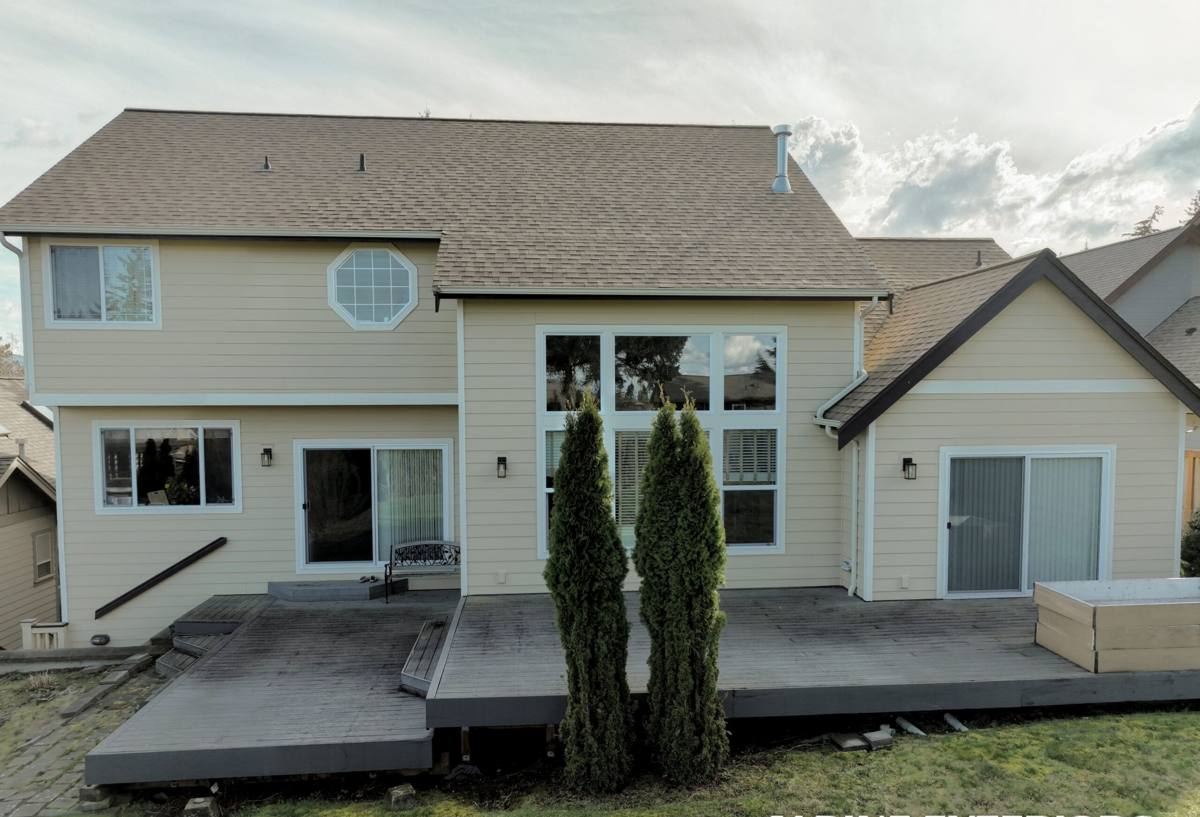
What Salt Air and Rain Actually Do to a Deck
Salt air isn't just an inconvenience — it accelerates corrosion on any exposed metal, and it does it faster on a bluff or waterfront lot with a clear line to the water than it does even a mile back from shore. Combine that with Skagit County's wet season, which can keep a deck surface damp for weeks straight, and you get a specific set of failure patterns:
- Fasteners and hardware rust and stain the decking around them long before the boards themselves fail
- Joist hangers and structural connectors corrode from the inside, often invisibly, until a board starts to feel spongy
- Moss and algae take hold on shaded or north-facing sections and hold moisture against the wood or composite surface
- End grain on wood decking soaks up water fastest, so board ends rot or split first — usually near stair stringers and rail posts
- Wind-driven rain pushes moisture sideways under railings and around post bases, areas a standard deck design doesn't always account for
None of this means a deck can't be built to last on the island — it means the build has to plan for these failure points instead of hoping they don't show up.
Choosing the Right Decking Material for Island Conditions
There's no single "best" decking material — there's a best material for your budget, your maintenance appetite, and how exposed your lot is to wind and salt spray. Here's how the common options actually perform on Guemes Island specifically.
| Material | How it handles salt air & moisture | Maintenance | Best for |
|---|---|---|---|
| Capped composite | Excellent — the cap resists moisture absorption and won't rot; hardware corrosion is the main concern, not the boards | Occasional wash to prevent moss film; no staining or sealing | Waterfront and heavily shaded lots where low upkeep matters most |
| Cedar | Naturally rot- and insect-resistant, but end grain and fastener holes still need attention; softer, so it dents and weathers gray without maintenance | Needs periodic cleaning and re-sealing or staining to hold color and resist moisture | Homeowners who want a natural wood look and are willing to maintain it |
| Pressure-treated fir/hem-fir | Treatment resists rot in the wood itself, but is more prone to cupping and checking with repeated wet-dry cycles | Regular sealing recommended; more movement over time than cedar or composite | Budget-conscious builds, substructure/framing use |
| Tropical hardwood (e.g., ipe) | Very dense and naturally moisture-resistant; among the longest-lasting wood options in coastal exposure | Low rot risk but still benefits from oiling to maintain color; installation is unforgiving of shortcuts | Homeowners prioritizing longevity and willing to pay for it upfront |
We'll walk your specific site — sun exposure, wind direction, how close you are to the water — and give you a straight recommendation rather than steering you toward whatever's easiest to install.
Why We're Selective About What We Install
We don't install every product on the market, and that's a deliberate call rather than a limitation. Some decking and railing systems look great in a showroom but behave poorly in sustained wet, salty exposure — trapping moisture behind trim, requiring maintenance schedules most homeowners won't keep up with, or carrying warranty terms that don't hold up once you read the fine print. We'd rather build you something we're confident will still be solid in fifteen years than sell you whatever has the best margin.
Fasteners and Hardware: The Detail Most Decks Get Wrong
On an inland deck, galvanized fasteners and connectors are often fine. On Guemes Island, that's usually not enough. We build with stainless steel fasteners and marine-grade or coated structural hardware in the areas most exposed to salt air and standing moisture — ledger connections, post bases, and joist hangers especially. It costs more upfront than standard hardware. It's also the single biggest factor in whether a deck's frame is still sound in twenty years or needs structural repair in eight.
We also pay attention to how framing meets the ground and the house: proper flashing at the ledger board, post bases that keep wood off standing water, and gaps between boards sized to shed water and debris instead of trapping it.
Design Considerations for Waterfront and View Lots
Guemes Island homes are often built for the view, which usually means more wind exposure and more direct weather than a sheltered inland lot. A few design choices matter more here than they would elsewhere:
- Railing systems need to meet code for wind and guard loads while still holding up to salt exposure on cable, glass, or metal components
- Board orientation and gapping should account for prevailing wind and rain direction so water sheds instead of pooling
- Stair and landing placement should keep the most vulnerable end-grain cuts away from constant runoff paths
- Shaded, north-facing sections often need wider gapping or a different material altogether to avoid becoming the first spot where moss takes hold
A deck design that ignores these details might look identical on install day to one that accounts for them. The difference shows up three winters later.
Why It Matters That We Already Work Guemes Island
Building on an island changes the logistics of a project, even a straightforward one. Material deliveries, equipment, and crew all move on a ferry schedule, and a contractor who hasn't planned around that will either pass the inefficiency on to you in the price or show up with the wrong materials on the wrong day. Permitting also runs through Skagit County rather than the City of Anacortes, since Guemes Island is unincorporated — a detail that trips up contractors who mostly work in-city.
Because we work Guemes Island regularly, we plan deliveries and crew schedules around the ferry from the start, so your project isn't paying for someone else's learning curve. We also know which structural and hardware details matter most for this specific stretch of coastline, because we've gone back and looked at how our own past work has held up.
Our Process for a Guemes Island Deck
- Site visit — we look at your lot's sun, wind, and water exposure, existing structure (if replacing a deck), and access for materials and equipment
- Design and material recommendation — a straightforward rundown of the material and hardware options that fit your site, budget, and maintenance preference
- Permitting — we handle the Skagit County permitting process for your project
- Scheduled build — deliveries and crew time planned around ferry logistics so the project moves efficiently once it starts
- Final walkthrough — we go over the finished deck with you, including basic care so you get the material's full lifespan
Keeping a Guemes Island Deck in Good Shape
Even a well-built deck needs some seasonal attention out here. This isn't a heavy maintenance list — it's a short one that actually matters given the local climate:
- Sweep debris and standing leaves off the surface regularly, especially in fall and winter
- Rinse or lightly scrub shaded and north-facing sections before moss gets a foothold — it's far easier to prevent than remove
- Check railing posts and stair connections annually for movement or corrosion staining
- Re-seal or re-stain wood decking on the manufacturer's recommended schedule, not just when it looks faded
- Keep gutters and downspouts near the deck clear so runoff isn't draining directly onto or under it
- Have a professional check under-deck framing and hardware every few years, particularly on older builds with standard (non-stainless) fasteners
Get a Straight Answer on What Your Deck Needs
Every Guemes Island lot is a little different — some are tucked back with tree cover, others sit wide open to the Strait. We'll come look at yours, tell you honestly what material and build details make sense for your exposure and budget, and give you a clear estimate with no pressure to decide on the spot. Use the form below to request a free estimate.