 Anacortes Roofing
 Building a Deck That Holds Up in Sedro-Woolley
A deck in Sedro-Woolley has to do more than look good on a dry August afternoon. It has to survive a wet season that runs long, shrug off moss and algae that colonize anything shaded and damp, and hold its shape through freeze-thaw swings that loosen fasteners and crack poorly sealed wood. We build custom decks for homeowners throughout the Sedro-Woolley area and the broader Skagit County market, and the difference between a deck that looks good for two years and one that looks good for twenty almost always comes down to material choice, structural details, and drainage planning done right the first time.
What Skagit County Weather Does to an Outdoor Deck
Rain That Doesn't Let Up
Western Washington's wet season isn't defined by a few heavy storms — it's defined by months of steady, low-intensity rain that keeps wood surfaces damp for days at a time. Decking that can't shed water efficiently, or that's built without gaps for airflow underneath, stays wet long enough for rot to take hold in joists, ledger boards, and the undersides of deck boards that never get a chance to dry out between rain events.
Moss, Algae, and Shade
Sedro-Woolley sits along the Skagit River in a landscape of mature trees and shaded yards, which is great for privacy and terrible for bare wood decking. Moss and algae need moisture and low light to establish, and a north-facing deck under tree cover can develop a slick green film within a season or two if the surface isn't sealed or the material isn't resistant to it. Beyond looking bad, that buildup makes stairs and walking surfaces genuinely slippery — a real fall hazard on wet mornings.
Salt Air vs. Inland Humidity
It's worth being precise here: Sedro-Woolley is inland along the Skagit River, so it doesn't take the direct salt spray that coastal Anacortes properties deal with. What it does share with the rest of Skagit County is persistent humidity, heavy dew, and long stretches without direct sun to dry things out. That combination is less corrosive to metal hardware than true coastal salt air, but it's just as hard on untreated wood and just as capable of feeding rot if a deck isn't built with drainage and ventilation in mind.
Freeze-Thaw and Temperature Swings
Skagit County doesn't get brutal winters, but it does get repeated cycles of near-freezing nights followed by wet, milder days. Water that gets into a crack in decking or into an unsealed fastener hole expands when it freezes, widening the crack a little more each cycle. Over several winters, that's how a small surface check turns into a split board or a loosened railing post.
Choosing Decking Material for This Climate
There's no single "best" decking material — there's the right material for your budget, your maintenance appetite, and how much sun and shade your specific lot gets. Here's how the common options compare for a Skagit County build:
| Material | Upfront Cost | Maintenance in a Wet Climate | Typical Lifespan |
|---|---|---|---|
| Pressure-treated wood | Lowest | Needs re-sealing every 1-2 years; prone to moss without upkeep | 10-15 years with regular maintenance |
| Cedar | Moderate | Naturally rot-resistant but still needs periodic sealing and moss treatment | 15-20 years with care |
| Capped composite | Higher | Occasional washing; no sealing or staining required | 25-30+ years, manufacturer-warrantied |
| PVC decking | Highest | Very low; resists moisture absorption almost entirely | 25-30+ years, manufacturer-warrantied |
For heavily shaded, moisture-prone lots — which describes a lot of wooded Sedro-Woolley properties — we usually steer homeowners toward capped composite or PVC decking for the walking surface, even if the framing underneath is standard pressure-treated lumber. The framing is protected from direct weather once the deck is built; the top surface is what takes the daily beating.
Structural Details That Matter More Here Than Elsewhere
Ledger Board Flashing
The ledger board — where the deck attaches to the house — is the single most common failure point on decks in wet climates. If it isn't flashed correctly to shed water away from the house rim joist, water tracks behind the board and rots both the ledger and the framing it's bolted to, sometimes for years before it's visible. We flash every ledger connection with proper metal flashing and self-adhering membrane, not caulk alone, because caulk is a maintenance item and flashing is permanent protection.
Footings and Frost Depth
Footings need to be sized and set to local frost depth requirements so the deck doesn't heave or settle unevenly as ground temperatures swing through the winter. This is a code requirement, not an upgrade — skipping it or shortcutting depth is one of the most common ways an otherwise nice-looking deck ends up with a wobble or a gap within a few years.
Fasteners and Hardware
In a climate that keeps wood damp for long stretches, fastener quality is not the place to save money. We use hot-dip galvanized or stainless structural hardware rated for ground contact and treated lumber, and for the decking surface itself we typically recommend hidden fastener systems, which keep water from pooling in screw heads on the walking surface and give a cleaner finished look.
Design Choices That Fit Sedro-Woolley Properties
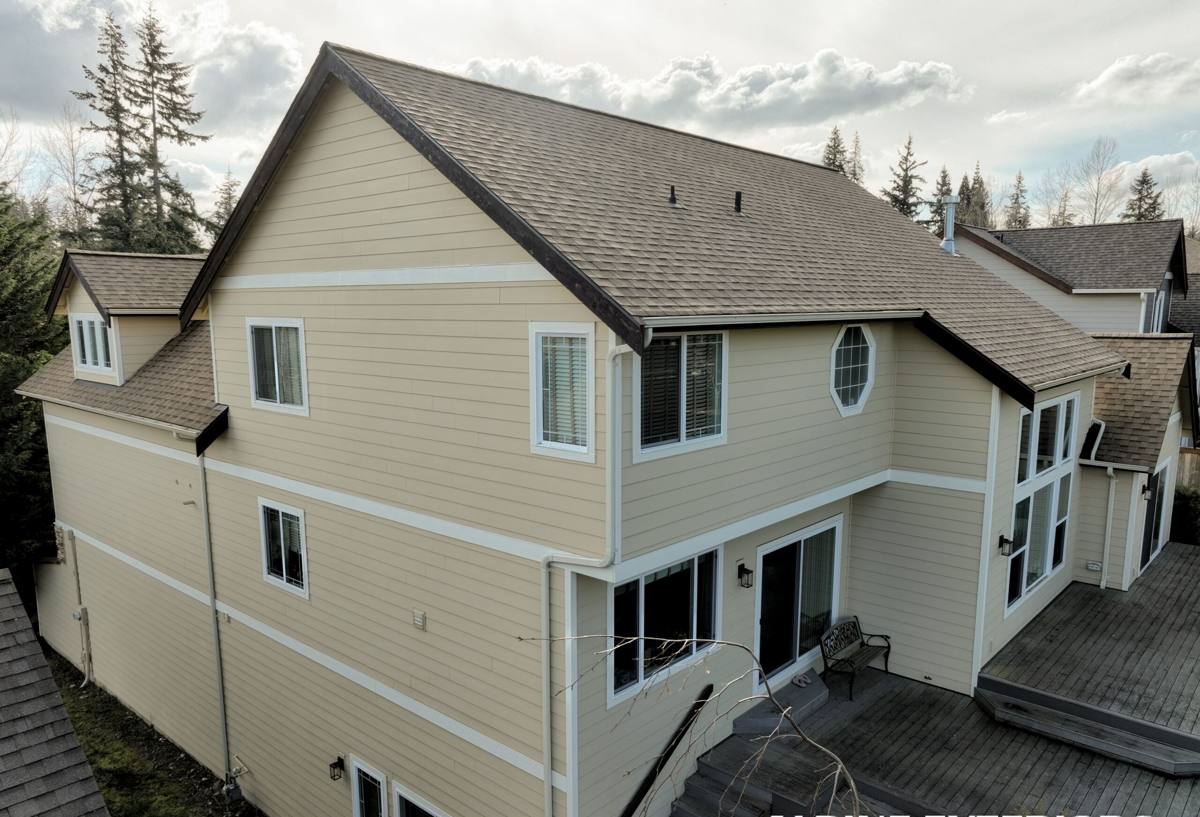
Many lots in and around Sedro-Woolley have some slope, tree cover, or a walkout basement level that shapes what a deck can do. Multi-level decks are common where a house sits above grade and needs a transition down to the yard. Whatever the layout, drainage planning has to happen before construction — that means grading the ground under the deck so water moves away from the foundation, and, where a deck sits low to the ground, leaving enough clearance underneath for airflow so the joists and the underside of the decking can actually dry between rain events. Covered or partially covered deck sections are also worth considering here; even a simple roof over part of the deck cuts down dramatically on how much standing water and debris the surface deals with over a wet season.
How We Build Your Deck
- On-site assessment. We walk the property, check slope and drainage, look at sun/shade exposure, and talk through how you actually want to use the space.
- Design and material selection. We put together a layout and go through decking, railing, and hardware options with honest pros and cons for your specific lot — not a one-size-fits-all pitch.
- Permitting. We handle the permit application and coordinate any required inspections with the local building department so you don't have to chase paperwork.
- Site prep and footings. Footings are dug to proper frost depth and inspected before framing starts.
- Framing and ledger flashing. The structural frame goes up with corrosion-resistant hardware and a properly flashed ledger connection.
- Decking, railing, and finish work. Surface material, railings, stairs, and any lighting or fascia details are installed and finished.
- Final walkthrough. We go over the finished deck together, cover basic care, and make sure everything meets what we agreed on up front.
Deck Maintenance Checklist for Skagit County Homeowners
Whatever material you choose, a little seasonal attention goes a long way in this climate. A general checklist we give homeowners:
- Sweep leaves and debris off the deck surface and out from between boards regularly during fall
- Rinse or lightly pressure-wash the surface once or twice a year to keep moss and algae from establishing
- Inspect wood decking for soft spots, splitting, or graying that signals it needs re-sealing
- Re-seal or stain wood decking on the schedule the product calls for — typically every 1-2 years in this climate
- Check railings and stair connections annually for looseness, since freeze-thaw cycles can work fasteners loose over time
- Keep gutters and downspouts near the deck clear so water isn't dumping directly onto or under the structure
- Confirm under-deck ventilation isn't blocked by stored items, mulch, or overgrown landscaping
Permits and Code in Sedro-Woolley
Most decks attached to a house, and many freestanding decks above a certain height, require a building permit in Sedro-Woolley and the surrounding Skagit County jurisdictions. Requirements can depend on deck height, size, and whether it's attached or freestanding, and they can change, so we always confirm current requirements with the applicable building department rather than assuming. Skipping a required permit isn't just a compliance issue — it can cause problems later when you sell the house or file an insurance claim involving the structure. We handle the permit process as a standard part of the job so it's one less thing on your plate.
Why Work With a Crew That Already Builds in This Area
A deck built to a generic national spec sheet isn't necessarily built for what Skagit County weather actually does over a decade of wet winters and mossy shade. Knowing which ledger flashing details actually hold up here, which decking materials shrug off this specific combination of humidity and shade, and what the local building department expects on a permit application isn't something you get from a one-size-fits-all approach — it comes from having built and maintained decks in this exact climate. That's the difference a crew with regional experience brings: fewer surprises during the build, and a deck that's still solid and safe well after the novelty of a new deck has worn off.
If you're planning a new deck or replacing one that's past its prime, we're happy to come take a look and walk through honest options for your property. Reach out through the form below for a free, no-pressure estimate.