 Anacortes Roofing
 Building a Deck That Lasts in Bow's Marine Climate
Bow sits close enough to the water that every outdoor structure on a property deals with salt-laden air, wind-driven rain, and long stretches of damp shade under fir and cedar canopy. A deck built the same way you'd build one in a dry inland climate will show problems within a few years here — soft spots at the ledger, green film on the boards by spring, fasteners that bleed rust streaks down the face of the decking. Building a deck correctly in this part of Skagit County isn't about using fancier materials than anyone else. It's about respecting how much moisture this property is going to see every single year and detailing the structure so that water has somewhere to go instead of somewhere to sit.
We build and repair decks throughout the Anacortes area, and Bow properties get the same attention to drainage and structural detail as anything closer to town. The goal on every job is the same: a deck that still feels solid and looks decent a decade from now, not just at the final walkthrough.
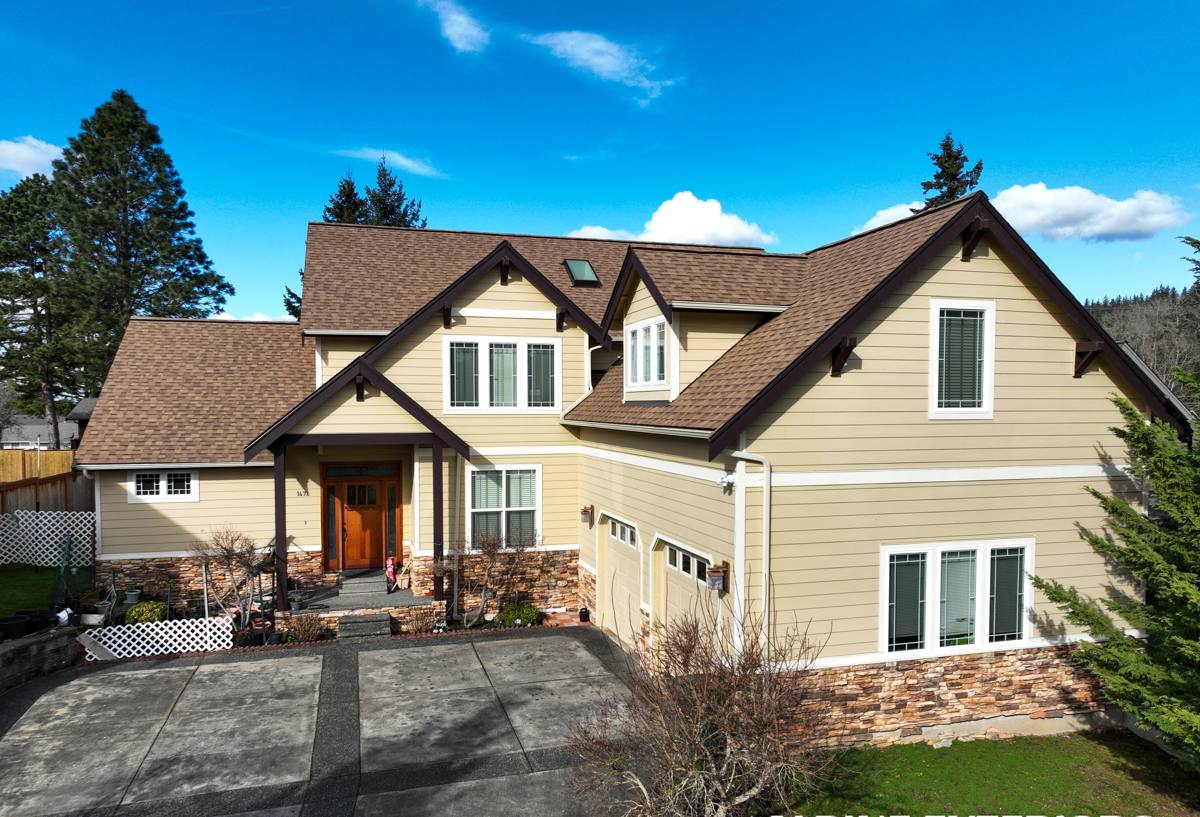
What Bow's Weather Actually Does to a Deck Over Time
It helps to understand the specific failure patterns before talking about how we prevent them. Three things drive almost every deck problem we see out this way:
Driving rain and wind-blown moisture
Storms off the water don't just fall straight down — wind pushes rain sideways into ledger boards, post bases, and any horizontal surface that isn't sloped to shed water. Flat-top rails, unsealed end grain, and horizontal ledger-to-house connections are where we find rot first.
Salt air and metal fatigue
Salt in the air accelerates corrosion on any fastener, bracket, or hanger that isn't rated for it. Standard interior-grade hardware can start showing rust within a couple of seasons this close to the water, and corroding hardware is a structural issue, not just a cosmetic one.
Extended moss and algae season
Shade, moisture, and mild temperatures mean moss and algae have a long growing window here — often most of the year on north-facing or tree-covered decks. Beyond looking bad, a moss layer holds water against the wood surface, which is exactly the condition that causes rot and makes boards slick and dangerous underfoot.
Choosing the Right Decking Material for This Site
There's no single "best" decking material — the right choice depends on budget, how much sun the deck gets, and how much upkeep the homeowner actually wants to do. We walk through the honest trade-offs rather than pushing one product.
| Material | Upfront Cost | Moisture Behavior Here | Maintenance |
|---|---|---|---|
| Pressure-treated lumber | Lowest | Good if properly sealed and re-sealed; end grain and cut edges need re-treatment | Annual cleaning and re-sealing every 2-3 years |
| Cedar | Mid-range | Naturally rot-resistant but still needs sealing against driving rain and salt air | Cleaning plus sealant every 2-3 years |
| Composite decking | Higher | Doesn't rot or absorb water into the board itself; still needs surface cleaning to prevent moss/algae film | Periodic washing, no sealing required |
| PVC decking | Highest | Fully moisture-resistant board; performance depends on quality of substructure underneath | Lowest ongoing maintenance |
Composite and PVC products cost more up front, but in a climate with this much year-round moisture, the reduced maintenance and lack of rot risk in the boards themselves often make sense for homeowners who don't want to be out there sealing wood every other year. That said, plenty of well-built, properly sealed wood decks perform fine here too — it comes down to whether you're willing to keep up with the maintenance schedule.
Framing and Structure: Where Decks Actually Fail First
The decking surface is what you see, but the framing underneath is what determines whether the deck is safe. Almost every deck failure or collapse we've been called to inspect traces back to the substructure, not the surface boards.
- Ledger board attachment to the house — this connection carries a huge share of the deck's load and is the single most common failure point when flashed or fastened incorrectly
- Post footings set below frost depth and bearing on solid, undisturbed soil rather than fill
- Joist hangers and structural connectors rated for exterior, corrosion-resistant use — not standard interior hardware
- Proper joist spacing for the decking material chosen, since composite and PVC often require tighter spacing than wood
- Beam sizing that accounts for actual span and load, not just what "looks about right"
We frame every deck to hold up structurally first, then finish it to look right. A deck that looks great for the first two summers but was under-built underneath is a liability, not a value.
Moisture Management and Drainage Details
This is where a lot of the difference between a deck that lasts and one that doesn't actually gets decided, and it's mostly invisible once the project is done.
Ledger flashing
Where the deck attaches to the house, proper flashing — installed in the correct layered sequence with the house's existing weather barrier — keeps water from tracking behind the siding and into the wall framing. This is one of the most consequential details on the entire project and one of the easiest to get wrong.
Board spacing and airflow
Decking boards need consistent gaps to let water drain through rather than pool on the surface, and the framing below needs enough clearance and airflow to dry out between rain events instead of staying damp constantly.
Post base drainage
Posts set in or near concrete need a standoff base that keeps the wood from sitting in standing water, which is a common source of rot at ground level.
Slope
A slight, intentional slope away from the house keeps water moving off the deck surface instead of collecting near the ledger — small on paper, significant over years of Skagit County rain.
Our Deck Building Process
For a new deck or a full rebuild, the process generally looks like this:
- Site visit and assessment — we look at sun exposure, drainage, existing structure (for rebuilds), and how the space will actually be used before recommending materials
- Design and material selection — honest conversation about wood versus composite versus PVC based on your budget and appetite for maintenance
- Permitting — we handle the permit application and inspection scheduling with the county or city as required for the project's size and location
- Demolition (if replacing an existing deck) — including a check of the ledger and framing for hidden rot before anything new goes up
- Framing — footings, posts, beams, joists, and ledger flashing, all built to hold the load and shed water correctly
- Decking, railing, and stairs — installed to code, with attention to spacing and fastener choice for the material used
- Final walkthrough — we go over the finished deck and the maintenance schedule for whatever material was installed
Permits and Code Considerations
Most deck projects of meaningful size require a building permit, and requirements can vary depending on whether the property falls under county jurisdiction or a nearby city's. Height above grade, railing requirements, and proximity to property lines or shoreline setbacks can all affect what's allowed. We handle the permit process as part of the job so homeowners aren't left navigating that on their own, and so the finished deck passes inspection without surprises.
Maintenance Checklist for Bow Homeowners
Whatever material a deck is built from, a little seasonal attention goes a long way in this climate. A simple annual routine:
- Sweep debris and standing organic matter (leaves, needles) off the deck regularly, especially in fall
- Wash the surface at least once a year to remove moss and algae film before it takes hold
- Check fasteners and hardware for rust or loosening, particularly on rail posts and stair connections
- Inspect the ledger flashing area for any signs of water staining on the siding above or below it
- Re-seal wood decking on the schedule appropriate to the product — don't wait until it looks obviously weathered
- Confirm drainage gaps between boards aren't clogged with debris or moss buildup
Why Hire a Crew That Already Works in Bow
A deck built without accounting for this specific climate — salt air, driving rain, and a moss season that runs most of the year — tends to look fine at handoff and start showing problems within a few seasons. Working regularly in and around Anacortes and Skagit County means we're not guessing at how a ledger flashing detail or a fastener choice holds up here; we've seen what fails and what doesn't over time in this exact weather pattern. That's the difference between a deck that's still solid in ten years and one that needs major repair in three or four.
If you're planning a new deck or need an honest look at an aging one in Bow, we're glad to come take a look. Reach out for a free, no-pressure estimate using the form below.