 Anacortes Roofing
 Why Decks in Bow Take a Different Kind of Beating
Bow sits in a part of Skagit County where marine air, seasonal downpours, and long stretches of shade and moisture all work against a deck at the same time. It's not one problem — it's several, stacked on top of each other for most of the year. Salt-laden air moving off the water corrodes fasteners and hardware faster than it would inland. Driving rain off Puget Sound and the Salish Sea gets pushed sideways into ledger boards, stair stringers, and railing posts. And the region's long, damp winters give moss and algae months at a time to colonize any horizontal wood surface that doesn't get direct sun or airflow.
None of that means a deck in Bow is doomed — it means a repair has to account for moisture, not just look like it fixed the visible problem. A lot of the deck repair calls we get started as a small soft spot or a wobbly rail, and turned into a bigger job because the first fix (or the original build) didn't deal with water the way this climate demands.
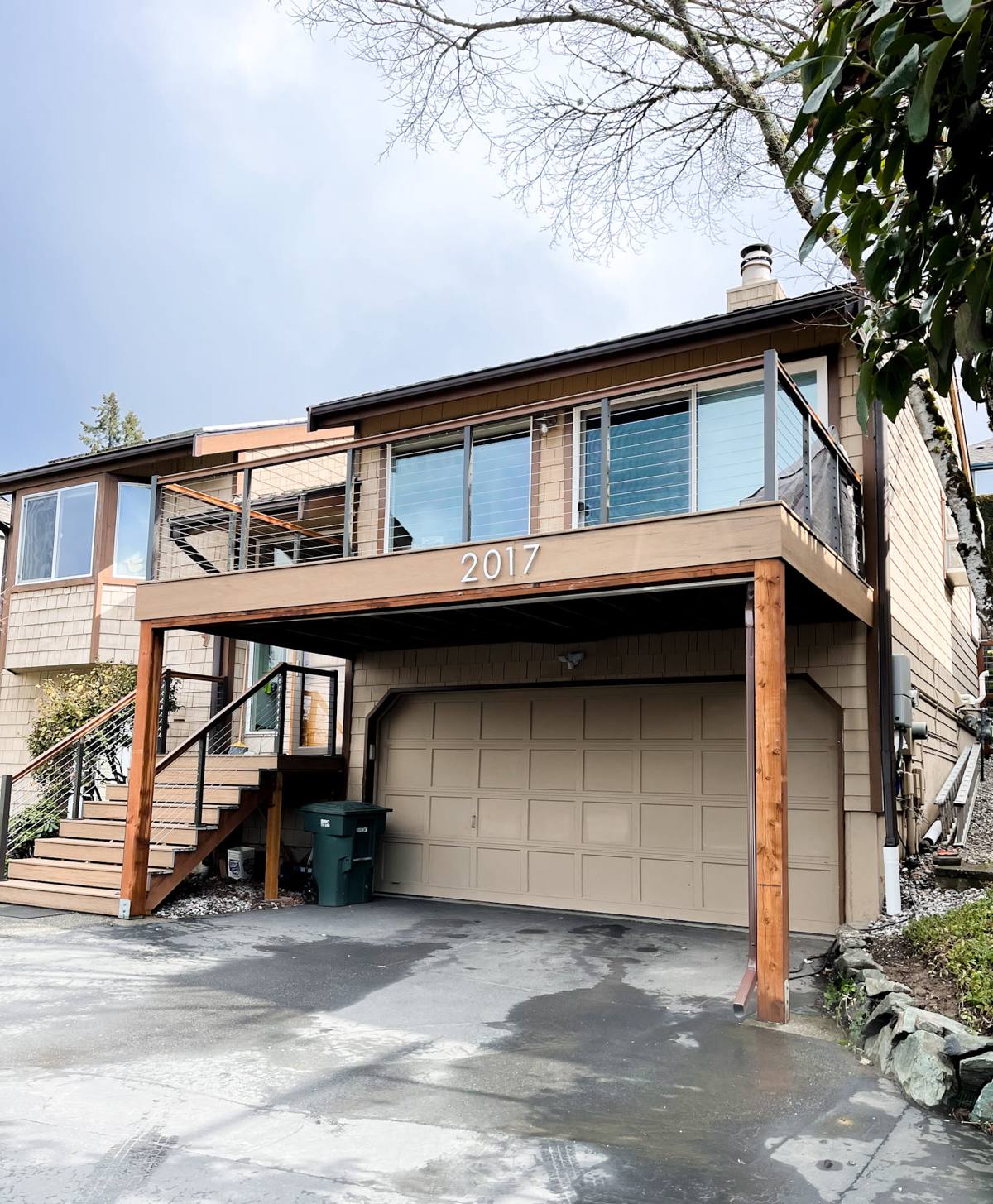
Signs a Bow Deck Needs Repair — And What They Usually Mean
Homeowners in this area tend to notice the same handful of warning signs. Some are cosmetic. Others point to structural issues that shouldn't wait.
- Soft or spongy decking boards — usually moisture trapped underneath, often where boards sit tight against each other with no drainage gap.
- Rust streaks around fasteners — a sign that hardware wasn't rated for coastal exposure, or that galvanized coatings have worn through.
- Green or black film on boards, especially in shaded corners — moss and algae holding moisture against the wood surface longer than it should sit there.
- Railings that flex or feel loose — often a post connection that's rotted at the base or was never lagged into solid framing.
- Gaps or separation where the deck meets the house — a ledger board or flashing issue, which is one of the more serious things to catch early.
- Stair stringers that feel bouncy or uneven — end grain on stringers absorbs water fast and is often the first framing member to fail.
Some of these are a board-and-a-half fix. Others mean opening up the structure to see what's happening underneath. Part of an honest estimate is telling you which one you're actually looking at before any work starts.
What a Correct Repair Actually Involves
It's Rarely Just the Board You Can See
Replacing a rotted deck board is the easy part. The harder — and more important — part is figuring out why that board failed and whether the framing underneath it is still sound. A repair that only replaces the surface board without checking the joist, ledger, or flashing below it is a repair that's likely to fail again in the same spot within a few seasons, especially with the amount of rain this area sees.
The Ledger Connection
The ledger board — where the deck attaches to the house — is the single most important connection on most decks, and it's also the one most likely to have hidden water damage. Flashing that's missing, undersized, or improperly lapped lets water track behind the ledger and into the house rim joist. On a repair, we check this connection whenever the deck surface near the house shows any sign of moisture damage, even if that wasn't the original complaint.
Fasteners and Hardware
Coastal air is hard on standard hardware. We use fasteners and structural connectors rated for the exposure this area actually sees, not just what's cheapest at the yard. Mismatched metals (for example, the wrong screws with certain treated lumber or hardware) can accelerate corrosion, so matching hardware to the lumber and to the environment is part of doing the repair right the first time.
Framing and Structural Members
Joists, beams, and posts are checked for rot, especially at the ends and anywhere water has been sitting. Localized rot can sometimes be sistered with new lumber; more extensive damage means replacing the member outright. We don't sister over damage that should be replaced just to save a step.
Materials: How They Actually Hold Up in This Climate
The right material depends on your budget, how much maintenance you want to keep up with, and how exposed the deck is to sun, shade, and moisture. Here's how the common options compare for repair and replacement work in a marine, moss-prone climate like this one.
| Material | Moisture Behavior | Maintenance | Typical Lifespan Here |
|---|---|---|---|
| Pressure-treated lumber | Resists rot when sealed and maintained; end cuts need re-treatment | Needs re-staining/sealing every 2-3 years | 15-20+ years with upkeep |
| Cedar | Naturally rot-resistant but softer; still needs sealing in wet shade | Regular cleaning and periodic sealant | 15-20 years with care |
| Composite decking | Doesn't rot, but can trap surface moisture and grow algae film | Periodic cleaning; no staining needed | 25+ years, warranty-backed |
| Untreated or older reclaimed lumber | Poor — absorbs moisture readily | High, and often not worth it | Often already failing |
We don't push composite as a blanket upgrade — for some repairs, matching the existing pressure-treated or cedar structure is the more sensible and less expensive fix. The decision comes down to how much of the deck is affected and what you want to be dealing with five or ten years from now.
Our Repair Process, Start to Finish
- On-site inspection. We look at the surface issue you called about, but also check the ledger, framing, posts, and any hidden moisture paths nearby.
- Honest scope of work. You get a clear explanation of what's actually failing, what's cosmetic, and what's structural — in plain terms, before any pricing.
- Written estimate. Repair scope, materials, and cost broken down so you know what you're paying for and why.
- Demo of the affected area only. We open up only what needs to come out, keeping sound structure intact.
- Structural correction first. Rot, corrosion, and flashing problems get addressed before anything cosmetic goes back on.
- Rebuild with matched or upgraded materials. Boards, fasteners, and hardware selected for this climate, not just what's on the shelf.
- Final check for drainage and airflow. Board spacing and any grading nearby is checked so water has somewhere to go.
Repair vs. Full Rebuild: What Actually Drives the Decision
Not every deck problem needs a full rebuild, and not every deck problem should be patched. The honest answer usually comes down to how much of the structure — not just the surface — is affected.
| Factor | Favors Repair | Favors Rebuild |
|---|---|---|
| Extent of rot | Isolated to a few boards or one post | Spread across multiple framing members |
| Age of the deck | Newer deck, one localized failure | Older deck near end of its service life |
| Ledger condition | Ledger and flashing still sound | Ledger showing rot or missing flashing |
| Code compliance | Meets current railing/attachment standards | Older railings or connections below current code |
| Long-term plans | Planning to stay a few more years | Wanting a lasting, low-maintenance upgrade |
We'll tell you plainly if a repair is a reasonable short-to-medium-term fix versus a case where you'd be spending real money to delay a rebuild you'll need anyway. That's your call to make, but it should be an informed one.
Living With Moss and Algae Between Repairs
Even a well-repaired deck will pick up moss and algae in a climate that stays damp and shaded for months at a time. A little seasonal upkeep goes a long way toward protecting the repair you've just paid for.
- Sweep leaves and debris out of board gaps regularly — trapped organic matter holds moisture against the wood.
- Rinse off moss and algae film before it builds up a heavy layer; a stiff brush and mild cleaner is usually enough.
- Keep nearby vegetation trimmed back so sunlight and airflow can reach shaded sections of the deck.
- Check that gutters and downspouts near the deck aren't dumping extra water onto it.
- Re-seal or re-stain wood decking on the schedule the product calls for — skipping a cycle in this climate catches up fast.
- Look underneath the deck once or twice a year for standing water or soft framing before it becomes a bigger repair.
Why a Crew That Already Works in Bow Matters
Deck repair in this part of Skagit County isn't the same job as deck repair somewhere dry and inland. A crew that works this specific area regularly already knows how far salt air travels, how long moss season really runs, and which repair shortcuts fail early here — because we've been called back to fix them. That local familiarity shows up in small decisions: which hardware to spec, where to add extra flashing that wasn't in the original build, and how much drainage gap to leave between boards for a deck that sits in shade most of the day.
It also means we're not guessing about permitting expectations or typical framing practices for homes in this area — we're applying what we've already learned on decks like yours, in this same climate, not relearning it on your project.
Get an Honest Look at Your Deck
If your deck in the Bow area has a soft spot, a wobbly rail, or just isn't holding up the way it used to, it's worth getting a straight answer on what's actually going on underneath before it gets worse. We offer free, no-pressure estimates — use the form below to get one scheduled.