 Anacortes Roofing
 Why Old Town Anacortes Decks Wear Out Faster Than the Manual Says
Old Town Anacortes sits close to the water, and that proximity is the whole story behind why decks here fail earlier than the lumber tags and product warranties suggest. Salt-laden air off the surrounding waterways accelerates corrosion on fasteners, hardware, and any metal connector that isn't rated for coastal exposure. Combine that with Skagit County's long wet season — months of driving rain followed by a mossy, low-sun stretch through winter and early spring — and you get a deck environment that's harder on materials than most manufacturers design for.
Homes in this part of Anacortes also tend to be older, with decks that were built or last replaced under a different code cycle, using framing and ledger connections that wouldn't pass inspection today. When we're called out to look at a "repair," we're often looking at a structure that's been quietly losing integrity for years under a deck board surface that still looks fine from a few feet away.
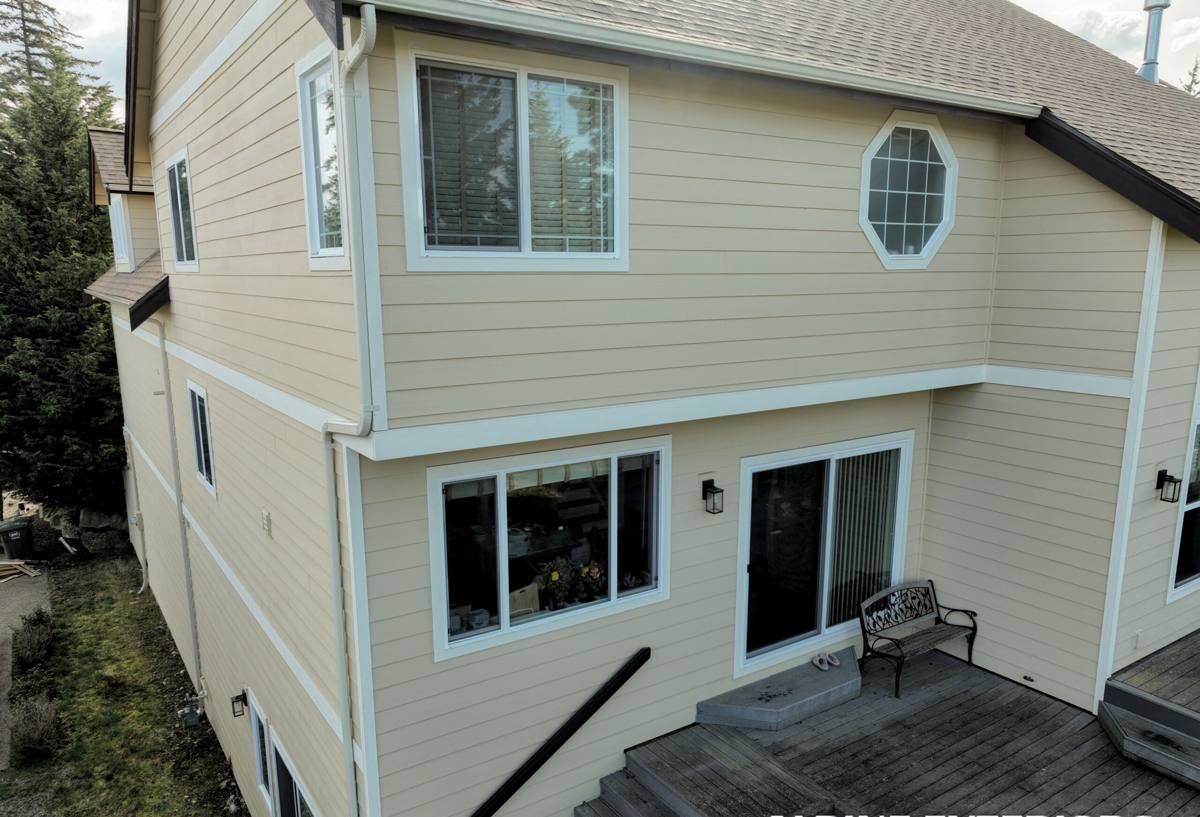
Signs a Deck Needs Full Replacement, Not Another Repair
Homeowners often ask whether a few rotten boards can just be swapped out. Sometimes yes — but there are specific signs that point to a structural problem underneath, where board replacement alone would be putting new paint on a cracked foundation.
- Soft, spongy, or bouncy footing anywhere on the deck surface, not just at the edges
- Rust streaking around joist hangers, bolts, or screw heads
- A ledger board that's pulling away from the house, or gaps behind the flashing where it meets the siding
- Visible moss or algae growth on the underside of joists and beams, which signals trapped moisture
- Wobble in the railing posts when you push on them — often a sign the post base has rotted inside the framing
- Deck boards that are cupping, splitting along their length, or holding standing water after rain
Any one of these can be isolated, but in our experience if a deck in this area is more than 15-20 years old and shows two or more of these signs at once, full replacement is usually the more honest recommendation than chasing repairs board by board.
What a Correct Deck Replacement Actually Involves
Starting With the Ledger and Structural Connection
The ledger board — where the deck attaches to the house — is the single most important connection on the whole structure, and it's also the one most likely to have been done wrong or under an older code. A correct replacement means removing the old ledger, inspecting and repairing the house's rim joist and sheathing behind it if there's rot, and reattaching with proper lag bolts or through-bolts along with flashing that directs water away from the house rather than behind it. On a home near the water, we treat this flashing detail as non-negotiable — it's the single most common failure point we find on older Anacortes decks.
Framing and Footings
Joists, beams, and posts get sized to current code span tables, not just matched to whatever was there before. Footings are checked for frost depth and bearing, especially important on older lots where original footings were sometimes undersized or set shallow. All structural hardware — joist hangers, post bases, hurricane ties — should be stainless steel or heavy hot-dip galvanized rated for coastal and treated-lumber contact, not the standard-grade hardware that's fine further inland but corrodes quickly here.
Decking, Fasteners, and Drainage
Board spacing matters more in a wet climate than people expect — too tight and boards can't shed water or dry between rains, which is exactly what feeds moss and mildew growth. Fasteners should be corrosion-resistant and rated for whatever decking material is used, since a mismatched fastener will stain or fail long before the board does. We also grade the framing to shed water away from the house and avoid low spots where standing water collects after storms.
Choosing a Decking Material for This Climate
There's no single "best" decking material — it's a real trade-off between upfront cost, appearance, and how much upkeep you're willing to do given the moss and moisture load this area sees every year.
| Material | How It Handles Salt Air & Moisture | Maintenance Load | General Lifespan |
|---|---|---|---|
| Pressure-treated lumber | Good with proper fasteners; needs sealing to resist moss and graying | Annual cleaning and periodic re-sealing | 15-20 years with upkeep |
| Cedar | Naturally resists rot and insects; still needs finish to fight moss staining | Regular cleaning and refinishing | 15-20 years with upkeep |
| Composite decking | Doesn't absorb moisture like wood; some boards can still trap surface moss if not cleaned | Periodic washing, no sealing required | 25-30 years, per manufacturer warranty |
| PVC/cellular decking | Fully moisture-resistant surface, very low absorption | Lowest — occasional washing | 25+ years, per manufacturer warranty |
We'll walk through these options honestly during your estimate, including where composite or PVC decking makes sense as a lower-maintenance long-term choice, and where a wood deck fits the home's style and budget better. Neither is "wrong" — it depends on how much yearly upkeep you want to take on.
Railings, Stairs, and Local Code Considerations
Railings and stairs are where a lot of older decks fall out of compliance without the homeowner realizing it — post spacing, baluster gaps, and guard height requirements have tightened over the years. On a replacement, we build railings and stairs to current code as a matter of course, not as an upsell. This matters especially on elevated decks common on the sloped and view-oriented lots around Anacortes, where a railing failure has real consequences. We also pay attention to stair stringer support and footing depth, since undersized stringers are one of the more common shortcuts we find on older builds in this area.
Our Deck Replacement Process
- On-site assessment — we inspect the existing deck's framing, ledger, footings, and any visible rot or corrosion before quoting anything
- Written estimate — a clear scope covering demolition, framing, decking material, railings, and any structural repairs to the house connection
- Permitting — we handle the permit process for the city where required, since most full deck replacements in Skagit County need one
- Demolition and disposal — full removal of the old structure, including hardware, with the site cleaned and hauled off
- Framing and inspection — new structural work built to current span and connection standards, ready for any required inspection
- Decking, railing, and stair installation — finished surface and safety elements installed per the agreed material and design
- Final walkthrough — we go over the finished deck with you, including care instructions specific to the material you chose
What Drives the Cost of a Deck Replacement
Every deck is different, so we don't quote off square footage alone. The factors below are what actually move the price up or down on a typical Old Town Anacortes project.
| Factor | Why It Matters |
|---|---|
| Height and grade of the lot | Elevated decks need more substantial framing, footings, and stair runs |
| Ledger and house connection condition | Rot behind siding or an undersized rim joist adds repair scope before decking can start |
| Decking material chosen | Pressure-treated, cedar, composite, and PVC carry different material costs and install labor |
| Railing style and stair count | More linear footage of railing and additional stairs add labor and material |
| Permit and inspection requirements | Structural changes or elevated decks typically require permitting, which adds time but ensures the work is done right |
| Access to the site | Tight side yards or waterfront lots with limited equipment access can add labor time |
Maintaining a New Deck Through Skagit County's Wet Season
A properly built deck still needs seasonal attention to get its full lifespan, especially with the moss season this area sees every year. A little upkeep goes a long way toward protecting the investment.
- Sweep debris and standing leaves off the deck surface regularly through fall, when moss growth accelerates
- Rinse the surface periodically to remove salt residue and organic buildup before it stains or feeds moss
- Check railing posts and stair connections annually for movement or loosening hardware
- Reseal wood decking on the manufacturer's recommended schedule, typically every 1-2 years
- Keep gutters and downspouts near the deck clear so runoff isn't draining directly onto the structure
- Watch the ledger flashing line each spring for any gaps or staining that suggest water intrusion
Why Local Deck Experience Matters in This Neighborhood
A deck built to a generic spec sheet doesn't account for what actually happens to lumber, hardware, and finishes a few blocks from the water in Anacortes. A crew that regularly works Old Town Anacortes has already seen how the salt air, rain patterns, and moss season here play out over a decade or two on real decks — which fastener grades hold up, which flashing details actually keep ledgers dry, and which materials are worth the extra upfront cost in this specific environment. That local pattern recognition is the difference between a deck that needs major work again in eight years and one that holds up for its full expected life.
If your deck is showing its age, or you're just not sure whether it needs repair or full replacement, we're happy to take a look and give you a straight answer. Reach out for a free, no-pressure estimate using the form below.