 Anacortes Roofing
 Roofing in Edison: A Different Kind of Wear
Edison sits close enough to the water and the surrounding farmland that its roofs take on a specific combination of stress most inland Skagit County homes never see. Salt-laden air moves through the area, wind-driven rain comes in sideways during winter storms, and shaded, damp conditions under tree cover or along low ground give moss and algae months at a time to get established. None of that is dramatic on its own, but stacked together year after year, it shortens the life of a roof that wasn't built or installed with those specific conditions in mind.
Asphalt shingle roofing can absolutely hold up well here — it's still the most practical, cost-effective option for the vast majority of homes in this area. But "asphalt shingles" covers a wide range of products and installation quality, and what works fine in a dry inland climate can underperform in Edison if corners get cut on ventilation, flashing, or underlayment. This page is about what actually matters for a shingle roof in this specific area, not shingle roofing in general.
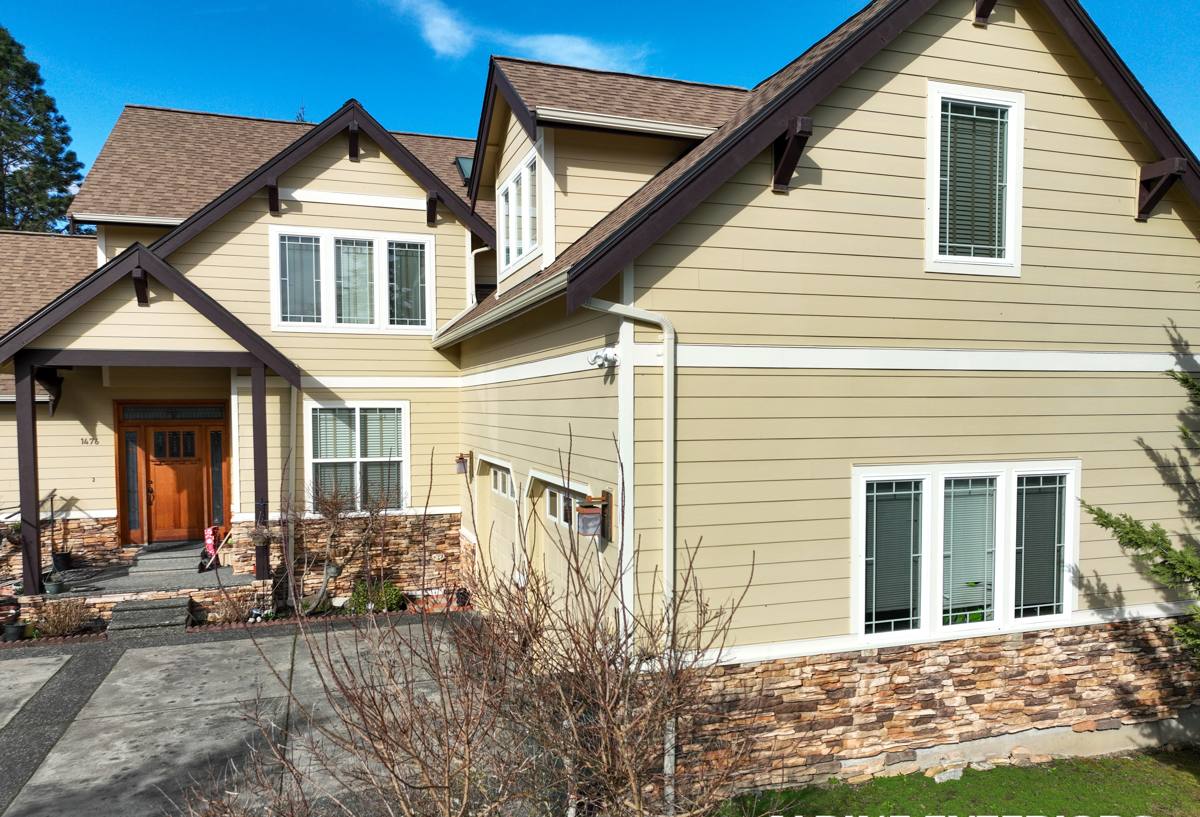
What Salt Air, Rain, and Moss Actually Do to a Roof
Salt Air
Airborne salt doesn't damage asphalt shingles directly the way it corrodes metal, but it accelerates wear on exposed metal components — flashing, fasteners, vents, and gutters — if those aren't rated or coated for coastal exposure. Once flashing starts to corrode at the edges, water finds a path underneath it long before the shingles themselves are worn out.
Driving Rain
Rain that comes in at an angle behaves differently than rain falling straight down. It gets pushed up under shingle tabs, into valleys, and around penetrations like vent pipes and chimneys. A roof that's only detailed for vertical rainfall — thin underlayment, minimal valley protection, standard nailing patterns — is more likely to develop leaks during a real Pacific Northwest wind event than one detailed with wind-driven rain in mind.
Moss and Algae
Shaded roof sections and north-facing slopes in Edison can stay damp for days after a storm, which is exactly what moss needs to take hold. Moss doesn't just look bad — as it grows, it lifts shingle edges, holds moisture against the roof deck, and works its way under tabs and around fasteners. Left unchecked over a few seasons, moss growth can cut meaningfully into a roof's remaining service life.
What a Correctly Built Shingle Roof Needs Here
A shingle roof that's going to hold up in this environment needs a few things done right underneath the shingles themselves — these are the details that separate a roof that lasts from one that needs attention again in five years.
- Full synthetic or ice-and-water underlayment in valleys and along eaves, not just felt paper, to stop wind-driven rain that gets past the shingle layer
- Corrosion-resistant flashing around chimneys, skylights, and wall intersections — this matters more here than in drier inland areas
- Proper nailing patterns rated for the wind exposure of the specific roof slope, not just manufacturer minimums
- Balanced attic ventilation so moisture from inside the home doesn't condense on the underside of the roof deck
- Drip edge on all eaves and rakes so water is directed into gutters instead of behind fascia boards
- Algae-resistant shingle granules on shaded or north-facing slopes where moss and algae pressure is highest
Choosing the Right Shingle for an Edison Roof
Not every asphalt shingle product is built the same way, and the differences matter more in a climate like this one than they would somewhere dry. The table below is a general comparison of shingle classes — actual product lines and warranties vary by manufacturer, and we'll walk through specific options during an estimate.
| Shingle Type | Typical Lifespan | Moss/Algae Resistance | Wind Rating | Best Fit For |
|---|---|---|---|---|
| 3-Tab | 15–20 years | Lower unless treated | Moderate | Budget-conscious re-roofs on less exposed slopes |
| Architectural / Dimensional | 25–30 years | Good with algae-resistant granules | Higher | Most Edison homes — best balance of cost and durability |
| Impact-Rated / Class 4 | 30+ years | Good with algae-resistant granules | Highest | Homes with heavy tree exposure or a strong preference for longevity |
For most homes in Edison, an architectural shingle with algae-resistant granules is the sensible middle ground — it costs more upfront than 3-tab but holds up noticeably better against moss pressure and driving rain over the life of the roof. We'll only recommend a premium or impact-rated product where the site conditions actually justify it, not as an upsell.
Our Process for an Edison Roof Replacement
1. On-Site Inspection
We start by walking the roof, checking the attic for ventilation and moisture issues, and looking at flashing, valleys, and any problem areas specific to the slope and shading of that particular home. This tells us what the existing roof is actually dealing with, not just its age.
2. Tear-Off and Deck Inspection
Old shingles and underlayment come off completely so we can inspect the roof deck itself. Any soft, rotted, or water-damaged sheathing gets replaced before anything new goes down — installing new shingles over a compromised deck just hides the problem.
3. Underlayment and Ice-and-Water Protection
Given the amount of driving rain this area sees, we pay particular attention to valleys, eaves, and any low-slope transitions, using ice-and-water shield or high-quality synthetic underlayment in those zones rather than relying on standard felt alone.
4. Flashing and Penetrations
All flashing around chimneys, vents, and wall intersections is replaced or verified, using materials suited to the salt-air exposure typical of this area. This is one of the most common places older roofs fail, and it's easy to overlook if a crew is only focused on the shingles themselves.
5. Shingle Installation
Shingles go down following manufacturer specs for nailing pattern and exposure, adjusted for the wind exposure of that specific roof. Ridge and hip caps, starter strips, and drip edge are all installed as part of the system, not treated as afterthoughts.
6. Ventilation Check
We verify intake and exhaust ventilation is balanced before calling the job done. Poor ventilation is one of the most common reasons a shingle roof fails early in this climate, and it's invisible from the ground.
7. Cleanup and Final Walkthrough
We clear debris, magnet-sweep for stray nails, and walk the finished roof with the homeowner so there are no surprises.
Repair or Replace? What to Look For
Not every roof issue in Edison means a full replacement. Localized moss buildup, a handful of lifted shingles after a storm, or a single flashing leak are often repairable. A roof usually needs full replacement when the underlying materials — not just the surface shingles — are failing across multiple areas, or when the deck itself has moisture damage. Some signs worth having looked at:
- Granule loss heavy enough that shingles look bald or patchy in large areas
- Moss or algae covering more than isolated patches, especially on north-facing slopes
- Curling, cracking, or cupped shingles across multiple sections of the roof
- Daylight visible through the roof deck from inside the attic
- Stains on interior ceilings that reappear after every heavy rain
- Shingles that are original to a home built more than 20–25 years ago
Ongoing Roof Care in a Wet, Coastal Climate
Even a well-installed shingle roof benefits from periodic attention in an environment like this. Gutters should be kept clear so water isn't backing up under the eaves during heavy rain, and moss should be treated before it spreads rather than after it's already lifting shingles. We generally recommend a visual check after major windstorms and before the wettest months of the year, since catching a lifted shingle or a small flashing gap early is a lot less expensive than dealing with the water damage that follows if it's left alone for a season or two.
Why Hiring a Crew That Already Works in Edison Matters
A roof installed by a crew unfamiliar with this specific microclimate can look fine on day one and still be under-detailed for what Edison actually throws at it — not enough valley protection for driving rain, standard flashing that wasn't chosen with salt air in mind, or ventilation that wasn't checked against the home's actual attic conditions. We work roofs throughout Anacortes and the surrounding Skagit County area, including Edison, so these aren't hypothetical concerns for us — they're the baseline we build every roof to. That local familiarity also means a faster, more accurate estimate, because we already know what this climate does to a roof and what it takes to hold up against it.
If you're dealing with an aging roof, storm damage, or just want an honest read on where your roof currently stands, we're glad to take a look. Reach out using the form below for a free, no-pressure estimate.