 Anacortes Roofing
 Deck Repair Built for Edison's Weather, Not a Generic Climate
Edison sits in the low-lying farmland and tidal slough country of Skagit County, close enough to Samish Bay and Padilla Bay that salt-laden air is a constant, quiet presence on every exposed surface. Add in the region's long stretch of driving rain and a moss season that can run from fall through spring, and a deck here ages differently than one fifty miles inland. Fasteners corrode faster. Wood stays damp longer between dry spells. Moss and algae get a foothold on any board that doesn't drain and dry quickly. None of this means a deck in Edison is doomed — it means the repair has to account for conditions a generic contractor from outside the area may not think twice about.
We work decks throughout Anacortes and the surrounding Skagit County communities, and Edison decks tend to show a consistent pattern: solid framing lumber that's still structurally sound, paired with surface-level rot, corroded fasteners, and moss buildup that's been mistaken for a bigger problem than it is — or, just as often, a small moisture issue at a ledger board or post base that's been ignored until it became a real one.
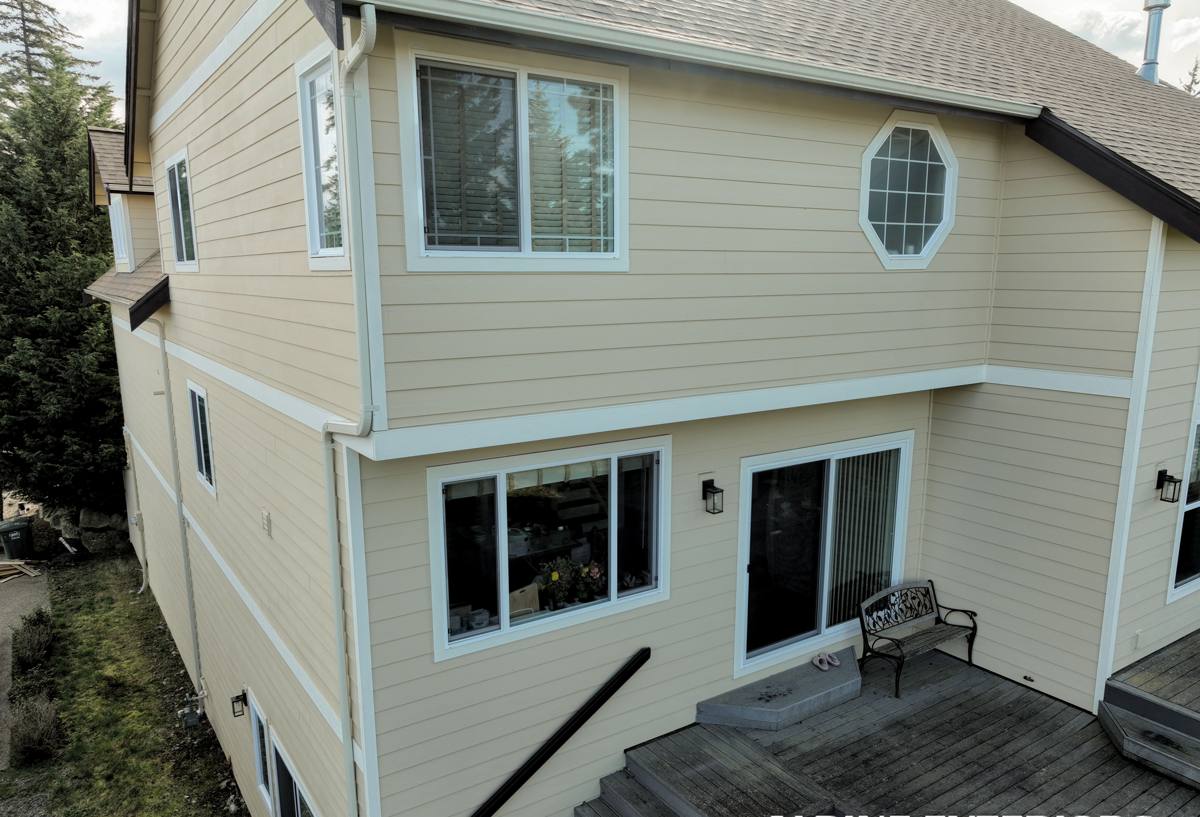
Signs an Edison Deck Needs Repair
Most deck problems don't announce themselves with a collapse. They show up as small, specific symptoms that are easy to dismiss individually but add up to a clear picture when you know what to look for.
- Soft or spongy spots underfoot, especially near the house or at board ends
- Green or black staining that keeps returning within weeks of cleaning
- Rust streaks bleeding out from screw heads or nail heads
- Gaps opening up between the deck and the house wall
- Railings or posts that flex or wobble more than they used to
- Standing water that takes more than a day to drain after a storm
- Visible daylight or gaps at the ledger board where the deck meets the house
- Stair stringers that feel bouncy or uneven compared to when the deck was new
Any one of these on its own might be minor. Several together, or any sign near the ledger board connection, is worth a proper look before the next wet season sets in.
What a Correct Deck Repair Actually Involves
A repair that only replaces what's visible from the top often misses what's actually failing underneath. We work from the structure outward, because that's the order problems actually develop in this climate.
Ledger Board and Flashing
The ledger board — where the deck attaches to the house — is the single most common point of hidden failure on decks in wet climates. If the flashing behind it was installed poorly, or wasn't installed at all, water gets channeled directly into the rim joist and wall framing every time it rains. In an area with as much annual rainfall as Skagit County, that's not an occasional event, it's a routine one. We check this connection on every repair, even when it isn't the reason for the service call, because a deck can look fine everywhere else while this one joint is doing real damage out of sight.
Framing, Joists, and Posts
Once we're past the ledger, we check joists, beams, and post bases for rot, checking, and fastener failure. Post bases that sit directly on concrete or in ground contact without proper standoff hardware are a frequent weak point — they hold moisture against the wood far longer than a post base designed to keep wood elevated and drained.
Decking Boards and Fasteners
Individual board replacement is often the most visible part of a repair, but the fasteners matter as much as the boards. Standard coated screws can start showing corrosion within a few seasons this close to salt water. We match fastener grade to the board material and the deck's exposure, not just whatever's fastest to install.
Railings and Guards
Railings take constant hand pressure and lateral load, and a loose or rotted post here is a safety issue, not just a cosmetic one. We test every railing section for movement as part of the inspection, not only the sections that look obviously worn.
Repair vs. Replace: How We Make That Call
Homeowners often assume any visible damage means the whole deck needs to come out. That's rarely true. The decision comes down to where the damage is and how much of the structure it's touching.
| Factor | Usually Repairable | Usually Warrants Replacement |
|---|---|---|
| Decking boards | Isolated soft spots, surface checking, individual board failure | Widespread rot across most of the surface |
| Framing | One or two damaged joists, localized rot near a leak source | Rot found through multiple joists or the primary beam |
| Ledger board | Flashing fixed, board sound underneath | Ledger rot extending into the house rim joist |
| Posts and footings | Post base hardware failure with sound post above it | Footing settlement or movement affecting the whole structure |
| Railings | Loose connections, single damaged post | System-wide undersized or non-compliant railing |
| Age and history | Deck built to current code, well-drained design | Older deck with a design that traps water by nature |
We'll always tell you honestly which category your deck falls into, including when a repair is the right call even if replacement would be the bigger job for us.
Materials That Actually Hold Up Here
Material choice matters more in a salt-air, high-rainfall environment than it does in drier parts of the state. There's no single right answer for every deck — it depends on budget, how the deck is used, and how much upkeep the homeowner wants to take on.
Pressure-treated lumber remains a solid, economical choice for framing and is what most Edison-area decks are built on. It needs periodic sealing to perform well against driving rain, and any cut ends need to be treated in the field, not left exposed.
Cedar has natural resistance to rot and insects and weathers attractively, but it's softer and needs more consistent maintenance to keep moss and algae from taking hold in a shaded, damp yard.
Composite decking resists rot and doesn't need staining, which appeals to homeowners tired of yearly upkeep. The trade-off is a higher upfront cost and the fact that composite still needs regular cleaning — moss and mildew grow on composite surfaces just as readily as on wood if they're not kept clear, and not every composite product handles ground-level moisture or poor airflow underneath equally well.
Fasteners and hardware deserve as much attention as the decking material itself in this climate. Stainless steel costs more than standard coated fasteners but resists the corrosion that salt air accelerates. On a deck within a mile or two of open water, we generally recommend it for any hardware that's difficult to inspect or replace later, like post base connectors and structural screws.
Our Repair Process
- On-site inspection of the full structure — ledger, framing, posts, decking, and railings — not just the area you called about
- Plain-language explanation of what we found, with photos of anything hidden from normal view
- A written estimate that separates must-fix structural items from optional cosmetic work
- Repair work performed in the correct order — structure first, surface last
- Final walkthrough so you can see exactly what was done and why
We don't pad estimates with work that isn't needed, and we don't quietly skip structural issues to keep a price low. If we find something during the inspection that changes the scope, we tell you before we touch it, not after.
Keeping a Repaired Deck From Needing the Same Repair Twice
A repair is only worth doing well if the deck is set up to hold up afterward. In this part of Skagit County, that mostly comes down to managing moisture and moss before they become structural problems again.
- Sweep debris and standing water off the deck surface regularly through fall and winter
- Keep gutters and downspouts clear so runoff isn't landing directly on or under the deck
- Trim back vegetation that's shading the deck and keeping it damp longer than the surrounding area
- Re-seal or re-stain wood decking on the schedule appropriate to the product, not just when it looks faded
- Check the ledger board area once a year, since it's the spot most likely to develop a hidden problem
- Address moss with a wash and treatment before it establishes, rather than after it's stained the wood
Why Hiring a Crew That Already Works Edison Matters
A contractor who works decks and roofs throughout Anacortes and Skagit County has already seen how the local combination of salt air, moss, and sustained rain plays out on real structures, season after season. That's not something you can substitute with general carpentry experience from a drier region. It shapes which fasteners we default to, how seriously we take ledger flashing on every job, and why we don't treat moss as a purely cosmetic issue. It also means we're not guessing at permit requirements or inspection expectations for the area — we've been through that process before, on similar jobs, in this same county.
If you're noticing soft spots, corrosion, or moss buildup on your Edison-area deck, we're glad to take a look and give you a straight answer about what it needs. Reach out for a free, no-pressure estimate using the form below.