 Anacortes Roofing
 Edison's Climate Is Harder on Siding Than It Looks
Edison sits low in the Skagit Valley, close to the tidal flats along Samish Bay, surrounded by open farmland and marine air that moves through the valley almost year-round. That combination is deceptively rough on exterior siding. Salt-laden air off the bay accelerates corrosion on fasteners and metal trim. The open, low-lying terrain means wind-driven rain hits walls at an angle instead of falling straight down, pushing moisture into seams, laps, and penetrations that would stay dry in a more sheltered spot. And the same humidity and shade that make the surrounding farmland productive also make Edison a long moss season for anything mounted on an exterior wall.
Put those three things together — salt air, driving rain, and moss — and you get a environment that punishes siding that isn't installed with real attention to water management. This isn't a marketing point; it's the reason we treat Edison jobs differently from a subdivision fifteen miles inland. The material matters, but the installation details matter just as much, and we've built our process around what actually holds up here.
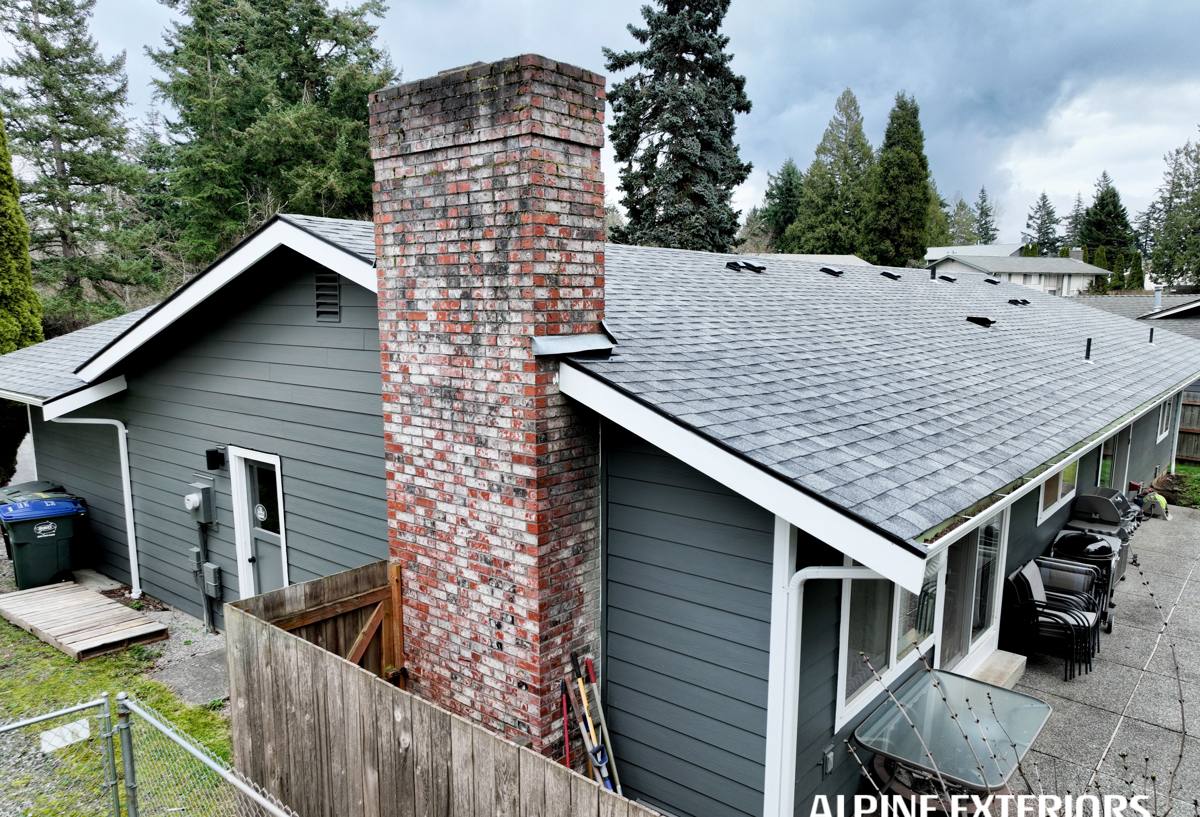
What "Correct" Fiber Cement Installation Actually Involves
Moisture Management Behind the Siding
Fiber cement siding is only as good as the water management system behind it. On every Edison project we install a weather-resistant barrier and flash every penetration, window, and door opening so that any water that gets past the siding face has a path to drain out, not a place to pool. In a climate with this much driving rain, skipping or shortcutting the flashing details is where most premature siding failures start — not with the panels themselves.
Fastening and Clearances
James Hardie publishes specific fastening patterns, nail placement, and minimum clearances (from grade, roof lines, decks, and other trim) for a reason: get those wrong and you create the exact gaps where moisture and, eventually, moss get a foothold. We follow manufacturer fastening specs to the letter, including corrosion-resistant fasteners appropriate for a marine-influenced environment like Edison's.
Cut Edges and Caulking
Every cut edge on a fiber cement board is a raw, unsealed edge unless it's treated. We seal cut ends with the appropriate sealant before installation and use a paintable, high-quality caulk at trim joints and penetrations — done right the first time, not patched later. This detail alone is a common shortcut on rushed jobs, and it's one of the first places driving rain finds its way in.
Why We Install Only James Hardie — Not LP SmartSide, Vinyl, Cemplank, Allura, or Cedar
We standardized on James Hardie fiber cement for every home we side, including Edison, and we're upfront about why. LP SmartSide is a wood-strand product with an engineered resin coating — it can perform well, but it's still an engineered wood product, and wood-based sidings carry more sensitivity to sustained moisture exposure than a true cement-based product does over the long run. Vinyl siding is affordable and low-maintenance, but it's a thin plastic product that can warp in sustained heat, crack in cold, and simply doesn't offer the impact resistance or the factory-baked finish durability of fiber cement. Cemplank and Allura are also fiber cement, and reasonable products in their own right, but Hardie's HZ5 climate-engineered formulation, ColorPlus factory finish process, and the depth of its installer network and warranty backing are what we've chosen to stand behind. Primed spruce or cedar siding can look beautiful, but it requires ongoing repainting and sealing, and in an environment with Edison's rainfall and moss pressure, that maintenance burden adds up fast.
None of this means those products are junk — it means we've made a professional call about what we're willing to install and warranty our labor on, and fiber cement from James Hardie is where that line sits for us.
James Hardie's HZ5 Line: Built for This Climate
James Hardie engineers its HardieZone products by climate region, and Western Washington falls into the HZ5 zone — formulated specifically for high-moisture, temperate coastal climates like Skagit County's. That means the product's moisture resistance and freeze-thaw performance are matched to what Edison actually experiences, not a generic national spec. Combined with the ColorPlus factory finish — a baked-on, UV-cured finish applied before the boards ever leave the factory — you get color and coating that isn't relying on a field-applied paint job to hold up against salt air and driving rain from day one.
Product Lines We Use for Edison Projects
| Product | Best Use | Why It Fits Edison |
|---|---|---|
| HardiePlank Lap Siding | Primary wall siding | Most common profile; strong moisture and impact performance in HZ5 formulation |
| HardiePanel Vertical Siding | Accent walls, gables, farmhouse-style elevations | Clean vertical lines that suit the area's rural and coastal character |
| HardieTrim Boards | Corners, fascia, window and door trim | Matches siding durability so trim doesn't fail before the field siding does |
| HardieSoffit Panels | Eaves and overhangs | Vented options help manage moisture in the attic space, reducing interior condensation risk |
Our Process on an Edison Project
- On-site assessment. We look at current siding condition, sheathing, trim, and any existing moisture damage or moss buildup before quoting anything.
- Tear-off and inspection. Old siding comes off and we inspect the sheathing underneath — this is where hidden rot or moisture damage from years of driving rain often surfaces, and it needs to be addressed before new siding goes on, not covered up.
- Weather barrier and flashing. We install the water-resistive barrier and flash every window, door, and penetration before a single piece of siding goes up.
- Installation to manufacturer spec. Fastening pattern, clearances, and cut-edge sealing follow James Hardie's published installation requirements.
- Trim, caulking, and finish detail. Corners, trim boards, and caulk joints are finished to shed water, not just to look clean on installation day.
- Final walkthrough. We go over the finished work with the homeowner before calling the job done.
What Drives Cost on an Edison Siding Job
Every home is different, so we don't quote a number until we've walked the property, but these are the factors that most often move the price up or down:
| Factor | Why It Matters |
|---|---|
| Existing siding removal | Tear-off of old vinyl, wood, or damaged siding adds labor and disposal time |
| Sheathing repair | Moisture-damaged sheathing found during tear-off needs replacement before new siding goes on |
| Home size and wall complexity | More square footage, dormers, and cut-up wall lines all add installation time |
| Trim and accent choices | Vertical accent panels, extra trim boards, and custom color combinations add material and labor |
| Site access | Tight lot lines, landscaping, or limited staging area can slow the job down |
Living With Fiber Cement Siding in Edison: What Upkeep Actually Looks Like
One of the real advantages of James Hardie siding over wood or primed products is how little upkeep it needs — but "low-maintenance" isn't "no-maintenance," especially this close to Samish Bay. We recommend homeowners rinse siding with a garden hose once or twice a year to clear salt residue and organic buildup before it becomes a moss problem, and keep gutters clear so overflow doesn't run down the wall face. Trim shrubs and landscaping back from the siding so airflow can dry the wall between rain events — trapped moisture and shade are what let moss establish in the first place. ColorPlus finish means you're not looking at a repaint every few years the way you would with wood, but it's still worth a visual check after major storms for any caulk joints that may need attention.
What to Look for When Hiring a Siding Crew in Edison
- Manufacturer training or certification for James Hardie installation, not just "experience with siding" in general
- A written scope that specifies flashing and weather-barrier details, not just "install siding"
- Willingness to inspect and discuss sheathing condition before quoting a final price
- Local knowledge of Skagit County's marine climate and moss pressure, not a one-size-fits-all install approach
- Clear warranty terms covering both the manufacturer's product warranty and the contractor's labor
- References or a track record of work in Skagit County's coastal and valley communities
Why a Crew That Already Works in Edison Makes a Difference
A contractor who only occasionally works this far out into the Skagit Valley may not have a feel for how differently Edison behaves compared to a more sheltered site closer to town. We know which elevations on a typical Edison property take the worst of the wind-driven rain, how much moss pressure to expect on north- and shade-facing walls, and how the salt air off Samish Bay factors into fastener and flashing choices. That familiarity isn't guesswork — it comes from working Anacortes, Skagit County, and the surrounding valley and coastal communities on a regular basis, and it shows up in fewer callbacks and siding that actually performs the way it's supposed to for the long haul.
If your Edison home needs new siding or you're not sure whether your current siding is holding up the way it should, we're happy to take a look. Use the form below to request a free, no-pressure estimate — we'll walk the property, answer your questions honestly, and give you a straight assessment of what your home needs.