 Anacortes Roofing
 Why Edison Homes Ask More of Their Siding
Edison sits in one of the wetter, saltier corners of Skagit County, where farmland, tidal water, and marine weather all meet at once. That combination is tougher on exterior siding than most homeowners realize. Salt-laden air off the nearby tidal flats and bays accelerates corrosion on fasteners and trim. Driving rain off Puget Sound doesn't just fall straight down, it gets pushed sideways into laps, corners, and butt joints by wind. And the long, gray moss season that Skagit County is known for keeps north- and west-facing walls damp for weeks at a stretch, which is exactly the environment moss, algae, and mildew need to take hold.
None of this means siding is a lost cause in Edison. It means the material choice and the installation details matter more here than they would in a drier, more sheltered part of the state. A siding job that would hold up fine in a protected inland neighborhood can fail early on a home exposed to salt air and wind-driven rain if it's the wrong product, or the right product installed carelessly.
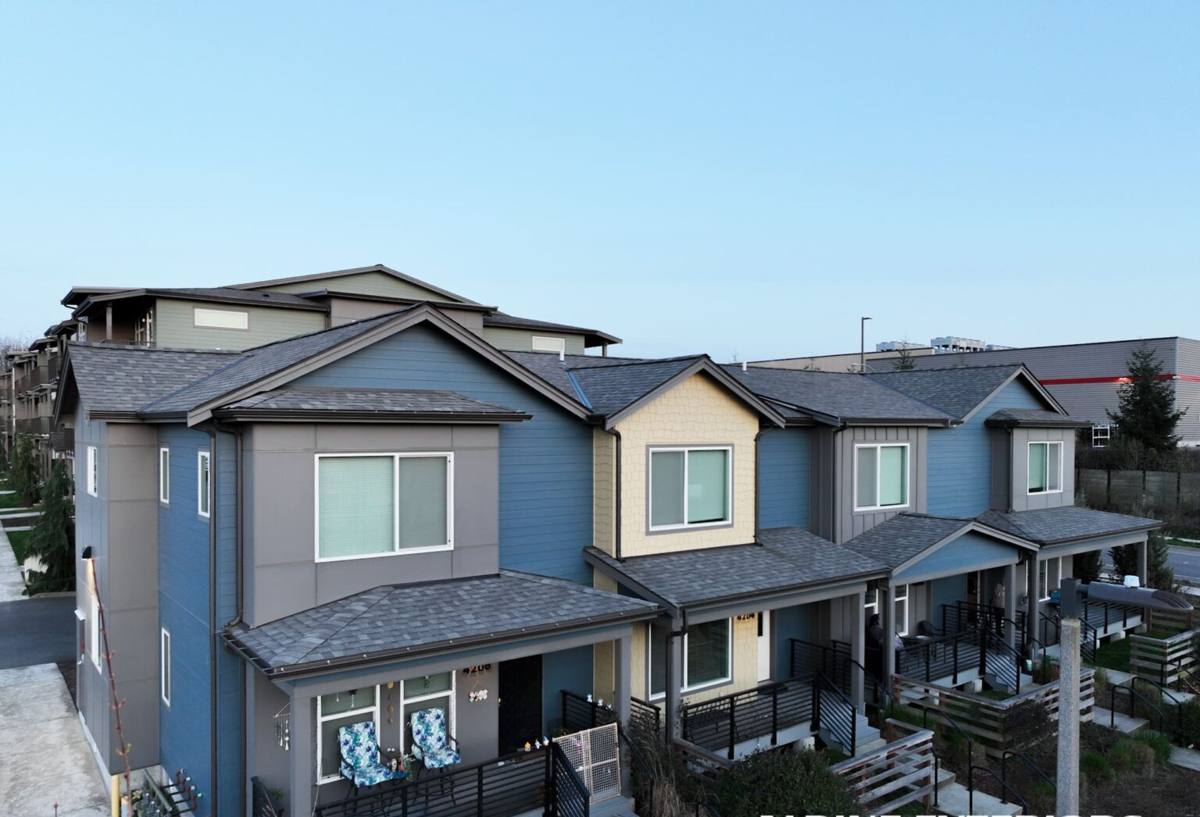
What "Correct" Siding Installation Actually Means Here
Siding installation isn't just fastening panels to a wall. In a climate like this, the water management system behind the siding is doing most of the real work. Get that wrong and even a premium material will let moisture into the wall assembly.
Water Management Comes First
Every wall needs a continuous weather-resistive barrier, properly lapped so water sheds downward and outward rather than tracking behind seams. Every window, door, and penetration needs flashing that directs water out and away from the framing, not just a bead of caulk covering the gap. On a home exposed to driving rain off the water, these details are the difference between a wall that stays dry for decades and one that quietly rots from the inside where nobody can see it until the damage is extensive.
An Airspace Behind the Siding
A rainscreen gap between the weather barrier and the siding lets any moisture that does get past the outer layer drain and dry out instead of sitting against the sheathing. This matters more in a damp, foggy climate than in a dry one, because wet wood that never gets a chance to dry is what leads to rot, mold, and eventually siding that has to come off years before it should.
Fastening for Salt Air
Corrosion-resistant, manufacturer-approved fasteners aren't optional close to salt water. Cutting corners on fastener quality here shows up years later as rust streaks, loosened panels, and failed attachment points, usually right around the time a homeowner assumed the siding was maintenance-free.
Why We Install James Hardie and Nothing Else
We standardized on James Hardie fiber cement siding because it's the product we trust to actually perform in this climate, not because it's the only siding on the market. Vinyl siding is inexpensive and easy to install, but it expands and contracts with temperature swings, can crack in cold snaps, and isn't rated to stand up to sustained wind-driven rain the way a properly installed fiber cement system is. Engineered wood products like LP SmartSide use a wood strand substrate that, while treated, is still an organic material that depends heavily on perfect installation and ongoing maintenance to keep moisture out over the long run. Primed spruce and raw cedar look great on day one but require regular refinishing to keep water from working into the wood grain, which is a demanding maintenance schedule in a climate this wet.
James Hardie fiber cement is non-combustible, dimensionally stable across temperature and humidity swings, and doesn't feed moss and algae the way organic siding substrates can. Hardie's HZ5 product line is engineered specifically for climates with significant moisture exposure, which describes Edison well. The ColorPlus factory finish is baked on under controlled conditions, so it resists fading and chipping better than field-applied paint, and it comes with a meaningful transferable warranty. We install it because, in this specific climate, it's the product that lets us stand behind the work for the long term.
Our Installation Process
The steps below are the same core process on every Edison job, adjusted for each home's exposure, existing wall condition, and layout.
- Assessment and tear-off. We remove the existing siding down to the sheathing and inspect for hidden rot, soft framing, or prior water damage, which is common on homes with aging or poorly flashed siding in this area.
- Sheathing repair. Any damaged sheathing or framing gets replaced before anything else happens. Installing new siding over a compromised wall just hides the problem.
- Weather-resistive barrier. A continuous, properly lapped barrier goes over the sheathing, sealed at every seam and penetration.
- Flashing at every opening. Windows, doors, hose bibs, vents, and any other penetration get flashed to direct water outward, not just caulked over.
- Rainscreen furring. Vertical furring strips create the drainage gap that lets the wall assembly breathe and dry.
- Hardie panel or plank installation. Panels are installed per James Hardie's fastening and clearance specifications, including the correct gap at grade, roof lines, and trim to keep the bottom edge of the siding from sitting in standing water or trapped debris.
- Trim, caulking, and touch-up. Factory-finished trim and matching touch-up paint close out any cut edges so the ColorPlus finish stays protected everywhere it counts.
- Final walkthrough. We review the finished job with the homeowner and point out anything worth knowing for long-term upkeep.
Moss, Algae, and the Long Skagit County Damp Season
Edison's mix of shade, farmland humidity, and proximity to tidal water means north- and west-facing walls can stay damp for extended stretches, especially under eaves or near tree cover. Fiber cement doesn't feed moss and algae growth the way wood-based siding can, but no siding material is completely immune to surface growth in a climate this wet. Good installation practice reduces the problem at the source: proper drainage, adequate ground clearance, and gutters that actually move water away from the wall all matter as much as the siding material itself. A wall that drains and dries quickly after rain simply doesn't grow moss the way a wall that stays saturated does.
Siding Options at a Glance
| Material | Salt Air / Driving Rain Performance | Moss & Algae Resistance | Maintenance Needed | Do We Install It? |
|---|---|---|---|---|
| James Hardie Fiber Cement | Engineered for wet, coastal-adjacent climates (HZ5 line) | Non-organic substrate, resists growth well | Occasional wash, factory finish holds up | Yes — the only siding we install |
| Vinyl | Can warp, crack, or blow loose in sustained wind-driven rain | Moderate | Low, but limited repair options when damaged | No |
| LP SmartSide | Treated wood strand substrate, installation-sensitive | Organic substrate, needs upkeep to resist growth | Regular caulk and finish maintenance | No |
| Primed Spruce / Cedar | Natural wood, absorbs moisture without diligent upkeep | Organic material, prone to growth if damp | Frequent refinishing and sealing | No |
Signs Your Current Siding Is Already Struggling
Homeowners often wait too long to look closely at their siding because problems develop slowly and out of sight. In a climate like Edison's, it's worth checking for these signs before small issues become structural ones:
- Soft, spongy spots when you press on the siding, especially near the bottom edge or below windows
- Persistent moss or algae streaking on north- or west-facing walls that comes back soon after cleaning
- Paint or finish that's peeling, bubbling, or chalking unevenly across the wall
- Visible gaps, warping, or buckling at panel seams and corners
- Rust staining around fasteners or trim, a common sign of corrosion in salt-exposed areas
- Interior signs like musty odors, peeling interior paint, or discoloration on walls that back up to exterior siding
Any one of these on its own might be minor. Several together, especially on a home more than 15-20 years old, usually means the water management behind the siding has been compromised for a while.
Why Local Installation Experience Matters
Siding manufacturers publish installation specs, but applying them correctly to a specific wall, in a specific climate, on a specific exposure, takes judgment that comes from doing it in that environment repeatedly. A crew that regularly works Skagit County homes near the water already knows how far to set clearances at grade, how much rainscreen depth to use on the wettest walls, and where driving rain typically finds weak spots in flashing details. That local pattern recognition is hard to replicate from a spec sheet alone, and it's part of why the installation quality matters as much as the material choice.
What Affects the Cost of a Siding Project in Edison
Every home is different, but a few factors consistently move the price on siding jobs in this area:
| Cost Factor | Why It Matters |
|---|---|
| Extent of sheathing or framing repair | Hidden rot from prior water intrusion adds labor and material before new siding can go on |
| Home size and wall complexity | More corners, dormers, and trim details mean more cutting, flashing, and labor time |
| Siding profile chosen | Lap plank, panel, and shingle-style Hardie products carry different material and labor costs |
| Existing siding removal | Multiple layers of old siding or difficult tear-off conditions add time |
| Site access and exposure | Waterfront or exposed sites may need extra weatherproofing detail and scheduling flexibility around weather windows |
We provide project-specific pricing after seeing the home, since these variables shift the number more than any general estimate could reflect accurately.
Planning a Siding Project in Edison
If your siding is original to an older home, showing early signs of wear, or you're simply tired of fighting moss every damp season, it's worth having it looked at before small issues turn into sheathing repair. A siding system that's built for this specific climate, installed with the water management details this area demands, is what keeps a home dry and low-maintenance for decades rather than years.
If you'd like a straightforward look at your home's siding and what it would take to do the job right, we offer a free, no-pressure estimate using the form below.