 Anacortes Roofing
 Why Sedro-Woolley Homes Are Hard on Siding
Sedro-Woolley sits up the Skagit River valley, tucked against tree-covered hills that keep a lot of homes shaded for large stretches of the day. That shade is nice in July, but for siding it means something else: moisture doesn't burn off as fast as it does on an open lot closer to the water. Combine that with the long, wet stretch of fall through spring that defines this part of Skagit County, and you get siding that stays damp longer, grows moss and algae faster, and takes more of a beating over the years than the same product would on a drier site.
We also work plenty of jobs closer to the water in Anacortes, where salt-laden air is the dominant stress on exterior materials. Sedro-Woolley's challenge is a little different but just as real — it's less about salt and more about sustained moisture, tree debris, and shade that slows drying. Either way, the region's marine climate doesn't leave much margin for siding that can't handle repeated wet-dry cycles without swelling, rotting, or feeding mold.
What This Means for Material Choice
Wood-based products — cedar, primed spruce, engineered wood siding like LP SmartSide — all rely on an intact paint or coating layer to keep water out of the wood fibers underneath. Once that layer is compromised at a cut edge, a nail hole, or a joint that wasn't caulked right, water gets in and the clock starts on rot. In a climate where things dry slowly, that clock runs faster than it would somewhere arid. That's the core reason we don't install wood-based or wood-fiber siding products on Skagit County homes, including here in Sedro-Woolley.
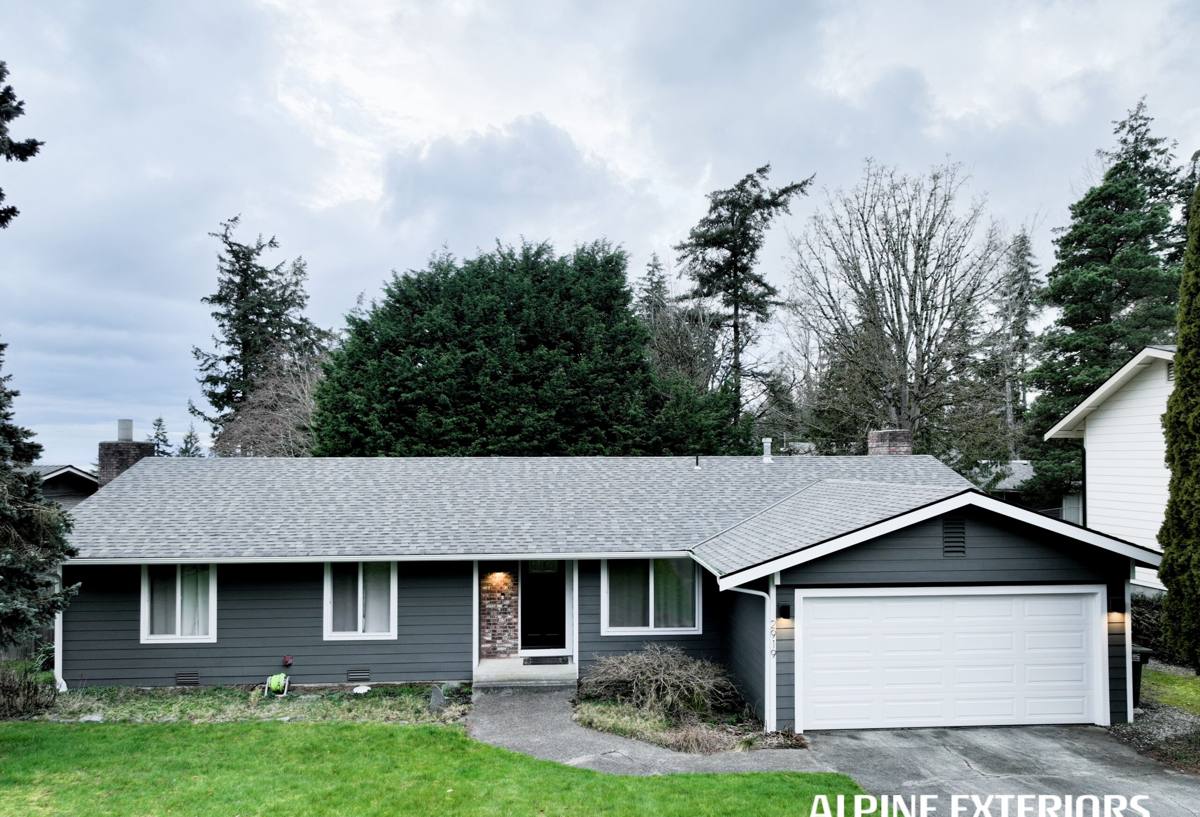
Why We Install Only James Hardie Fiber Cement
Anacortes Roofing Co installs one siding system: James Hardie fiber cement. We don't offer vinyl, LP SmartSide, Cemplank, Allura, or wood siding as alternatives, and we're upfront about why. Fiber cement is made from cellulose fiber, sand, and Portland cement — there's no wood substrate to rot, and it doesn't feed mold or moss the way organic materials can. It's also non-combustible, which matters increasingly as wildfire smoke seasons stretch later into the year even on this side of the Cascades.
James Hardie backs its ColorPlus finish with a factory-applied, baked-on coating that resists fading and chipping better than field-applied paint, and it carries a real transferable limited warranty — something that matters if a homeowner sells within the coverage period. We've standardized on Hardie because when it's installed correctly, it holds up to exactly the conditions Sedro-Woolley throws at a house year after year.
The HZ5 Product Line for This Climate
James Hardie engineers its siding by climate zone, and Western Washington falls into the HZ5 category — the line formulated for cold, wet, moisture-heavy regions. HZ5 products are engineered with moisture management and freeze-thaw performance in mind, which is the right spec for a river valley town that sees plenty of damp, cool weather. We install HZ5-rated Hardie products on every Sedro-Woolley job; it's not an upgrade option, it's the correct baseline for this region.
What Correct Fiber Cement Installation Involves
Fiber cement siding is only as good as its installation. The material itself resists rot and pests, but a sloppy install can still let water behind the siding, and once that happens the sheathing and framing underneath pay the price — not the siding itself. Getting it right isn't complicated, but it's detail work that's easy to rush.
Flashing and Water Management
Every window, door, and horizontal trim transition needs proper flashing and a drainage plane behind the siding — typically a weather-resistant barrier with a rainscreen gap in our climate. The gap lets any moisture that does get behind the siding drain and dry instead of sitting against the wall assembly. Skipping the rainscreen is one of the more common shortcuts we see on re-sides, and it's exactly the kind of shortcut that causes problems in a slow-drying environment like this one.
Fastening and Clearances
Hardie's install specs call for specific nail placement, fastener type, and minimum clearances from grade, roof lines, and decks. Siding installed too close to the ground or butted tight against a deck surface will wick moisture even though the material itself doesn't rot — dirt, debris, and standing water held against the bottom edge can still cause staining and finish failure over time. We hold to Hardie's published clearances on every job, not just the ones where it's convenient.
Caulking and Joints
Butt joints, corners, and penetrations need the right sealant, applied correctly, or they become the weak point in an otherwise solid installation. We follow Hardie's joint treatment guidance rather than improvising, because inconsistent caulking is one of the fastest ways to undercut an otherwise correct install.
Signs Your Current Siding Needs Attention
A lot of Sedro-Woolley homeowners call us after noticing one or two of these signs, not because they were shopping for new siding. Worth checking for:
- Soft or spongy spots when you press on the siding, especially near the bottom courses
- Persistent moss or algae growth that returns within weeks of cleaning
- Visible gaps, cracking, or warping at panel joints and corners
- Paint that's peeling or bubbling rather than just fading
- Bulging or rippling in the siding surface, which often points to trapped moisture
- Rising energy bills that coincide with drafts near exterior walls
- Wood trim or fascia near the siding that shows rot before the siding itself does
Any one of these on its own isn't necessarily an emergency, but a couple together usually means water is getting behind the cladding somewhere, and it's worth having someone look before it spreads.
Our Process for Sedro-Woolley Projects
We run the same disciplined process on every Hardie install, whether it's a full re-side or a targeted repair:
- On-site assessment — we inspect the existing siding, sheathing, and trim, looking specifically for moisture damage before we ever talk product or price.
- Scope and estimate — a written estimate that spells out product line, color, and what the water management details will look like on your specific house.
- Sheathing and moisture barrier repair — any rotted sheathing gets replaced, and the weather-resistant barrier and rainscreen go in before a single piece of Hardie siding is hung.
- Installation to Hardie spec — correct fastening, clearances, flashing, and joint treatment, not shortcuts.
- Final walkthrough — we go over the finished job with you before we consider it done.
Cost Factors for a Sedro-Woolley Siding Project
Every home is different, but the same handful of factors drive most of the variation in scope and price. Broad ranges only — an accurate number requires seeing the house.
| Factor | Why It Matters Here |
|---|---|
| Existing sheathing condition | Long-shaded, damp walls in this area more often need sheathing repair before new siding can go on |
| Product line (lap, panel, shingle) | HardiePlank lap is the most common choice; shingle and panel profiles cost more in material and labor |
| Trim and detail work | Homes with more windows, dormers, and roof transitions need more flashing and cutting |
| Tree cover and access | Wooded lots common around Sedro-Woolley can affect staging, cleanup, and drying time between steps |
| ColorPlus vs. field-painted | Factory-finished ColorPlus costs more up front but skips a paint cycle and holds color longer |
| Full re-side vs. repair | Localized moisture damage near grade or decks can sometimes be addressed without a full tear-off |
Why a Crew That Already Works Sedro-Woolley Matters
Skagit County covers a lot of different microclimates — the tighter, tree-shaded lots common in and around Sedro-Woolley behave differently than open sites closer to Anacortes and the water. A crew that already works this area knows where rot tends to start first on a shaded wall, how much drying time to plan between install steps during a wet stretch, and which details actually matter for a house that sits under a tree canopy most of the year. That local pattern recognition is the difference between a generic install and one that's actually built for the site it's going on.
Maintenance After Installation
Fiber cement asks less of a homeowner than wood siding, but it isn't zero-maintenance. A yearly rinse to clear moss, pollen, and debris — especially on shaded walls — keeps the ColorPlus finish looking right and prevents organic growth from taking hold. Check caulked joints periodically and keep gutters clear so water isn't sheeting down the wall face. Keep an eye on anything close to grade or landscaping, since that's where moisture and debris tend to collect first, even against a material that doesn't rot.
If your Sedro-Woolley home's siding is showing its age, or you're planning ahead for a re-side, we're happy to take a look and walk you through what correct, climate-appropriate installation looks like for your house. Reach out for a free, no-pressure estimate using the form below.