 Anacortes Roofing
 Why Guemes Island Decks Face a Tougher Environment
Guemes Island sits just off Anacortes in Skagit County, reachable only by the passenger ferry, and that isolation shapes how we approach every deck project out there. Homes on the island sit close to saltwater, many lots carry heavy tree cover, and the region's long stretch of wet, overcast weather means a deck can stay damp for days after a storm passes. Add in the salt-laden air coming off the water and a moss season that can run from fall through spring, and you have a combination that punishes decks built to a generic, one-size-fits-all spec.
We're not saying decks can't be built to last here — they absolutely can. But the material choices, fastener selection, and framing details that work fine on a dry inland lot often fall short on Guemes Island within a few short years. A deck built for this environment needs to be planned around it from the first design conversation, not patched up after the fact.
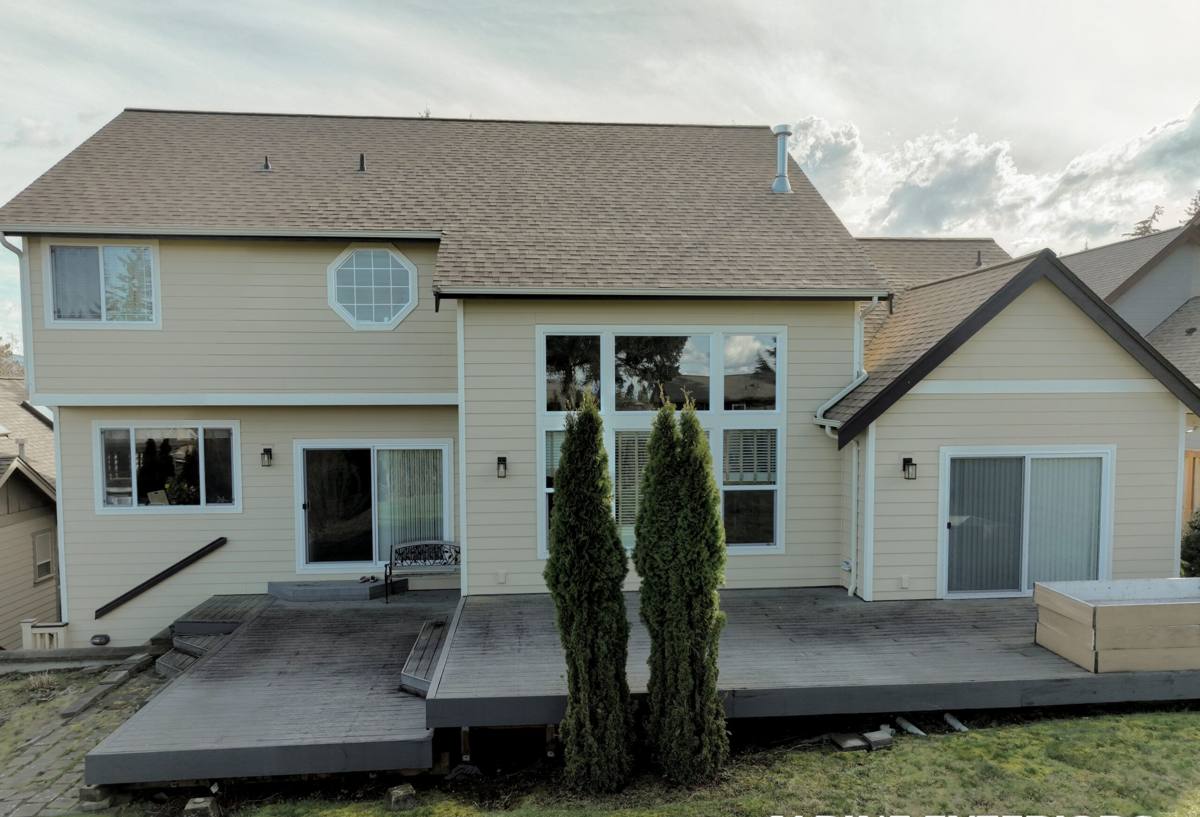
What a Deck Built for This Climate Needs to Get Right
Exposure varies more than people expect
Two decks a quarter mile apart on Guemes Island can face completely different conditions. A waterfront deck gets direct salt spray and wind-driven rain, while a deck tucked under fir and cedar canopy gets less wind but far more shade, moisture retention, and organic debris — the exact recipe for moss and algae growth. Before we recommend a material or a framing approach, we look at where the deck actually sits: how much direct sun it gets, how close it is to the water, and how much wind and rain it takes on directly.
The real threats aren't just water
Most homeowners think about rain when they think about deck durability, but on Guemes Island the bigger long-term threats are often salt corrosion on hardware, moss holding moisture against the board surface, and UV combined with damp cycling that causes wood to check and split faster than it would inland. A deck that handles rain fine can still fail early if the fasteners corrode or the underside never gets a chance to dry out.
Choosing Decking Material for Salt Air, Rain, and Moss
There's no single "best" decking material for every home — it depends on budget, how much maintenance you're willing to do, and how exposed the site is. Here's an honest comparison of the main options we work with for island homes:
| Material | Salt Air / Moisture Behavior | Moss & Mildew Resistance | Maintenance |
|---|---|---|---|
| Pressure-treated lumber | Handles moisture well when properly sealed; hardware is the weak point | Moderate — needs regular cleaning in shaded areas | Annual cleaning, periodic re-sealing |
| Western red cedar | Naturally moisture-resistant, but surface graying and softening occur without upkeep | Moderate — porous surface can hold spores if not cleaned | Regular cleaning and re-oiling to keep it performing |
| Tropical hardwood (ipe and similar) | Very dense, excellent moisture resistance | Good — hard, tight grain resists moss anchoring | Low, but oiling helps retain color; installation is unforgiving |
| Capped composite | Not affected by moisture absorption or rot | Good — smooth cap sheds spores more easily than wood | Occasional washing; no sealing or staining needed |
We steer most Guemes Island clients toward capped composite or a well-detailed cedar deck, depending on budget and how the deck will be used. Composite costs more up front but removes rot and re-staining from the equation entirely, which matters on a property that's harder to get service crews to on short notice. Cedar looks and feels the way people expect a Pacific Northwest deck to look, but it only holds up if someone actually keeps up with the cleaning and oiling schedule.
Framing, Fasteners, and the Ledger Connection
Fasteners matter as much as the boards
We see more early deck failures caused by corroding hardware than by bad decking. Standard coated deck screws can start to corrode within a few years in a salt-air environment, especially on waterfront lots, leading to staining, weakened connections, and eventually a board that lifts or squeaks. We use stainless steel fasteners and corrosion-resistant structural hardware on Guemes Island builds — it costs more than standard coated hardware, but it's the difference between hardware that lasts the life of the deck and hardware you're replacing in year six.
Ledger flashing is where most rot starts
The ledger board — where the deck attaches to the house — is the single most common point of structural failure on any deck, and it's even less forgiving in a wet climate. Water that gets behind an improperly flashed ledger has nowhere to go, and it will rot both the ledger and the house rim joist behind it before anyone notices a problem from the outside. We install proper flashing that integrates with the home's existing water-shedding layer, with a drainage gap behind the ledger so any water that does get in can escape instead of sitting against the wood.
Drainage and Moss Management by Design
Moss doesn't grow because a deck is "dirty" — it grows because moisture sits somewhere long enough for spores to take hold. A deck designed with drainage and airflow in mind will fight moss far better than any cleaning schedule can on its own. A few things we build into every island deck:
- Board gapping sized to shed water quickly without letting debris pack into the joints
- Joist framing with enough clearance underneath for air to actually move, not just a few inches of dead space
- Grading and gutter tie-ins that route roof runoff away from the deck footprint instead of dumping it under the structure
- Material and layout choices that account for shade patterns on wooded lots, where moss pressure is highest
None of this eliminates the need for occasional cleaning, but it dramatically reduces how often and how aggressively you have to do it.
Getting Materials and Crews to the Island: Our Process
Ferry logistics and scheduling
Working on Guemes Island means building the ferry schedule into the project timeline from day one. We plan material deliveries and crew trips around ferry availability so the job doesn't stall out waiting on a load that missed the last sailing. This is one of the biggest reasons hiring a crew unfamiliar with island work can turn a straightforward deck project into a drawn-out one — every trip they haven't planned for costs a day.
Permitting through Skagit County
Deck projects on Guemes Island typically fall under Skagit County's building permit process, and whether a permit is required generally depends on the deck's height, size, and how it attaches to the home. We handle the permitting conversation as part of the estimate so there are no surprises once the project starts.
Our general process for an island deck build:
- On-site visit to assess exposure, existing structure (for replacements), and site access
- Material and design recommendation based on sun exposure, wind, and how the deck will be used
- Permit review and submission where required
- Scheduled build with materials and crew staged around ferry sailings
- Final walkthrough covering care and maintenance specific to your deck's material and exposure
Maintenance Checklist for a Long-Lasting Guemes Island Deck
Whatever material you choose, a little seasonal attention goes a long way in this climate. We give every client a maintenance rundown specific to their deck, but the basics look like this:
- Clear leaves, needles, and debris from board gaps before they trap moisture
- Rinse or soft-wash the surface at least once a year to knock back early moss and algae growth
- Check and clear any drainage paths under and around the deck before the wet season starts
- Inspect ledger flashing and hardware for staining or corrosion during an annual walk-around
- Re-oil or re-stain wood decking on the schedule the manufacturer or your contractor recommends — don't wait until it's visibly gray
Why Local Experience on Guemes Island Matters
A deck contractor who's never worked on the island will plan the job the same way they'd plan one in Mount Vernon or Burlington — and that's how projects run into avoidable delays and details that don't hold up. We've worked Guemes Island jobs enough to know how to schedule around the ferry, what exposure levels actually look like on different parts of the island, and which material and fastener choices earn their keep against salt air and a long moss season instead of just looking good on install day.
If you're planning a new deck or replacing one that's showing its age, we're happy to come take a look and put together a straightforward estimate — no pressure, no hard sell. Use the form below to get started.