 Anacortes Roofing
 Siding Built for Life on Guemes Island
Guemes Island sits close enough to the water that the weather never really lets a house alone. Homes here take a steady dose of salt-laden air off the Salish Sea, wind-driven rain that finds every gap in a wall system, and a wet, shaded moss season that can run most of the year on north-facing walls and anything tucked under fir or cedar canopy. Add the practical realities of island life — materials and crews crossing on the ferry, homes that sit vacant for stretches, and siding that has to hold up with less frequent hands-on maintenance than a mainland property might get — and you have a siding decision that deserves more thought than picking a color off a sample board.
We install James Hardie fiber cement siding exclusively. Not as one option among several, but as the only product we'll put our name on. This page covers what that means specifically for a home on Guemes Island: what the climate does to siding out here, what a correct Hardie installation actually involves, and why the crew doing the work matters as much as the product itself.
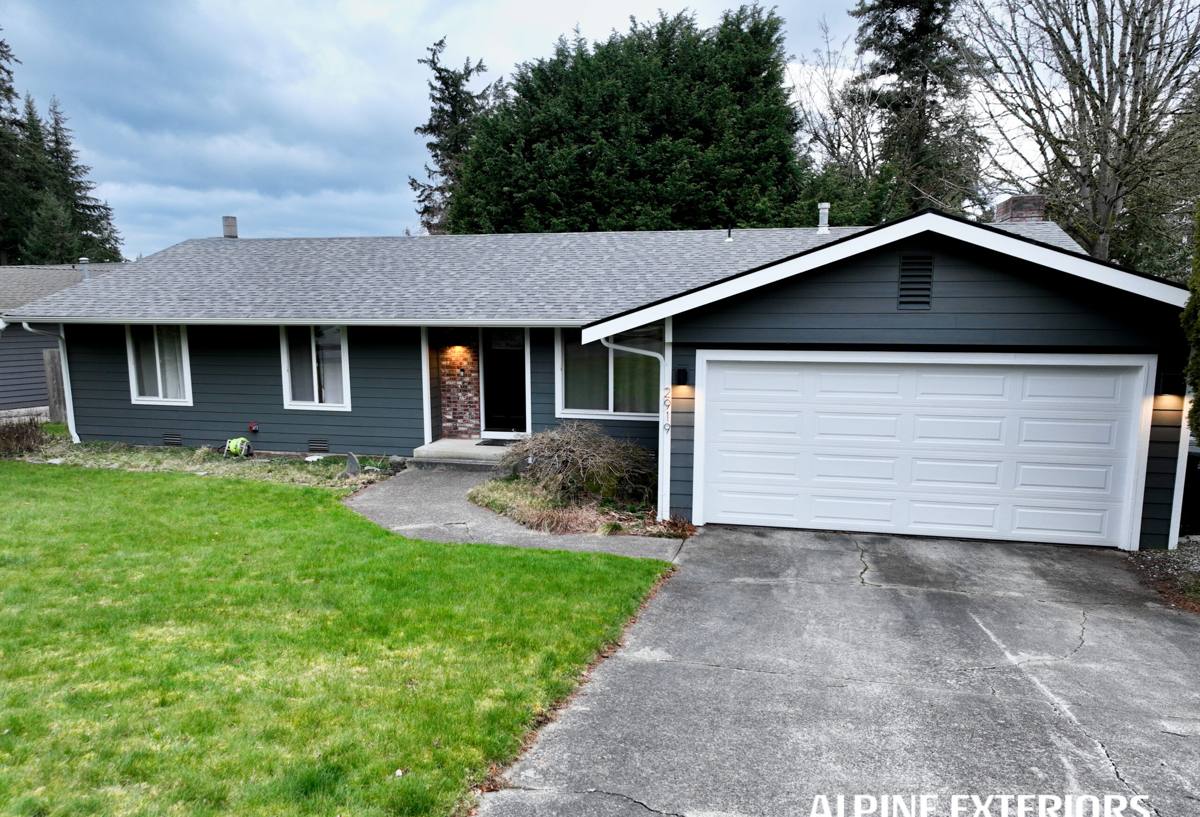
What Guemes Island's Climate Actually Does to Siding
Salt Air and Metal Fasteners
Airborne salt from the surrounding water settles on every exterior surface, including the fasteners and flashing behind your siding. Over years, that salt exposure accelerates corrosion on anything less than a marine-rated or hot-dip galvanized fastener. Siding that looks fine on the surface can still be failing underneath if the wrong hardware was used to hang it. This is one of the first things we check on any Guemes Island job — not just what siding goes up, but what's holding it there.
Wind-Driven Rain
Island exposure means rain rarely falls straight down. Wind pushes it sideways into wall assemblies, which puts real pressure on every seam, joint, and penetration in the siding system. A product that's merely water-resistant on paper isn't enough — the installation details (flashing, house wrap integration, proper clearances) have to actually manage that moisture, not just the material itself.
Moss, Shade, and Prolonged Dampness
Wooded lots and marine humidity mean a lot of Guemes Island homes have walls that stay damp longer than a comparable home in a drier, more open setting. Moss and algae don't just look bad — sustained organic growth against a wall surface holds moisture against it, which is exactly the condition that breaks down siding materials that aren't built to shrug it off.
Freeze-Thaw and Seasonal Swing
Skagit County winters bring repeated freeze-thaw cycles, especially on shaded or north-facing walls that hold onto moisture longer. Materials that absorb water and then freeze are working against themselves every winter. This is a slower, quieter failure mode than storm damage, but it's just as real over a 15-20 year window.
Why We Standardized on James Hardie
James Hardie fiber cement is engineered specifically to resist the failure modes above. It's non-combustible, dimensionally stable in wet climates, and doesn't feed moss and algae growth the way wood-based or wood-fiber composite sidings can. Hardie's ColorPlus factory finish is baked on under controlled conditions, which gives it a more consistent, fade-resistant, chip-resistant finish than field-applied paint. And Hardie backs the product with a strong transferable warranty — meaningful for a home that may change hands down the road.
We don't install LP SmartSide, vinyl, Cemplank, Allura, primed spruce, or cedar. That's not a knock on every homeowner who has one of those products already — plenty of them perform fine when properly maintained. It's a statement about what we're willing to warranty our labor on, in this specific climate, for the long haul. Salt air, driving rain, and a long moss season are not forgiving conditions, and we'd rather install one product exceptionally well than spread our crew's expertise across five.
How Hardie Compares to Alternatives in This Climate
| Factor | James Hardie Fiber Cement | Wood / Cedar | Vinyl |
|---|---|---|---|
| Moisture behavior | Engineered for wet climates, dimensionally stable | Absorbs moisture, prone to rot and swelling | Doesn't absorb, but seams can let water behind panel |
| Moss/algae resistance | Resists organic growth on the surface | Feeds moss and mildew growth | Can grow algae film, especially in shade |
| Salt air durability | Not affected by salt exposure itself | Salt accelerates weathering and finish breakdown | Generally stable but can chalk/fade near water |
| Fire resistance | Non-combustible | Combustible | Can soften, warp, or melt under heat |
| Finish longevity | Factory-baked ColorPlus finish | Requires repainting/staining on a cycle | Color molded in, but can fade unevenly over time |
| Maintenance burden | Low — periodic wash, caulk checks | High — regular refinishing needed | Low, but repairs can be visible/hard to color-match |
What a Correct Installation Looks Like Here
The material is only half the equation. On Guemes Island, the installation details are what actually determine whether the siding performs for 20-plus years or starts showing problems in five. A correct job includes:
- Proper water-resistive barrier and flashing integration behind the siding, not just around windows and doors but at every penetration and horizontal transition
- Correct clearance between the bottom of the siding and grade, decks, roof lines, and hardscape, so water has somewhere to go instead of wicking into the bottom edge
- Stainless steel or hot-dip galvanized fasteners rated for coastal exposure, driven to Hardie's specified pattern and depth
- Proper joint treatment and caulking at butt joints and trim intersections, using products compatible with the ColorPlus finish
- Correct nailing and fastening for the specific Hardie product line, since panel, plank, and shingle profiles each have their own installation requirements
- Ventilation behind the siding where the wall assembly calls for a rainscreen approach, especially on shaded or heavily exposed elevations
Any one of these done wrong can undercut the product's performance, no matter how good the siding itself is. This is why we treat installation quality as inseparable from the product decision — a Hardie product installed with shortcuts performs worse than people expect, and it's the installation, not the material, that usually gets blamed.
Choosing the Right Hardie Product Line for the Island
James Hardie makes several siding profiles and, in some regions, climate-specific HZ formulations engineered for different moisture and temperature conditions. For a Guemes Island home, that decision comes down to a few practical questions:
Exposure Direction
North and west-facing walls that stay shaded and damp longer benefit from careful attention to ventilation and drainage behind the panel, regardless of which Hardie profile is chosen. We look at each elevation separately rather than treating the whole house the same.
Existing Wall Assembly
Whether we're installing over existing sheathing, replacing house wrap, or working with an older wall assembly changes the flashing and drainage plan. On an island property, we'd rather find and fix a moisture problem behind the old siding now than have it resurface later.
Profile and Reveal
Lap siding, board-and-batten, and shingle-style Hardie products all read differently on a home, and the right choice is as much about matching the home's existing lines and neighborhood character as it is about performance. Performance-wise, all Hardie profiles share the same core fiber cement durability when installed correctly.
Our Process for Guemes Island Jobs
Working on an island adds real logistics on top of the usual siding job — ferry schedules, material staging, and making sure a crew has everything it needs for the day before it ever leaves the mainland. We plan around that instead of letting it become the homeowner's problem.
- On-site assessment: We walk the exterior, check the existing siding and wall assembly for moisture damage, and note exposure conditions on each elevation.
- Material and logistics planning: Because of ferry access, we plan material delivery and crew staging in advance so the job isn't stalled mid-project waiting on a supply run.
- Tear-off and inspection: Old siding comes off carefully so we can inspect sheathing and house wrap underneath for rot or existing moisture intrusion before anything new goes up.
- Weather barrier and flashing correction: Any deficient flashing or water-resistive barrier gets addressed before siding installation begins, not patched around.
- Hardie installation to manufacturer spec: Fastening, clearances, joint treatment, and ventilation are all installed to James Hardie's published specifications for the chosen product line.
- Final walkthrough: We review the finished job with the homeowner, including care and maintenance guidance specific to island exposure.
Living With Hardie Siding on the Island
One advantage of choosing a fiber cement product built for this kind of climate is how little ongoing work it asks of the homeowner. A periodic rinse to knock off salt residue and organic buildup, an eye kept on caulking at trim and joints, and prompt attention if a gutter or downspout starts dumping water where it shouldn't — that's most of what's needed. Compared to a wood or wood-composite product on the same lot, the maintenance difference over a decade is significant, and on a property that may sit unattended for stretches between visits, that matters.
Quick Homeowner Checklist
- Rinse siding periodically to remove salt residue, pollen, and organic buildup
- Inspect caulking at joints and trim annually, and reseal if it's cracking or pulling away
- Keep gutters and downspouts clear so water isn't dumping directly onto or behind siding
- Trim back vegetation and tree canopy that keeps a wall section shaded and damp longer than the rest of the house
- Watch for moss or algae starting at the base of walls or under eaves, and address it early rather than letting it establish
Why the Crew Matters as Much as the Product
James Hardie siding installed poorly does not perform like James Hardie siding installed correctly — that gap is where most siding complaints actually originate, regardless of brand. A crew that regularly works Guemes Island and the surrounding Anacortes and Skagit County waterfront already understands the exposure conditions specific to island homes: which elevations take the worst of the wind-driven rain, how moss establishes differently under tree cover versus open exposure, and what fastener and flashing choices actually hold up against sustained salt air. That's knowledge that shows up in the details of the installation, not on the invoice.
If you're planning a siding project on Guemes Island, we'd like to take a look and give you a straightforward, no-pressure estimate — what your home's exposure looks like, what a correct Hardie installation would involve, and what it would cost. Reach out using the form below to get started.