 Anacortes Roofing
 Siding Replacement Built for Life on Guemes Island
Guemes Island sits just across the water from Anacortes, reachable only by the short Guemes Island Ferry crossing, and that separation shapes more about a siding project than most homeowners expect. The island's homes face the same Skagit County weather patterns as the mainland, but with fewer wind breaks, more direct exposure to open water, and a logistics picture that's different from a job a contractor can reach by simply driving up. This page focuses on one thing: what siding replacement actually requires on a Guemes Island home, why the climate here is harder on siding than a quick drive-by inspection would suggest, and how we plan a project so the ferry schedule works for you instead of against you.
This is general guidance for homeowners on the island, not a claim about any specific property. If you're weighing whether it's time to replace your siding, or you're comparing bids from contractors who may or may not have actually worked out here before, the details below should help you ask better questions.
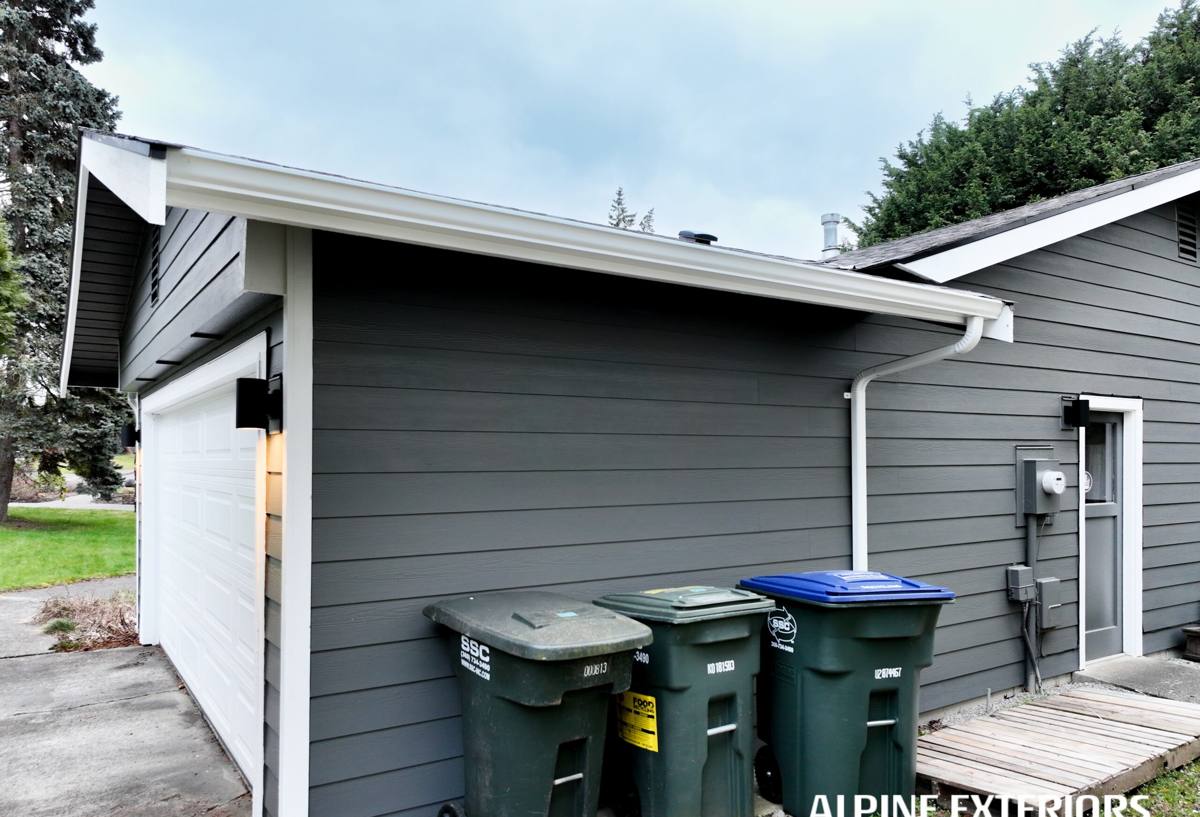
What Guemes Island's Climate Does to Siding
Salt air, driving rain, and a long moss season all take their toll on this island in ways that compound each other rather than acting alone. None of the three is unique to Guemes, but the combination, and the degree of direct exposure a lot of island homes have, tends to wear siding down faster than a comparable house set back a few miles inland.
Salt Air
Guemes sits surrounded by the waters of the Salish Sea, and salt-laden air moves across the island more or less constantly. Salt is corrosive to fasteners, flashing, and trim metal, and it breaks down lower-grade paint and stain finishes faster than a drier, more sheltered site would. Siding materials and hardware that hold up fine on an inland Skagit County lot can start showing wear noticeably sooner on a home with a clear line to open water.
Driving Rain
An island with open exposure on multiple sides gets wind that doesn't cooperate with a siding system designed only to shed water falling straight down. Storms push rain sideways into south- and west-facing walls, forcing it into butt joints, corner trim, and any seam where a finish or caulk line is doing the work of keeping water out. Siding details that are marginal on a sheltered lot tend to fail first here, because the rain isn't just falling on the wall, it's being driven into it.
A Long Moss Season
Mild temperatures, tree cover on many island lots, and near-constant moisture add up to a moss and mildew season that can run most of the year, especially on north-facing walls and shaded elevations. Moss and mildew hold moisture against whatever surface they're growing on, and any siding material that's even slightly porous becomes a growth surface over time. By the time moss or dark staining is obvious on a wall, moisture has often been working on the material underneath for a while already.
Why Some Siding Materials Struggle Here
A lot of the siding still on older Guemes Island homes is wood, vinyl, or an engineered wood product, and each of those carries real trade-offs in this specific combination of salt air, wind-driven rain, and extended moss exposure. Wood siding needs a disciplined refinishing schedule to keep its protective coating intact, and on an island, a maintenance visit isn't a same-day errand the way it would be on the mainland. Vinyl can trap moisture behind the panels and tends to fade, warp, or crack under sustained sun and salt exposure. Engineered wood products can swell or lose structural integrity if moisture reaches the wood fiber core, which is a real risk anywhere driving rain is working joints and seams as hard as it does here.
None of that means those materials are worthless everywhere, plenty of homeowners in gentler climates get long service life out of them. It means that on a site with this much direct water and salt exposure, the margin for a maintenance lapse or an installation shortcut is smaller, and the consequences of either show up faster.
Why We Install James Hardie Fiber Cement Only
We install James Hardie fiber cement siding exclusively, on every home we side, including the ones we work on out on Guemes Island. We don't install LP SmartSide, vinyl siding, Cemplank, Allura, primed spruce, or cedar. That's a professional standard, not a supplier preference, and it comes from watching which materials actually hold up under sustained salt air, wind-driven rain, and a near-year-round moss season, and which ones quietly shift maintenance costs and callbacks onto the homeowner a few years down the road.
- Non-combustible core: Fiber cement doesn't feed a fire the way wood-based siding can, which matters for household safety and can matter for insurance underwriting on an island where fire response times are longer than on the mainland.
- Factory-applied ColorPlus finish: Color is baked on under controlled factory conditions rather than brushed on in the field, so it resists fading, chalking, and moisture damage far longer than a site-applied paint or stain job.
- Climate-engineered HZ product lines: Hardie's HZ5 formulation is built specifically for regions with heavy moisture exposure and freeze-thaw cycling, which fits the exposed, salt-air conditions on Guemes Island well.
- Dimensional stability: Fiber cement doesn't swell, cup, or warp the way engineered wood siding can after repeated wet-season moisture cycles.
- Strong transferable warranty: Hardie backs its products with one of the stronger warranty structures in the industry, provided installation follows spec, which matters if the home changes hands down the road.
We'd rather stand behind one system we trust completely than offer a cheaper alternative and hope the trade-offs don't catch up with you a few winters from now.
What a Correct Siding Replacement Actually Involves
Picking the right material only gets a project part of the way there. A siding replacement that actually performs the way it's designed to depends just as much on what happens underneath the new boards as on the boards themselves.
Tear-Off and What It Reveals
A full tear-off, rather than siding over the existing material, lets us see the sheathing and framing underneath before anything new goes up. On an island home that's been absorbing salt air and driving rain for years, it's not unusual to find moisture damage behind the old siding that was invisible from the outside. Finding that now, before new siding closes it back up, is the difference between a clean job and a problem that resurfaces in a few years.
Weather Barrier and Flashing
The house wrap and flashing details behind the siding do as much work as the siding itself when it comes to keeping wind-driven rain out of the wall assembly. Window and door openings, butt joints, and any place two planes of the house meet need flashing that's lapped correctly so water sheds outward and down rather than finding a way in. On an exposed island lot, a flashing detail that's marginal is more likely to actually get tested by a real storm than the same detail on a sheltered inland site.
Nailing Pattern and Clearance
James Hardie siding has to be installed to the manufacturer's specified nailing pattern and clearance requirements to perform and to keep its warranty valid. That includes proper clearance from grade, roof lines, and decks, and correctly spaced fasteners driven to the right depth, not just close enough. Shortcuts here are largely invisible once the job is finished, which is exactly why they're worth asking a contractor about directly.
Joint and Trim Detail
Butt joints, corners, and trim are where siding failures usually start, because they're where two pieces of material meet and depend on caulk or flashing to stay sealed. Correctly detailed joints, with the right materials and the right sequencing relative to the weather barrier underneath, hold up to driving rain far longer than a joint that was rushed to keep a schedule.
Ferry Access and Island Logistics
Working on Guemes Island means planning around the Guemes Island Ferry, and that changes how a siding project has to be run compared to a mainland job. Materials, equipment, and crew all have to cross on a schedule, which means a project benefits from batching deliveries and staging efficiently rather than making repeated small trips. A contractor who hasn't worked the island before often underestimates this, and it shows up as delays, missed ferry windows, or a crew standing around waiting for material that didn't make the crossing it needed to. A contractor who already works Guemes Island builds that timing into the schedule from the start, so the ferry is a planning input, not a surprise.
Island logistics also affect how quickly a callback or a warranty issue can be addressed. A contractor with an established presence on the island can respond without the same lead time a first-time crew would need to arrange a crossing, which matters if a detail needs a second look after the first real storm of the season.
Signs Your Guemes Island Home May Need Siding Replacement
- Moss or dark staining that returns quickly after cleaning, especially on shaded or north-facing walls
- Soft or spongy siding, particularly low on the wall or around window and door trim
- Peeling paint, bubbling, cupping, or visible warping on siding boards
- Visible gaps at seams, corners, or trim joints where water can track in
- Corroded or discolored fasteners, flashing, or trim metal
- A musty smell or visible staining on interior walls near exterior corners
- Rising energy bills that may point to a wall assembly no longer sealing the way it should
- Siding that's original to a home built decades ago and has never been fully replaced
Siding Replacement Cost Factors on Guemes Island
| Factor | What It Affects | Why It Matters on Guemes |
|---|---|---|
| Tear-off vs. overlay | Labor scope and substrate access | Tear-off often reveals hidden moisture damage that's common under aging siding in this climate |
| Substrate condition | Repair costs before new siding goes on | Trapped moisture behind failing siding can rot sheathing and framing over time |
| Exposure and orientation | Material spec and moss/mildew treatment needs | Walls facing open water or staying shaded longer need more resistant detailing |
| Material and equipment logistics | Scheduling and delivery planning | Ferry crossings mean materials and crew have to be staged and batched, not delivered piecemeal |
| Site access on the property | Labor time and equipment needs | Rural roads and larger, tree-covered lots common on the island can add setup and staging time |
Exact numbers depend on the specific home, so we walk the property in person before giving a real estimate rather than quoting off a generic price sheet.
Our Process for a Guemes Island Siding Replacement
- We walk the exterior in person and evaluate the existing siding, flashing, and substrate condition together rather than judging the job by what's visible from the road.
- Where there's existing damage, we identify the actual water entry point rather than assuming the visible problem is the root cause.
- We give a straight recommendation on repair versus full replacement, based on what we find, not on what's easiest to sell.
- We spec James Hardie's HZ5 line for the added moisture and freeze-thaw resistance this island's exposure calls for.
- We plan material delivery and crew scheduling around the ferry from the outset, so the project timeline reflects the real logistics instead of a mainland assumption.
- We detail flashing, joints, and fastening to account for the wind-driven rain and salt exposure typical of open, near-shoreline lots on the island.
Why a Crew That Already Works Guemes Island Matters
A contractor who regularly works this island has already made the mistakes a first-time crew is likely to make: underestimating ferry timing, misjudging how much material a job actually needs staged before crossing, or not accounting for how much longer certain walls stay wet after a storm. That experience shows up in small, practical decisions on install day, which sections need extra flashing attention, which orientations are worth the added moss-resistant detailing, and how to sequence the job so a delayed ferry crossing doesn't leave a wall exposed overnight. It also shows up after the job is done, since a crew with an ongoing presence on the island can respond to a warranty question or a follow-up without the lead time a mainland-only contractor would need just to plan the trip. Guemes Island's exposure isn't identical to a sheltered lot in downtown Anacortes, and a crew that's actually worked both knows the difference instead of applying a generic mainland approach to an island job.
Get a Free, No-Pressure Estimate
If you own a home on Guemes Island and want an honest look at your siding, whether it's showing early wear or you're just trying to plan ahead, we're glad to make the crossing and walk the property with you. Use the form below to schedule a free estimate, no pressure and no upsell script.