 Anacortes Roofing
 Conway sits low in the Skagit River delta, on flat, open farmland between Mount Vernon and Stanwood, not far from where the river meets Skagit Bay. That geography changes what a siding job actually needs to hold up. There's less tree cover and fewer hills to break up the wind than a lot tucked into town, so driving rain tends to hit walls straighter and harder during a winter storm, and the tidal sloughs and bay nearby add a steady dose of salt-tinged air to the mix. We install James Hardie fiber cement siding across Skagit County, and Conway is one of the areas where the climate makes the difference between a siding job that lasts and one that starts showing problems by year six or seven.
What Conway's Climate Actually Does to a Wall
Open, low-lying farmland doesn't offer much of a windbreak, so wind-driven rain reaches siding at more of a direct angle here than it would on a sheltered, wooded lot elsewhere in the county. That matters at every horizontal joint, every window and door opening, and every spot where two pieces of siding meet — those are the places water finds a way in if the installation wasn't detailed correctly. The nearby bay and river sloughs add salt content to the air, which is harder on fasteners, flashing, and any coating that isn't formulated to resist it. And because the ground around a lot of Conway properties stays damp longer after a storm, the bottom few feet of a wall often sees more sustained moisture exposure than the same wall would somewhere with better drainage and more slope.
Put those three things together — direct wind exposure, salt-tinged moisture, and a long damp season — and you get a climate that's genuinely tough on siding that isn't built or installed for it. Moss and algae growth on shaded or north-facing walls is common through most of the year, and it's rarely just cosmetic; sustained organic growth holds moisture against a surface and can accelerate deterioration underneath it if the material or the assembly behind it isn't up to the job.
What We Look For on a Conway Siding Inspection
- Caulking and trim joints that have opened up from repeated wet-dry cycling through the winter months
- Moss or algae buildup on shaded or north-facing siding and around ground-level trim
- Corroded or failing fasteners, especially on older installs that weren't detailed for coastal-adjacent exposure
- Soft spots or staining near window and door trim, usually a sign flashing was never installed correctly
- Buckling, warping, or visible seams on wood or engineered wood siding that's been through several wet seasons
Why We Only Install James Hardie Fiber Cement
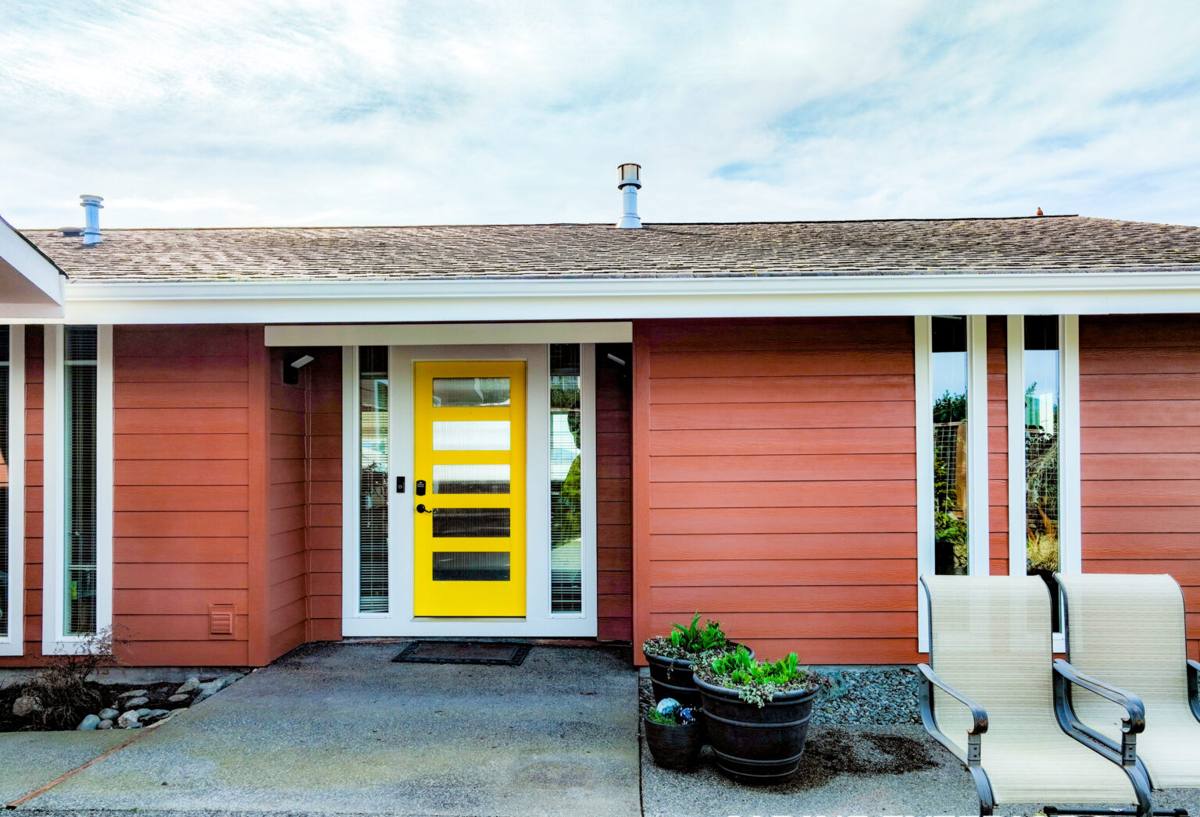
We install James Hardie exclusively — no vinyl, no LP SmartSide, no Cemplank, no Allura, no primed spruce, no cedar. That's a standard we hold to on every job, including in Conway, because we've seen firsthand how different siding materials perform when they're up against sustained moisture and salt air rather than a milder, sheltered site.
Vinyl siding isn't a water barrier by itself — it relies entirely on whatever's behind it to keep a wall dry, and it can go brittle with age and UV exposure, which shows up as cracking at fastener points and corners sooner than most homeowners expect. Wood and wood-composite products need consistent repainting or resealing to keep water out, and on a low-lying, damp lot like a lot of Conway properties sit on, that maintenance cycle gets demanding fast — miss a season and rot can start before it's visible from the ground. James Hardie fiber cement is dimensionally stable, non-combustible, and doesn't rely on paint film alone to survive; the ColorPlus factory finish is baked on under controlled conditions and engineered to resist fading, cracking, and moisture intrusion in exactly the kind of marine-influenced climate Conway sits in.
Hardie Product Lines We Install
| Product Line | Best For | Notes |
|---|---|---|
| HardiePlank Lap Siding | Most Conway homes, traditional and farmhouse styles | Smooth or cedar-textured finish, widest color range |
| HardiePanel Vertical Siding | Gable ends, accent walls, modern or barn-style homes | Clean vertical lines, also common on outbuildings and shops |
| HardieTrim Boards | Window and door surrounds, corners, fascia | Resists the swelling and rot that plague wood trim in wet conditions |
| HZ10 Climate Engineered | Homes with direct wind, rain, or salt-air exposure | Formulated for the wetter, harsher climate zones common in western Washington |
What a Correct Installation Actually Involves
Hardie siding is only as good as the assembly it's part of. The board itself resists moisture and holds its finish, but the wall behind it — the water-resistive barrier, the flashing, the fastening, the gaps and clearances — is what actually determines whether water stays out. This is where we see the most difference between a job that lasts decades and one that starts showing problems within a few years, regardless of which siding brand was used.
A correct install starts with the water-resistive barrier and flashing done first and done right: window and door openings flashed so water sheds outward at every layer, not just caulked and hoped for. Starter strips set level and true, since everything above follows that first course. Butt joints staggered and either flashed or sealed with a product rated for the exposure, not just caulk alone. Siding fastened per Hardie's published pattern for the specific product and exposure zone — under-fastening leads to boards working loose over time, and over-fastening or using the wrong fastener type can crack the board or void warranty coverage. And clearance kept at the bottom of the wall, off decks, patios, and grade, so the siding isn't sitting in standing water or splash-back after every rain.
Where We See Installation Shortcuts Cause Problems Later
The most common failures we get called out to inspect in this area aren't failures of the siding material — they're failures of installation. Flashing skipped or improvised around a window. Caulk used to bridge a gap that should have had proper flashing instead. Siding installed tight to a deck or driveway with no clearance, so it wicks moisture every time it rains. None of these show up on day one. They show up two, three, five winters later, after enough wet-dry cycles have worked the problem loose — which is exactly why we treat the whole assembly, not just the board choice, as the real job.
Our Process, Start to Finish
- Walk-around and assessment — we look at your existing siding, trim, and any problem areas, and talk through what's actually driving the wear you're seeing.
- Product and color selection — we help you choose the right Hardie product line, profile, and ColorPlus color for your home and this specific site.
- Prep and removal — old siding comes off, the sheathing gets inspected for hidden moisture damage, and any rot or compromised framing gets addressed before anything new goes on.
- Water-resistive barrier and flashing — this is the step that determines long-term performance, and we don't rush it.
- Installation — siding, trim, and any accent panels installed to Hardie's fastening and clearance specifications for our climate zone.
- Final walkthrough — we go over the finished job with you, point out anything you should know for long-term care, and answer questions before we consider it done.
What Drives Cost on a Conway Siding Job
Every home is different, but a few factors consistently move the price on a Hardie install in this area more than anything else. Being upfront about them saves everyone time.
| Cost Factor | Why It Matters |
|---|---|
| Existing siding removal and disposal | Tear-off adds labor and disposal cost, and reveals what condition the sheathing is actually in |
| Hidden moisture or rot damage | Sheathing or framing repair, if needed, is priced separately once it's exposed and assessed |
| Home size and wall complexity | Dormers, multiple gables, and cut-up wall planes take more labor than a simple rectangular footprint |
| Trim and accent details | Vertical panel accents, extensive trim boards, or custom color combinations add material and labor |
| Site access | Rural, spread-out Conway lots sometimes mean longer material staging and setup than a tight in-town lot |
Why a Crew That Already Works Conway Matters
Skagit County isn't one uniform climate — a sheltered, wooded lot near town behaves differently than an open farmland property near the delta, and Conway leans hard toward the exposed end of that range. We've worked enough homes in this specific stretch of the county to know which walls take the brunt of a winter storm, where moss keeps coming back no matter what you do, and which flashing and clearance details actually matter here versus which ones are just code minimums that happen to be enough somewhere drier.
It also means fewer surprises on the practical side — knowing what Skagit County permitting looks like for a re-side, planning around rural lot access and material staging, and not treating a Conway property like it's identical to a job three towns over. That kind of pattern-recognition gets built by doing the work here repeatedly, not by reading a spec sheet once and assuming it applies everywhere the same way.
Living With Hardie Siding After Installation
A correctly installed Hardie system is low-maintenance, not zero-maintenance. A little attention goes a long way toward getting the full lifespan out of it in a climate like this one.
- Rinse siding down once or twice a year, especially shaded or north-facing walls where moss and algae tend to collect
- Check caulking at trim and joints annually, ideally after the wettest stretch of winter, and have any cracked or missing sealant addressed before it becomes a bigger problem
- Keep gutters clear so water isn't overflowing and running down the face of the siding repeatedly
- Trim back vegetation that's holding moisture against the wall or blocking airflow and sun
- Watch clearance at grade, decks, and patios over time — settling or added landscaping can quietly reduce the gap that was built in at installation
If you're in Conway and dealing with aging or failing siding, or you're planning ahead before the next wet season sets in, we're happy to take a look and walk you through what your home specifically needs. Reach out for a free, no-pressure estimate — we'll give you a straight answer, not a sales pitch.